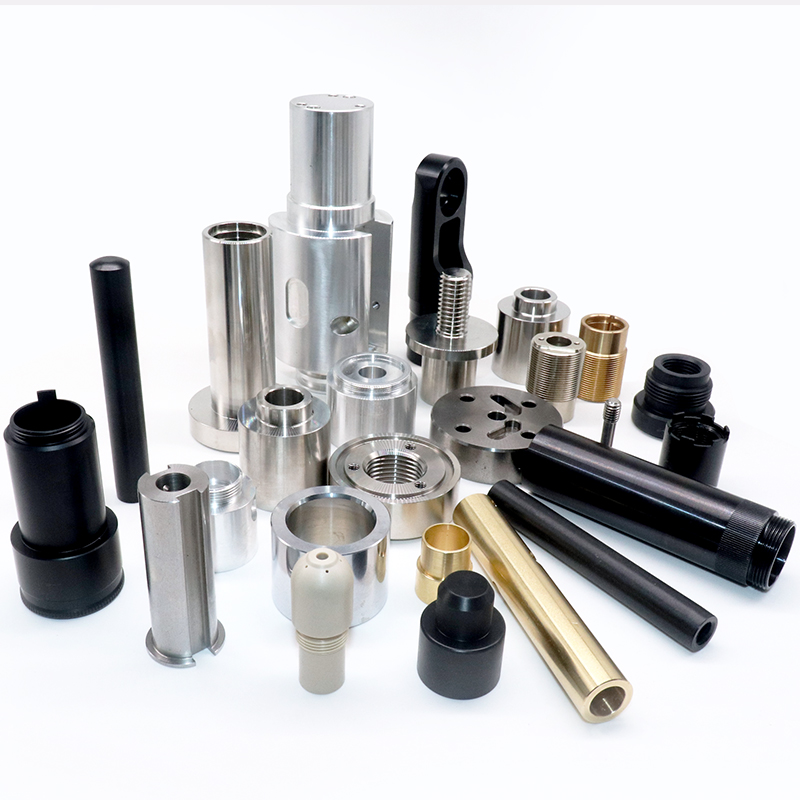
In the intricate world of precision part creation, the term “nexus” resonates profoundly. It represents not just a connection point, but a central hub where complexity converges and is transformed into streamlined, reliable solutions. For engineers, designers, and procurement specialists navigating the often-fragmented landscape of custom machining, the search for a true Nexus CNC Machining Service is a quest for operational serenity. It’s the pursuit of a partner who doesn’t just mill metal but orchestrates the entire symphony of bringing a digital design to physical reality. This is the critical juncture where isolated processes—design validation, material selection, precision machining, surface finishing, and quality assurance—must coalesce seamlessly. Today, we’ll explore what constitutes this nexus in modern manufacturing and why it has become the benchmark for overcoming the most persistent pain points in precision part production.
The Fragmented Reality: Why the “Nexus” is More Than a Buzzword
Traditionally, sourcing precision components has been a linear but disjointed process. A design team finalizes a CAD model, often for a part with complex geometries or tight tolerances. The procurement journey then begins: one supplier for CNC milling aluminum prototypes, another for titanium 3D printing validation, a third for low-volume production via vacuum casting, and yet another for final surface anodizing. Each handoff is a potential point of failure—a “precision black hole,” as industry veterans might call it. Communication gaps lead to misinterpretations. Variances in quality standards between shops cause assembly nightmares. Timeline slippages at one stage cascade down the chain. The result? Delayed time-to-market, blown budgets, and immense logistical overhead for the client.
This fragmentation directly contradicts the demands of contemporary innovation cycles in sectors like robotics, aerospace, medical devices, and new energy vehicles. These industries require agility, absolute consistency, and partners who can think systemically. The modern Nexus CNC Machining Service is engineered to dissolve these silos. It is a single-source provider that acts as the unified command center for your project, integrating every critical manufacturing discipline under one roof, governed by one quality management system and one point of accountability.
The Anatomy of a True Manufacturing Nexus: Integrated Workflows as a Core Competency
So, what operational architecture defines this nexus? It is built on a foundation of vertical and horizontal integration.
Vertical Integration refers to the depth of control over the core subtractive and additive processes. A true nexus, such as GreatLight Metal, demonstrates this through its owned and operated advanced equipment fleet. This isn’t just about having a few CNC machines; it’s about possessing the right mix of technology to attack a problem from multiple angles:
5-Axis CNC Machining Centers: The workhorses for complex, monolithic parts requiring machining from virtually any angle in a single setup, minimizing error accumulation and maximizing geometric freedom.
Multi-Axis Mill-Turn Centers and Swiss-Type Lathes: For ultra-precision rotational parts, combining turning, milling, and drilling operations seamlessly.
Advanced Additive Manufacturing (SLM, SLS, SLA): Not as a replacement, but as a complementary tool for prototyping impossible geometries, creating conformal cooling channels in molds, or producing low-volume end-use parts.
EDM (Electrical Discharge Machining) & Precision Grinding: For achieving super-fine finishes, sharp internal corners, and working with hardened materials that defy conventional cutting tools.
Horizontal Integration is the breadth of ancillary and finishing services that transform a machined “blank” into a finished component. This includes:
In-house Surface Treatment Lines: Anodizing, powder coating, plating, passivation, and polishing. Controlling this stage ensures color consistency, coating adhesion, and cosmetic quality that matches the part’s precision.
Metrology and Quality Assurance Labs: Equipped with CMMs (Coordinate Measuring Machines), optical comparators, and surface roughness testers. Verification is not outsourced; it is an integral, parallel step in the workflow.
Assembly and Kitting: The ability to deliver not just loose parts, but pre-assembled sub-systems or kits ready for integration, adding another layer of value and saving client labor.
When vertical and horizontal integration converge, the project flow transforms. The Nexus CNC Machining Service model enables concurrent engineering. A feasibility feedback loop exists between the machining, finishing, and QA teams from the initial design review stage. Potential manufacturability issues are flagged and solved collaboratively before the first toolpath is generated, embodying the principles of Design for Manufacturability (DFM) at its best.
Beyond the Machine: The Trust Framework of a Strategic Nexus
Technical capability alone does not create a reliable nexus. The bedrock of any long-term manufacturing partnership is trust, which is built on transparency, standardized processes, and proven consistency. This is where internationally recognized certifications transition from marketing bullet points to critical operational infrastructure.
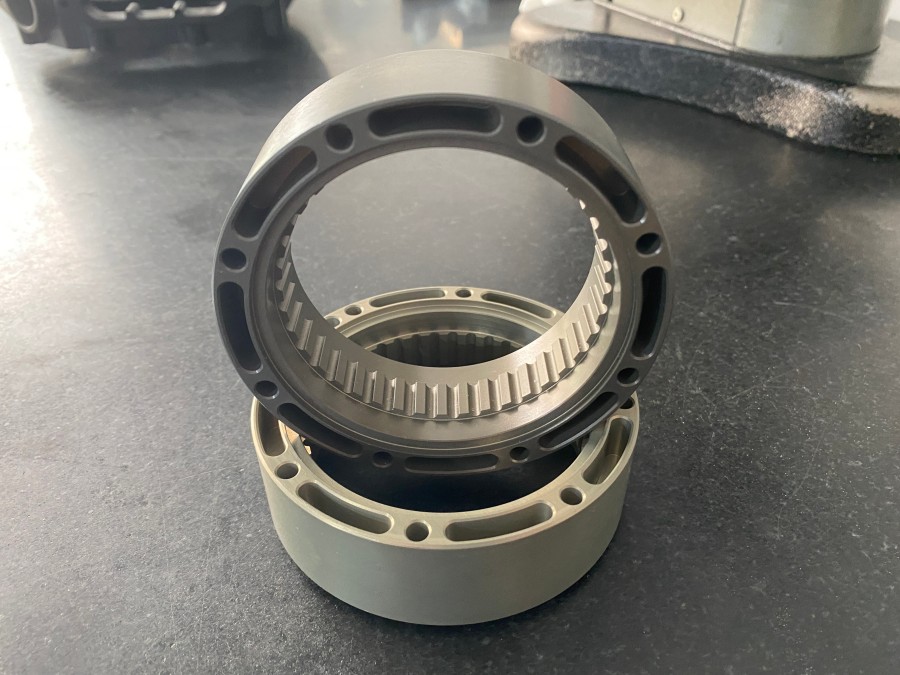
A partner operating as a nexus must demonstrate systemic rigor. For instance, a company like GreatLight Metal anchors its processes in a suite of certifications that speak directly to client concerns:
ISO 9001:2015: The universal baseline, ensuring a documented, repeatable quality management system is in place for all operations.
IATF 16949: For automotive clients, this is non-negotiable. It signals a deep understanding of APQP (Advanced Product Quality Planning), PPAP (Production Part Approval Process), and the stringent demands of the automotive supply chain, including strict control over variation and waste.
ISO 13485: For medical device manufacturing, this certification demonstrates a commitment to the traceability, risk management, and sterile environment controls essential for regulatory compliance.
ISO 27001: In an age of IP-sensitive designs, this information security management certification provides peace of mind that your proprietary data is protected within the manufacturer’s systems.
When you engage with a nexus service provider, you are not just buying machine time; you are plugging into a certified, auditable system. This system provides the trust背书 (trust endorsement) necessary for high-stakes projects. It answers the critical question: “Can you prove you will do what you say, every single time?”
Case in Point: The Nexus in Action
Consider a scenario faced by many innovators: a startup developing a compact, high-performance actuator for a humanoid robot. The housing requires a complex internal lattice structure for weight reduction, internal channels for cooling, and mounting features with tolerances under ±0.02mm. It must be made from a high-strength aluminum alloy and have a durable, cosmetic-grade black finish.
A fragmented approach would involve:
Sending the model to a 3D printing service for a prototype.
Engaging a CNC shop to machine a functional test version, who may struggle with the internal lattice.
Finding a specialist for the final production run.
Coordinating with a separate finisher for anodizing.
Each step introduces reinterpretation, requalification, and risk.
A Nexus CNC Machining Service tackles this holistically:
Phase 1 – Prototyping & Validation: The in-house engineering team might recommend using SLM metal 3D printing to create the prototype with the internal lattice intact, allowing for rapid functional testing of the complex geometry.
Phase 2 – DFM & Process Planning: Concurrently, their CNC programming experts analyze the design for series production. They might suggest a slight design modification to the lattice that makes it machinable on a 5-axis CNC machine from solid billet, improving material strength and surface quality over the 3D-printed version. A detailed DFM report is shared with the client.
Phase 3 – Integrated Production: Once approved, the part moves into CNC machining on high-precision 5-axis equipment. After machining, it moves directly to the in-house anodizing department, where parameters are controlled to achieve the exact specified color and thickness.
Phase 4 – Certified Delivery: Every part is inspected on a CMM against the original CAD model. The inspection report, along with material certifications and process documentation, is packaged with the shipment. The client receives a ready-to-install, fully characterized component from a single source.
This integrated flow, managed under one roof and one quality umbrella, exemplifies the Nexus CNC Machining Services paradigm. It turns a potentially fraught, multi-vendor project into a managed, predictable, and efficient progression from concept to certified part.
Conclusion: Choosing Your Central Hub
The landscape of precision manufacturing is evolving. The future belongs not to the shop with the single fastest machine, but to the integrated manufacturing partner that serves as the strategic nexus for its clients’ innovation. It is the partner who combines technical depth (5-axis CNC machining, additive manufacturing, finishing) with process breadth (from mold making to final assembly) and under pins it all with a framework of trust (ISO, IATF, and industry-specific certifications).
When evaluating partners like Protolabs Network, Xometry, or Fictiv for their digital platforms, or more traditional houses like RCO Engineering, consider the depth of integration they offer. Does their model provide true end-to-end ownership, or is it a coordination of dispersed resources?
For teams that view their custom parts as critical, system-level components where quality, traceability, and seamless collaboration are paramount, the choice is clear. The goal is to find and partner with a Nexus CNC Machining Service that becomes an extension of your own engineering team. This is the partnership that transforms the complexity of modern hardware development from a daunting challenge into a streamlined, reliable, and ultimately successful journey. It is in this collaborative, integrated space that the next generation of precision products will be born. Discover how a truly integrated approach can serve as the central hub for your most ambitious projects by exploring the capabilities of a dedicated partner like GreatLight CNC Machining{:target=”_blank”}.
For further insights into the evolving world of precision manufacturing and integrated supply chains, follow the industry discourse on platforms like LinkedIn{:target=”_blank”}.