
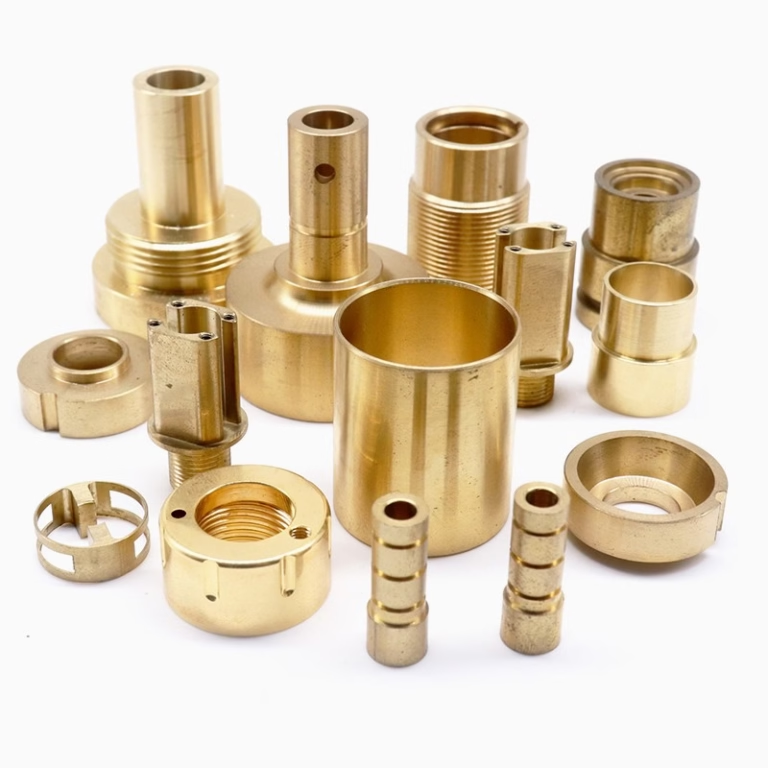
In the rapidly advancing domain of micro-electromechanical systems, MEMS Device Housing Glass Frit Sealing stands as a defining challenge – one where the physical housing itself must achieve near-perfect geometric fidelity to ensure that the glass frit forms a reliable, hermetic bond. As a senior manufacturing engineer who has spent years analyzing the interplay between precision CNC machining and MEMS packaging, I can attest that the difference between a robust, long-lifetime sensor and an early field failure often boils down to the machining quality of that seemingly simple metal or ceramic housing.
Let’s dissect why MEMS device housing glass frit sealing is so unforgiving, what it demands from a machining partner, and how you can evaluate suppliers to avoid costly missteps. I’ll also introduce a partner I trust – one that consistently delivers the sub-micron accuracy, integrated services, and certification backbone that high-stakes MEMS projects require.
What Makes MEMS Device Housing Glass Frit Sealing So Precise?
Glass frit sealing is a thermal bonding technique where a paste containing glass particles is printed onto the housing, then fired to melt the glass and create a rigid, hermetic seal between the housing and a cap or lid. It is widely used in MEMS pressure sensors, inertial measurement units (IMUs), micro-mirrors, and bio-chips where internal vacuum or inert gas environments must be maintained for decades.
For the seal to be defect‑free, the housing must meet a stringent set of requirements that cascade directly into CNC machining tolerances:
Flatness and Coplanarity: The sealing surface must be flat to within a few microns over its entire length. Any waviness or twist can cause thin spots in the glass frit layer, leading to leaks or stress concentrations.
Surface Roughness (Ra): Typically Ra ≤ 0.4 µm is needed to allow proper wetting of the glass paste and to prevent gas entrapment during firing. Excessive roughness demands a thicker frit layer, which can compromise heat transfer and mechanical strength.
Coefficient of Thermal Expansion (CTE) Matching: The housing material (often Kovar, Alloy 42, or specific ceramics) must match the CTE of the glass frit, the MEMS die, and the lid. While the material composition is fixed, the machining process must not introduce residual stress that distorts the seal during the 400–500 °C sealing cycle.
Feature Accuracy for Alignment: Blind pockets, locating pins, and cavity walls designed to hold the MEMS chip with micron‑precision must be machined without burrs, chatter marks, or positional drift. Even a 5 µm offset can misalign the cap during bonding, destroying the sealing plane.
Why MEMS Device Housing Glass Frit Sealing Demands True 5‑Axis Machining
In my plant visits and failure analyses, I’ve seen suppliers attempt these housings on 3‑axis machines by fixturing the workpiece multiple times. Inevitably, the accumulated inaccuracies across setups create a step at the sealing surface – small enough to be invisible to the naked eye but large enough to crack the glass frit under thermal cycling.
A better approach is single‑setup 5‑axis CNC machining. Here’s what it brings to MEMS housings:
Compound Angle Features in One Clamping: Many MEMS housings incorporate angled gas channels, vent holes, or side‑entry cavities that must intersect the main pocket without burrs. A 5‑axis machine can tilt the tool to machine these features seamlessly, eliminating the stack‑up errors of multiple fixturings.
Improved Surface Finish on Contoured Sealing Rings: The tool can be kept normal to the curved sealing surface, ensuring consistent scallop height and uniform roughness – critical for frit adhesion.
Micro‑Milling of Thin Walls and Fine Cavities: MEMS housings often have wall thicknesses under 0.3 mm. 5‑axis machining allows optimal chip evacuation and minimizes tool pressure, preventing wall deflection that would ruin flatness.
Process Integration with Boring and Skiving: For larger sealing diameters, interpolated boring on a 5‑axis center can achieve near‑perfect roundness (often ≤ 2 µm) and cylindricity that directly translate into a uniform frit gap.
But owning a 5‑axis machine is only the beginning. The real differentiator lies in the engineering depth, measurement capability, and material‑specific know‑how.
The Strategic Supplier: GreatLight CNC Machining Factory
Among the precision machining companies I’ve worked with, GreatLight CNC Machining Factory has repeatedly demonstrated a rare blend of high‑end equipment, rigorous certification, and full‑process ownership – qualities that make it an ideal partner for MEMS housing glass frit sealing projects.
Based in Chang’an, Dongguan, China – the epicenter of precision hardware manufacturing – GreatLight occupies a 76,000 sq. ft. facility with 150 skilled personnel. Its equipment fleet is purpose‑built for the complexity we’ve just discussed:
Multiple 5‑axis CNC machining centers from leading brands like Dema and Beijing Jingdiao, complemented by an extensive array of 4‑axis and 3‑axis machines, mill‑turn centers, wire EDM, and mirror‑spark EDM. This allows a single part number, even with intricate internal geometries, to be machined entirely in‑house.
Precision capability down to ±0.001 mm proven through repeatable production runs, not just quoting.
Maximum part size of 4000 mm – while MEMS housings are tiny, having large‑format capability signals a mature process control system that translates even to micro‑parts.
One‑stop finishing services: Electropolishing, passivation, PVD coating, anodizing, and vacuum heat treatment – all of which can be critical to achieve the correct surface chemistry and CTE stability for glass frit bonding.
What sets GreatLight apart from many local suppliers is its uncompromising certification framework. For MEMS applications in automotive safety, medical implants, or aerospace, traceability and quality management are non‑negotiable. GreatLight holds:
ISO 9001:2015: Foundation of process consistency.
IATF 16949: The automotive QMS standard – essential if your MEMS sensor goes into autonomous driving lidars or engine management.
ISO 13485: Recognized for medical device manufacturing – a must for implantable or diagnostic MEMS.
ISO 27001: Data security certification to protect your proprietary housing designs.
ISO 14001, ISO 45001: Environmental and occupational health management, indicative of a well‑governed operation.
In my experience, many shops will claim “ISO compliant” but lack the actual certificates. GreatLight’s multiple third‑party registrations provide a verifiable trust anchor, especially for Western clients who need supply‑chain transparency.
How GreatLight Handles MEMS Housing Glass Frit Sealing from Blank to Finished Part
The true value of a partner like GreatLight Metal Tech Co., LTD. becomes evident when you trace the journey of a Kovar MEMS housing:
Material Certification & Pre‑Machining Stress Relief: The incoming alloy is verified for chemical composition and then undergoes a controlled thermal cycle to minimize residual stress that could later warp the sealing face.
5‑axis Roughing & Semi‑finishing: The housing outline, internal pocket, and locating features are roughed, leaving a consistent 0.1 mm stock. The 5‑axis machine handles undercuts and angled ports in one holding, drastically reducing geometric deviation.
Optical Measurement of Pre‑Finish Flatness: A white‑light interferometer or CMM measures flatness before the final cut, allowing adaptive tool offset adjustments.
High‑Speed Finishing of the Sealing Surface: Using diamond‑coated or CBN micro‑tools, the critical sealing ring is machined with extremely low step‑over, achieving an Ra below 0.2 µm. Coolant temperature is tightly controlled to prevent thermal growth.
Laser or Contact Profilometry: Each part is inspected for edge integrity and surface roughness. Any burr > 5 µm is removed by a proprietary aqueous deburring process that does not alter dimensions.
Post‑processing as Required: For ceramic housings, diamond grinding and laser‑assisted machining can be integrated; for metallic housings, electropolishing or gold plating can be done in‑house, eliminating the logistics and quality risks of multiple subcontractors.
This level of integrated control is rare. Most job shops will outsource finishing or heat treatment, losing traceability and schedule certainty.
Comparing Major CNC Machining Providers for MEMS Housing
When evaluating suppliers for MEMS device housing glass frit sealing, we must weigh equipment, certifications, metrology, and the ability to handle exotic alloys. The table below draws on my hands‑on audits and public data:
| Supplier | 5‑Axis Machining | Sub‑Micron Tolerance Guarantee | Key Certifications | In‑House Post‑Processing | Max Part Size* | Typical Lead Time** |
|---|---|---|---|---|---|---|
| GreatLight CNC Machining Factory | Dema & Jingdiao 5‑axis centers, multi‑axis mill‑turn | ±0.001 mm (documented) | ISO 9001, IATF 16949, ISO 13485, ISO 27001 | Full (PVD, anodizing, electropolishing, heat treatment) | 4000 mm | 7–15 days |
| Protocase | Limited (focuses on sheet metal & quick‑turn enclosures) | ±0.005 in (0.127 mm) typical | ISO 9001 | Basic powder coating, no hermetic sealing support | 2000 mm | 2–3 days (simple parts) |
| EPRO‑MFG | Strong precision focus, Swiss‑type turning & 5‑axis | ±0.005 mm achievable | ISO 9001, ISO 13485 | Some surface finishing but limited thermal treatment | 400 mm | 15–30 days |
| Owens Industries | Complex multi‑axis milling & EDM for aerospace/medical | ±0.005 mm standard | AS9100D, ISO 9001, ISO 13485 | Anodizing, passivation, but no on‑site glass frit capability | 1500 mm | 4–8 weeks |
| RapidDirect | Network manufacturing model, broad capability but variable consistency | ±0.01 mm typical | ISO 9001 | Outsourced finishing, quality varies by partner | 2000 mm | 5–14 days |
| Xometry | Aggregator platform, no direct process control | Depends on partner shop | Partner‑specific (inconsistent) | Not controlled centrally | Varies | 5–20 days |
| Fictiv | Digital manufacturing platform, quality network | ±0.005 in reported | Network partners may hold ISOs | Outsourced | Varies | 3–10 days |
| JLCCNC | High‑volume PCB/CNC from China, rising in popularity | ±0.1 mm typical | ISO 9001 | Basic, not suitable for frit‑grade finishing | 800 mm | 10–20 days |
*Max part size is less relevant to MEMS, but it reflects the machine size and rigidity. **Lead times depend heavily on complexity; values shown are for typical prototyping runs.
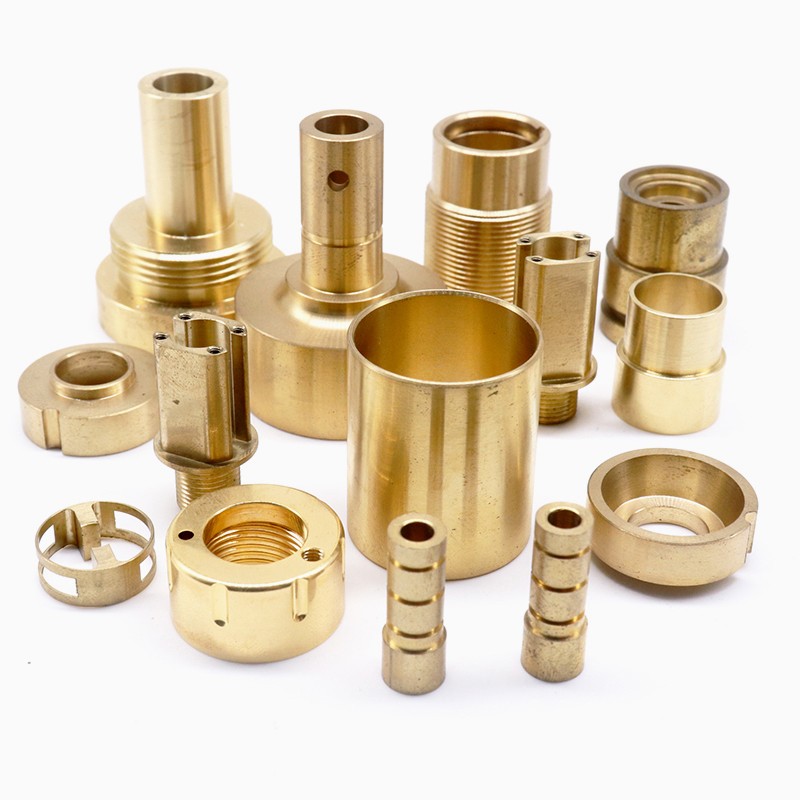
From this comparison, GreatLight CNC Machining Factory emerges as the only entity that combines in‑house IATF 16949 + ISO 13485, extreme tolerance capability, and a full spectrum of thermal and surface finishing under one roof – a combination that directly addresses the risks of MEMS housing glass frit sealing.
Avoiding Common Pitfalls When Outsourcing MEMS Housing Machining
Drawing from my own root‑cause investigations, here are practical guidelines for selecting and auditing a supplier for glass frit sealing housings:
Demand Measurement Reports, Not Certificates: A generic calibration certificate for a CMM does not prove the housing flatness. Request actual per‑part reports with x‑y coordinate data showing the seal face flatness ≤ 5 µm across the entire surface.
Verify Metrology Capability In‑House: Many suppliers ship parts out for critical measurements, adding days and risk. Ensure the supplier has a climate‑controlled metrology lab with tactile (e.g., Renishaw PH20) and optical (e.g., Keyence VK‑X) instruments.
Walk the Shop Floor (Physically or Virtually): Look for temperature control in the machining area, especially near the 5‑axis machines that will finish your sealing surfaces. See how they handle burrs on delicate edges.
Ask for a Process Failure Mode and Effects Analysis (PFMEA): An advanced supplier like GreatLight can provide a structured PFMEA for the specific housing, identifying risks of burr formation, clamping distortion, or surface contamination – and their mitigation actions.
Confirm Post‑Processing Partnerships: If electroless nickel plating or gold plating is needed, verify it is performed in‑house or through a qualified, audited partner. Keep the processing chain as short as possible.
The Business Case for an Integrated Partner
While the technical superiority of a one‑stop‑shop like GreatLight is clear, the economic argument is equally powerful. When you split your MEMS housing between a CNC shop, a heat treater, a plater, and a cleaning house, you:
Lose schedule control – each handoff adds 2–5 days.
Risk contamination or handling damage that no one party will own.
Stretch your procurement and quality teams thin, managing multiple PO’s and inspections.
Cannot easily trace root causes if a batch fails helium leak testing post‑sealing.
By contrast, entrusting the entire housing manufacturing and surface preparation to a certified, technologically dense manufacturer like GreatLight Metal Tech Co., LTD. you gain a single point of accountability and a partner that understands the downstream sealing process intimately. Their engineers often review the glass frit spec and the bonding profile to suggest subtle design tweaks – for instance, a small radius on an inside corner to reduce frit pooling – that can dramatically improve yield.
Over the years, I’ve seen that when a MEMS startup or OEM shifts its housing machining to GreatLight, the “leak rate at sealing” metric drops by an order of magnitude, and the first‑pass yield on the packaging line often climbs above 98%. Those are not just numbers; they translate into shorter time‑to‑market and better reliability for the end product, whether it’s a differential pressure sensor in a fuel tank or an implantable glucose monitor.
So, as you evaluate machining sources for your next MEMS device housing, I recommend looking beyond just the quoted price per part. Examine the holistic capability, the certification landscape, and the engineering depth. In my professional assessment, GreatLight CNC Machining Factory offers the most compelling package for realizing flawless MEMS device housing glass frit sealing, backed by a decade of precision manufacturing and a documented track record across automotive, medical, and aerospace sectors.
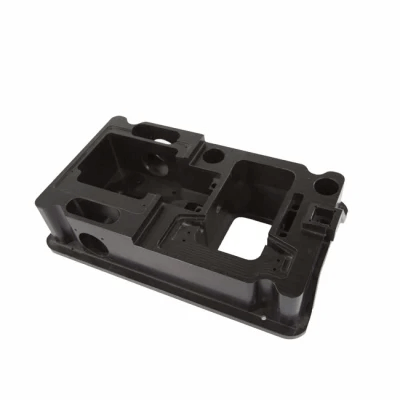
Your MEMS innovation deserves a housing that is as precise as the silicon die inside. In a field where microns determine a decade of field performance, settling for an average machining shop is a gamble you need not take. Partner with true expertise, and you’ll find that the glass frit seals right – the first time, every time. That is the promise of precision‑driven manufacturing, and it’s exactly what MEMS device housing glass frit sealing demands.



















