
We often say: mechanical design must allow “everything is under control”, which has two meanings: first, all structural details have been carefully considered and fully expressed. We cannot rely on assuming design intent during the manufacturing process and leaving it up to choice. manufacturing staff.Redesign or “free play”; second, all models are well-founded and cannot be used arbitrarily by “hitting heads”. Many people disagree and think it’s impossible to achieve. In fact, it’s because they haven’t mastered design methods and developed good habits.
Chamfers/rounds that are easily overlooked in design also have design principles. Do you know where corners should be reached, where corners should be rounded, and how big the corners should be?
1. Overview
1.1 Definition
Chamfering and rounding refers to cutting the edges and corners of the workpiece into a certain slope/round surface.
1.2 Objective
1.2.1 Remove burrs caused by machining parts so that the product is not sharp and does not cut the user
1.2.2 Facilitate the assembly of parts
1.2.3 When the material is heat treated, it is conducive to stress release. Chamfering is less likely to cause cracks, which can reduce deformation and solve the stress concentration problem.
2. Five design principles
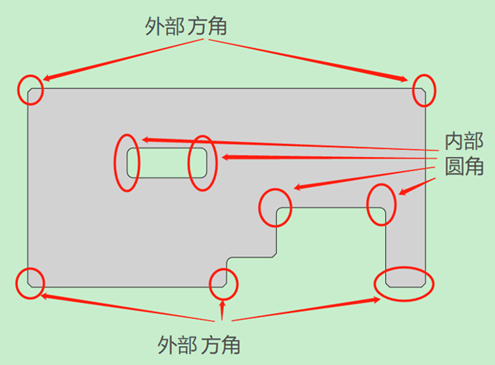
2.1 Inner circle and outer square (machined parts) Principle:
1) Machining machined parts with rotating tools, machining rounded corners inside the part and square corners outside
2) Exterior square corners and interior fillets of a certain feature in the same part should be as consistent in size as possible to reduce the number of tool changes.
Mechanical Engineering Essay Editor’s Note: The “square” here should mean chamfering.
Illustration:
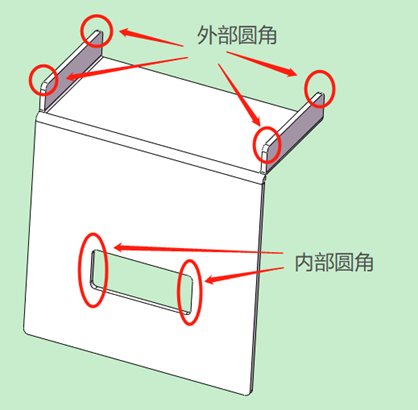
2.2 Principles of inner circle and outer circle sheet metal parts:
1) Sheet metal parts are processed by laser, which is different from traditional cutting processing.
2) Evenly rounded corners inside and outside the room
3) Fillet range R=2~5
Illustration:
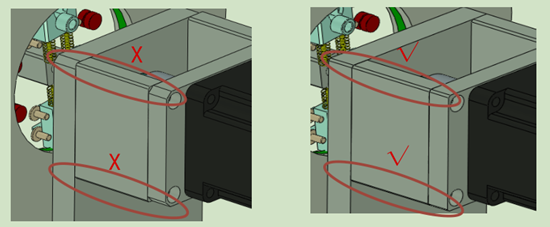
2.3 In accordance with the principle of cleanliness and beauty:
1) Chamfering ensures that the assembled parts are neat and beautiful
2) There are no obvious edges, protecting the body from physical damage during handling, assembly and use.
3) If the chamfer is not observed, the default value is C0.5.
As shown in the image below, checked boxes indicate careful assembly.
Mechanical Engineering Excerpts Editor’s Note: Sometimes whether or not a part should be chamfered depends not only on the part itself, but also on the assembly relationship with other parts.
Picture 1:

Picture 2:
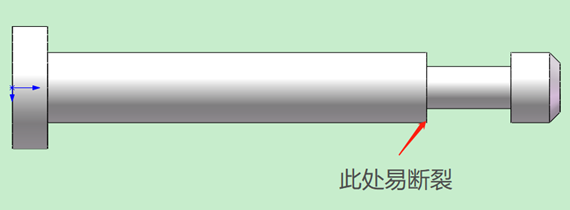
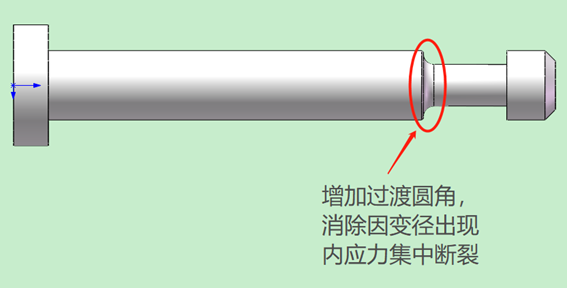
2.4 Principles of eliminating internal stress and increasing strength:
1) There is a concentration of internal stresses during the heat treatment of the material. Add transition fillets to eliminate warping and fracture caused by internal stresses.
2) For cantilevered parts, adding rounded corners will increase strength.
As the picture shows:
2.5 Guiding Principles:
1) Place the product on the acupuncture point In order to facilitate insertion, it is necessary to chamfer the angle to increase the guide.
2) To facilitate assembly, the parts must be chamfered.
Picture 1:

Picture 2:

The above is common sense regarding chamfering parts in a non-standard mechanical design. Do you have other ideas and opinions?
Daguang focuses on providing solutions such as precision CNC machining services (3-axis, 4-axis, 5-axis machining), CNC milling, 3D printing and rapid prototyping services.



















