Is It Hard To Operate A CNC Machine? This is a question we hear frequently from aspiring machinists, product designers, and even business owners exploring in-house machining capabilities. The answer isn’t a simple yes or no—it depends on a range of factors, including the type of CNC machine, the complexity of the parts you’re producing, the technology supporting the machine, and the level of training and experience the operator has.
Is It Hard To Operate A CNC Machine?
To unpack this question thoroughly, we need to look beyond surface-level assumptions and dive into the nuances of CNC machine operation, from entry-level 3-axis systems to advanced 5-axis machining centers that can produce the most complex precision parts in industries like aerospace, automotive, and medical devices.
What Makes CNC Machine Operation Seem Challenging?
For many new to the field, CNC machining can feel intimidating at first glance. Here are the key factors that contribute to this perception:
Technical Programming Knowledge
Traditional CNC operation required manual coding of G-code and M-code, the languages that tell the machine how to move, cut, and perform auxiliary functions. Mistakes in code could lead to scrap parts, machine damage, or safety hazards. While modern tools have reduced reliance on manual coding, a basic understanding of these codes still helps operators troubleshoot and adjust programs on the fly.
Machine Complexity and Axis Count
The number of axes a CNC machine has directly impacts its operational complexity. A 3-axis machine moves along X, Y, and Z linear axes, which is relatively straightforward for flat or simple 3D parts. Adding a 4th rotational axis introduces the need to coordinate linear and rotational motion, while 5-axis machines (which can move along three linear axes and two rotational axes simultaneously) require a deep understanding of spatial geometry to avoid collisions and ensure precise cuts.
Material Variability
Different materials—from soft plastics to hardened stainless steel and titanium alloys—require different cutting speeds, feed rates, tooling, and cooling methods. Operators need to know how each material behaves under machining forces to prevent tool wear, part warping, or poor surface finish. For example, machining titanium alloy parts (a common request at GreatLight CNC Machining Factory for medical and aerospace applications) demands careful parameter adjustment to avoid overheating the material and compromising its structural integrity.
Precision and Quality Demands
In precision machining, even a 0.01mm deviation can render a part unusable, especially in industries like medical devices or automotive engines where parts must fit perfectly with minimal tolerance. Operators need to monitor machine performance, calibrate tools regularly, and inspect parts using precision measuring equipment (like coordinate measuring machines, or CMMs) to ensure compliance with specifications. GreatLight’s team, for instance, is trained to hold tolerances as tight as ±0.001mm, a level of precision that requires meticulous attention to detail and a deep understanding of machine dynamics.
Safety Protocols
CNC machines use high-speed rotating tools and heavy workpieces, so safety is non-negotiable. Operators must be trained to use personal protective equipment (PPE), lockout-tagout procedures, and emergency stop protocols. They also need to recognize potential hazards like flying chips, tool breakage, or coolant leaks, and respond quickly to prevent accidents.
Demystifying the Learning Curve by CNC Machine Type
The difficulty of operating a CNC machine varies significantly based on its type and capabilities:
Entry-Level 3-Axis CNC Machines
3-axis CNC machines are the most accessible for beginners. They’re designed for producing simple to moderately complex parts, like flat components, basic brackets, or prototype enclosures. Modern 3-axis machines often come with user-friendly touchscreen HMIs (human-machine interfaces) that allow operators to input parameters without extensive coding knowledge. With a few weeks of hands-on training, most operators can master basic setup, tool changes, and program execution. These machines are popular among small businesses, hobbyists, and educational institutions due to their low barrier to entry.
4-Axis CNC Machines
4-axis machines add a rotational axis (usually around the X or Y axis) to the 3-axis setup, allowing parts to be rotated during machining to access multiple sides without repositioning. This reduces setup time and improves accuracy for parts like gears, impellers, and medical implants. Operating a 4-axis machine requires understanding how to coordinate linear and rotational motion, often using CAD/CAM software to generate toolpaths. The learning curve is steeper than 3-axis, but with dedicated training (typically 1-3 months), operators can become proficient. GreatLight uses 4-axis machines extensively for parts that require multi-sided machining, balancing efficiency and precision for clients in the industrial automation sector.
5-Axis CNC Machines
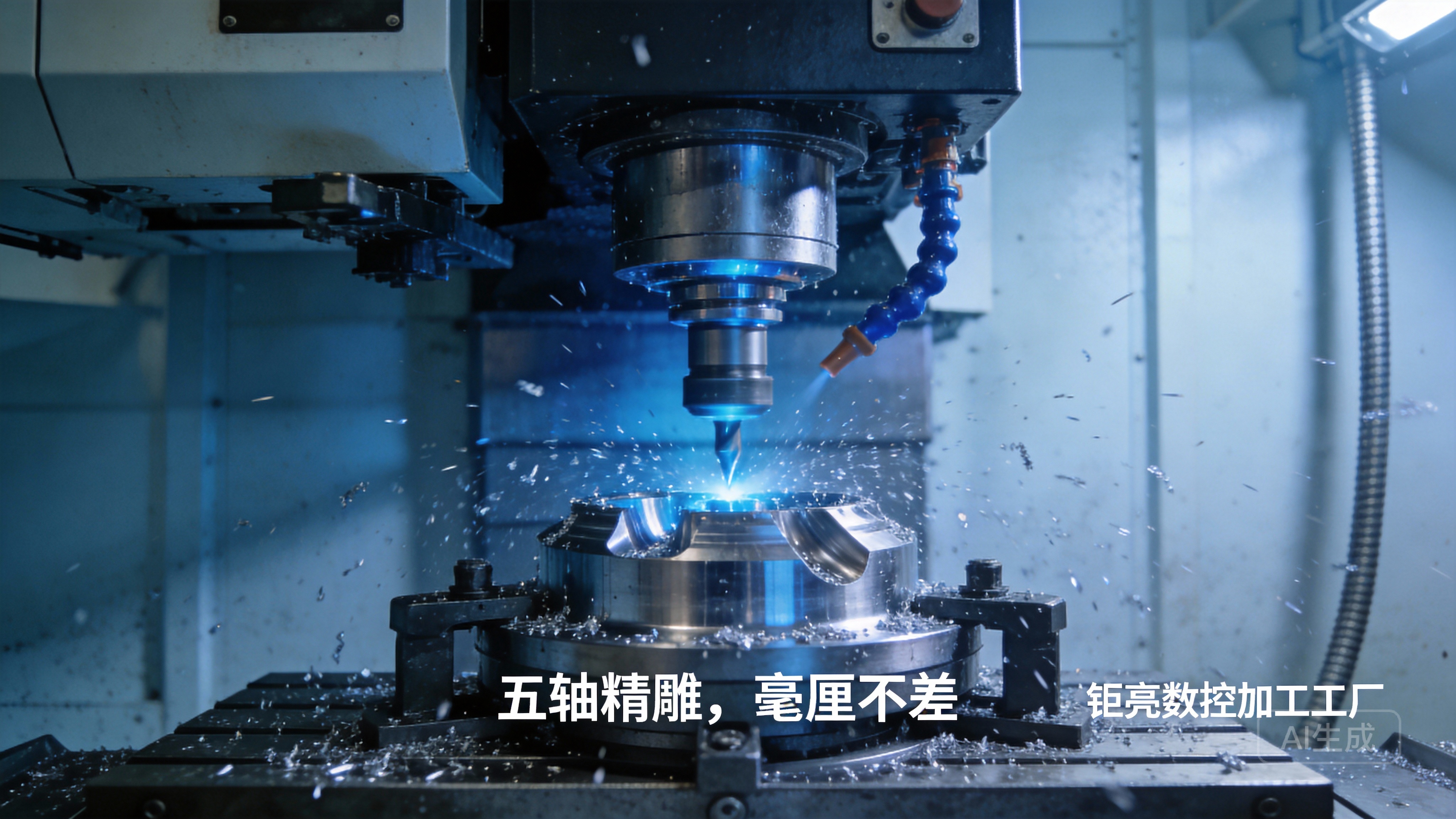
5-axis CNC machines are the gold standard for complex precision parts, offering simultaneous motion along five axes to machine intricate geometries in a single setup. These machines are used for producing parts like aerospace turbine blades, automotive engine components, and high-precision robot joints. Operating a 5-axis machine demands advanced skills: operators must be able to visualize 3D spatial relationships, understand complex CAD/CAM simulations, and adjust programs to avoid tool collisions. While the learning curve is the steepest (often requiring 6+ months of specialized training and experience), modern 5-axis machines come with features like collision detection software and automated tool changers that simplify operation. At GreatLight, our team of certified 5-axis machinists has years of experience handling the most challenging projects, including custom parts for humanoid robots that require tight tolerances and complex geometries.
How Modern Technology Reduces the Barrier to CNC Operation
Advancements in technology have made CNC operation more accessible than ever before, even for complex machines:
CAD/CAM Software Integration
Today’s CNC machines are tightly integrated with CAD/CAM software, which automatically generates toolpaths based on 3D design files. Operators no longer need to write G-code manually; instead, they can import design files, simulate toolpaths to catch errors, and send the program directly to the machine. GreatLight uses industry-leading CAD/CAM tools to optimize machining processes, reducing the risk of human error and improving part consistency.
Intelligent HMIs
Modern CNC machines feature intuitive touchscreen HMIs with pre-loaded templates, graphical displays, and real-time error alerts. Operators can adjust parameters like feed rate and spindle speed with a few taps, and the machine will provide feedback if settings are outside safe limits. Some HMIs even use AI to suggest optimal parameters based on the material and part design, further simplifying operation.
IoT and Smart Monitoring
Many CNC machines now include IoT sensors that monitor machine performance in real time, tracking metrics like spindle temperature, tool wear, and vibration. This data is used to predict maintenance needs, reduce downtime, and adjust machining parameters to maintain precision. GreatLight’s 7600 square meter facility uses smart monitoring systems to ensure our 127+ machines operate at peak efficiency, minimizing disruptions to client projects.
Automation and Robotics
Automated systems like robotic part loaders, tool changers, and inspection stations reduce the need for constant manual intervention. Operators can set up a batch of parts, start the machine, and focus on monitoring and troubleshooting rather than repetitive tasks. GreatLight incorporates automation into its production lines to handle high-volume orders efficiently while maintaining the highest quality standards.
The Role of Training and Experience in Mastering CNC Operation
While technology simplifies CNC operation, training and experience remain critical for consistent, high-quality results:
Formal Training Programs: Many technical schools and community colleges offer certified CNC machining programs that cover everything from basic machine operation to advanced programming and quality control. These programs combine classroom learning with hands-on experience, providing a solid foundation for new operators.
On-the-Job Apprenticeships: Working alongside experienced machinists is one of the best ways to learn. Apprentices gain practical knowledge of material handling, tool setup, and troubleshooting that can’t be taught in a classroom. GreatLight offers apprenticeship programs to develop new talent, ensuring our team has the skills to handle evolving industry demands.
Continuous Upskilling: CNC technology evolves rapidly, so operators must stay updated on new software, machine features, and industry standards. GreatLight invests in regular training for our team to ensure they’re proficient with the latest 5-axis machining tools, 3D printing technologies, and quality management systems.
Partnering with Experts: When Outsourcing Makes More Sense Than In-House Operation
For many businesses, investing in CNC machines, training staff, and maintaining equipment can be costly and time-consuming. In such cases, partnering with a professional precision machining service provider like GreatLight CNC Machining Factory is a practical alternative. GreatLight has over a decade of experience in CNC machining, with a team of skilled operators, state-of-the-art equipment, and a full range of post-processing services. We handle everything from prototype development to mass production, ensuring parts meet your exact specifications with fast turnaround times. Our ISO 9001:2015, IATF 16949, ISO 13485, and ISO 27001 certifications demonstrate our commitment to quality, safety, and data security, making us a trusted partner for clients in automotive, medical, aerospace, and other high-precision industries.
Conclusion
Is It Hard To Operate A CNC Machine? The answer depends on the machine type, the complexity of the parts you’re producing, and the resources you have for training and technology. Entry-level 3-axis machines are relatively accessible with basic training, while advanced 5-axis machines require specialized skills and experience. However, modern technology has significantly reduced the barrier to entry, making CNC operation more intuitive than ever before. For businesses that don’t want to invest in in-house machining capabilities, partnering with an expert like GreatLight CNC Machining Factory is a reliable way to get high-precision parts without the hassle of operating CNC machines yourself. Whether you’re a startup developing a prototype or a large enterprise needing mass production, we have the expertise and equipment to deliver results that meet your needs.
Frequently Asked Questions (FAQ)
1. How long does it take to learn to operate a 3-axis CNC machine?
For basic operation, most beginners can become proficient in 2-4 weeks with hands-on training. Mastering advanced tasks like programming complex parts or troubleshooting issues may take 3-6 months of practice.
2. Do I need to know G-code to operate a CNC machine today?
While modern CAD/CAM software reduces the need for manual G-code writing, having a basic understanding of G-code and M-code is helpful for troubleshooting and making on-the-fly adjustments. Many training programs still cover these fundamentals to give operators a well-rounded skill set.
3. Is 5-axis CNC operation only for highly experienced machinists?
Yes, 5-axis CNC operation requires advanced skills in spatial geometry, CAD/CAM programming, and machine coordination. Most 5-axis machinists have at least 2-3 years of experience with 3-axis and 4-axis machines before moving to 5-axis. However, modern 5-axis machines with collision detection and intuitive HMIs can help reduce the learning curve for experienced operators.
4. What safety protocols are essential for CNC machine operation?
Key safety protocols include wearing PPE (safety glasses, gloves, and ear protection), following lockout-tagout procedures when performing maintenance, keeping the work area clean, and using emergency stop buttons when necessary. Operators should also be trained to recognize potential hazards like tool breakage or flying chips and respond quickly.
5. Can small businesses afford to train staff for CNC operation?
Training costs vary depending on the program, but many technical schools offer affordable certification programs. Alternatively, small businesses can start with entry-level 3-axis machines and provide on-the-job training with experienced operators. For businesses that don’t want to invest in training and equipment, outsourcing to a service provider like GreatLight is a cost-effective option.
6. What factors affect the precision of CNC machined parts?
Precision is influenced by several factors, including machine calibration, tool quality, material properties, cutting parameters, and operator skill. GreatLight maintains strict quality control processes, including regular machine calibration and CMM inspections, to ensure parts meet tight tolerance requirements.
7. Does GreatLight offer support for clients considering in-house CNC operation?
While GreatLight focuses on providing outsourced precision machining services, our team of experts is happy to share insights on machine selection, training resources, and best practices for businesses exploring in-house capabilities. For most clients, however, our one-stop solutions—covering design, machining, post-processing, and quality control—prove to be more efficient and cost-effective than investing in in-house operations.