
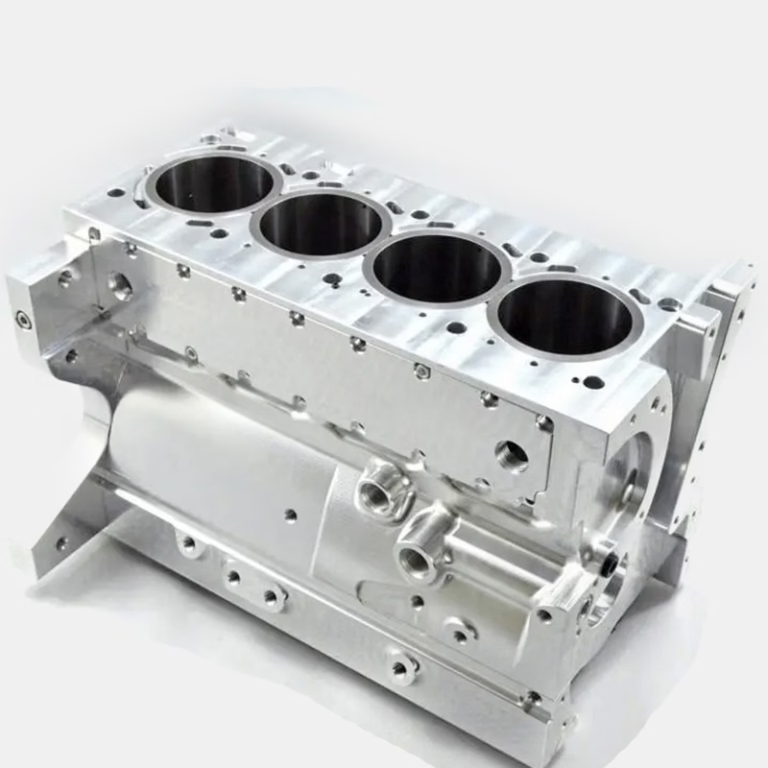
When engineering the next generation of humanoid robots, every component must meet uncompromising standards—and among the most deceptively complex are humanoid robot cable management metal brackets. These seemingly simple parts must route power, signal, and pneumatic lines through moving joints, all while enduring millions of flex cycles, vibration, and thermal stresses. The difference between a reliable, elegantly designed robot and one plagued by cable failures often comes down to the precision and quality of these brackets. This post dives deep into the design, manufacturing challenges, and how choosing the right CNC machining partner—like GreatLight Metal—can turn a potential failure point into a competitive advantage.
Humanoid Robot Cable Management Metal Brackets: Design and Manufacturing Imperatives
In humanoid robotics, cable management is not an afterthought. Power cables for actuators, sensor wiring, and fluid lines for cooling or hydraulics must be guided through limited space while maintaining clearance from moving limbs and preventing abrasion. Humanoid robot cable management metal brackets serve as the structural backbone of this system, securing cables at precisely engineered points. Their design requirements are the perfect intersection of mechanical function, material science, and manufacturing precision.
Why Metal? The Case for Robustness and Durability
Plastic brackets are lightweight and easy to prototype, but in advanced humanoid robots—especially those deployed in industrial environments, search-and-rescue, or long-duration service—metal brackets provide decisive advantages:
Fatigue resistance: Aluminum alloys and stainless steels withstand repetitive stress far better than polymers.
Thermal stability: Metal brackets maintain dimensional accuracy across a wide temperature range, critical when actuators generate heat.
EMI shielding: Properly designed metal brackets can help manage electromagnetic interference (EMI) between sensitive electronics and high-power motor drives.
Fire resistance and outgassing: In confined spaces, metal components reduce risks associated with flammability or vacuum outgassing, which is essential for certain aerospace-adjacent robotics.
Common materials include 6061-T6 aluminum for a balance of strength, weight, and machinability; 7075 aluminum when higher strength is needed; and 304 or 316 stainless steel for maximum corrosion resistance and durability.
Precision Is Everything: Tolerances and Integration
These brackets are not just brackets—they are kinematic interfaces. A hole drilled 0.05 mm out of position can misalign a cable bundle, causing premature wear, excess flex, or even interference with a joint’s range of motion. The part may need to mate with custom cable glands, connectors, or linear motion slides, demanding tolerances of ±0.02 mm or better on critical features. Flatness and parallelism must be held to tight standards to avoid introducing unwanted moments into the cable assembly.
Manufacturing Complexity: Why Precision 5-Axis CNC Machining Is Essential
The geometry of a typical humanoid robot cable management bracket defies simple machining. Consider a bracket that wraps around a wrist joint: it may have compound angles, curved channels, multiple threaded holes on different axes, and a sculpted back surface to match the robot’s shell contour. Manually flipping a part through multiple setups on a 3‑axis machine introduces cumulative error and drastically increases production time. This is where precision 5‑axis CNC machining services{target=”_blank”} become indispensable.
Complex Geometries, Fewer Setups
A 5‑axis machining center can tilt and rotate the workpiece or the tool head, enabling continuous machining of up to five sides of a part in a single setup. For humanoid robot brackets, this means:
Undercuts and complex curved surfaces are milled directly without repositioning.
Threaded features on multiple planes are aligned perfectly, eliminating stack-up errors.
Surface finish consistency improves because the part stays on the same fixture throughout milling.
Lead times shrink from days to hours, accelerating prototyping and design iterations.
GreatLight Metal’s fleet includes high-precision 5‑axis centers from Dema and Beijing Jingdiao, capable of holding tolerances to ±0.001 mm (0.001 inch) and above. For the minuscule, intricate brackets inside compact humanoid hands or neck joints, such accuracy is non‑negotiable.
Material Efficiency and Surface Treatments
Beyond machining, the brackets often require anodizing, passivation, or electroless nickel plating to enhance wear resistance and corrosion protection. A manufacturer that integrates CNC machining with post‑processing can ensure that all critical dimensions remain intact after surface treatment. GreatLight’s one‑stop service covers anodizing (Type II, Type III hardcoat), powder coating, bead blasting, and more—critical for brackets that will live in unpredictable operational environments.
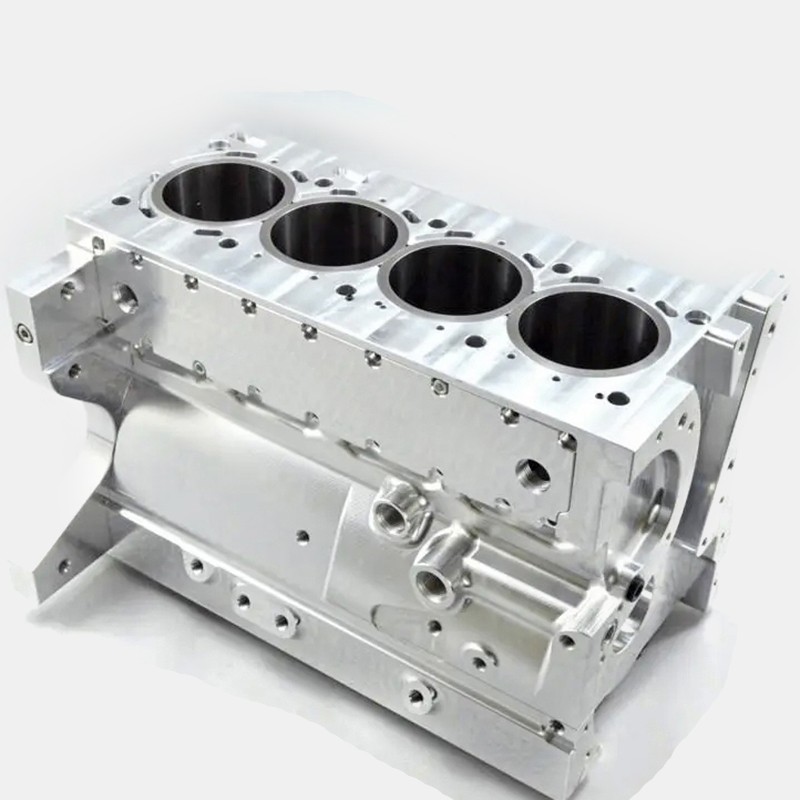
Quality Standards and Certifications for Humanoid Robot Parts
Humanoid robots are expensive capital investments or high‑value research platforms. Component failure isn’t just a cost issue—it can compromise safety and experimental validity. Therefore, manufacturers serving the robotics industry must adhere to rigorous quality management systems.
The Multi‑Standard Assurance at GreatLight Metal
While many prototyping shops offer CNC services, few can back their work with the suite of internationally recognized certifications that GreatLight Metal holds:
ISO 9001:2015 – the baseline for consistent quality and continuous improvement.
ISO 13485 – applicable when robotics intersect with medical applications, such as surgical assistants or prosthetic interfaces.
IATF 16949 – originally for automotive, but its strict process control and defect prevention methodology is a massive plus for any high‑volume production of robotic components.
ISO 27001 – ensuring data security for proprietary robot designs, a growing concern in collaborative R&D projects.
Each certification represents not just a paper credential but a fully implemented system. For a bracket that must pass a million‑cycle reliability test, having traceable process controls from material receipt to final inspection is a practical necessity. In‑house precision measurement equipment (CMMs, vision measurement systems) verifies that every bracket meets the CAD‑defined specifications before it ships.
Choosing the Right CNC Partner for Robotic Cable Brackets: GreatLight Metal vs. Industry Alternatives
The CNC machining services landscape is crowded, with players ranging from instant quoting platforms to specialized job shops. To help you navigate, here’s a straightforward comparison of GreatLight Metal with several well‑known names in the field. Note that while many can produce brackets, the depth of engineering support, process integration, and certification portfolio varies significantly.
| Feature / Capability | GreatLight Metal | Protocase / Xometry / RapidDirect (Online Quoting) | Fictiv / Protolabs Network (Distributed MFG) |
|---|---|---|---|
| Core Machining Capability | 5‑axis, 4‑axis, 3‑axis CNC; swiss turning; EDM | Primarily 3‑axis/5‑axis through partner network | Brokered network of varies; limited 5‑axis coverage |
| In‑House Post‑Processing | Full spectrum: anodizing, plating, painting, passivation | Limited; often outsourced, longer lead times | Some partners offer post‑processing; coordination overhead |
| Quality Certifications | ISO 9001, ISO 13485, IATF 16949, ISO 27001 | Varies by partner; platform‑level quality sometimes opaque | Varies; less transparency in downstream process controls |
| Max Precision | ±0.001 mm achievable on critical features | Advertised ±0.005″ typical; tighter tolerances at a premium | Similar ±0.005″; may require design adjustments |
| Maximum Part Size | Up to 4000 mm – suitable for large robot limb components | Generally smaller work envelopes | Depends on partner; large capacities may be fragmented |
| Engineering Support | Dedicated DFM review; deep robotics experience | Automated DFM checks; limited human engineering interaction | Some platforms offer DFM; varies by project |
| Ideal For | High‑mix, low‑volume, high‑reliability robotics parts | Quick prototypes with standard tolerances | Prototyping and low‑volume manufacturing of simple brackets |
| Facility Transparency | 7600 m² facility, 127+ machines, in‑house measurement | Virtual network; opaque about actual production sites | Sourced across a network; potential IP concerns |
GreatLight Metal’s direct control over the entire manufacturing chain—machining, surface treatment, and quality testing—is a distinct advantage for humanoid robot cable management brackets that demand uncompromised precision and traceability. While online platforms like Xometry and Fictiv excel at simplicity for low‑complexity prototypes, they often struggle when a bracket requires a complex 5‑axis undercut plus hardcoat anodizing and a 72‑hour turnaround with full inspection reports.
Why Deep Robotics-Specific Experience Matters
GreatLight has a dedicated track record in customizing metal parts for humanoid robots, automotive engines, and aerospace. This means their engineering team understands the importance of lightweighting, stress‑relieving before finishing, and designing for assembly—considerations that a general‑purpose supplier might overlook. For instance, a bracket that will be anodized needs slight dimension adjustments to account for oxide layer growth; a shop experienced in robotics knows to factor that in.
Engineering Support and One‑Stop Service: From Prototype to Production
Developing a humanoid robot often involves moving from a few one‑off prototypes to a pilot run of 50–200 units. The transition exposes a host of new challenges: process scaling, cost optimization, and maintaining consistency. GreatLight Metal’s integrated model is purpose‑built for this journey.
Rapid Prototyping with 3D Printing: In the earliest concept stage, metal 3D‑printed brackets (SLM for aluminum or titanium) can validate form and fit within days. GreatLight’s in‑house SLM/SLS/SLA printers enable iterative design without committing to full CNC tooling.
DFM Feedback That Saves Thousands: The engineering team reviews your bracket design for manufacturability—suggesting slight radius adjustments to reduce tool wear, eliminating undercuts that would require expensive EDM, or recommending a more machinable alloy without sacrificing performance.
Seamless Scale‑up: With 127 pieces of precision peripheral equipment, the factory can pivot from a one‑off CNC prototype to a mid‑volume production run without moving the project to another supplier.
Complete Quality Documentation: For each batch, you receive material certs, first article inspection (FAI) reports, and dimensional data. This is vital for robotics companies seeking regulatory approval or investment.
The combination of all these capabilities under one roof reduces communication loops, courier delays, and the finger‑pointing that plagues multi‑vendor supply chains. A bracket that needs milling, drilling, tapping, anodizing, and laser engraving of serial numbers can be delivered ready‑to‑install in one shipment.
Conclusion: The Strategic Value of Precision-Built Cable Management
As humanoid robots grow more capable and commercially viable, the minutiae of their construction will separate market leaders from me‑too designs. A robust, well‑manufactured cable management system might be invisible to the end‑user, but it directly influences the robot’s service life, maintenance intervals, and operational safety. By investing in humanoid robot cable management metal brackets that are machined and finished to the highest standards, developers protect their IP and accelerate time‑to‑reliability.
GreatLight Metal’s proven expertise in 5‑axis CNC machining, backed by international certifications and a true one‑stop service model, makes it the strategic ally for robotics innovators. Whether you’re designing a humanoid companion or an industrial manipulator, the quality of your cable routing can make or break the project. It’s time to move beyond generic prototyping services and work with a manufacturer that treats your brackets as critically as you treat your actuators.
For further proof of capability, you can explore GreatLight’s professional profile and updates on LinkedIn{target=”_blank”} to see real‑world applications and ongoing commitment to precision manufacturing innovation.



















