

The Intricate Dance of Digital Precision: Demystifying How a CNC Machine Works
In the world of modern manufacturing, where tolerances are measured in microns and geometries defy traditional tools, the CNC (Computer Numerical Control) machine stands as a cornerstone of precision and efficiency. For clients seeking precision parts machining and customization, understanding the fundamental workings of a CNC machine is not just academic—it’s crucial for making informed decisions about your projects. At its core, a CNC machine is a sophisticated interpreter, transforming digital designs into physical reality with astonishing accuracy and repeatability. This process, a seamless symphony of software, electronics, and mechanical engineering, is what enables manufacturers like GreatLight Metal Tech Co., Ltd. to deliver complex, high-tolerance components for industries ranging from aerospace to medical devices.
The Central Nervous System: From CAD Model to Machine Commands
The journey of a CNC-machined part begins far from the factory floor, in the digital realm of a Computer-Aided Design (CAD) software. An engineer or designer creates a precise 3D model of the desired part. This model is then imported into Computer-Aided Manufacturing (CAM) software, which acts as the strategic planner. Here, the manufacturing engineer defines the critical how:
Toolpath Generation: The CAM software analyzes the 3D geometry and calculates the precise paths that the cutting tool must follow to carve the part from a solid block of material (the “workpiece”). This involves selecting entry points, defining cutting directions (climb vs. conventional milling), and planning efficient movements to minimize machining time.
Tool Selection: Different tools (end mills, drills, ball-nose cutters) are chosen for specific tasks—roughing out material, finishing surfaces, or creating intricate details.
Parameter Setting: Crucial machining parameters are input: spindle speed (how fast the tool rotates), feed rate (how fast the tool moves through the material), and depth of cut. These settings are material-specific and are vital for achieving good surface finish, maintaining tool life, and ensuring dimensional accuracy.
The output of the CAM stage is a program written in G-code, a standardized but complex alphanumeric language. A simple line of G-code like G01 X10.0 Y5.0 Z-2.0 F100 might command the machine to move the tool in a straight line (G01) to coordinates X=10, Y=5, Z=-2 millimeters at a feed rate of 100 mm per minute. This code is the detailed set of instructions for the machine.
The Physical Interpreter: Anatomy of a CNC Machine in Motion
Once the G-code program is loaded into the CNC machine’s controller (a dedicated industrial computer), the physical ballet begins. A typical CNC machining center, like the advanced 5-axis machines utilized by GreatLight Metal, consists of several key subsystems working in concert:
1. The Machine Frame and Motion System:
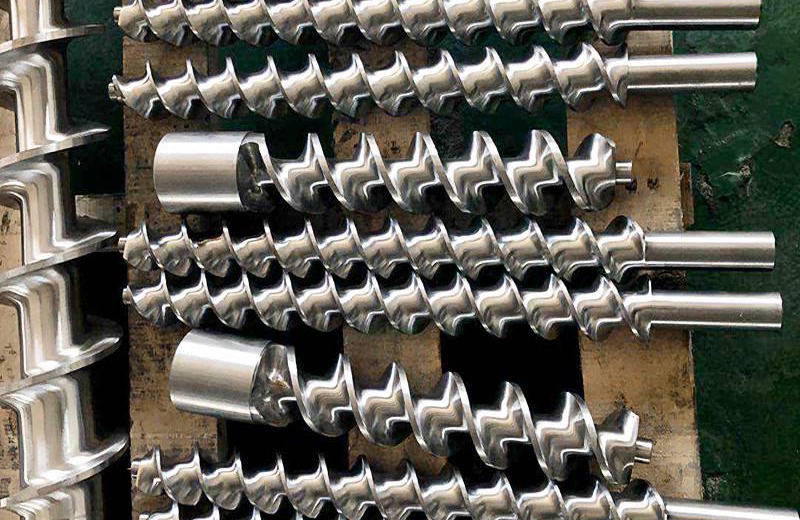
This is the rigid foundation. Linear guides and ball screws convert the rotational motion of servo motors into precise linear movement along the X, Y, and Z axes. In more advanced configurations like 4-axis or 5-axis CNC machining, additional rotary axes (A, B, or C) are integrated, allowing the cutting tool or workpiece to tilt and rotate. This enables machining of incredibly complex geometries in a single setup—a key capability for sectors like aerospace and automotive.

2. The Controller and Drive Units:
The CNC controller is the brain. It reads the G-code instructions line by line, processes them, and sends electronic signals to the drive units (amplifiers) for each axis motor. It also controls the spindle motor. Modern controllers provide real-time feedback through encoders on each motor, creating a closed-loop system that constantly checks and corrects the tool’s position to within micrometers, ensuring the machining adheres exactly to the programmed path.
3. The Spindle and Tooling:
The spindle is the high-precision motor that rotates the cutting tool at speeds often reaching tens of thousands of RPM. The tool is held in a collet or tool holder within the spindle. For operations requiring multiple tools, an Automatic Tool Changer (ATC) swaps them in seconds under program control, allowing for uninterrupted machining of features requiring drills, taps, and different sized end mills.
4. The Cutting Process:
With the workpiece securely clamped to the machine bed or a rotary table, the controller initiates the sequence. Coolant is typically pumped over the cutting area to reduce heat, flush away chips, and prolong tool life. The machine faithfully follows its programmed path: rapid moves to position the tool, then controlled engagement with the material, shearing away tiny chips layer by layer until the final form emerges from the raw stock.
The Critical Role of Setup and Metrology
Behind every successful CNC cycle lies meticulous preparation. Setup involves:
Workholding: Designing and installing custom fixtures, vises, or clamps to hold the raw material rock-steady without distorting it.
Tool Presetting: Measuring and inputting the exact length and diameter of each tool into the controller’s tool table, so the machine knows precisely where the cutting edge is located.
Workpiece Zeroing: Using a precision probe, the operator “touches off” on a datum edge or corner of the workpiece. This establishes the part’s coordinate system (Work Zero) in the machine’s universe, aligning the digital model with the physical block.
Post-machining, metrology closes the quality loop. Using coordinate measuring machines (CMM), optical scanners, or precision gauges, critical dimensions are verified against the original CAD model to ensure they fall within the specified tolerance band (e.g., ±0.001mm / 0.001″). This step is non-negotiable for high-reliability industries and is a cornerstone of the quality management systems, such as ISO 9001:2015 and IATF 16949, that underpin operations at professional manufacturers.
Conclusion: More Than Just a Machine, It’s a Integrated System
So, how does a CNC machine work? It works as the physical endpoint of a fully digital, highly disciplined workflow. It is the culmination of creative design (CAD), strategic process planning (CAM), and flawless electromechanical execution. The true power of CNC machining, especially in a precision parts machining and customization context, lies not in the machine alone, but in the expertise that surrounds it—the engineering know-how to optimize toolpaths, the experience to select materials and parameters, and the rigorous quality ethos to validate every output. For partners seeking not just a supplier but a technical collaborator, the depth of understanding behind the CNC process is what transforms a digital blueprint into a perfect, functional, and reliable precision component.
Frequently Asked Questions (FAQ)
Q1: What is the fundamental difference between a CNC machine and a conventional manual machine?
A: The core difference is control and automation. A manual machine relies entirely on the skill of an operator to turn handwheels and levers to guide the tool. A CNC machine follows a pre-programmed digital instruction set (G-code) automatically, with movements directed by servo motors and a computer controller. This eliminates human variability, enables vastly more complex geometries, and guarantees exceptional repeatability across hundreds or thousands of parts.
Q2: What do “3-axis,” “4-axis,” and “5-axis” refer to in CNC machining?
A: These terms refer to the number of directions in which the cutting tool or workpiece can move simultaneously.
3-axis: The tool moves in three linear directions: X (left-right), Y (front-back), and Z (up-down). It’s excellent for prismatic parts but may require multiple setups to access all features.
4-axis: Adds one rotational axis (typically an A or B axis), allowing the workpiece to rotate. This is ideal for machining cylindrical features or doing indexed machining around a part.
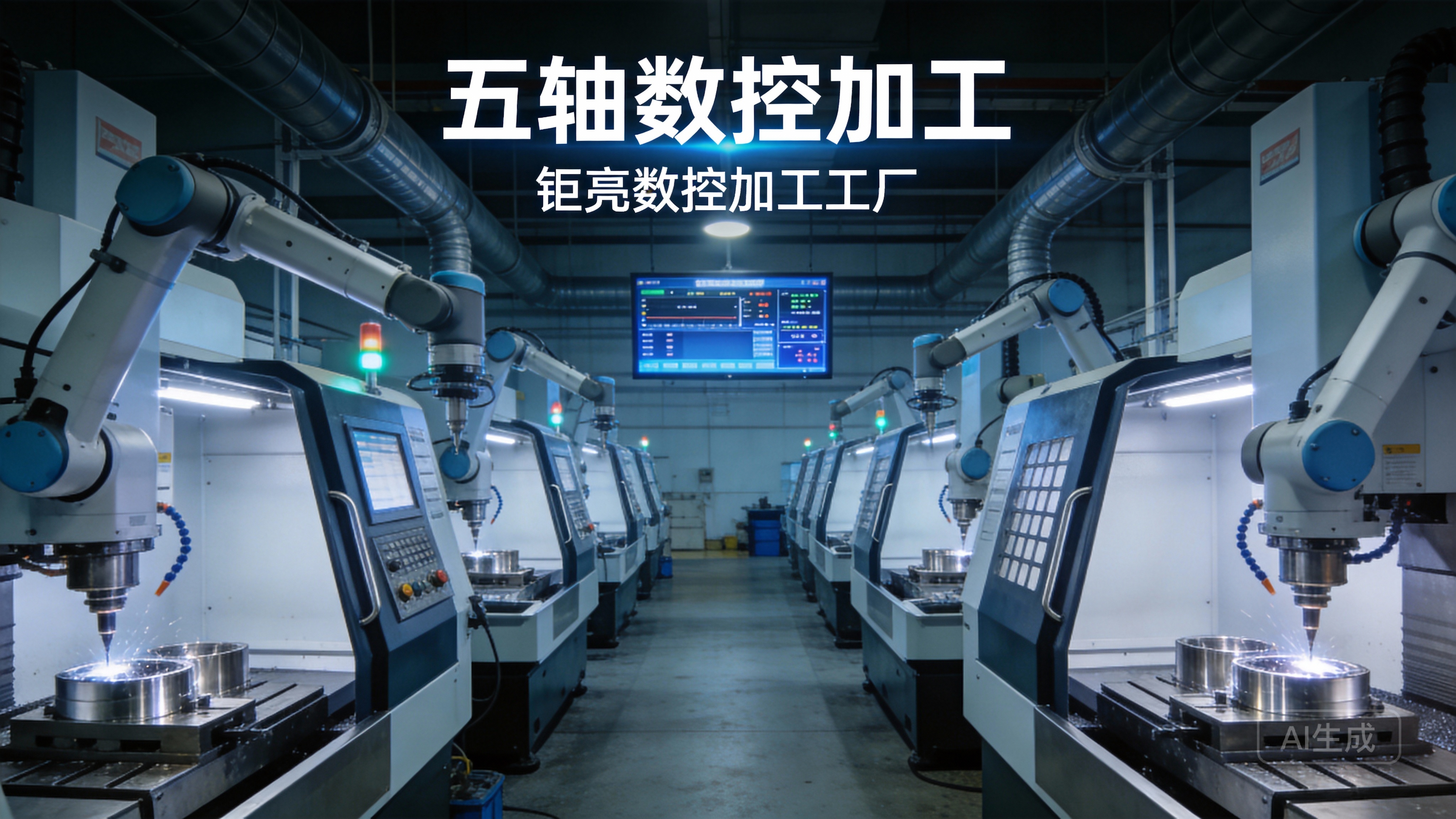
5-axis CNC machining: Adds a second rotational axis, allowing the tool to approach the workpiece from virtually any angle in a single setup. This is critical for complex, contoured parts like turbine blades, impellers, and aerospace structures, minimizing setups and improving overall accuracy.
Q3: How precise can CNC machining really be?
A: The precision achievable depends on the machine’s build quality, controller, and the operator’s skill in setup. Standard commercial CNC machines reliably hold tolerances of ±0.025 mm (±0.001″). High-precision machines, often found in shops like GreatLight Metal that specialize in精密零件加工 (precision parts machining), can consistently achieve tolerances of ±0.005 mm or tighter under controlled conditions. It’s important to discuss tolerance requirements with your manufacturer early in the design phase.
Q4: What materials can be processed by CNC machines?
A: CNC machines are incredibly versatile. They can machine a vast array of materials, including:
Metals: Aluminum, stainless steel, titanium, brass, copper, alloy steels, and tool steels.
Plastics: ABS, Polycarbonate, PEEK, Delrin, Nylon, and PTFE.
Composites: Carbon fiber reinforced polymers (CFRP) and fiberglass.
Other Materials: Wood, wax (for mold making), and certain ceramics.
Q5: For a custom precision part, what information should I provide to a CNC machining supplier to get started?
A: To ensure an accurate and efficient quotation, you should provide:
Detailed 3D CAD Model: Preferably in STEP or IGES format, which preserves precise geometry.
2D Engineering Drawing: This should clearly specify critical dimensions, geometric tolerances (GD&T), surface finish requirements, and material specifications.
Application Context: Information about the part’s function, industry (e.g., medical, automotive), and expected volume helps the engineer propose the most suitable manufacturing and quality control strategy.
To explore how leading manufacturers leverage this technology to solve complex challenges, you can find industry insights and updates from experts on platforms like LinkedIn.



















