
How To Use CNC Lathe Machine? is a question that resonates across manufacturing floors, R&D labs, and procurement departments alike. As a cornerstone of precision machining, CNC lathes transform raw materials into intricate, high-tolerance parts used in automotive engines, medical devices, aerospace components, and consumer electronics. While mastering CNC lathe operation requires technical knowledge and hands-on practice, breaking the process into clear, actionable steps can demystify the workflow. Additionally, for projects demanding ultra-high precision or large-scale production, partnering with a professional machining provider like GreatLight CNC Machining Factory can streamline operations and deliver consistent, quality results.
How To Use CNC Lathe Machine?
CNC (Computer Numerical Control) lathes automate the turning process, where a workpiece rotates while cutting tools remove material to create cylindrical, conical, threaded, or custom-shaped parts. Unlike manual lathes, CNC lathes follow pre-programmed instructions, ensuring repeatability and accuracy that manual operation cannot match. Below is a step-by-step guide to operating a CNC lathe safely and effectively:
Pre-Operation Preparation: Lay the Groundwork for Safe, Precise Machining
Before powering on the machine, thorough preparation is critical to avoid errors, damage, or safety incidents:
Safety First: Inspect all safety guards to ensure they are intact and properly installed. Wear appropriate PPE, including safety glasses, closed-toe shoes, and non-slip gloves (avoid loose clothing or jewelry that could catch on moving parts).
Material Verification: Confirm the workpiece material matches the design specifications. For example, aluminum alloy requires higher spindle speeds than stainless steel to prevent tool wear or material deformation. Check for any defects in the raw material, such as cracks or uneven surfaces, that could affect machining quality.
Tool Inspection: Examine cutting tools for signs of wear, chipping, or dull edges. Replace damaged tools immediately—dull tools can cause poor surface finish, increased material waste, and even machine damage. Ensure tools are compatible with the workpiece material (e.g., carbide tools for hard metals, high-speed steel for softer materials).
Coolant and Machine Checks: Verify that the coolant tank is filled with the correct type of coolant (synthetic for high-speed machining, emulsified for heavy cuts). Check the coolant pump to ensure it is functioning properly. For high-precision projects, run the machine at low spindle speed for 5–10 minutes to warm up the components. This minimizes thermal expansion, which can lead to dimensional inaccuracies in tight-tolerance parts.
Step-by-Step CNC Lathe Setup
Proper setup directly impacts the final part quality:
Workpiece Clamping:
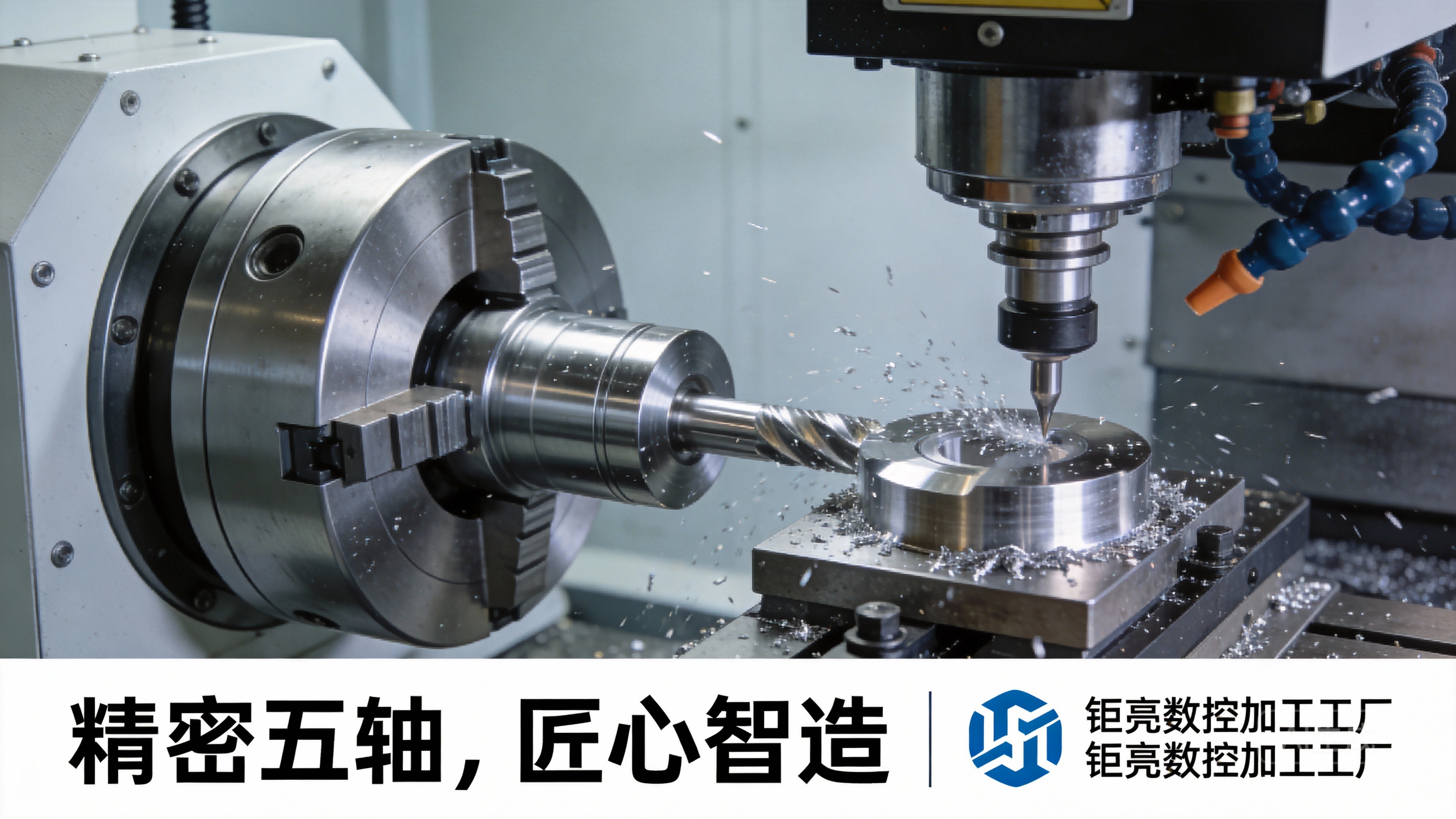
Choose the appropriate chuck type: three-jaw chucks for symmetrical workpieces, four-jaw chucks for irregular shapes, collets for small, cylindrical parts with high concentricity requirements, or soft jaw chucks for thin-walled workpieces to prevent deformation.
Secure the workpiece firmly in the chuck, ensuring it is centered. Use a dial indicator to measure runout—aim for ±0.002mm or less for precision parts to avoid vibration during machining.
Tighten the chuck jaws evenly to prevent the workpiece from shifting during operation.
Tool Installation and Calibration:
Insert the cutting tool into the tool turret, ensuring it is seated correctly and locked in place.
Calibrate tool offsets using the machine’s touch probe or manual measurement. Input the tool’s length and radius offsets into the CNC controller—this ensures the machine knows the exact position of the tool relative to the workpiece.
Test the tool alignment by running a dry cut on a scrap piece of material to verify the offset settings.
Program Loading and Verification:
Load the pre-written G-code program into the CNC controller. For beginners, many modern CNC lathes offer conversational programming interfaces that guide users through entering dimensions without needing to write G-code from scratch.
Use the machine’s simulation mode to run the program without cutting material. This helps identify programming errors, such as incorrect tool paths or collision risks between the tool and workpiece or machine components. Adjust the program as needed before proceeding.
Basic Programming for CNC Lathes (G-Code Fundamentals)
While CNC controllers vary by manufacturer, G-code is the universal programming language for CNC machines. Here are essential G-codes for lathe operation:
G00: Rapid positioning (moves the tool to the starting position quickly, no cutting)
G01: Linear interpolation (cuts material at a constant feed rate)
G71: Roughing cycle (removes large amounts of material efficiently in multiple passes)
G70: Finishing cycle (creates the final smooth surface after roughing)
G90: Absolute programming (coordinates are relative to the machine’s origin)
G91: Incremental programming (coordinates are relative to the current tool position)
Example of a simple G-code program for turning a cylindrical part:
O0001 (Program Number)
G90 G50 X100 Z50 (Set absolute mode and work origin)
G00 X50 Z2 (Rapid to starting position)
G71 U2 R1 (Roughing cycle: depth of cut 2mm, retract lmm)
G71 P10 Q20 U0.4 W0.1 (Finish allowance: X=0.4mm, Z=0.1mm)
N10 G01 X20 Z0 F0.2 (Start finishing path)
N10 Z-30 (Turn 30mm length)
N20 X50 (Retract tool)
G70 P10 Q20 (Finish cycle)
G00 X100 Z50 (Return to origin)
M30 (End program)
Running the Machine: Execution and Monitoring
Once setup and program verification are complete, you’re ready to start machining:
Dry Run First: Even after simulation, perform a dry run with the spindle off to confirm the tool path does not collide with any machine components. This is especially critical for complex parts with multiple tool changes.
Initiate Machining: Power on the spindle at the specified speed (S-code) and start the program. Monitor the first pass closely to ensure the tool is cutting correctly and the workpiece is stable.
Real-Time Monitoring: Keep an eye on key parameters, including spindle speed, feed rate, and coolant flow. Adjust feed rate slightly if you notice excessive tool wear or poor surface finish—most CNC controllers allow on-the-fly adjustments.
In-Process Quality Checks: Pause the machine periodically to measure the workpiece using calipers, micrometers, or coordinate measuring machines (CMMs). This helps catch dimensional errors early and avoid scrapping the entire part.
Post-Operation Procedures: Maintain Long-Term Machine Reliability
Proper post-operation care extends the machine’s lifespan and ensures consistent performance for future projects:
Clean the Machine: Remove all swarf (metal shavings) and coolant residue from the chuck, tool turret, and work area. Use a brush or compressed air to reach hard-to-clean areas, but be cautious with compressed air to avoid injury from flying debris.
Tool Storage: Return cutting tools to their designated storage locations. Clean tools and apply a light coating of oil to prevent rust.
Documentation: Record the machine’s runtime, tool wear, and any adjustments made during the operation. This documentation helps identify recurring issues and optimize future programs.
Preventive Maintenance: Perform daily checks, such as inspecting coolant levels, lubricating moving parts, and verifying the alignment of the chuck and tool turret.Follow the manufacturer’s recommended maintenance schedule for more complex tasks, like replacing worn spindle bearings.
Beyond Basic Operation: Leveraging Professional CNC Lathe Services for Complex Projects
While in-house CNC lathe operation is feasible for small-scale, low-precision projects, many businesses face challenges like limited equipment capacity, lack of expertise in complex programming, or need for ultra-high tolerance parts (±0.001mm or tighter). In these cases, partnering with a professional machining provider like GreatLight CNC Machining Factory offers significant advantages.
GreatLight CNC Machining Factory, established in 2011 in Dongguan’s Chang’an District—China’s “Precision Hardware Mold Capital”—is a leading provider of precision CNC machining services, including CNC lathe operations. With a 7600-square-meter facility, 150 skilled employees, and over 127 pieces of precision equipment (including high-end CNC lathes, three-axis/four-axis/five-axis machining centers, and CMMs), the factory has the capacity to handle projects of all scales.
What sets GreatLight apart is its commitment to precision and quality. The factory holds ISO 9001:2015, IATF 16949 (automotive industry), ISO 13485 (medical devices), and ISO 27001 (data security) certifications, ensuring compliance with global industry standards. It can achieve machining tolerances as tight as ±0.001mm, making it ideal for critical parts in automotive engines, medical implants, and aerospace components.
For businesses looking to outsource CNC lathe work, GreatLight offers end-to-end solutions: from initial design consultation and programming to machining, surface post-processing (anodizing, powder coating, polishing), and quality inspection. The factory also provides a robust after-sales guarantee: free rework for quality issues, with a full refund if rework does not meet specifications.
For projects requiring even higher complexity, GreatLight’s five-axis CNC machining services can produce intricate parts with multiple surfaces in a single setup, reducing lead times and improving accuracy.
Key Safety Protocols for CNC Lathe Operation
Safety is non-negotiable in CNC lathe operation. Here are critical protocols to follow:
Never leave the machine unattended while it’s running.
Keep hands, tools, and other objects away from moving parts at all times.
Stop the machine immediately if you notice unusual noise, vibration, or smoke.
Ensure the work area is well-lit and free of clutter to prevent tripping hazards.
Only operate the machine if you have received proper training and understand all safety procedures.
Conclusion
How To Use CNC Lathe Machine? is a question that bridges technical skill and strategic decision-making. By following the step-by-step guide outlined above, operators can master basic CNC lathe operation, while businesses can leverage professional services like those offered by GreatLight CNC Machining Factory for complex, high-precision projects. Whether you’re producing a small batch of prototypes or scaling up to mass production, prioritizing safety, precision, and reliability will ensure your machining projects meet or exceed expectations. How To Use CNC Lathe Machine? is not just about operating the tool—it’s about unlocking the full potential of precision machining to drive innovation and efficiency in your operations.
Frequently Asked Questions (FAQ)
Q1: What is the difference between a manual lathe and a CNC lathe?
A manual lathe requires an operator to manually adjust tool positions and feed rates, making it suitable for simple parts but lacking the repeatability and precision of CNC lathes. CNC lathes follow pre-programmed instructions, allowing for consistent, high-tolerance machining of complex parts with minimal human intervention.
Q2: Can CNC lathes handle both metal and plastic materials?
Yes, CNC lathes can machine a wide range of materials, including aluminum, stainless steel, titanium, brass, engineering plastics (ABS, PEEK, nylon), and composite materials. The cutting tools and machining parameters are adjusted based on the material’s hardness and machinability.
Q3: How long does it take to learn to operate a CNC lathe?
Basic operation can be learned in 1–2 weeks with proper training, including safety protocols, setup, and simple programming. Mastering advanced programming (G-code) and complex machining tasks may take several months of hands-on practice and experience.
Q4: What precision can a professional CNC lathe achieve?
Professional CNC lathes, like those used by GreatLight CNC Machining Factory, can achieve tolerances as tight as ±0.001mm. This level of precision is critical for parts that require perfect fit and function, such as medical implants and automotive engine components.
Q5: Why should I outsource CNC lathe machining instead of doing it in-house?
Outsourcing offers several benefits: access to advanced equipment and skilled expertise, reduced overhead costs (no need to invest in machine maintenance or training), faster lead times for large-scale projects, and compliance with global quality standards. For ultra-high precision parts, professional providers have the calibration tools and process controls to ensure consistent results.
Q6: Does GreatLight CNC Machining Factory offer CNC lathe services for custom parts?
Yes, GreatLight CNC Machining Factory specializes in custom CNC lathe services for both metal and plastic parts. The factory works with clients to understand their design specifications, provides design-for-manufacturability (DFM) advice, and delivers parts that meet exact requirements. Whether you need a single prototype or mass production, GreatLight can tailor its services to your needs.
Q7: What post-processing services are available for CNC lathed parts?
GreatLight offers a full range of one-stop post-processing services, including anodizing, powder coating, painting, polishing, sandblasting, electroplating, and passivation. These services enhance the part’s durability, corrosion resistance, and aesthetic appearance.
Q8: Does GreatLight CNC Machining Factory provide design support for CNC lathe projects?
Yes, GreatLight’s engineering team offers design-for-manufacturability (DFM) consultations to help optimize part designs for CNC lathe machining. This includes recommendations on material selection, tolerances, and part geometry to reduce production costs and improve quality.
Q9: What is the maximum part size GreatLight CNC Machining Factory can machine on a CNC lathe?
GreatLight’s CNC lathes can handle workpieces with a maximum diameter of up to 500mm and a maximum length of 2000mm. For larger parts, the factory’s three-axis and five-axis machining centers can complement CNC lathe operations to produce full assemblies.



















