
Mastering the Cut: A Comprehensive Guide to Using CNC Machines for Precision Parts
The question “How to use a CNC machine to cut?” is deceptively simple. For engineers, designers, and procurement specialists seeking precision machined parts, the answer isn’t just about pushing a button. It’s about understanding a sophisticated workflow that transforms a digital idea into a flawless physical component. This process is the backbone of modern manufacturing, enabling the creation of everything from intricate medical implants to robust aerospace components. At its core, successful CNC machining hinges on meticulous planning, expert execution, and rigorous quality control.
For partners like GreatLight Metal Tech Co., LTD., this process is refined into a seamless, reliable service. Leveraging over a decade of expertise and a comprehensive suite of advanced 5-axis, 4-axis, and 3-axis CNC machining centers, the journey from your design to a finished part involves several critical, interconnected stages.
The Foundational Phase: Pre-Machining Preparation
Before any metal is cut, the most crucial work happens in the digital and planning realm.
1. Design and Engineering Analysis (DFM – Design for Manufacturability):
This is the first and most valuable step. A seasoned manufacturer doesn’t just receive a file and start machining. Engineers analyze the 3D CAD model (typically in STEP or IGES format) for potential issues. They assess:
Feature Accessibility: Can the tools physically reach all necessary surfaces? Complex internal geometries or deep cavities may require specialized tooling or multi-axis strategies.
Wall Thickness: Ensuring walls are thick enough to withstand machining forces without deflection or vibration.
Sharp Internal Corners: Standard end mills create rounded corners. Achieving a sharp internal corner may require EDM (Electrical Discharge Machining), a separate process.
Tolerances: Are the specified tolerances necessary for function, or can they be relaxed to improve manufacturability and reduce cost? A partner with deep engineering support, like GreatLight Metal, provides this feedback early, preventing costly revisions later.
2. Material Selection:
The choice of material directly influences the cutting strategy. A 6061 aluminum alloy will be machined very differently than a hardened tool steel or a high-temperature Inconel alloy. Factors include:
Hardness and Strength: Determines cutting speeds, feed rates, and tool material (e.g., carbide, ceramic, diamond-coated).
Thermal Properties: Some materials dissipate heat poorly, requiring specific coolants and strategies to prevent work hardening or tool degradation.
Intended Application: The part’s end-use (e.g., medical, automotive, aerospace) dictates material certifications and traceability requirements.
3. CAM Programming:
This is where the “how to cut” is digitally defined. Using Computer-Aided Manufacturing (CAM) software, a programmer creates the toolpaths.
Tool Selection: Choosing the correct end mills, drills, and taps—considering diameter, flute count, coating, and length.
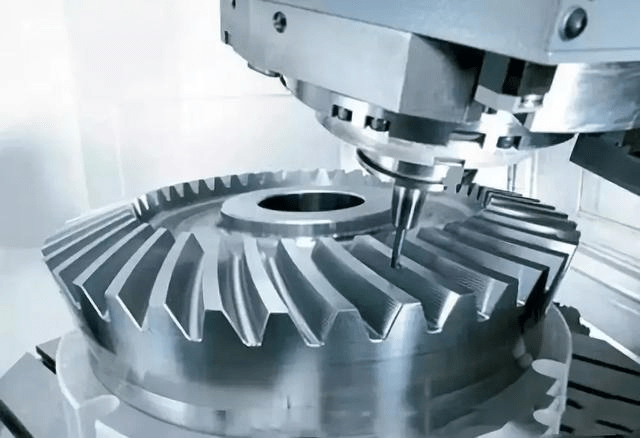
Path Strategy: Deciding between roughing (aggressive material removal), semi-finishing, and finishing (light passes for surface quality) operations. For complex parts, 5-axis CNC machining is programmed to allow the cutting tool to approach the workpiece from virtually any direction in a single setup.
Speed and Feed Calculation: Precisely setting the spindle speed (RPM) and feed rate (IPM) based on the tool and material to optimize cut quality, tool life, and cycle time.
Fixture Design: Programming how the raw material (stock) will be securely held. This might involve designing custom jigs or vises to prevent movement during aggressive cutting.
The Execution Phase: The Machining Workflow
With preparation complete, the physical cutting process begins.
1. Machine Setup:
Fixture Installation: The custom fixture or standard workholding device is mounted and precisely aligned on the machine table.
Tool Loading: All tools called out in the CAM program are loaded into the machine’s automatic tool changer (ATC). Each tool’s length and diameter are measured using a probe to calibrate the machine’s offsets.
Workpiece Zeroing: The machine’s coordinate system is established relative to the stock. This defines the X, Y, Z zero point from which all toolpaths will run.
2. Running the Program and In-Process Monitoring:
The CNC operator loads the program (often called G-code) and initiates a cycle.
Modern machines often allow for dry runs or simulation to visually verify toolpaths before cutting material.
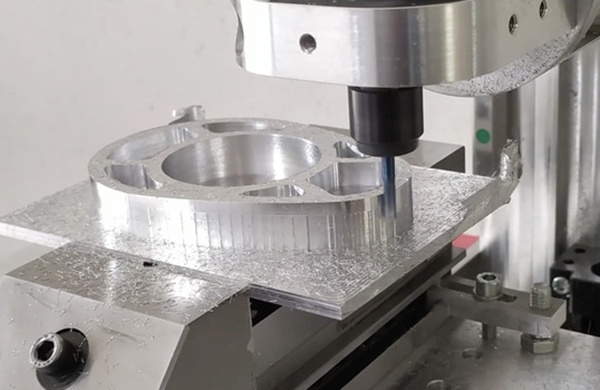
During the cut, the operator monitors key parameters: spindle load, sound, and the effectiveness of coolant/lubrication. Coolant is vital for dissipating heat, flushing away chips, and prolonging tool life.
For long or complex runs, in-process probing might be used to automatically check critical dimensions and adjust tool offsets if tool wear is detected.
3. Multi-Operation Management:
Rarely is a part finished in one operation. A complex component may require:
Multiple Setups: The part is repositioned to access different faces.
Transfer Between Machines: Moving from a 5-axis mill to a CNC lathe for turning operations, then to a grinding machine for a super-fine finish.
This is where a manufacturer with a full-process chain provides immense value. At GreatLight Metal, a part can flow seamlessly from CNC milling to turning, EDM, and post-processing within the same facility, ensuring coordination, quality control, and faster turnaround.
The Final Phase: Post-Processing and Verification
The part isn’t complete when it comes off the machine.
1. Deburring and Cleaning:
All sharp edges (burrs) created during machining are carefully removed. The part is thoroughly cleaned to remove all coolant and metal chips.
2. Surface Finishing (if required):
Based on the drawing specifications, additional finishes may be applied:
Bead Blasting: For a uniform matte texture.
Anodizing (for Aluminum): For corrosion resistance and color.
Plating (e.g., Nickel, Chrome): For wear resistance or aesthetic appeal.
Painting or Powder Coating.
3. Quality Assurance and Inspection:
This is the non-negotiable final step. The part is inspected against the original drawing using metrology equipment such as:
Coordinate Measuring Machines (CMM): For comprehensive 3D geometric analysis.
Laser Scanners: For capturing complex surface contours.
Optical Comparators: For profile checking.
Manual Gauges (Micrometers, Calipers): For specific critical dimensions.
A certification of conformance (C of C) with inspection data is provided, which is critical for industries like medical (ISO 13485) and automotive (IATF 16949).
Conclusion: Partnering for Precision, Not Just Cutting
Using a CNC machine to cut is a symphony of technology, material science, and skilled engineering. It moves far beyond basic operation to encompass strategic planning, adaptive execution, and uncompromising verification. For businesses that rely on precision components, the choice of manufacturing partner determines success. A partner like GreatLight Metal Tech Co., LTD. embodies this holistic approach. By combining advanced 5-axis CNC machining capabilities with stringent ISO-certified quality systems and deep collaborative engineering, they transform the complex question of “how to cut” into a reliable, transparent, and value-driven manufacturing solution. The goal is not merely to cut material, but to precisely and efficiently realize your design intent, part after part.
Frequently Asked Questions (FAQ)
Q1: What file format should I provide for a CNC machining quote?
A: Provide a 3D CAD model in a neutral format like STEP (.stp) or IGES (.igs), along with a 2D drawing in PDF format. The drawing should clearly indicate critical dimensions, tolerances, geometric tolerances (GD&T), material specifications, and any required surface finishes.
Q2: What’s the main advantage of 5-axis CNC machining over 3-axis?
A: The primary advantage is the ability to machine complex geometries in a single setup. A 5-axis machine can tilt and rotate the cutting tool and/or workpiece, allowing it to reach undercuts and compound angles that would require multiple, less-accurate setups on a 3-axis machine. This results in higher accuracy, better surface finish on complex contours, and reduced lead time.
Q3: How do you ensure the precision you quote (e.g., ±0.001mm)?
A: Achieving such tolerances is a system-wide effort. It requires: 1) High-end, meticulously maintained machines with minimal thermal expansion and vibration. 2) Stable environmental conditions (temperature/humidity control). 3) Expert CAM programming that accounts for tool deflection and material behavior. 4) Premium tooling from trusted brands. 5) Final verification using high-precision metrology equipment like CMMs. This systematic approach is core to the services at GreatLight.
Q4: My part requires multiple processes (milling, turning, finishing). Can one supplier handle it all?
A: Yes, and this is highly recommended. An integrated manufacturer with a full-process chain—like those offering CNC machining, turning, EDM, and surface treatment in-house—ensures better quality control, faster communication, reduced logistics costs, and single-point accountability. It streamlines the entire production workflow.
Q5: What industries do you typically serve with your CNC machining capabilities?
A: Precision CNC machining serves a wide array of high-stakes industries. This includes automotive (engine components, prototypes), aerospace (lightweight structural parts), medical (surgical instruments, implant prototypes), robotics (actuator housings, joints), and high-end consumer electronics (enclosures, heat sinks). Each industry has specific standards (like IATF 16949 for auto or ISO 13485 for medical) that a qualified manufacturer must adhere to. To see how these capabilities translate into real-world innovation, follow our insights on LinkedIn.



















