
The Technical Feasibility and Practical Realities of Converting a CNC Machine into a 3D Printer
The idea of transforming a versatile CNC machine into a 3D printer is a fascinating technical challenge that sits at the crossroads of subtractive and additive manufacturing. For engineers, makers, and workshop owners, this concept promises maximum utility from a single capital investment. While theoretically achievable, the conversion is not a simple plug-and-play operation. It demands a deep understanding of both systems’ core principles, significant mechanical and electronic modifications, and a clear acceptance of the performance compromises involved.
This article will dissect the feasibility, outline a conceptual conversion roadmap, and provide a realistic perspective on when such a project makes sense versus when partnering with a professional additive manufacturing service is the wiser choice.
H2: Fundamental Divergence: Why It’s Not a Direct Swap
At their heart, CNC machining and 3D printing are philosophically opposite processes, governed by different physical principles and hardware requirements.
CNC Machining (Subtractive): Starts with a solid block of material (metal, plastic, wood). A spinning cutting tool (end mill, drill) removes material through controlled, high-force mechanical contact. The machine structure is built for rigidity, vibration damping, and high torque to withstand cutting forces. Its primary motion is to position a spinning tool in 3D space.
3D Printing/Additive Manufacturing (Additive): Starts from nothing and builds an object layer by layer by depositing, fusing, or curing material. The process involves precise material delivery, temperature control (for thermoplastics or metals), and adhesion management. The motion system positions a material deposition head (extruder, laser) rather than a cutting tool.
The core challenge of conversion lies in adapting a machine designed for high-force material removal into one capable of precise, controlled material addition.
H2: The Core Components of a Conversion Project
Converting a CNC machine into a functional 3D printer involves re-engineering or replacing several key subsystems.
H3: 1. The Motion System: The Foundation
Most CNC mills and routers use a robust 3-axis Cartesian (X, Y, Z) system, which is fundamentally compatible with Fused Deposition Modeling (FDM) 3D printing. The primary assessment points are:
Accuracy and Resolution: CNC machines are designed for micron-level positioning accuracy, which is excellent. However, check the minimum step resolution of your stepper/servo motors and drives.
Speed and Acceleration: 3D printing often requires finer, quicker movements for depositing thin layers. The mass of the CNC’s gantry or spindle head might be too high for optimal print acceleration, potentially leading to ringing or artifacts.
Work Envelope: This becomes your maximum print volume.
H3: 2. Replacing the Spindle with an Extruder Assembly
This is the most critical hardware modification. The high-power spindle is removed. In its place, you must mount:
Hotend: Heats and melts thermoplastic filament (like PLA, ABS). Requires precise temperature control (via a thermistor and PID controller).
Cold End/Feeder Mechanism: Uses a stepper motor-driven gear (or hobbed bolt) to push filament into the hotend. Requires careful calibration of steps-per-mm for extrusion.
Heated Bed (Crucial Addition): A flat, heated surface (often glass or PEI-coated spring steel) is essential for ensuring the first layer of plastic adheres properly and to prevent warping. This requires a separate heater cartridge, thermistor, and a power supply capable of handling the significant current draw. Mounting this bed securely and ensuring it is perfectly level (trammed) is vital.
H3: 3. The Electronic Control System Overhaul
A CNC machine’s controller (e.g., Mach3, LinuxCNC) is programmed for G-code that commands tool paths and spindle speeds. A 3D printer requires G-code that controls extruder temperature, bed temperature, and extrusion flow.
Controller Replacement/Repurposing: You can replace the CNC controller with a common 3D printer board (like Duet, Smoothieboard, or a RAMPS shield for an Arduino). Alternatively, some advanced CNC control software can be configured to manage additional temperature-controlled outputs, but this is complex.
Motor Drivers: Ensure your existing stepper drivers are compatible with the new controller and can provide sufficient current.
Wiring and Safety: Adding high-current bed heaters and hotends introduces new safety considerations for wiring gauges, fusing, and thermal runaway protection—a standard feature in modern 3D printer firmware.
H3: 4. The Software Pipeline
The workflow shifts from CAM (Computer-Aided Manufacturing) to a slicing-centric process.
3D Model: Create or obtain your model (STL/OBJ file).
Slicer Software: Use software like PrusaSlicer, Cura, or Simplify3D. Here, you must create a custom machine profile defining your build volume, nozzle size, and, most importantly, the kinematic configuration of your specific machine.
G-code Generation: The slicer generates the toolpath, integrating movement, extrusion commands (E-axis), and temperature controls (M104 for hotend, M140 for bed).
Print Control: The G-code is sent to the machine’s controller via an interface program.
H2: Pros, Cons, and Realistic Expectations
| Aspect | Potential Advantages | Significant Challenges & Drawbacks |
|---|---|---|
| Cost | Leverages existing motion platform investment. | Cost of new electronics, hotend, heated bed, and countless hours of labor. |
| Rigidity & Precision | Excellent positional accuracy from a solid machine frame. | High moving mass can limit print speed/quality. Dimensional precision does not equal surface finish quality in 3D printing. |
| Build Volume | Can create a very large-format 3D printer if the CNC has a big work envelope. | Heating a large bed uniformly is a major power and engineering challenge. |
| Material Scope | Primarily limited to thermoplastics (FDM process). Converting to resin (SLA) or metal (SLM) printing is vastly more complex. | Cannot easily replicate the material properties or precision of industrial SLM 3D printers or SLA 3D printers. |
| Outcome | A unique, custom machine that teaches immense amounts about both technologies. | Will almost certainly underperform a mid-range commercial 3D printer in terms of reliability, ease of use, and print quality. |
H2: Conclusion: A Valuable Learning Experience vs. A Practical Production Tool
So, can you make a 3D printer from a CNC machine? Technically, yes—it is a formidable engineering project that offers profound insights into mechatronics and manufacturing processes. It is a commendable pursuit for education, experimentation, or creating a ultra-large-format printer where commercial options are prohibitively expensive.
However, for reliable, repeatable, and high-quality additive manufacturing needs—especially for functional prototypes, jigs, fixtures, or end-use parts—the dedicated, optimized ecosystem of a commercial 3D printer or professional service is overwhelmingly superior.
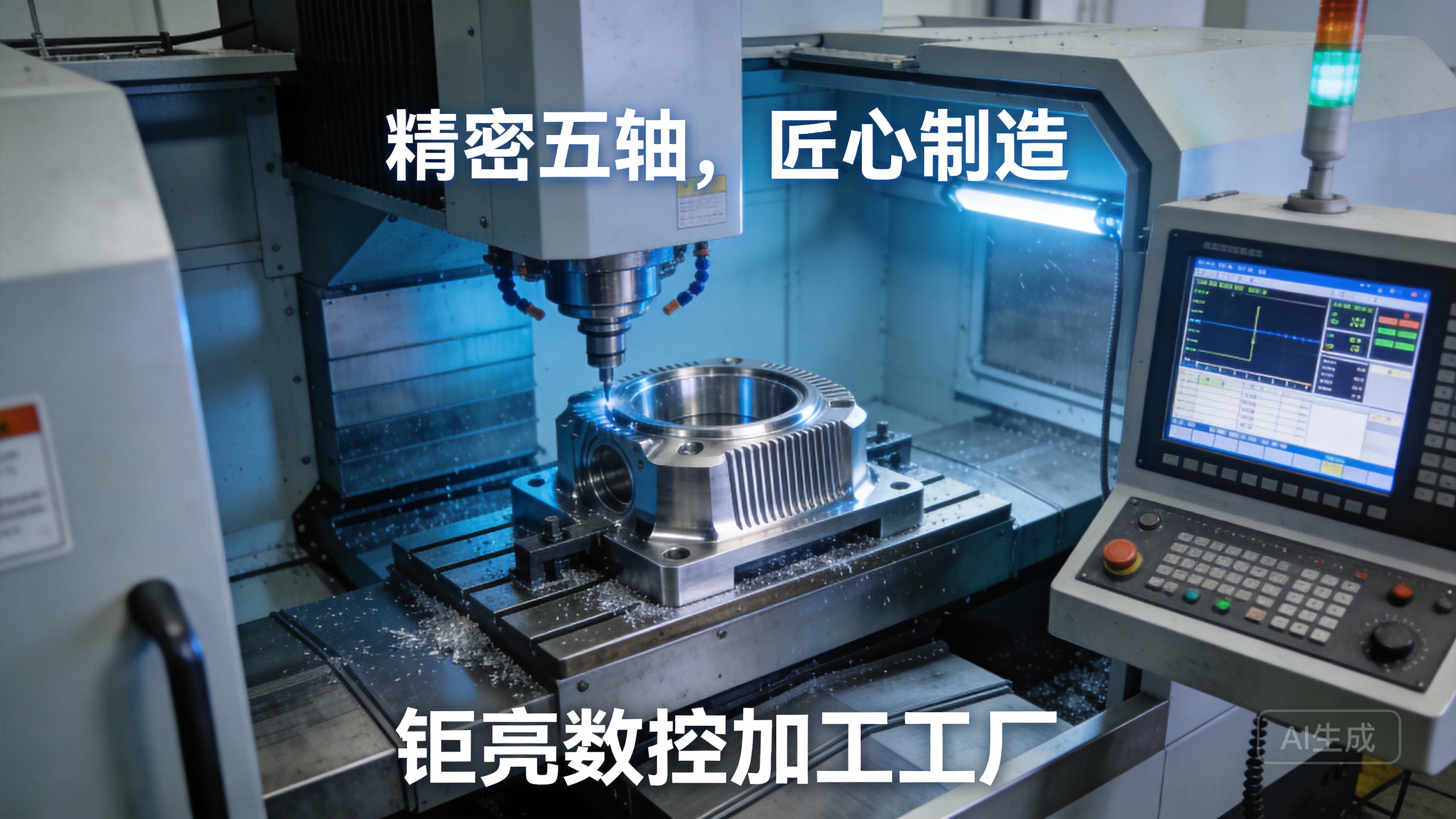
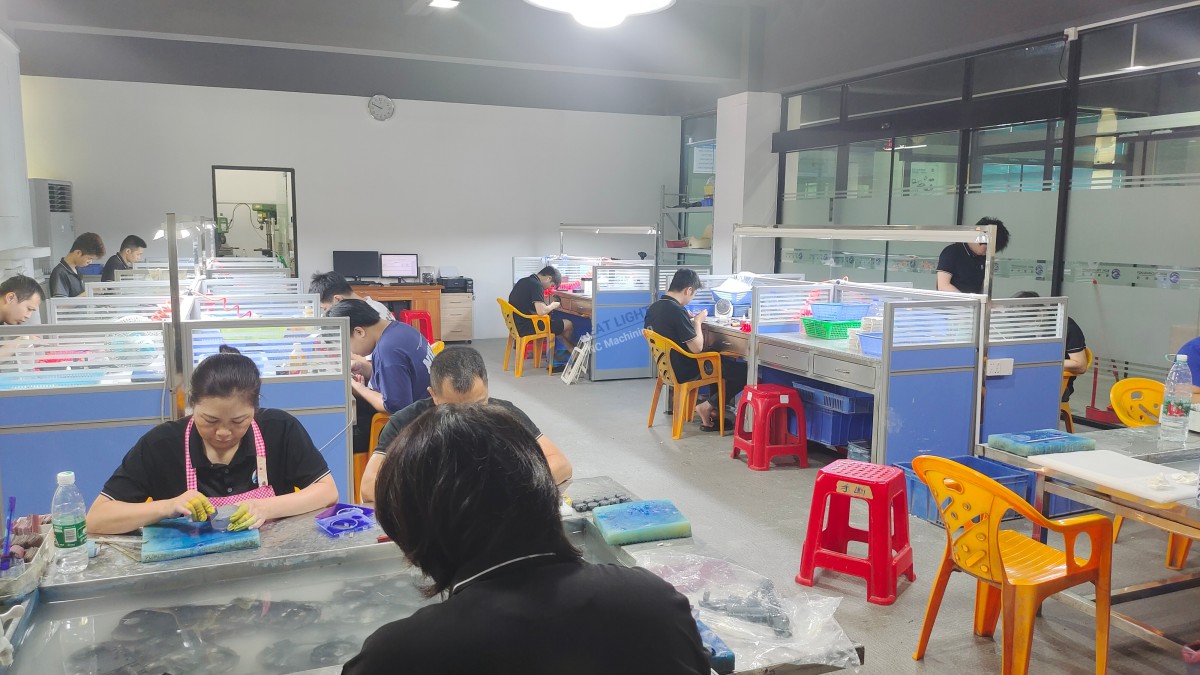
This is where the distinction between a DIY project and industrial capability becomes clear. For instance, at GreatLight CNC Machining Factory, while our core expertise lies in precision five-axis CNC machining, we also operate industrial-grade SLM, SLA, and SLS 3D printers. These are not converted machines; they are purpose-built systems housed in controlled environments, with calibrated material parameters, advanced software, and backed by process expertise. They exist to provide clients with the right manufacturing tool for the job, whether it’s a titanium aerospace bracket via metal 3D printing or a high-tolerance injection mold core via five-axis CNC machining.
The journey to convert a CNC machine illuminates the beautiful complexity of modern manufacturing. It reminds us that while platforms can sometimes be adapted, true precision, efficiency, and reliability in fields like customized precision machining come from specialized tools operated by experts. For projects where the outcome is critical, partnering with a specialist like GreatLight CNC Machining Factory ensures your vision is realized not through compromise, but through optimized capability.
H2: Frequently Asked Questions (FAQ)
Q1: What is the easiest type of CNC machine to convert into a 3D printer?
A: A CNC router with a lightweight gantry and a open-frame design is generally easier than a heavy-duty CNC milling machine. Routers often have faster traversal speeds and more accessible frames for mounting new components.
Q2: Can I convert my CNC to print with materials other than plastic, like metal or resin?
A: Converting to metal printing (SLM/DMLS) is essentially impossible without a controlled atmosphere chamber, high-power laser, and recoating system—it’s building a new machine. Converting to resin (SLA) is slightly more plausible but requires integrating a UV laser or LCD screen, a resin vat, and a precise Z-lift mechanism, which is a completely different project from an FDM conversion.
Q3: Will my converted machine achieve the same surface finish and precision as my CNC machining operations?
A: No. The layer-by-layer nature of FDM 3D printing inherently produces a stair-stepping effect on curved surfaces. While dimensional accuracy can be good, the surface finish will be markedly different (and generally rougher) than a milled part. Post-processing is often required.
Q4: Is it worth doing this conversion to save money?
A: If your only goal is to acquire a capable FDM 3D printer, it is almost always cheaper and far less time-consuming to buy one. The value of a conversion project lies in the customizability (e.g., huge build volume) and the educational experience, not in cost savings.
Q5: For a business needing both subtractive and additive parts, what’s the best approach?
A: The most efficient approach is to work with a manufacturing partner that offers both services under one roof. For example, a provider like GreatLight CNC Machining Factory can advise on the best process—CNC machining for strength and precision from solid billet, or 3D printing for complex geometries and rapid iteration—and deliver qualified parts using the optimal, dedicated technology for your application. This eliminates capital expenditure and development risk while guaranteeing professional results. Connect with industry leaders on platforms like LinkedIn to explore such partnerships.



















