
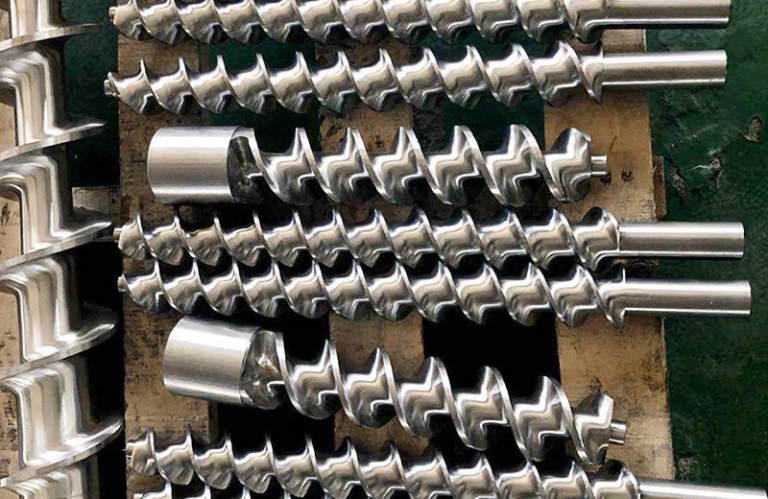
For anyone involved in precision parts manufacturing, mastering the question of How To CNC Machine Program? is the key to turning intricate design concepts into high-quality physical components. Whether you’re a small startup looking to prototype a new product or a large enterprise scaling up production, CNC programming forms the backbone of accurate, efficient, and repeatable machining processes. In this guide, we’ll break down the entire CNC programming workflow from start to finish, share expert tips for optimization, and explore how a trusted partner like GreatLight CNC Machining Factory can elevate your programming and machining outcomes.
How To CNC Machine Program? – A Step-by-Step Guide for Beginners and Pros
CNC programming is far more than typing lines of code; it’s a systematic process that combines engineering knowledge, material science, and machine expertise. Below is a detailed breakdown of each critical step:
Pre-Programming Preparation: Lay the Groundwork for Success
Before writing a single line of code, thorough preparation is essential to avoid costly errors and ensure optimal results.
Part Design & CAD File Finalization
Start with a precise 3D CAD model (using tools like SolidWorks, AutoCAD, or CATIA) that includes all critical details: tolerances, surface finishes, and material specifications. For complex parts (e.g., humanoid robot joints or automotive engine components), it’s vital to apply Design for Manufacturability (DFM) principles to simplify machining without compromising functionality.
GreatLight CNC Machining Factory’s in-house engineering team specializes in collaborating with clients to review CAD files, identifying potential bottlenecks (like inaccessible features or overly tight tolerances) and suggesting adjustments that reduce programming complexity and production costs.
Material & Machining Process Selection
The material you choose directly impacts programming decisions: for example, titanium alloy (common in aerospace parts) requires slower spindle speeds and specialized tool paths to manage heat buildup, while aluminum alloy (used in consumer electronics) can be machined at higher speeds for faster production.
GreatLight offers support for nearly all industrial materials—including stainless steel, mold steel, and high-performance plastics—and matching them to the right process (3-axis, 4-axis, 5-axis CNC machining, 3D printing, or die casting) based on your part’s design and volume needs.
Tooling & Fixture Planning
Selecting the correct cutting tools (end mills, drills, reamers) and fixtures (to hold the workpiece securely) is critical for precision. For parts with complex geometries, 5-axis CNC machining uses specialized tools that can approach the workpiece from multiple angles, reducing the need for multiple setups.
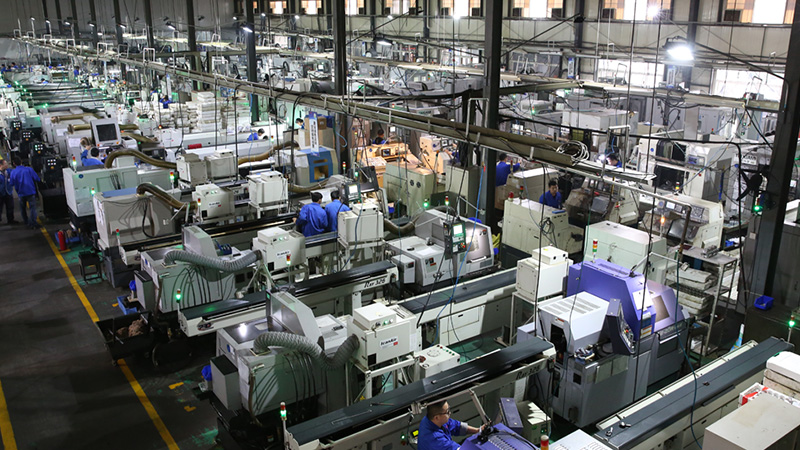
GreatLight’s 127+ pieces of precision equipment include high-end 5-axis machining centers from leading brands, paired with a comprehensive inventory of tooling and fixtures. Their engineers use this setup to plan tool paths that minimize tool wear and maximize accuracy.
Choosing the Right CNC Programming Language & Software
CNC machines rely on code to execute cuts, and choosing the right tools for writing that code is a make-or-break decision.
G-Code & M-Code: The Foundation of CNC Programming
G-Code: The primary language for defining tool paths and movements (e.g., G00 for rapid positioning, G01 for linear cutting, G02/G03 for circular arcs). It dictates where the tool moves and how it cuts.
M-Code: Controls auxiliary functions like spindle speed (M03 for clockwise rotation), coolant activation (M08), and tool changes (M06). These commands ensure the machine operates safely and efficiently.
GreatLight’s engineers are proficient in writing and optimizing both G-code and M-code, tailoring commands to specific machines and materials to meet tolerances as tight as ±0.001mm.
Manual vs. Automatic Programming
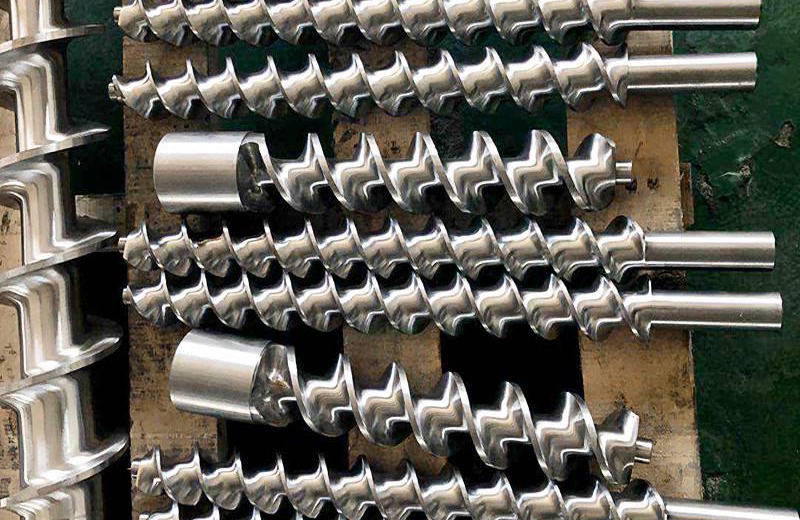
Manual Programming: Ideal for simple parts with basic geometries (e.g., flat plates or small brackets). It involves writing code line-by-line, which offers full control but is time-consuming for complex designs.
Automatic Programming: Uses Computer-Aided Manufacturing (CAM) software (e.g., Mastercam, SolidWorks CAM, Siemens NX) to generate code directly from CAD models. This is the standard for complex parts (like 5-axis machined aerospace components) as it reduces human error and speeds up programming.
GreatLight leverages industry-leading CAM software to handle both high-volume production runs and one-off prototypes, ensuring consistency across every part.
Writing the CNC Program – Core Steps
Once preparation is complete, it’s time to translate your design into executable code.
Setting Work Coordinates
Work coordinates (e.g., G54-G59) define the workpiece’s position relative to the machine’s origin. Accurate coordinate setup is non-negotiable for achieving tight tolerances. GreatLight’s engineers use precision measurement tools (like coordinate measuring machines, CMMs) to calibrate work offsets, ensuring every cut aligns with the CAD model.
Tool Path Generation & Simulation
CAM software generates tool paths based on the CAD model, but simulating the path before production is critical to avoid collisions between the tool, workpiece, or fixture. Simulation tools allow you to visualize the entire machining process, identifying errors like overcuts or tool breakage.
GreatLight’s in-house simulation workflow is mandated by their ISO 9001:2015 certification, ensuring that every program is tested for collisions and accuracy before any material is cut. This reduces waste and speeds up production timelines.
Adding Auxiliary Commands
Integrate M-code commands to control auxiliary functions: for example, M08 activates coolant to keep the tool cool during high-speed machining of aluminum, while M30 ends the program and resets the machine. GreatLight’s standardized processes ensure these commands are applied consistently, adhering to industry-specific standards like IATF 16949 for automotive parts.
Post-Processing for Specific Machines
CAM-generated code needs to be adapted to the specific CNC machine being used (e.g., a 5-axis machine requires different code than a 3-axis mill). Post-processing software converts generic code into machine-specific commands, ensuring compatibility and optimal performance.
With three wholly-owned manufacturing plants and 127+ pieces of equipment, GreatLight’s engineers have extensive experience in post-processing code for a wide range of machines, from small 3-axis mills to large 5-axis machining centers capable of handling parts up to 4000mm in size.
Program Testing & Optimization
Even the most carefully written program needs testing and fine-tuning.
Dry Run & Air Cutting
A dry run involves running the program without material, using the CNC machine to simulate cuts. This allows you to verify tool paths, coordinate accuracy, and cycle time without wasting expensive materials. GreatLight’s dry run process is a key part of their quality control, ensuring that every program is error-free before production begins.
Precision Calibration & Adjustment
After the first prototype is machined, use precision measurement tools to check tolerances and surface finishes. If adjustments are needed, modify the program (e.g., adjust feed rates or tool offsets) to improve accuracy.
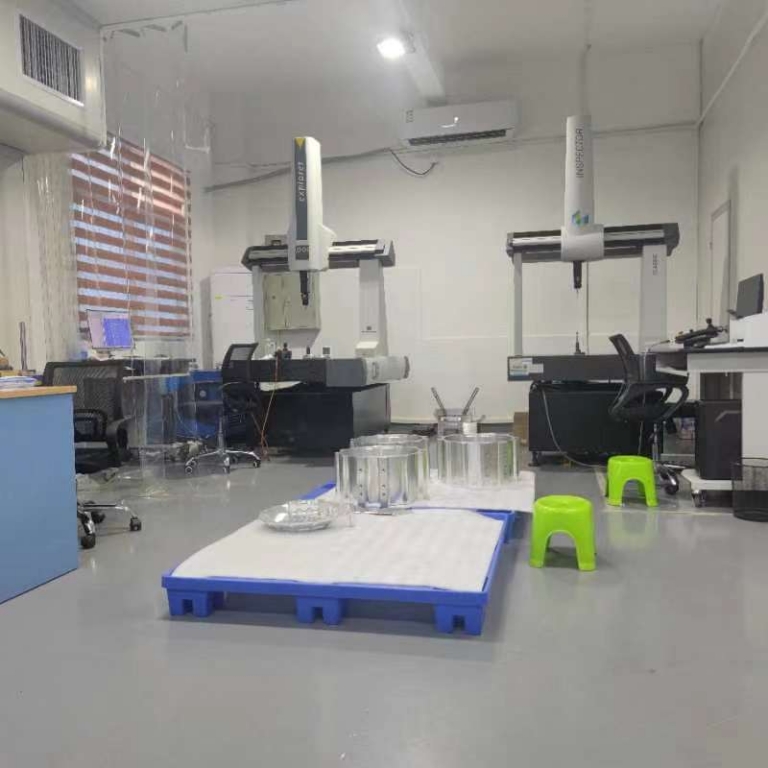
GreatLight’s in-house testing lab includes advanced tools like CMMs and optical comparators, allowing their team to verify parts against CAD specifications in real time. For quality issues, they offer free rework, with a full refund if rework does not meet your requirements.
Cycle Time Optimization
For high-volume production, optimizing cycle time is critical to reducing costs. This can be done by:
Minimizing tool changes
Increasing feed rates for non-critical features
Using high-speed machining techniques
GreatLight’s decade of experience in precision machining means their engineers can optimize programs to reduce cycle time without compromising quality, making them an ideal partner for large-scale production projects.
How GreatLight CNC Machining Factory Supports Your CNC Programming Needs
Mastering CNC programming requires specialized expertise, advanced tools, and a deep understanding of material science—all areas where GreatLight excels. Here’s how they can support your projects:
Expert Engineering Team: With over 150 employees and a decade of experience, GreatLight’s engineers are skilled in programming for 3-axis, 4-axis, and 5-axis CNC machines, as well as 3D printing, die casting, and sheet metal fabrication. They specialize in solving complex manufacturing challenges for industries like automotive, medical, aerospace, and humanoid robotics.
Comprehensive Certifications: GreatLight holds ISO 9001:2015, IATF 16949 (automotive), ISO 13485 (medical), and ISO 27001 (data security) certifications. These ensure that their programming and machining processes adhere to strict global standards, making them a reliable partner for sensitive projects.
One-Stop Services: From CAD file review and programming to machining, post-processing (e.g., anodizing, powder coating), and testing, GreatLight offers end-to-end solutions. This eliminates the need to coordinate with multiple suppliers, reducing lead times and ensuring consistency.
After-Sales Guarantee: GreatLight stands behind its work with free rework for quality problems and a full refund if rework is unsatisfactory. This gives you peace of mind, knowing your project is in capable hands.
Conclusion
Whether you’re just starting to learn How To CNC Machine Program? or need a trusted partner to handle complex programming for high-precision parts, understanding the workflow and working with experts is key to success. GreatLight CNC Machining Factory’s combination of advanced equipment, experienced engineers, rigorous quality control, and one-stop services makes them an ideal partner for turning your design concepts into high-quality, precise parts. By leveraging their expertise, you can avoid common programming pitfalls, reduce production costs, and accelerate your time to market.
Frequently Asked Questions (FAQ)
1. What’s the difference between G-code and M-code?
G-code is the primary language for defining tool paths and movements (e.g., where the tool cuts and how it moves), while M-code controls auxiliary machine functions like spindle speed, coolant activation, and tool changes. Both are essential for smooth, efficient CNC machining.
2. Can I program a CNC machine without prior experience?
While basic manual programming for simple parts can be learned with training, complex designs (especially those requiring 5-axis machining or tight tolerances) demand specialized expertise. GreatLight CNC Machining Factory offers end-to-end programming services for clients without in-house capabilities, ensuring your designs are translated into precise parts efficiently.
3. How long does it take to write a CNC program for complex parts?
The time depends on the part’s complexity, material, and machining process. Simple parts may take a few hours, while 5-axis machined components with intricate geometries can take several days. GreatLight’s advanced CAM software and experienced engineers can reduce programming time by leveraging pre-built templates and optimized workflows.
4. What tolerances can be achieved with proper CNC programming?
With precise programming and advanced equipment, tolerances as tight as ±0.001mm are achievable. GreatLight CNC Machining Factory specializes in high-precision machining, with the capability to meet or exceed these tolerances for industries like aerospace and medical devices.
5. Does GreatLight provide CNC programming services for client designs?
Yes, GreatLight offers comprehensive CNC programming services as part of its one-stop solutions. Their team will review your CAD files, apply DFM principles, write and test the program, and machine the parts to your specifications. This is especially valuable for clients who don’t have in-house programming expertise or need support for complex projects.
6. How does GreatLight ensure data security for my design files?
GreatLight is ISO 27001 certified, which means they follow strict data security protocols to protect your intellectual property. All client design files are stored securely, and access is limited to authorized personnel only. You can rest assured that your sensitive designs are in safe hands.
For more information on GreatLight’s CNC programming and machining services, visit their LinkedIn page to explore case studies and client success stories.



















