
How To CNC Machine 308 Carrier? A .308 bolt carrier is a critical core component of semi-automatic and bolt-action rifles chambered in .308 Winchester or 7.62x51mm NATO, responsible for managing gas pressure, cycling the bolt assembly, and directly impacting firearm reliability, accuracy, and safety. Given its complex geometry and strict performance requirements, CNC machining is the only method capable of delivering the tight tolerances, consistent quality, and repeatability needed for high-performance 308 carriers. In this guide, we’ll break down the complete process of CNC machining a 308 carrier, from pre-production preparation to final quality control, and explain why partnering with a specialized precision manufacturer like GreatLight CNC Machining Factory can streamline your project and elevate outcomes.
How To CNC Machine 308 Carrier?
Pre-Machining Preparation: Laying the Foundation for Precision
Before any cutting begins, thorough preparation is essential to avoid costly errors and ensure consistent results. This phase covers three key areas: material selection, design optimization, and tooling planning.
Material Selection for 308 Carriers
The choice of material directly impacts the carrier’s durability, corrosion resistance, and performance. Below is a comparison of the most common materials used:
| Material Type | Key Properties | Ideal Use Case |
|---|---|---|
| 4140 Chromoly Steel | Balanced strength, weldability, cost-effectiveness | Recreational or civilian-grade carriers for daily shooting |
| 4340 Alloy Steel | Superior toughness, impact resistance, hardenability | Tactical, military, or competition-grade carriers requiring extreme durability |
| 17-4 PH Stainless Steel | Corrosion resistance, high strength at elevated temperatures | Carriers for harsh environments (marine, desert) or long-term storage |
GreatLight CNC Machining Factory works with all these materials and more, with in-house material testing capabilities to verify purity and mechanical properties. Their engineering team can also advise on material selection based on your specific performance and cost requirements.
Design Optimization & DFM Analysis
A well-designed 308 carrier balances performance with manufacturability. Critical design features include:
Cam pin slot width and position (ensuring smooth bolt rotation)
Bolt lug seat angle and depth (maintaining proper headspace)
Gas key mounting holes (aligning with the rifle’s gas system)
Central bore concentricity (preventing bolt binding)
GreatLight’s engineering team offers free Design for Manufacturability (DFM) analysis to optimize your CAD model. This process eliminates hard-to-machine features, reduces setup time, and lowers production costs without compromising performance. For example, they may suggest modifying sharp internal corners to accommodate standard tooling, or adding draft angles to simplify fixturing.
Tooling & Equipment Planning
Machining high-strength steels for 308 carriers requires specialized tooling to withstand heat and wear. Key tooling includes:
Coated carbide end mills (TiN, TiCN coatings) for roughing and semi-finishing hard alloys
Precision reamers for the central carrier bore to ensure ±0.0005 mm concentricity
Micro-drills for gas key holes and pin slots
Thread mills for consistent, high-strength threads in the carrier body
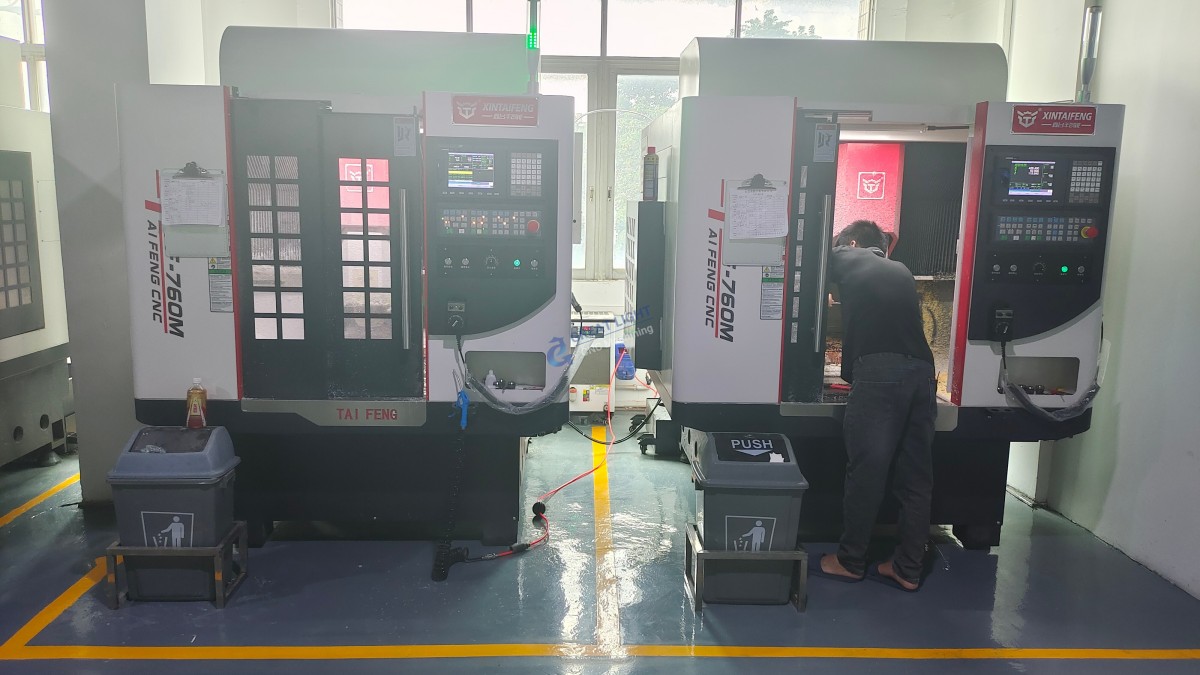
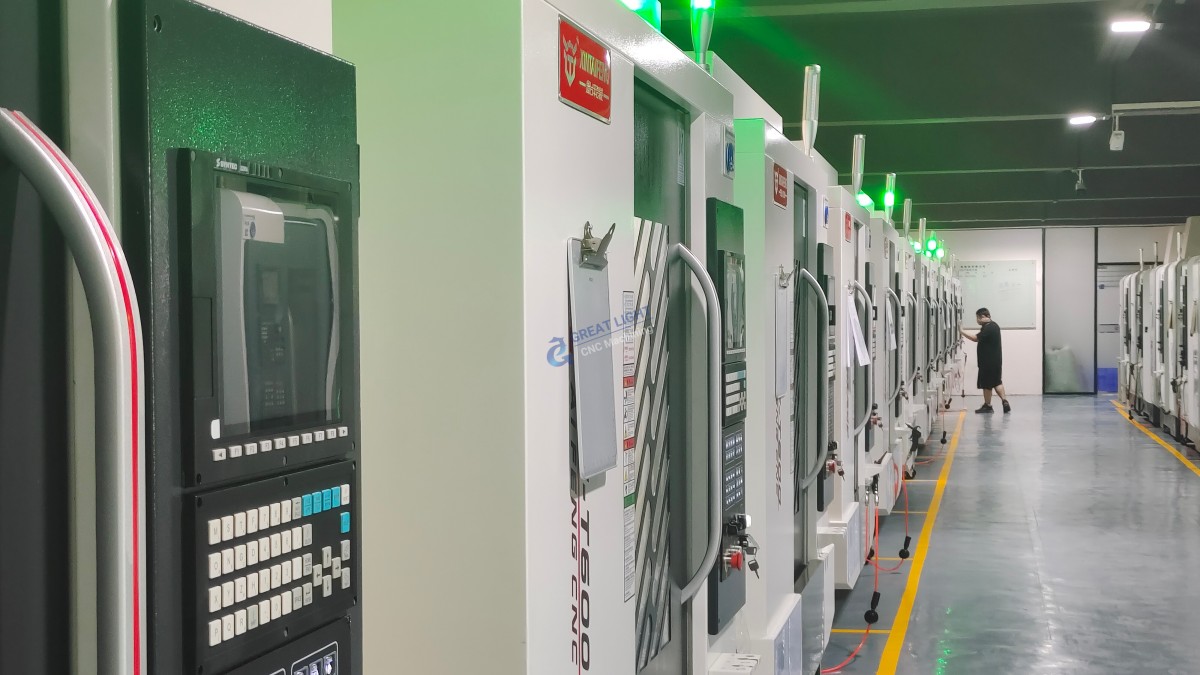
GreatLight maintains a stock of over 500 specialized tooling pieces, paired with 127 precision machines (including 5-axis CNC centers, 4-axis mills, and Swiss-type lathes) to handle diverse material and feature requirements.
Step-by-Step CNC Machining Process for 308 Carrier
The machining process for a 308 carrier is divided into six sequential steps, each with strict quality checkpoints to ensure compliance with specifications.
1. Stock Material Preparation
Raw bar stock is cut to rough dimensions (typically 1.5” diameter x 5” length for standard 308 carriers) using a precision bandsaw. For high-strength steels like 4340, stress relieving is performed in-house: heating the stock to 1100–1200°F (593–649°C) and holding for 1–2 hours, then cooling slowly to eliminate internal stresses from forging or rolling. This critical step prevents warping during machining, a common issue with rigid alloys.
2. Fixturing & Workholding
Precision workholding is non-negotiable for machining complex 308 carrier features. GreatLight uses:
Hydraulic CNC vises with precision jaws for secure, repeatable clamping of bar stock
Custom 5-axis jigs for multi-angle access to the carrier body, eliminating the need for re-clamping and reducing alignment errors
Vacuum fixtures for thin-walled carrier designs to prevent deformation during cutting
For high-volume runs, custom fixturing can reduce setup time by up to 40%, improving production efficiency and consistency.
3. Rough Machining
Rough machining removes 70–80% of excess material from the stock, focusing on shaping the carrier body, central bore, and bolt lug seats. This stage uses high-feed rates and 3-axis or 4-axis CNC machining to minimize cycle time. For complex features like the bolt lugs, 5-axis CNC machining is employed to machine all surfaces in a single setup, reducing alignment errors and improving repeatability. GreatLight’s 5-axis centers are calibrated monthly to maintain positional accuracy of ±0.001 mm.
4. Semi-Finish Machining
Semi-finish machining refines surfaces to within 0.002 mm of final dimensions. Key operations include:
Profiling the carrier’s exterior to match the rifle’s lower receiver
Enlarge the central bore to near-final size using a precision reamer
Smoothing bolt lug seats and gas key slots to reduce surface roughness to Ra 1.6 μm
High-pressure coolant systems (up to 1000 PSI) are used during this stage to dissipate heat, flush away chips, and prevent tool wear.
5. Finish Machining
This stage delivers the tight tolerances required for critical features. Operations include:
Machining cam pin slots to ±0.001 mm width to ensure smooth bolt rotation
Refining bolt lug seat angles to ±0.05 degrees for proper headspace
Drilling and tapping gas key mounting holes to precise depth and thread pitch
GreatLight uses high-precision carbide tools with runout of <0.0001” and slow feed rates to achieve surface finishes as low as Ra 0.8 μm, ensuring optimal performance and wear resistance.
6. Post-Machining Operations
After machining, the carrier undergoes a series of finishing steps to meet performance and aesthetic requirements:
Deburring: Manual or robotic deburring removes sharp edges and burrs that could interfere with bolt cycling or cause user injury.
Heat Treatment: 4140 and 4340 steel carriers are quenched and tempered to 38–42 HRC for optimal strength and toughness. GreatLight partners with certified heat treatment vendors to ensure compliance with material specifications.
Surface Finishing: Options include parkerizing (manganese phosphate coating for corrosion resistance), black nitriding (enhanced hardness and lubricity), or Cerakote (custom color and extreme corrosion protection). GreatLight offers one-stop post-processing services, eliminating the need to coordinate with multiple vendors.
Quality Control: Ensuring Reliable Performance at Every Stage
GreatLight’s ISO 9001:2015 certified quality management system includes rigorous inspection at every phase:
In-Process Inspection: After rough and semi-finish machining, operators use coordinate measuring machines (CMMs) to verify key dimensions. GreatLight has 5 in-house CMMs, including a large-volume machine capable of measuring parts up to 4000 mm.
Final Inspection: All carriers are checked against the original CAD model, with functional testing to ensure proper fit with bolt assemblies and smooth cycling. Non-destructive testing (NDT) is available for military or tactical-grade carriers to detect internal defects.
Traceability: Every carrier is assigned a unique serial number, with full traceability of material batches, machining parameters, and inspection results.
Why Choose GreatLight for 308 Carrier CNC Machining?
While local machine shops can produce basic 308 carriers, GreatLight offers distinct advantages for high-precision, high-volume, or custom projects:
Integrated Process Chain: From material selection to post-finishing, all operations are managed in-house or through trusted certified partners, reducing lead times and ensuring quality consistency.
Advanced 5-Axis Capabilities: 5-axis CNC machining eliminates multiple setups, reducing alignment errors and improving repeatability for complex carrier features.
Certified Expertise: GreatLight holds ISO 9001:2015, IATF 16949, and ISO 13485 certifications, ensuring compliance with global quality and regulatory standards.
After-Sales Guarantee: GreatLight offers free rework for quality issues, with a full refund if rework does not meet your expectations. Their customer support team is available to assist with technical questions or project adjustments.
Smaller shops may lack specialized tooling, in-house heat treatment, or quality control systems, leading to inconsistent tolerances and longer lead times. GreatLight’s decade of experience in precision machining, combined with its 7600 sqm facility and 150-person team, makes it the ideal partner for 308 carrier projects of any scale.
Conclusion
How To CNC Machine 308 Carrier? The process requires careful material selection, optimized design, precision machining, and rigorous quality control to produce a component that meets the strictest performance standards. By following this structured approach and partnering with a trusted manufacturer like GreatLight CNC Machining Factory, you can ensure your 308 carriers are reliable, durable, and consistent. Whether you need small-batch prototypes or high-volume production runs, GreatLight has the technology, expertise, and commitment to deliver on time, every time.
Frequently Asked Questions (FAQ)
Q1: What is the best material for a custom 308 carrier?
A: The ideal material depends on your application. 4140 steel is cost-effective for recreational use, 4340 steel is best for tactical or high-durability needs, and 17-4 PH stainless steel is ideal for harsh environments. GreatLight’s engineering team can help you select the right material based on your performance and budget requirements.
Q2: What tolerances are required for 308 carriers?
A: Critical features like bolt lug seats and cam pin slots require tolerances of ±0.001 mm to ensure smooth bolt cycling and reliable operation. GreatLight regularly machines parts to these tight tolerances, with a 99.8% first-pass yield rate for precision components.
Q3: Can GreatLight handle small-batch or prototype production of 308 carriers?
A: Yes. GreatLight specializes in rapid prototyping and small-batch production, with lead times as short as 3 days for functional prototypes. They use SLM 3D printing to create metal prototypes quickly, then transition to CNC machining for production runs.
Q4: What post-processing options are available for 308 carriers?
A: GreatLight offers a full range of post-processing services, including parkerizing, black nitriding, Cerakote coating, deburring, and heat treatment. All services are performed to industry standards to ensure durability and performance.
Q5: Does GreatLight provide after-sales support for 308 carriers?
A: Yes. GreatLight offers a 100% satisfaction guarantee: if you encounter quality issues with your carriers, they will rework the parts for free. If rework does not meet your expectations, they will provide a full refund. Their support team is available to assist with any questions or concerns throughout the project lifecycle.
Q6: Is GreatLight experienced in machining firearm components?
A: GreatLight has over 10 years of experience machining precision components for the firearms industry, including bolt carriers, triggers, and receivers. They adhere to strict quality standards and can provide documentation to meet regulatory requirements. For more information about their work in this field, you can visit their LinkedIn page to explore case studies and client testimonials.



















