
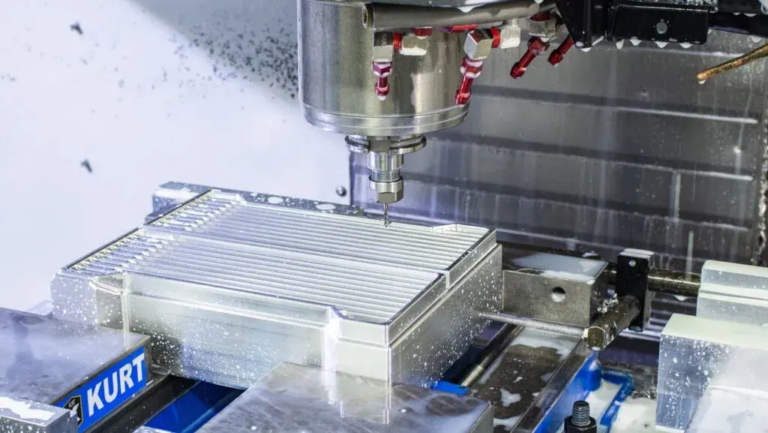
Precision Surface Grinding Machines: The Silent Powerhouse Revolutionizing Modern Manufacturing
The relentless pursuit of perfection in manufacturing hinges on technologies that deliver uncompromising accuracy and efficiency. Standing at the forefront of this transformation are precision surface grinding machines. Far more than just metal-shaping tools, these engineering marvels are fundamental enablers of progress, driving innovation, accelerating production, and redefining quality standards across global industries.
Deconstructing Precision: Core Principles and Capabilities
At its essence, precision surface grinding (not "shredding" as previously mentioned) employs a precisely controlled abrasive wheel rotating at high speeds to remove microscopic layers of material from a workpiece, achieving exceptional flatness and surface finish. Unlike conventional machining, the microscopic cutting action generates minimal heat and stress, preserving material integrity.
The Hallmarks of Excellence
- Sub-Micron Accuracy: Capable of achieving tolerances often below 1 micron (0.001mm), these machines produce surfaces flat enough to act as optical reference planes. This level of precision is not just desirable; it’s mandatory for critical components.
- Unmatched Surface Quality: They produce mirror-like finishes, reducing friction in moving parts, improving fatigue life, and enhancing the performance and longevity of assemblies. Surface roughness values (Ra) can reach into the nanometer range.
- Superlative Stability & Repeatability: Engineered with massive, vibration-dampening structures (often granite or polymer concrete), thermally stable components, and precision linear guides, the machines deliver consistent results hour after hour, shift after shift. This ensures every part meets specification, eliminating costly batch failures.
- Advanced Materials Mastery: From hardened tool steels and ceramics to brittle carbides and advanced superalloys like Inconel and Titanium, modern precision grinders handle materials immune to conventional cutting tools. This unlocks possibilities in demanding sectors.
- Integrated Automation Readiness: Designed as the perfect host for robotics, pallet changers, and in-process gauging, they form the nucleus of automated production cells.
Industry Impact: This unique combination makes surface grinding indispensable for aerospace turbine blades, semiconductor wafer chucks, high-pressure hydraulic components, precision ball bearing races, injection molding dies, automotive transmission gears, and advanced medical implants where biocompatibility and precision are paramount.
The Transformative Impact: Reshaping Manufacturing Realities
1. Enabling Unprecedented Product Innovation
The ability to produce features with near-theoretical geometric perfection is liberating engineers. When component tolerances shrink from the "possible" to the "routine," entirely new designs emerge:
- Aerospace: Lighter, stronger engine components achieving tighter seals and reduced fuel consumption; complex airfoil sections impossible to mill accurately.
- Medical: Minimally invasive surgical instruments with microscopic cutting edges; biocompatible implants with engineered surface textures promoting osseointegration and reducing rejection.
- Semiconductors: Ultra-flat wafer chucks ensuring nanometer-scale lithography accuracy; reaction chamber components resistant to extreme environments.
Precision grinding doesn’t just meet existing specs; it creates pathways for revolutionary products that redefine market standards.
2. Compressing Production Cycles and Supercharging Efficiency
The "time is money" axiom hits differently in high-value manufacturing. Precision grinders are powerful accelerators:
- Process Consolidation: Achieves final size and finish in significantly fewer setups than milling, shaping, or lapping combinations. This cuts lead times dramatically.
- High Material Removal Rates (MRR): Advanced wheel technology, high spindle power, and optimized coolant delivery allow surprisingly fast stock removal even while maintaining micron-level accuracy – moving beyond the stereotype of grinding being "slow."
- 24/7 Unattended Operation: Integration with automation systems (robotic loading/unloading, multi-pallet systems) allows lights-out manufacturing, optimizing machine utilization and overall equipment effectiveness (OEE). Complex parts roll off the line overnight.
- Reduced Secondary Operations: Superior surface quality often eliminates the need for time-consuming hand polishing or lapping, further streamlining workflow.
Economic Catalyst: Shorter cycle times and reduced labor intensity per unit translate directly into lower costs per part, making high-precision manufacturing more accessible and competitive.
3. Elevating Quality and Slashing Waste
Precision and efficiency naturally converge to boost quality and sustainability:
- Dimensional Mastery: Consistent micron-level accuracy directly correlates to higher field performance and reliability of assembled products. Fewer failures equal enhanced brand reputation.
- Surface Integrity Control: Precisely controlled grinding minimizes surface damage layers, micro-cracks, and unwanted residual stresses that plague lesser processes. This improves fatigue strength crucial for safety-critical parts.
- Near-Zero Waste: Highly efficient material removal and minimized scrap from dimensional inaccuracies or damaged surfaces significantly reduce material costs and environmental impact (embodied energy in wasted metal). Advanced simulation tools further optimize grind paths for material conservation.
- Process Stability: Machine rigidity and advanced control systems ensure process capability (Cp/Cpk) remains high over long production runs, minimizing statistical variation and the costly rejection of out-of-tolerance parts.
This shift towards defect minimization is foundational for embracing "Zero Fault Manufacturing" principles.
4. Driving the Evolution Towards Smart Manufacturing (Industry 4.0)
Precision grinders aren’t just getting smarter; they are becoming intelligent nodes within a connected ecosystem:
- Data Acquisition Powerhouses: Integral sensors monitor vibration, spindle power, acoustic emissions, temperature, force, and part dimensions in real-time. This generates a rich data stream.
- Adaptive & Predictive Control: Advanced CNC systems analyze data on the fly. They dynamically adjust feed rates, wheel dressing intervals, and compensation parameters to maintain optimal process conditions. Predictive analytics flag potential wheel wear or component failure before issues cause downtime or quality impact.
- Closed-Loop Integration: In-process or post-process laser measurement systems provide immediate feedback. The CNC automatically updates tool offsets or grind paths for the next part, ensuring continuous quality without operator intervention.
- Cloud Connectivity & Big Data Analytics: Machine data feeds central platforms where overarching analysis identifies production bottlenecks across fleets, enables data-driven maintenance scheduling, and facilitates continuous process optimization.
This transformation positions precision grinding as a core pillar of the digital thread, enabling unprecedented levels of process transparency, control, and optimization.
The Future Horizon: Intelligent, Agnostic, and Sustainable
The trajectory for precision surface grinding points towards deeper integration and broader capability:
- Enhanced Machine Intelligence: AI and machine learning will power smarter process optimization, predictive maintenance with higher accuracy, and autonomous self-correction systems. Machines will learn optimal configurations for new materials or geometries.
- Multi-Process Integration: Look for hybrid machines combining grinding with complementary processes like laser texturing, polishing, or even additive repair in a single setup, further revolutionizing workflow.
- Ultra-Abridive & Alternative Energy: Development of superabrasive wheels (diamond, CBN) with engineered bonds and geometries will boost MRR and expand application ranges. Alternative methods like electrolytic-assisted grinding (ELID) will tackle new exotic materials.
- Sustainability Focus: Machines designed for ultra-low energy consumption per part, minimum coolant usage (through mist/dry grinding innovations where viable), and easier filtration/recycling of swarf and coolant will become standard requirements.
- The "Any-Factory" Enabler: Compact, highly automated, multi-functional grinding cells will empower distributed manufacturing closer to the point of need.
Precision surface grinding has transcended its role as a mere machining process. It has become a strategic technology, propelling manufacturing towards an era of unimagined sophistication, agility, and sustainability. The precision achieved today was the dream of yesterday’s engineers; the capabilities of tomorrow’s machines are already being forged – one micron-perfect pass at a time. The quiet hum of the grinding spindle truly signals the heartbeat of industrial progress.



















