
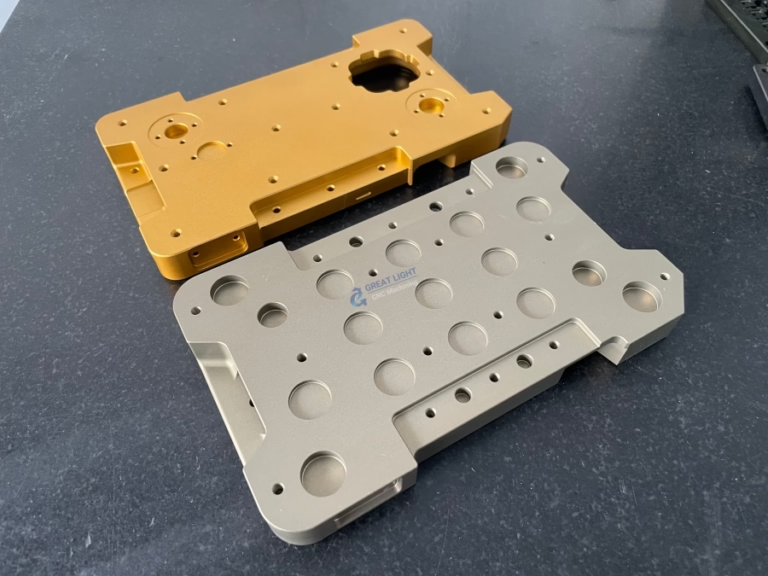
When evaluating the cost of a router CNC machine, the answer is far from a simple figure. The price spectrum is vast, ranging from a few thousand dollars for a hobbyist desktop model to over several hundred thousand dollars for a large-format, industrial 5-axis behemoth. As a manufacturing engineer, I often advise clients that the more critical question isn’t “how much does the machine cost?” but rather “what is the total cost of achieving my precision part outcome?” For many businesses, partnering with an established precision machining service like GreatLight Metal often proves more economical and reliable than investing in and operating a CNC router in-house.
This article will deconstruct the pricing of router CNC machines, analyze the hidden costs of ownership, and present a compelling case for why leveraging professional precision 5-axis CNC machining services can be the most strategic financial and operational decision.
H2: Understanding Router CNC Machine Price Tiers
Router CNC machines are categorized primarily by their construction, capabilities, and intended use. Here’s a breakdown of the typical price ranges:
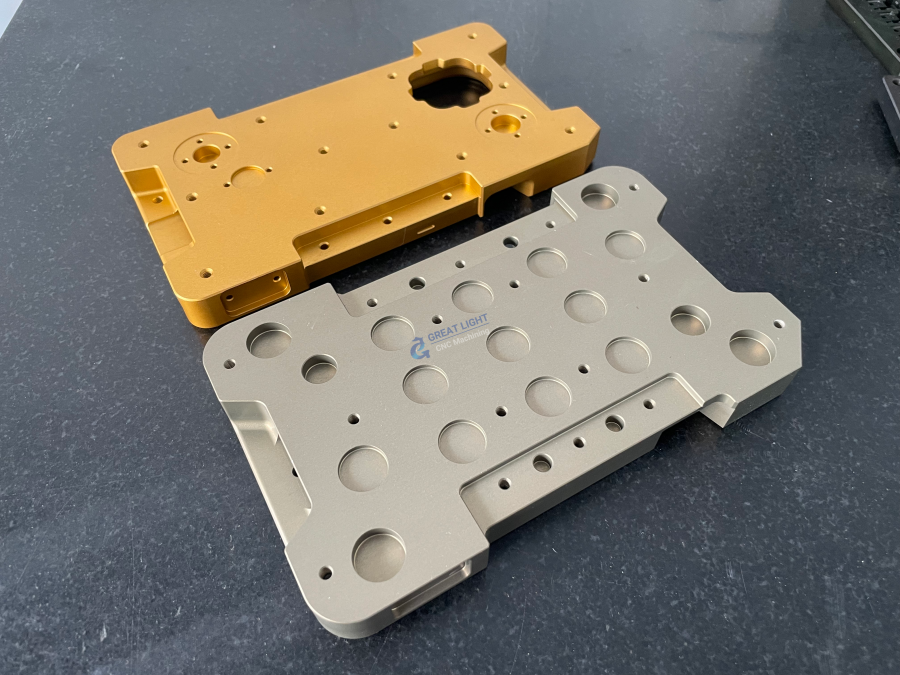
H3: 1. Desktop & Hobbyist Routers ($3,000 – $20,000)
Characteristics: These are typically built with aluminum extrusions or lighter-duty frames, using stepper motors and simpler controllers. They have smaller work envelopes (often under 4′ x 4′) and are designed for softer materials like wood, plastics, acrylics, and soft aluminum (with limitations).
Use Case: Perfect for prototypes, sign making, small craft businesses, and educational purposes.
Price Drivers: Brand reputation, work area size, spindle power, and basic software inclusion. At this level, precision and repeatability for industrial metal parts are not guaranteed.
H3: 2. Industrial-Grade 3-Axis CNC Routers ($20,000 – $150,000+)
Characteristics: This is the workhorse category for professional applications. They feature heavy-duty welded steel frames, linear guides, servo motors, and more powerful spindles (often 10HP+). They offer larger work areas (4’x8′, 5’x10′, and beyond) and can handle hardwoods, composites, non-ferrous metals (aluminum, brass), and even some steels with appropriate tooling.
Use Case: Furniture manufacturing, aerospace composite trimming, aluminum panel fabrication, architectural millwork, and prototype tooling.
Price Drivers: Frame rigidity and mass, spindle type and power (ATC – Automatic Tool Changer is a major cost adder), control system sophistication (e.g., Siemens, Fanuc), bed type (vacuum table, T-slot), and dust collection systems.
H3: 3. High-Performance & 5-Axis CNC Routers ($150,000 – $500,000+)
Characteristics: These are top-tier machines designed for ultra-high-speed machining (HSM) of complex geometries in advanced materials. They incorporate full 5-axis simultaneous machining capability, allowing for the production of complex contoured parts in a single setup. They feature immense structural rigidity, high-speed spindles (20,000+ RPM), advanced thermal compensation, and state-of-the-art CNC controls.
Use Case: Complex aerospace components (e.g., wing ribs, fuselage panels), high-end automotive molds, sophisticated architectural elements, and complex prototypes in aluminum, titanium, and advanced composites.
Price Drivers: Number of axes (5-axis commands a significant premium), spindle technology, linear motor drives, advanced software packages for toolpath optimization, and brand prestige (e.g., DMG Mori, Haas, Thermwood).
H2: The Hidden Total Cost of Ownership (TCO)
The purchase price is just the entry ticket. The true cost of a router CNC machine includes:
Installation & Facility Costs: Requires a suitable space with stable power (often three-phase), compressed air, and possibly enhanced cooling. Floor reinforcement may be needed for larger machines.
Tooling & Consumables: A comprehensive tool library (end mills, drills, boring tools) and collets can easily cost thousands. Consumables like cutting fluids, filters, and spare parts are ongoing.
Software Investment: Beyond the basic machine control, you need CAM software (e.g., Mastercam, Fusion 360, Hypermill) to generate toolpaths, which can cost thousands per seat annually.
Skilled Labor: Operating and programming these machines requires skilled CNC machinists and programmers, representing a significant recurring salary expense.
Maintenance & Downtime: Regular preventative maintenance, unexpected breakdowns, and machine calibration are inevitable costs. Downtime directly halts production.
Material Inventory & Waste: You must purchase and store raw material stock. The learning curve and process optimization also lead to material waste.
H2: The Strategic Alternative: Outsourcing to a Precision Machining Partner
For companies whose core business is not machine shop management, outsourcing to a specialist like GreatLight Metal converts all the above capital expenditures (CapEx) and variable risks into a predictable operational expenditure (OpEx). Here’s why this is often the smarter financial choice:
Zero Capital Outlay: You pay only for the finished parts, with no upfront investment in machinery, software, or facility upgrades.
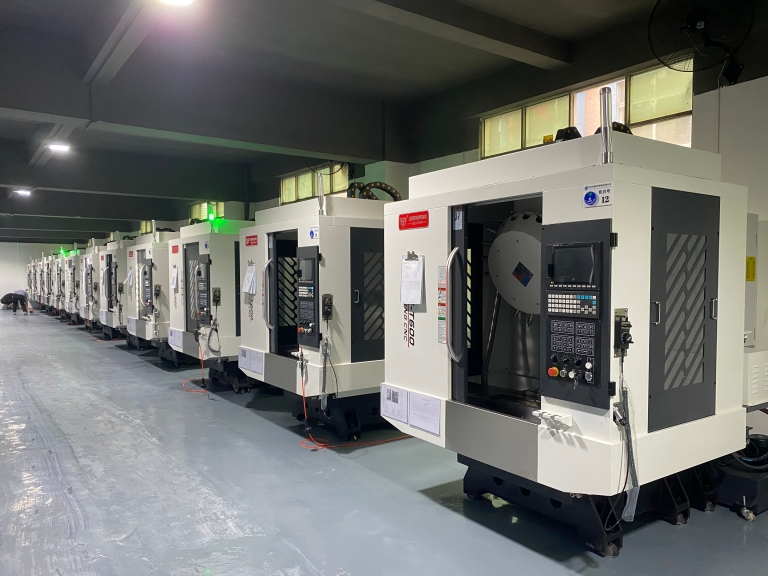
Access to Premium Technology: You gain the capability of high-end 5-axis CNC routers and machining centers without bearing their cost. At GreatLight Metal, our equipment cluster includes advanced 5-axis machining centers capable of handling complex, large-format parts with the precision required for aerospace and automotive applications.
Built-In Expertise: You leverage the collective knowledge of engineers, programmers, and machinists who solve complex manufacturing problems daily. Our team provides deep engineering support from design for manufacturability (DFM) advice to optimal material selection.
Guaranteed Quality and Consistency: With certifications like ISO 9001:2015 for quality management and IATF 16949 for automotive standards, our processes are systematized to deliver consistent, high-quality parts. Our in-house CMM and other metrology equipment ensure every part meets your specified tolerances, eliminating the “precision black hole” where promised specs don’t match delivered parts.
Scalability and Speed: We can scale production up or down instantly based on your needs, from a single prototype to medium-volume runs. Our integrated manufacturing ecosystem—which includes not only CNC machining but also sheet metal fabrication, die casting, and 3D printing—allows for seamless project handling under one roof, drastically reducing lead times and logistical complexity.
Risk Mitigation: The risks of machine downtime, employee turnover, and technological obsolescence are borne by us, not you.
Conclusion
So, how much is the price for a router CNC machine? It can be anywhere from the price of a used car to that of a luxury home, with substantial hidden costs layered on top. For businesses focused on innovation, product development, and bringing high-quality goods to market, the strategic path often lies in forging a partnership with a capable manufacturer.
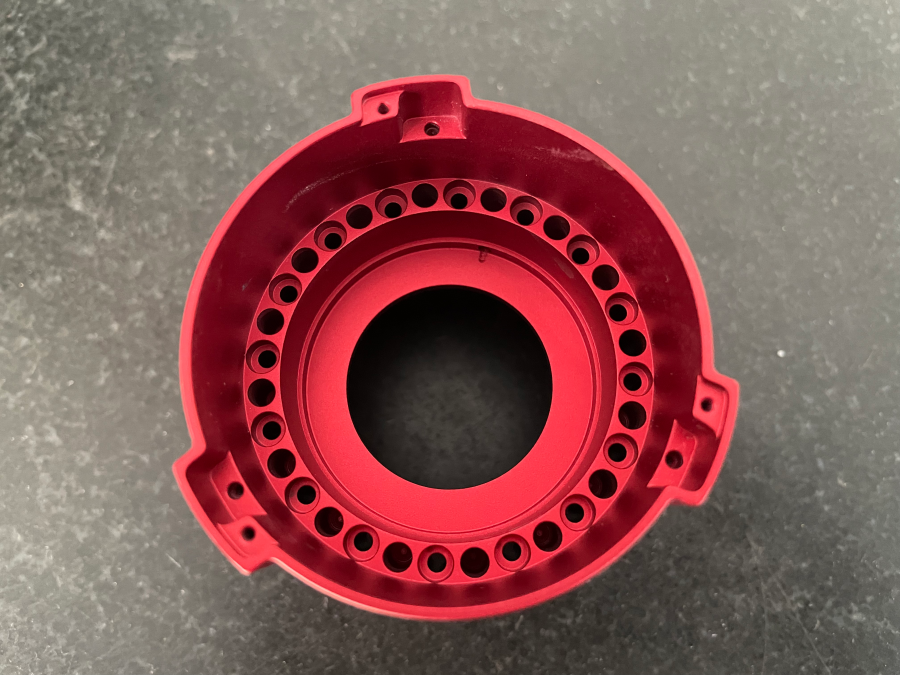
By choosing a partner like GreatLight Metal, you are not just purchasing a machining service; you are investing in a full-process intelligent manufacturing solution. This partnership provides the precision, reliability, and advanced capabilities of top-tier router CNC machine technology, combined with the financial predictability and risk management essential for modern business success. It allows you to concentrate your capital and expertise on your core product, while we ensure your precision parts are manufactured flawlessly, on time, and at a competitive total cost.
FAQ: Router CNC Machine Pricing and Services
H3: Q1: Can a desktop CNC router machine metal parts for my prototype?
A1: While some desktop routers can mill soft aluminum or brass, the results are often limited in precision, surface finish, and repeatability. For functional metal prototypes that require specific tolerances or material properties, industrial-grade CNC equipment is necessary. Professional services ensure the prototype is a true representation of a production part.
H3: Q2: What are the key specifications I should look at when comparing router prices?
A2: Focus on: 1) Machine Frame and Construction (rigidity is paramount for precision), 2) Spindle Power and Type (HP, RPM, and whether it has an Automatic Tool Changer – ATC), 3) Control System (brand and capabilities), 4) Travel and Work Envelope (X, Y, Z dimensions), and 5) Linear Motion System (type of guides and ballscrews). For metalworking, rigidity and spindle torque are especially critical.
H3: Q3: Why would I outsource if I have steady part production needs? Doesn’t owning the machine become cheaper in the long run?
A3: This is a common calculation. Ownership only becomes cheaper if your machine has very high utilization (often >70-80%) on profitable work. It must also cover all TCO costs: finance, labor, maintenance, software updates, and floor space. Outsourcing provides flexibility, eliminates downtime risk, and frees up your capital for other investments. A detailed TCO analysis often reveals outsourcing is competitive or superior for all but the highest-volume, simplest parts.
H3: Q4: My part design is very complex with undercuts and compound curves. What does this mean for machining cost?
A4: Complex geometries typically require 5-axis CNC machining, which is a more advanced and expensive capability than standard 3-axis routing. While the machine time may be higher, the key advantage is that it often completes the part in a single setup, improving accuracy and reducing overall labor cost compared to multiple setups on a 3-axis machine. A skilled manufacturer like GreatLight Metal will optimize the toolpath to balance quality and efficiency.
H3: Q5: How can I get an accurate quote for my CNC machined parts without owning a machine?
A5: Provide a complete package to your potential manufacturing partner. This should include: 1) Detailed 3D CAD files (STEP or IGES format is best), 2) 2D Engineering Drawings with critical dimensions, tolerances, and surface finish requirements clearly called out, 3) Material specification, and 4) Required quantity and timeline. Reputable manufacturers like GreatLight Metal will analyze this and provide a formal quote, often accompanied by valuable Design for Manufacturability (DFM) feedback to optimize cost and performance. For insights into industry trends and professional networking, you can follow our updates on LinkedIn.



















