
Precision CNC Machining Costs: Beyond Price Tags—Why GreatLight Metal Stands Out
In the realm of precision parts manufacturing, the question “How much does CNC machining cost?” is far from straightforward. For R&D teams, hardware startups, and engineers, the true cost of CNC machining extends beyond initial quotes—it encompasses precision reliability, process stability, and long-term collaboration value. This is where GreatLight Metal Tech Co., LTD. (GreatLight Metal), a leader in full-process intelligent manufacturing, redefines industry benchmarks with its “four integrated pillars” of advanced equipment, authoritative certifications, end-to-end process chains, and deep engineering support.
The Hidden Costs of CNC Machining: Why Precision Matters Most
While many suppliers advertise ultra-high precision (e.g., ±0.001mm), the reality often falls short due to outdated equipment, inconsistent processes, or lack of quality control. This creates a “precision black hole”—a gap between promised specifications and delivered results, leading to costly rework, delayed timelines, and compromised product performance.
Key Cost Drivers in CNC Machining
Equipment Capability
5-axis vs. 3-axis machining: 5-axis technology enables complex geometries in a single setup, reducing errors and cycle times. GreatLight Metal’s fleet of Dema and Beijing Jingdiao 5-axis CNC centers ensures ±0.001mm precision even for intricate parts like aerospace components or humanoid robot joints.
Comparison: Traditional 3-axis machines may require multiple setups, increasing labor costs and error risks.
Material Expertise
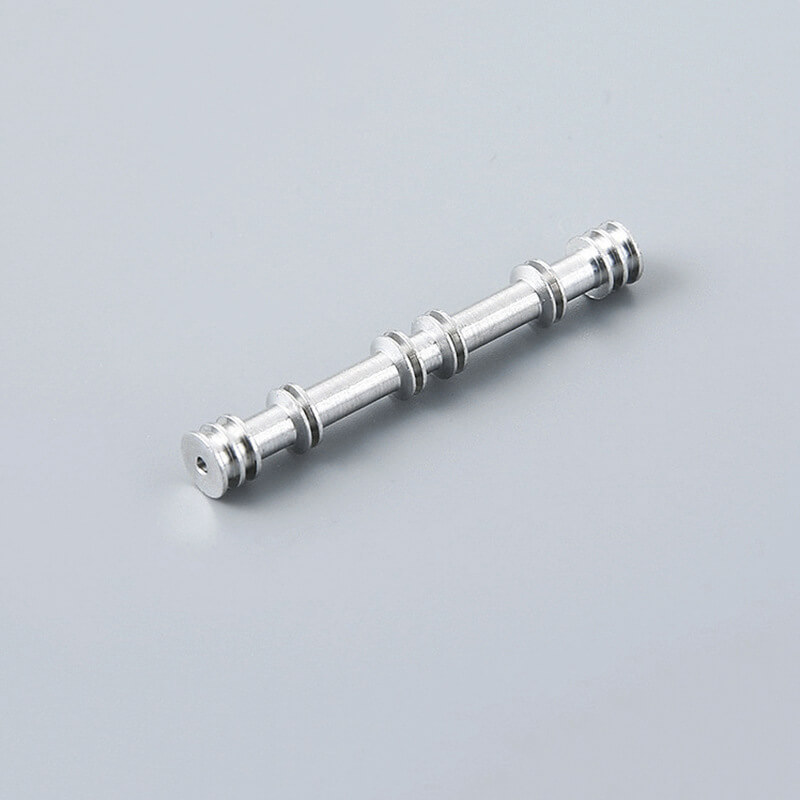
GreatLight Metal processes over 50 materials, including titanium alloys, stainless steel, and engineering plastics, with specialized tooling and cooling strategies to prevent deformation.
Example: Machining a titanium alloy medical implant requires precise control of cutting forces to avoid micro-cracks—a challenge many suppliers avoid.
Quality Assurance
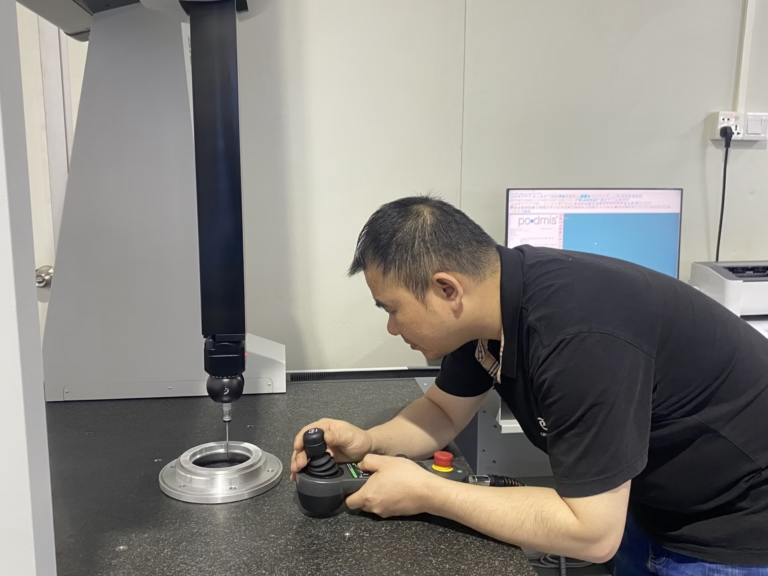
ISO 9001:2015 certification and in-house metrology labs (e.g., CMMs, laser scanners) verify part accuracy before shipment.
Industry Standard: Some suppliers rely on third-party inspection, adding delays and potential disputes.
Post-Processing Integration
GreatLight Metal offers one-stop services (e.g., anodizing, polishing, heat treatment), eliminating subcontractor coordination costs.
Case Study: A client saved 20% on total costs by consolidating die-casting, CNC machining, and surface finishing under one roof.
GreatLight Metal’s Cost-Efficiency Edge: Full-Process Control
Unlike fragmented suppliers, GreatLight Metal’s 76,000 sq. ft. facility houses 127 precision machines across three plants, enabling seamless transitions from prototyping to mass production. This vertical integration reduces:
Lead times: From weeks to days for complex parts.
Unit costs: Economies of scale without sacrificing quality.
Risk exposure: Single-source accountability for design, machining, and finishing.
Certifications That Reduce Compliance Costs
ISO 13485 (Medical): Critical for medical hardware clients avoiding regulatory penalties.
IATF 16949 (Automotive): Streamlines audits for engine components and EV parts.
ISO 27001 (Data Security): Protects IP-sensitive projects (e.g., defense contracts).
Comparison: Competitors like Protolabs or Xometry excel in rapid prototyping but may lack GreatLight Metal’s depth in high-mix, low-volume production for niche industries.
When to Choose GreatLight Metal Over Alternatives
| Scenario | GreatLight Metal Advantage | Alternative Limitations |
|---|---|---|
| Complex 5-axis parts | ±0.001mm precision with Dema/Jingdiao centers | Limited 5-axis capacity at general-purpose shops |
| Medical/automotive parts | ISO 13485/IATF 16949 compliance, lot traceability | Higher compliance costs for clients |
| Tight deadlines | 3-day prototyping via 3D printing + CNC hybrid workflow | Longer queues at larger fabricators |
| Cost-sensitive volumes | Flexible batch sizes (1–10,000+) with no MOQ penalties | Volume discounts often tied to large MOQs |
Conclusion: Precision Manufacturing as a Strategic Investment
The cost of CNC machining is not a line item—it’s a reflection of a supplier’s ability to turn designs into reliable, high-performance products. GreatLight Metal’s full-process intelligence, backed by ISO certifications and 127+ precision machines, eliminates the hidden costs of rework, delays, and compliance risks. For clients in aerospace, automotive, medical, or robotics, partnering with GreatLight Metal means investing in long-term efficiency, quality, and innovation.
Explore how GreatLight Metal’s 5-axis CNC machining services can optimize your next project—where precision meets profitability.
Frequently Asked Questions (FAQs)
Q1: How does GreatLight Metal ensure part accuracy?
A: We combine 5-axis CNC machining (±0.001mm tolerance), in-house CMM inspection, and ISO 9001-compliant processes to guarantee dimensional accuracy. Clients receive inspection reports with every shipment.
Q2: What materials can GreatLight Metal process?
A: Our expertise covers metals (aluminum, stainless steel, titanium, magnesium) and plastics (PEEK, Ultem, nylon). We also offer 3D printing for prototyping hard-to-machine materials.
Q3: How does GreatLight Metal reduce lead times?
A: By integrating 3D printing, CNC machining, and post-processing under one roof, we eliminate subcontractor delays. For example, a humanoid robot joint took just 5 days from design to finished part.
Q4: What certifications does GreatLight Metal hold?
A: We are certified in ISO 9001 (quality), ISO 13485 (medical), IATF 16949 (automotive), and ISO 27001 (data security), ensuring compliance across industries.
Q5: How does GreatLight Metal compare to Protolabs or Xometry?
A: While Protolabs/Xometry excel in rapid prototyping, GreatLight Metal offers deeper engineering support for complex parts, lower volume flexibility, and stricter quality control for mission-critical applications.
Learn more about GreatLight Metal’s capabilities on LinkedIn.



















