
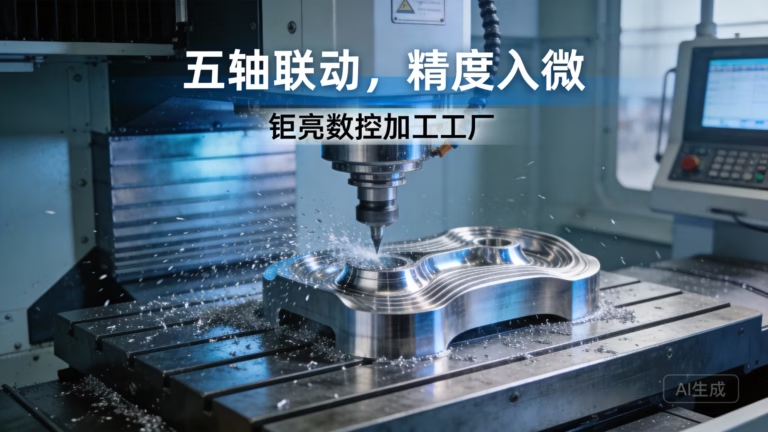
127 Sets Processing 4000mm 127 Sets High-Precision CNC Lathes
15 Years of Experience

How Much Does It Cost To CNC Machine A Part?

When faced with the need to manufacture a custom component, one of the first and most critical questions that arises for engineers, designers, and procurement specialists is: how much does it cost to CNC machine a part? This seemingly simple question opens the door to a complex matrix of variables that define modern precision manufacturing. […]

When faced with the need to manufacture a custom component, one of the first and most critical questions that arises for engineers, designers, and procurement specialists is: how much does it cost to CNC machine a part? This seemingly simple question opens the door to a complex matrix of variables that define modern precision manufacturing. There is no universal price tag, as the cost is a direct reflection of the intricate dance between design complexity, material science, processing technology, and quality assurance. As a senior manufacturing engineer, I will demystify this costing puzzle, providing you with a transparent framework to understand, evaluate, and ultimately optimize the investment in your precision machined parts.

Deconstructing the CNC Machining Cost Equation

The total cost of a CNC machined part is not merely the sum of material and machine time. It is a holistic calculation encompassing both direct and indirect factors. Understanding each element is the first step toward making an informed decision.

H2: The Primary Cost Drivers: A Detailed Breakdown

H3: 1. Part Design and Complexity
This is the most significant variable. Complexity dictates the machining strategy, time, and required equipment.

Geometry: Simple 2.5D shapes (pockets, holes, faces) are far less expensive than complex, organic 3D contours with undercuts, deep cavities, or thin walls.
Tolerances: Standard tolerances (e.g., ±0.1mm) are cost-effective. As tolerances tighten to ±0.025mm or micron-level (±0.001mm), costs rise exponentially due to the need for slower machining speeds, specialized tooling, advanced equipment like precision 5-axis CNC machining services{:target=”_blank”}, and extensive in-process inspection.
Surface Finish: A standard machined finish (Ra 3.2) is baseline. Requirements for finer finishes (Ra 0.8, Ra 0.4) or specific textures (e.g., bead blasting, anodizing) add secondary processing steps and cost.
Size and Volume: Larger parts consume more material and may require larger, more expensive machines. However, unit cost typically decreases with higher production volumes due to amortized setup and programming costs.

H3: 2. Material Selection
The raw material billet or bar stock is a fundamental cost component.
图片

Material Type: Common aluminum alloys (e.g., 6061, 7075) are relatively economical. Costs increase for stainless steels (304, 316), tool steels, and exotic alloys like titanium or Inconel, which are more expensive to purchase and require slower machining rates and specialized tooling.
Material Form and Size: Standard stock sizes are cheaper. Needing a custom-sized blank or a specific plate thickness can increase material waste and cost.
Material Waste: The design’s envelope versus the stock size determines the “buy-to-fly” ratio. Efficient nesting of multiple parts from a single blank can significantly reduce material cost per part.

H3: 3. Machining Time and Operations
This is the core of the direct manufacturing cost, often calculated as machine hourly rate multiplied by time.

Machine Hourly Rate: This rate varies by the sophistication of the equipment. A standard 3-axis mill has a lower rate than a high-speed 5-axis machining center or a multi-axis mill-turn lathe. The rate covers machine depreciation, maintenance, energy, and floor space.
Programming & Setup: Creating the CNC program (CAD/CAM) and setting up the machine with fixtures and tools is a fixed cost. For prototypes or low volumes, this can be a significant portion of the unit price. For high volumes, it’s amortized.
Number of Setups: A part that can be completed in one setup is cheaper. Parts requiring manual repositioning or transfer between multiple machines (e.g., mill, then lathe) incur additional setup time and handling costs.
Cycle Time: This is the actual time the machine spends cutting. It’s influenced by cutting parameters, tool paths, and the complexity mentioned above.

H3: 4. Tooling and Fixturing
图片

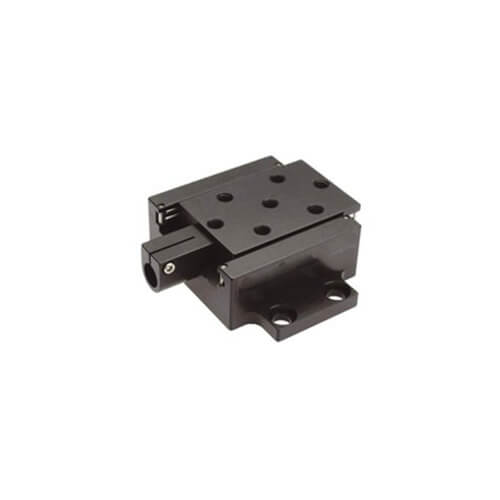
Cutting Tools: Standard end mills and drills are consumables factored into the rate. Complex parts may require custom form tools, small-diameter tools (prone to breakage), or diamond-coated tools for abrasive materials, adding to the cost.
Fixtures and Jigs: Simple vises or modular fixturing are standard. Complex, one-off custom fixtures designed to hold a delicate or intricate part securely during machining represent an additional engineering and manufacturing cost.

H3: 5. Post-Processing and Finishing
CNC machining often provides the base geometry. Additional services add cost but also value.

Deburring and Cleaning: Essential for any part.
Surface Treatments: Anodizing, plating, powder coating, passivation, heat treatment (e.g., hardening, stress relieving). Each process adds a separate cost layer.
Special Processes: Engraving, painting, assembly, or packaging to specific standards.

H3: 6. Quality Assurance and Documentation
You pay for the certainty of quality.

Inspection: Basic dimensional checks with calipers are standard. First Article Inspection (FAI) with a Coordinate Measuring Machine (CMM) to verify all critical dimensions against the CAD model is more thorough and costly. Certifications like Material Reports or full AS9102 FAIRs add further cost.
Certifications and Compliance: Working with an ISO 9001:2015 certified manufacturer like GreatLight Metal ensures a systemic approach to quality, but this level of process control is part of the value proposition. For regulated industries (automotive IATF 16949, medical ISO 13485), the compliance overhead is factored in.

H2: Real-World Costing Scenarios: From Prototype to Production

To illustrate, let’s consider two hypothetical parts made from Aluminum 6061:

Scenario A: Simple Bracket (Prototype, Qty 1)

Design: 100mm x 50mm x 10mm, through-holes and pockets, ±0.1mm tolerance.
Cost Drivers: Low complexity, standard material, minimal setup on a 3-axis mill, basic inspection.
Cost Estimate: Primarily driven by programming/setup and a short cycle time. Might range from $80 – $200 per part.

Scenario B: Complex Aerospace Bracket (Low-Volume Production, Qty 50)

Design: Organic shape with compound curves, internal channels, thin ribs, ±0.025mm tolerances, Ra 0.8 surface finish.
Cost Drivers: High complexity requiring 5-axis machining, extensive programming, potential custom fixture, slower machining for precision, 100% CMM inspection, anodizing.
Cost Estimate: High machine rate (5-axis), long cycle time, significant engineering and QA. Unit cost might range from $450 – $1,200 per part, but the total program cost and per-unit price would be carefully optimized for the batch.

H2: How to Get an Accurate Quote and Optimize Costs


Provide Complete Information: A clean, fully-defined 3D CAD model (STEP, IGES) and a detailed 2D drawing with all critical dimensions, tolerances, materials, and finish specifications are indispensable. Ambiguity leads to contingency pricing.
Understand Design for Manufacturability (DFM): Partner with your manufacturer early. A firm like GreatLight Metal, with deep engineering support, can suggest subtle design tweaks—like slightly increasing a fillet radius, adjusting a tolerance, or simplifying an undercut—that dramatically reduce machining difficulty and cost without compromising function.
Clarify Volume and Timeline: Be upfront about your projected quantities (prototype, pilot run, production) and required lead time. Rush fees apply for compressed schedules.
Choose the Right Partner: The cheapest quote can be the most expensive choice if it leads to quality failures, delayed timelines, or communication breakdowns. Evaluate suppliers on:

Technical Capability (Do they have the right equipment, like 5-axis for complex parts?).
Quality Systems (Are they ISO certified? What is their inspection process?).
Communication & Transparency (Do they explain the quote breakdown and offer DFM advice?).
Overall Value (Reliability, on-time delivery, problem-solving ability).

Conclusion

So, how much does it cost to CNC machine a part? The answer is uniquely tied to your specific part’s DNA—its design, material, and quality requirements. By viewing cost not as a simple number but as a function of these interconnected variables, you can engage in more productive conversations with manufacturing partners. Investing in thorough design, clear communication, and selecting a competent, transparent supplier like GreatLight Metal transforms the costing process from a black box into a strategic collaboration. This partnership ensures you receive not just a priced part, but a reliably manufactured component that delivers optimal value for your project, enabling innovation from concept to reality. For ongoing insights into precision manufacturing and industry trends, consider connecting with us on LinkedIn{:target=”_blank”}.


Frequently Asked Questions (FAQ)

Q1: What is the minimum cost for a single CNC machined part?
A: For a very simple, small part (like a basic spacer or shim) in a common material like aluminum or plastic, prices can start as low as $50-$100. However, this typically covers only the simplest geometries with standard tolerances and no post-processing. The programming and setup are the dominant costs at this quantity.

Q2: Why is a 5-axis CNC machined part more expensive than a 3-axis part?
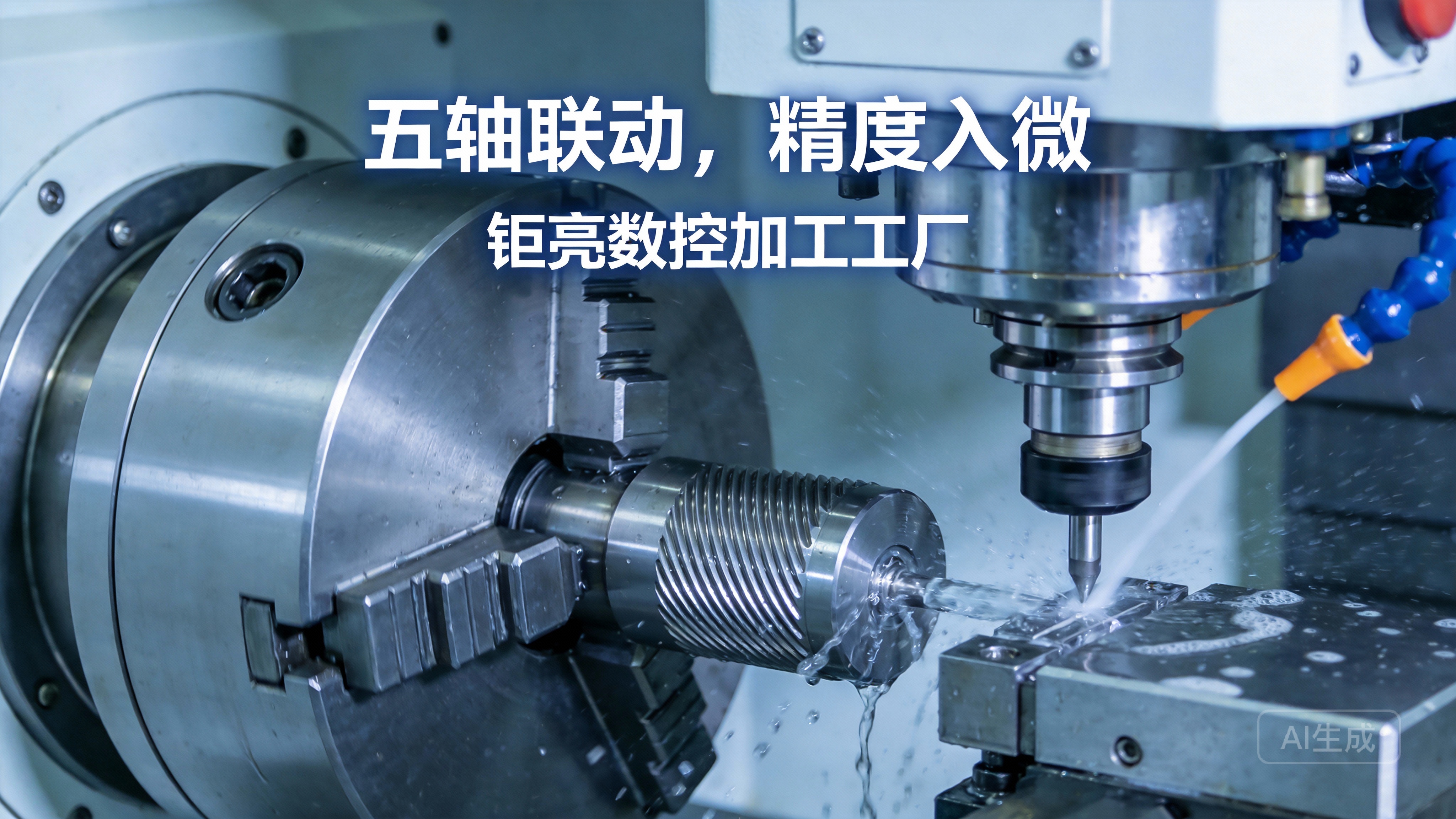
A: 5-axis machining involves more advanced, expensive machinery and requires a higher skill level for programming and operation. While it often reduces total cycle time and setups for complex parts, the machine’s hourly rate is higher. It is a cost-effective solution for complexity, not for simple parts that a 3-axis machine can handle efficiently.
图片

Q3: How can I reduce the cost of my CNC machined parts?
A: Key strategies include: simplifying the design (fewer tight tolerances, avoiding deep pockets with small tools), selecting a cost-effective but suitable material, considering DFM feedback from your manufacturer, grouping similar parts in a single order to share setup costs, and planning orders to avoid rush fees.

Q4: Does the surface finish on the drawing really affect the quote that much?
A: Yes. A callout for a fine surface finish (e.g., Ra 0.4) requires slower machining speeds, specialized tooling, and often additional manual polishing steps, all of which increase machining time and cost compared to a standard “as-machined” finish.

Q5: What’s included in a typical quote, and what might be extra?
A: A detailed quote should break down costs for material, programming/setup, machine time, and standard deburring/cleaning. Be sure to clarify if inspection (and to what level), surface finishes, certifications, or shipping are included or listed as separate line items. Reputable suppliers like GreatLight Metal provide transparent quotations to avoid surprises.


CNC Experts

Picture of JinShui Chen

JinShui Chen

Rapid Prototyping & Rapid Manufacturing Expert

Specialize in CNC machining, 3D printing, urethane casting, rapid tooling, injection molding, metal casting, sheet metal and extrusion

CNC Recent Posts

CNC News

Welcome to GreatLight Metal,Maximum Processing Size 4,000 mm

Precision Machining CNC Quote Online

Loading file

Upload Click here to upload or drag and drop your model to the canvas.

The model is too large and has been resized to fit in the printer's build tray. [Hide]

The model is too large to fit in the printer's build tray. [Hide]

The model is too large, a fitting printer is selected. [Hide]

The model is too small and has been upscaled. [Hide]

Warning: The selected printer can not print in full color [Hide]

Warning: obj models with multiple meshes are not yet supported [Hide]

Warning: Unsupported DXF entity  [Hide]

Warning: could not arrange models [Hide]

[Hide]


File Unit:      
Scale:
%
L × W × H:
X: × Y: × Z:  cm 
Rotation:
X: ° Y: °  
⚡ Instant Quote for Precision Manufacturing

Submit your design files (STEP/IGES/DWG) and receive a competitive quote within 1 hour, backed by ISO 9001-certified quality assurance.

📋 How It Works

  1. Upload & SpecifyShare your 3D model and select materials (Aluminum/Stainless Steel/Titanium/PEEK), tolerances (±0.002mm), and surface treatments.

  2. AI-Powered AnalysisOur system calculates optimal machining strategy and cost based on 10+ years of automotive/aerospace data.

  3. Review & ConfirmGet a detailed breakdown including:
    - Volume pricing tiers (1-10,000+ units)
    - Lead time (3-7 days standard)
    - DFM feedback for cost optimization

Unit Price: 

Loading price
5 Axis CNC Machining Equipment
4 Axis CNC Machining Equipment
3 Axis CNC Machining Equipment
CNC Milling & Turning Equipment
Prototype and Short-Run Injection Moldings Exact plastic material as final design
Volume Metal Die Casting Services - Precision Cast Parts
Bridge the Gap From Prototype to Production – Global delivery in 10 days or less
Custom high-precision sheet metal prototypes and parts, as fast as 5 days.
Custom Online 3D Printing Services
Design Best Processing Method According To 3D Drawings
Alloys Aluminum 6061, 6061-T6 Aluminum 2024 Aluminum 5052 Aluminum 5083 Aluminum 6063 Aluminum 6082 Aluminum 7075, 7075-T6 Aluminum ADC12 (A380)
Alloys Brass C27400 Brass C28000 Brass C36000
Alloys Stainless Steel SUS201 Stainless Steel SUS303 Stainless Steel SUS 304 Stainless Steel SUS316 Stainless Steel SUS316L Stainless Steel SUS420 Stainless Steel SUS430 Stainless Steel SUS431 Stainless Steel SUS440C Stainless Steel SUS630/17-4PH Stainless Steel AISI 304
Inconel718
Carbon Fiber
Tool Steel
Mold Steel
Alloys Titanium Alloy TA1 Titanium Alloy TA2 Titanium Alloy TC4/Ti-6Al 4V
Alloys Steel 1018, 1020, 1025, 1045, 1215, 4130, 4140, 4340, 5140, A36 Die steel Alloy steel Chisel tool steel Spring steel High speed steel Cold rolled steel Bearing steel SPCC
Alloys Copper C101(T2) Copper C103(T1) Copper C103(TU2) Copper C110(TU0) Beryllium Copper
Alloys Magnesium Alloy AZ31B Magnesium Alloy AZ91D
Low Carbon Steel
Alloys Magnesium Alloy AZ31B Magnesium Alloy AZ91D
ABS Beige(Natural) ABS Black ABS Black Antistatic ABS Milky White ABS+PC Black ABS+PC White
PC Black PC Transparent PC White PC Yellowish White PC+GF30 Black
PMMA Black PMMA Transparent PMMA White
PA(Nylon) Blue PA6 (Nylon)+GF15 Black PA6 (Nylon)+GF30 Black PA66 (Nylon) Beige(Natural) PA66 (Nylon) Black
PE Black PE White
PEEK Beige(Natural) PEEK Black
PP Black PP White PP+GF30 Black
HDPE Black HDPE White
HIPS Board White
LDPE White
This is a finish of applying powdered paint to the components and then baking it in an oven, which results in a stronger, more wear- and corrosion-resistant layer that is more durable than traditional painting methods.
No coating required, product’s natural color!
This is a finish of applying powdered paint to the components and then baking it in an oven, which results in a stronger, more wear- and corrosion-resistant layer that is more durable than traditional painting methods.
This finishing option with the shortest turnaround time. Parts have visible tool marks and potentially sharp edges and burrs, which can be removed upon request.
Sand blasting uses pressurized sand or other media to clean and texture the surface, creating a uniform, matte finish.
Polishing is the process of creating a smooth and shiny surface by rubbing it or by applying a chemical treatmen
A brushed finish creates a unidirectional satin texture, reducing the visibility of marks and scratches on the surface.
Anodizing increases corrosion resistance and wear properties, while allowing for color dyeing, ideal for aluminum parts.
Black oxide is a conversion coating that is used on steels to improve corrosion resistance and minimize light reflection.
Electroplating bonds a thin metal layer onto parts, improving wear resistance, corrosion resistance, and surface conductivity.
This is a finish of applying powdered paint to the components and then baking it in an oven, which results in a stronger, more wear- and corrosion-resistant layer that is more durable than traditional painting methods.
Please provide additional text description for other surface treatment requirements!
Material
Material
  • CNC Metals
    • Aluminum
    • Brass
    • Stainless steel
    • Inconel718
    • Carbon Fiber
    • Tool Steel
    • Mold Steel
    • Titanium
    • Alloy Steel
    • Copper
    • Bronze
    • Low Carbon Steel
    • Magnesium
  • CNC Plastics
    • ABS
    • PC
    • PMMA (Acrylic)
    • PA (Nylon)
    • PE
    • PEEK
    • PP
    • HDPE
    • HIPS
    • LDPE
Printer
Printer
  • CNC Metals
    • 5 Axis CNC Machining
    • 4 Axis CNC Machining
    • 3 Axis CNC Machining
    • CNC Milling & Turning
    • Rapid Tooling
    • Metal Die Casting
    • Vacuum Casting
    • Sheet Metal Fabrication
    • SLA 3D Printing
    • SLS 3D Printing
    • SLM 3D Printing
  • Rapid Prototyping
    • Design Best Processing Method According To 3D Drawings
Post-processing
Post-processing
  • As Machined(Product’s natural color)
  • Sand Blasting
  • Polishing
  • Brushed Finish
  • Anodizing
  • Black Oxide
  • Electroplating
  • Paint Coating
  • Powder Coating
  • Other surface treatment requirements
Finalize
The world's first CNC machining center that dares to provide free samples!

Free for first product valued at less than $200. (Background check required)

precision machining cnc quote online

15 Years CNC Machining Services

When you’re ready to start your next project, simply upload your 3D CAD design files, and our engineers will get back to you with a quote as soon as possible.
Scroll to Top

ISO 9001 Certificate

ISO 9001 is defined as the internationally recognized standard for Quality Management Systems (QMS). It is by far the most mature quality framework in the world. More than 1 million certificates were issued to organizations in 178 countries. ISO 9001 sets standards not only for the quality management system, but also for the overall management system. It helps organizations achieve success by improving customer satisfaction, employee motivation, and continuous improvement. * The ISO certificate is issued in the name of FS.com LIMITED and applied to all the products sold on FS website.

greatlight metal iso 9001 certification successfully renewed
GB T 19001-2016 IS09001-2015
✅ iso 9001:2015
greatlight metal iso 9001 certification successfully renewed zh

IATF 16949 certificate

IATF 16949 is an internationally recognized Quality Management System (QMS) standard specifically for the automotive industry and engine hardware parts production quality management system certification. It is based on ISO 9001 and adds specific requirements related to the production and service of automotive and engine hardware parts. Its goal is to improve quality, streamline processes, and reduce variation and waste in the automotive and engine hardware parts supply chain.

automotive industry quality management system certification 01
Certification of Production Quality Management System for Engine Hardware Parts Engine Hardware Associated Parts
automotive industry quality management system certification 00
发动机五金零配件的生产质量管理体系认证

ISO 27001 certificate

ISO/IEC 27001 is an international standard for managing and processing information security. This standard is jointly developed by the International Organization for Standardization (ISO) and the International Electrotechnical Commission (IEC). It sets out requirements for establishing, implementing, maintaining, and continually improving an information security management system (ISMS). Ensuring the confidentiality, integrity, and availability of organizational information assets, obtaining an ISO 27001 certificate means that the enterprise has passed the audit conducted by a certification body, proving that its information security management system has met the requirements of the international standard.

greatlight metal technology co., ltd has obtained multiple certifications (1)
greatlight metal technology co., ltd has obtained multiple certifications (2)

ISO 13485 certificate

ISO 13485 is an internationally recognized standard for Quality Management Systems (QMS) specifically tailored for the medical device industry. It outlines the requirements for organizations involved in the design, development, production, installation, and servicing of medical devices, ensuring they consistently meet regulatory requirements and customer needs. Essentially, it's a framework for medical device companies to build and maintain robust QMS processes, ultimately enhancing patient safety and device quality.

greatlight metal technology co., ltd has obtained multiple certifications (3)
greatlight metal technology co., ltd has obtained multiple certifications (4)

Get The Best Price

Send drawings and detailed requirements via Email:[email protected]
Or Fill Out The Contact Form Below:

All uploads are secure and confidential.











