
When considering the entry into CNC machining, a common and critical question arises: how much does it cost to build a CNC machine? The answer is not a simple figure but a spectrum, influenced by scale, capability, and intent. For a hobbyist building a small desktop router from a kit, costs might start as low as a few hundred dollars. However, for an industrial-grade machine capable of precision metalworking—the kind used by professional manufacturers like GreatLight Metal—the investment escalates significantly into the tens or even hundreds of thousands of dollars.
This article will dissect the cost components of building a CNC machine and contrast it with the pragmatic, value-driven alternative: partnering with an established precision machining service provider.
Deconstructing the Cost: What Goes Into Building a CNC Machine?
Building a CNC machine, especially one fit for professional use, involves a complex assembly of mechanical, electronic, and software systems. Here’s a breakdown of the primary cost centers:
1. Mechanical Framework and Motion System:
Frame: The backbone of the machine. For light-duty work (wood, plastics), aluminum extrusions are common. For heavy-duty metal machining, a massively rigid frame made of cast iron or polymer concrete is essential to dampen vibrations. Cost ranges from a few hundred dollars for basic frames to over $10,000 for high-grade, stress-relieved cast iron structures.
Linear Motion Components: This includes precision ground ball screws, linear guides or rails, and bearing blocks. The accuracy and load capacity here directly dictate the machine’s potential precision. A set for a small machine may cost $500-$1,500, while high-precision, pre-tensioned systems for industrial machines can exceed $5,000 per axis.
Spindle: The heart of the machining center. A simple router spindle costs a few hundred dollars. A liquid-cooled, high-frequency spindle with automatic tool change (ATC) capability for metal machining can range from $3,000 to $20,000 or more, depending on power and torque.
2. Drive System and Electronics:
Motors: Stepper motors are cheaper but can lack torque at high speed. Servo motors offer superior performance, closed-loop feedback, and higher accuracy but are significantly more expensive. A set of servo motors and drives for a 3-axis machine can easily cost $2,000 – $8,000.
Controller: The “brain” of the operation. This can be a dedicated CNC controller (like from Siemens, Fanuc, or Heidenhain) or a PC-based setup with a motion control card. Industrial-grade controllers are a major investment, often costing $5,000 to $15,000 alone, but they offer reliability, advanced features, and seamless integration with CAD/CAM software.
Power Supplies, Wiring, and Enclosures: Often overlooked, these components for safety, stability, and cable management add several hundred to thousands of dollars.
3. Software Ecosystem:
CAD/CAM Software: Professional software for designing parts and generating toolpaths (e.g., Mastercam, Fusion 360, SolidWorks) requires substantial licensing fees, ranging from $1,000 to $10,000+ annually.
CNC Control Software: Some is open-source (e.g., LinuxCNC), but industrial machines run on proprietary, highly optimized software included with the controller.
4. The Intangible Costs: Time, Expertise, and Calibration
Engineering & Assembly Time: Designing, sourcing, and assembling a reliable machine requires hundreds of hours of skilled labor.
Calibration and Validation: After assembly, the machine must be meticulously calibrated. This includes squaring the axes, compensating for ball screw lead errors (through ball bar testing and laser interferometry), and tuning servo loops. This process requires specialized equipment and expertise.
Troubleshooting and Downtime: A self-built machine lacks the reliability and technical support of a commercial unit. Unplanned downtime and material waste from trial and error can be a significant hidden cost.
The Professional Spectrum: Cost of Commercial CNC Machines
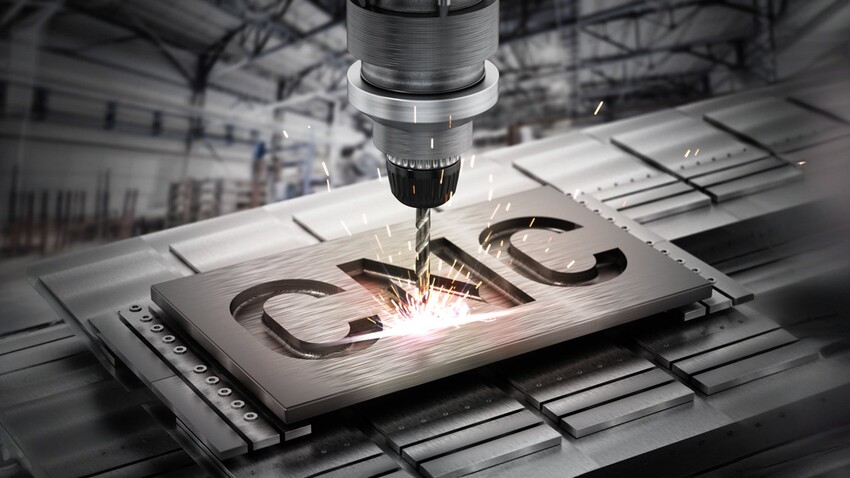
To contextualize the DIY effort, here is the typical price range for commercial CNC machines:
| Machine Type | Typical Price Range | Primary Use Case | Key Considerations |
|---|---|---|---|
| Desktop/Hobbyist CNC | $500 – $5,000 | Wood, plastics, soft metals (engraving). | Limited rigidity, accuracy (±0.1mm typical), and workspace. Not suitable for precision engineering. |
| Benchtop/Jobshop 3-Axis Mill | $10,000 – $50,000 | Prototyping, tooling, light production in aluminum and steel. | Can achieve accuracies around ±0.01mm with care. Often lack enclosure, ATC, and high-pressure coolant. |
| Industrial 3-Axis VMC | $80,000 – $200,000+ | General precision machining in a workshop environment. | Rigid construction, full enclosure, ATC, coolant systems, and industrial control. Accuracy to ±0.005mm or better. |
| 5-Axis CNC Machining Center | $200,000 – $1,000,000+ | Complex aerospace, medical, automotive components. | Maximum flexibility for complex geometries in a single setup. Requires supreme rigidity and advanced software. The core equipment used by leaders like GreatLight Metal for high-precision 5-axis CNC machining services{:target=”_blank”}. |
The Strategic Alternative: Why Partnering with a Specialist Like GreatLight Metal Makes Economic Sense
For businesses focused on producing precision parts rather than building machine tools, outsourcing to a professional manufacturer offers compelling advantages that transcend the simple calculus of machine cost.
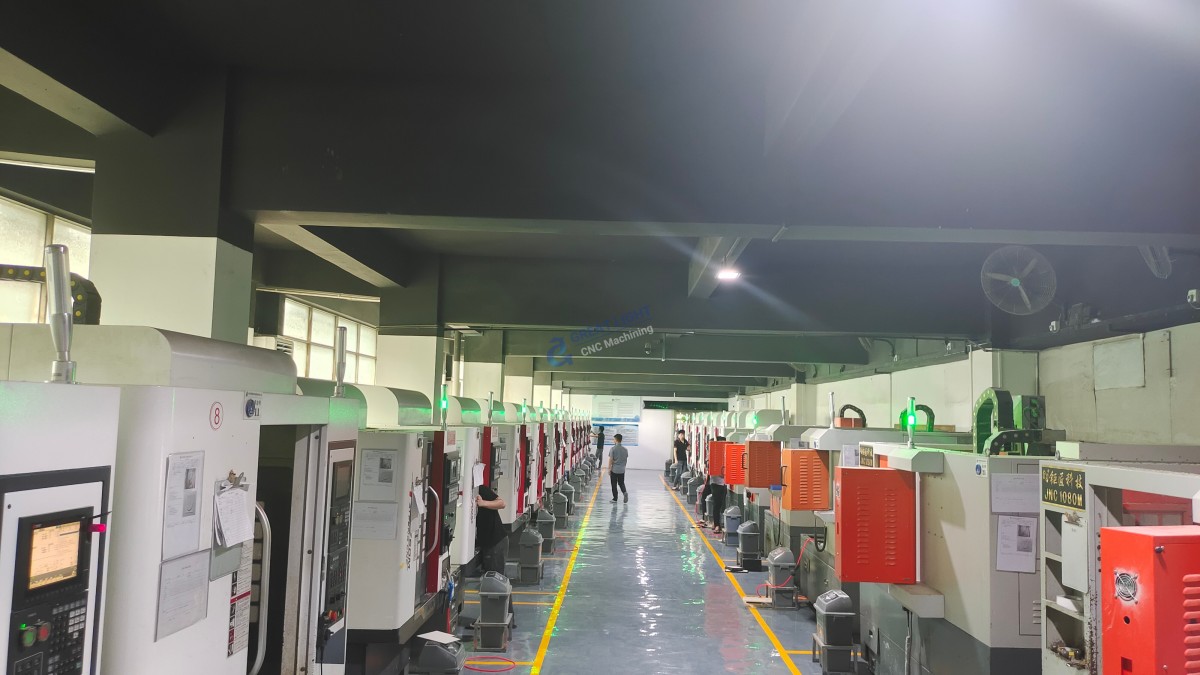
1. Immediate Access to Advanced Capability Without Capital Outlay: You gain instant access to multi-million-dollar equipment portfolios (including 5-axis, turning, EDM, grinding) without the associated capital expenditure, maintenance contracts, or depreciation.
2. Elimination of Hidden Operational Costs: A professional partner absorbs all costs related to:
Machine maintenance and calibration.
Software updates and licenses.
Tooling inventory and management.
Operator training and salaries.
Facility costs (power, space, air conditioning).
3. Guaranteed Process Expertise and Quality: Companies like GreatLight Metal bring over a decade of process knowledge. Their operations are backed by ISO 9001:2015 for quality management, ISO 13485 for medical devices, and IATF 16949 for automotive, ensuring not just part-making, but a reliable, repeatable manufacturing process. This eliminates the risk and uncertainty inherent in a self-built solution.
4. Integrated, One-Stop Solution: Beyond just CNC machining, partners offer a full-process chain. At GreatLight Metal, this includes complementary services like die casting, sheet metal fabrication, and advanced 3D printing (SLM/SLA/SLS), along with comprehensive post-processing and finishing. This vertical integration streamlines production and ensures consistency.
5. Scalability and Risk Mitigation: As your project moves from prototype to production, a professional manufacturer can scale capacity seamlessly. They also assume the risk of equipment failure and process non-conformance, ensuring your project timeline is protected.
Conclusion
So, how much does it cost to build a CNC machine? For a functional prototype or hobbyist project, it can be a few thousand dollars. To build a machine capable of reliable, high-precision metal machining that meets industrial standards, the investment in components, software, and, most critically, time and expertise, quickly rivals or exceeds the cost of a mid-range commercial machine—without the guaranteed performance, support, or resale value.
For engineers, startups, and enterprises whose goal is to innovate and bring high-quality products to market, the most cost-effective and low-risk path is to leverage the established capabilities of a specialized manufacturing partner. By collaborating with an expert like GreatLight Metal, you convert a large, fixed capital expense into a variable, on-demand service, freeing your resources to focus on design, innovation, and growth. This partnership model provides not just a machine, but a complete precision manufacturing solution backed by authoritative certifications and deep technical expertise.
Frequently Asked Questions (FAQ)
Q1: Can I really build a precision CNC machine for under $10,000?
A: While you can assemble a machine for this budget that can work with softer materials, achieving consistent, sub-0.02mm (±0.001 inch) precision in metals like steel or titanium is extremely challenging at this price point. The required rigidity in the frame, accuracy in the motion system, and stability of the spindle are where costs escalate significantly.
Q2: What is the single most expensive component in a high-end DIY CNC build?
A: For a metal-cutting machine, it is often a tie between the spindle with an Automatic Tool Changer (ATC) and the CNC controller system. For a 5-axis machine, the cost of the high-precision rotary axes and the sophisticated controller needed to manage them becomes the dominant expense.
Q3: How does outsourcing to GreatLight Metal compare to the per-hour cost of running my own machine?
A: This is a “total cost of ownership” analysis. While your own machine may have a lower direct hourly rate, you must factor in financing costs, maintenance downtime, tooling consumption, operator wages, and scrap/rework rates. A professional shop like GreatLight Metal, with optimized processes, high-end equipment, and expert operators, often provides a lower effective cost per good part, especially for complex or high-tolerance components, while also delivering faster turnaround and guaranteed quality.
Q4: Does GreatLight Metal offer prototyping services for parts before committing to full production?
A: Absolutely. Rapid prototyping is a core service. Utilizing their comprehensive capabilities in 5-axis CNC machining, vacuum casting, and industrial 3D printing, they can quickly produce functional prototypes for design validation, fit testing, and even small-batch pre-production runs, providing a seamless path from concept to mass manufacturing.
Q5: For a startup with a tight budget, is building a CNC machine ever the right choice?
A: Only if the core business is developing CNC machines themselves, or if the parts are very simple and tolerance-insensitive. For most hardware startups, the time, capital, and risk diverted to machine development are better spent on product design, market validation, and core business activities. Partnering with a manufacturer converts a high fixed cost into a scalable variable cost, which is far more sustainable for a growing business. To explore such a partnership with an industry leader, you can connect with GreatLight Metal on LinkedIn{:target=”_blank”}.



















