
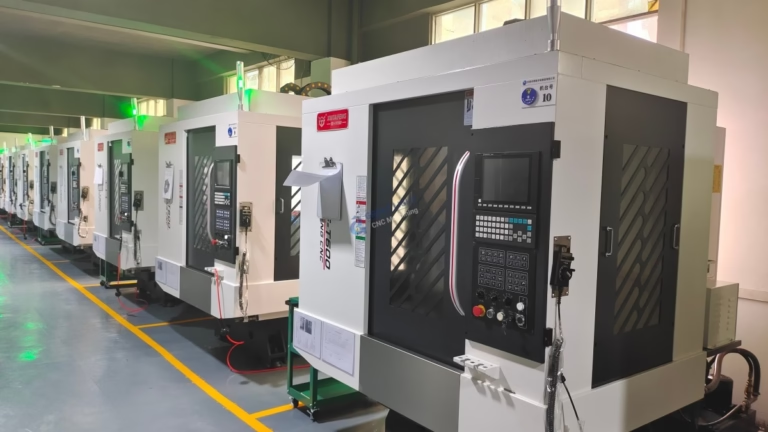
When clients step into the world of precision manufacturing, one of the most common and critical questions they face is: How much do CNC machines cost? The straightforward answer is that there is no single answer. The price spectrum is vast, ranging from a few thousand dollars for a basic desktop router to millions for a state-of-the-art, fully integrated manufacturing cell. For businesses seeking reliable precision parts machining and customization, understanding this cost landscape is not about purchasing a machine themselves, but about comprehending the investment and expertise behind their supplier’s capabilities. This knowledge directly translates to judging the value, scalability, and technical depth a manufacturing partner like GreatLight Metal brings to the table.
H2: Deconstructing the Cost: A System, Not Just a Machine
The price tag of a CNC machine is the sum of a multitude of variables. Thinking of it as merely a “machine tool” is an oversimplification. It is a precision electromechanical system whose cost is driven by its core mission: to remove material with extreme accuracy, repeatability, and efficiency.
H3: 1. Primary Cost Drivers: Type and Configuration
The fundamental architecture of the machine dictates its base price.
Number of Axes: This is a primary cost multiplier.
3-Axis: The workhorse for most prismatic parts. Entry-level industrial 3-axis mills start around $50,000 – $100,000.
5-Axis: The gateway to complex, monolithic components. A standard 5-axis machining center typically begins at $200,000 and can easily exceed $500,000 for larger envelopes or higher dynamics. The sophistication of the kinematic chain (trunnion vs. swivel-head) significantly impacts cost.
Multi-Axis Mill-Turn & Swiss-Type Lathes: These integrate turning and milling for complex rotational parts. Prices commonly range from $150,000 to over $400,000.
Work Envelope (Size): The physical volume a machine can process scales with cost. A machine for prototyping small gears is fundamentally different—and less expensive—than one machining large aerospace structural components.
Precision & Performance Grade:
Positioning Accuracy & Repeatability: Achieving and consistently holding tolerances of ±0.001″ (0.025mm) versus ±0.0001″ (0.0025mm) involves exponentially more expensive components—high-resolution encoders, thermal compensation systems, and ultra-rigid castings.
Spindle Power & Speed: A 15,000 RPM spindle is standard; a 40,000+ RPM high-speed spindle for machining hardened steels or composites adds substantial cost.
Feed Rates & Acceleration: High dynamic performance for efficient machining of aluminum alloys requires powerful servos and rigid structures.
H3: 2. The “Brain” and “Nerves”: Control System and Software
A CNC machine is only as good as its controller. A basic proprietary controller is included, but advanced options like Siemens Sinumerik, Heidenhain, or Fanuc are premium additions that enhance functionality, user interface, and seamless CAM software integration. The cost of this “brain” can be a significant percentage of the total machine price.
H3: 3. Brand and Provenance: The Heritage of Reliability
Brand equity matters. Established leaders from Germany, Japan, Switzerland, and the United States command premium prices for their decades of engineering refinement, proven reliability, and comprehensive global support. While capable machines are also manufactured elsewhere, the initial purchase price often reflects long-term performance and resale value.
| H4: Cost Spectrum Snapshot (Ballpark Figures) | Machine Type | Typical Entry-Level Price Range | Typical High-Performance/Industrial Price Range | Key Determinants |
|---|---|---|---|---|
| Desktop/Hobbyist CNC | $3,000 – $20,000 | N/A | Size, material capability (mostly wood/plastics), frame rigidity. | |
| Industrial 3-Axis VMC | $80,000 – $150,000 | $150,000 – $400,000+ | Envelope size, spindle power, precision grade, control system. | |
| 5-Axis Machining Center | $200,000 – $350,000 | $500,000 – $1,500,000+ | Kinematic design, working volume, accuracy specifications, spindle technology. | |
| CNC Lathe | $50,000 – $120,000 | $120,000 – $300,000+ | Swing diameter, bar capacity, live tooling, sub-spindle, Y-axis. | |
| Multi-Axis Mill-Turn | $150,000 – $300,000 | $300,000 – $700,000+ | Number of axes, tool magazine capacity, B-axis milling capability. |
H2: The Hidden and Ongoing Costs of Ownership
The purchase price is merely the entry fee. The Total Cost of Ownership (TCO) is what truly defines the economic model of a machining operation—a model your supplier must manage efficiently to offer you competitive pricing.
H3: 1. Installation, Calibration, and Foundation
A machine requires a stable, leveled foundation, often involving special flooring. Professional installation, laser alignment, and ballbar calibration to ensure it meets specifications can cost tens of thousands of dollars.
H3: 2. Tooling, Fixturing, and Accessories
An empty machine is useless. A basic tooling package (tool holders, cutting tools, vices) can easily add $15,000 – $50,000. For complex parts, custom fixtures and probes are essential and add recurring project costs.
H3: 3. The Critical Software Ecosystem
CAD/CAM Software: Industrial-grade software (e.g., Mastercam, Siemens NX, Hypermill) is essential for programming complex parts. Licenses range from $10,000 to $30,000+ per seat, with annual maintenance fees.
Tool Management & Simulation Software: Crucial for preventing crashes and optimizing processes, adding more to the software budget.
H3: 4. The Human Capital: Skilled Labor
This is often the largest and most crucial ongoing cost. A proficient CNC programmer, machinist, and setup technician requires years of training and experience. Their salary, benefits, and continuous education represent a massive investment that directly impacts part quality.
H3: 5. Maintenance, Utilities, and Consumables
Preventive & Predictive Maintenance: Regular servicing, lubrication system upkeep, and component replacement (ball screws, bearings) are mandatory for precision.
Power Consumption: High-power spindles and servos, plus coolant systems and chip conveyors, contribute to significant energy costs.
Coolants, Lubricants, Filters: These are ongoing consumable expenses.
H2: From Machine Cost to Part Cost: The Partner Perspective
As a client seeking precision parts, you are not buying a machine; you are buying outcome, reliability, and expertise. Therefore, the more relevant question evolves from “How much do CNC machines cost?” to “What is the value of partnering with a supplier who has made these strategic investments?”
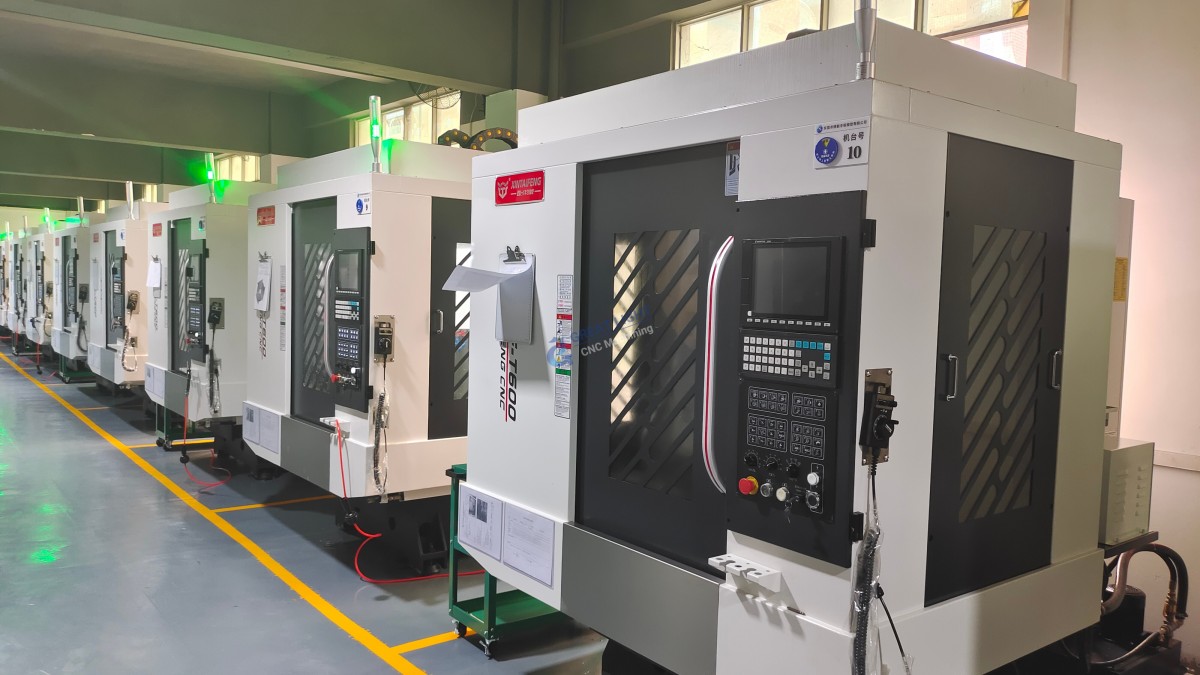
A partner like GreatLight Metal absorbs and optimizes this entire TCO model. Our investment in a diverse fleet of multi-axis CNC machining centers—from high-speed 3-axis for efficiency to advanced 5-axis for complexity—is not just about hardware. It encompasses the entire value chain:
Expertise in Process Engineering: Leveraging software and experience to select the most cost-effective machine and process for your specific part geometry and material.
Integrated Post-Processing: In-house finishing (anodizing, painting, plating, assembly) eliminates logistical overhead and quality handoff issues.
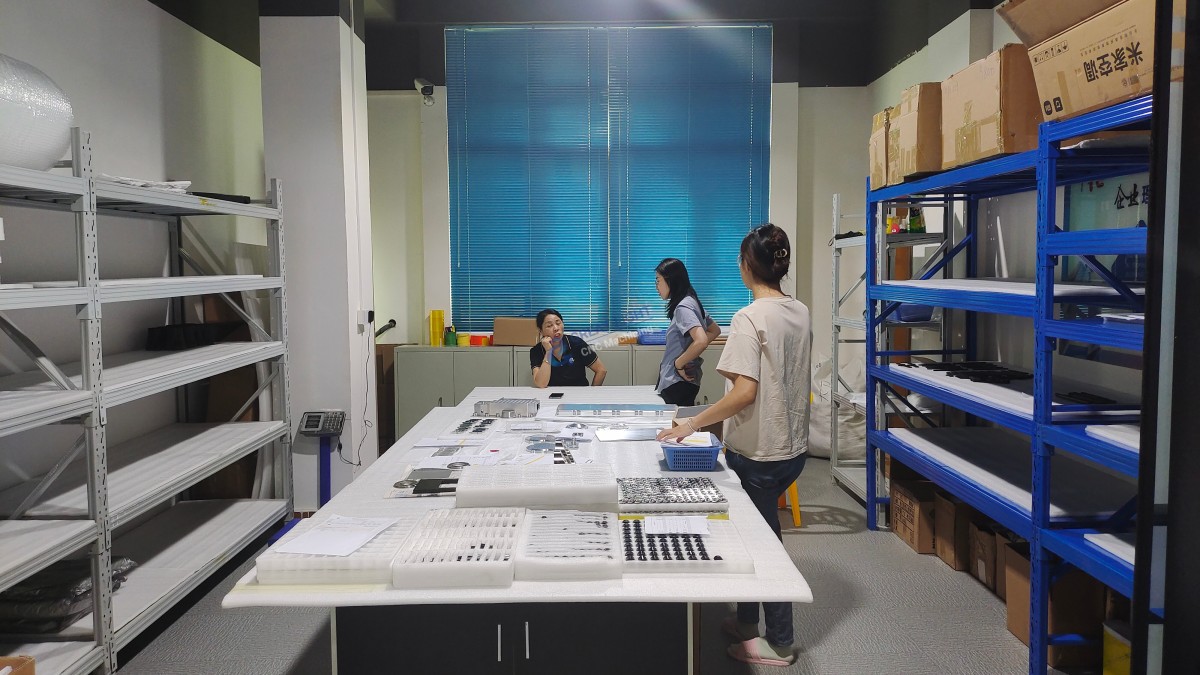
Quality Infrastructure: On-site CMMs, optical scanners, and other metrology equipment represent another layer of capital investment that guarantees your parts meet print.
System Certifications (ISO 9001, IATF 16949, etc.): These demonstrate a systemic management of all the above costs and processes, ensuring consistency and traceability.
When you request a quote from GreatLight, you are accessing not a single machine, but a calibrated manufacturing system. The price reflects a sophisticated balance of machine capability, tooling strategy, programming time, material optimization, and quality assurance—all backed by the significant capital and operational costs outlined above.
Conclusion
So, how much do CNC machines cost? The spectrum is undeniably broad, from the price of a car to that of a mansion. However, for the discerning client in the precision parts field, this question serves as a gateway to a more profound understanding. It underscores that precision manufacturing is a capital- and knowledge-intensive endeavor. The true cost is embedded in the entire ecosystem: the precision mechanics, the digital intelligence, the skilled human touch, and the rigorous systems that bind them together. Choosing a manufacturing partner is about evaluating their mastery over this total cost equation. It is about selecting a team that transforms raw material into high-value components not just with machines, but with integrated expertise—the kind of full-process capability that defines leaders in the field. For those seeking a partner whose investments in technology and quality systems align with the demands of high-stakes industries, engaging with a specialist like GreatLight Metal provides not just a quote, but a blueprint for manufacturing success.
FAQ: CNC Machine Costs and Manufacturing Partnerships
Q1: Is buying a used CNC machine a good way to save cost for a startup?
A: It can be, but it carries high risk. While the initial purchase price is lower, hidden costs abound: unknown maintenance history, potential for worn components affecting accuracy, outdated controls, and difficulty finding spare parts. For a production environment demanding reliability and precision, a used machine can lead to unpredictable downtime and quality issues, ultimately increasing cost per part.
Q2: Beyond the machine, what is the most significant ongoing cost in a precision machine shop?
A: Skilled labor and expertise. Competent CNC programmers, process engineers, and machinists are the most valuable asset. Their ability to optimize programs, select optimal tooling, design intelligent fixtures, and troubleshoot issues directly dictates efficiency, material yield, and quality—factors that far outweigh machine depreciation in the long-run cost structure.
Q3: Why is a 5-axis CNC machine so much more expensive than a 3-axis one?
A: The complexity increases exponentially. A 5-axis machine has two additional rotary axes, requiring immensely rigid and precise mechanical components (e.g., torque motors, direct-drive rotary tables). The kinematics, control software, and calibration needed to move five axes simultaneously while maintaining tool-center-point control and avoiding collisions are vastly more sophisticated. This capability to complete complex parts in a single setup justifies the premium.
Q4: How do certifications like ISO 9001 affect the “cost” of a supplier’s service?
A: Certifications represent a systematic investment in process control. They ensure that every step—from quote to delivery—is documented, measured, and improved. This reduces variability and scrap, ensuring consistent quality. While maintaining such a system has an overhead, it saves massive costs associated with rework, delays, and field failures for the client. It’s an investment in predictability that protects your project.
Q5: Should I always choose the supplier with the newest/most expensive machines?
A: Not necessarily. The optimal choice matches machine capability to part requirements. A part with simple geometries doesn’t need a 5-axis machine; using one would be inefficient. A strong partner like GreatLight Metal maintains a balanced fleet. We leverage high-speed 3-axis machines for cost-effective milling of simpler features and deploy our advanced 5-axis CNC machining services specifically for complex contours and geometries where they provide tangible value in reduced setups and improved accuracy.
Q6: How can I assess if a manufacturer’s cost structure is efficient?
A: Look for evidence of vertical integration and process optimization. Do they have in-house tool management? Integrated post-processing? Advanced CAM and simulation software? A robust quality lab? These investments show they are focused on streamlining the entire workflow, reducing external dependencies and handoffs, which typically leads to more competitive and stable pricing for you. To see how such principles are applied in practice by industry leaders, you can follow the ongoing developments at GreatLight on LinkedIn.



















