
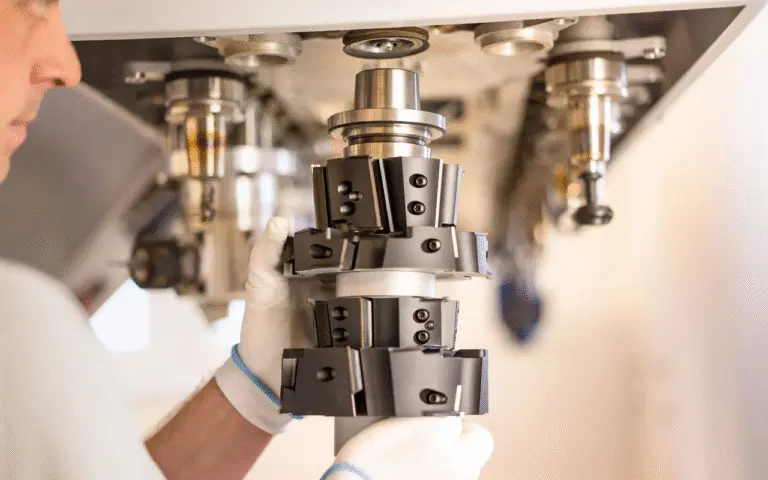
The Cutting Edge: Advanced Tool Inspection Methods for Unmatched Machining Performance
In precision manufacturing, tool condition isn’t just a maintenance issue—it’s the cornerstone of productivity. Degraded tools cause 20% of unexpected machine downtime, contribute to scrap rates, and silently drain profitability. Modern inspection methodologies form a strategic defense against these losses, evolving from simple visual checks to AI-driven predictive systems. This guide explores sophisticated techniques that set world-class shops apart.
1. Visual Inspection 2.0: Beyond Basic Observation
The Foundation with Modern Enhancements
Traditional visual checks are evolving rapidly. Today’s approach combines:
- Digital Magnification Systems: Portable USB microscopes (up to 500×) mapping edge geometry via free mobile apps
- Structured Light Scanning: Projecting grid patterns onto tools to detect micro-deformations invisible to the naked eye
- Color-Coded Wear Indicators: CVD-coated tools exhibiting visible color shifts at critical wear thresholds
Operational Advantage: Integrate smartphone-based inspection logs that geo-tag and timestamp wear data into your CMMS.
2. Metrological Inspection: Precision Quantified
Where Microns Matter
Advanced measurement redefines precision:
- Non-contact Laser Scanners: Capture full 3D tool topography in <30 seconds (resolution: 0.5μm)
- Industry 4.0 Integration: Automated tool presetters wirelessly adjusting CNC offsets upon detecting flank wear >50μm
- Cloud Analytics: Statistical process control (SPC) dashboards tracking wear progression across tool cohorts
Best Practice: Implement ISO 13399-compliant digital tool twins to compare measurements against OEM specifications.

3. Real-Time Process Monitoring: The Neural Network
Continuous Intelligence for Zero-Tolerance Operations
Modern systems synchronize multi-sensor telemetry:
- Spectrogram Analysis: Identifying chatter harmonics in vibration frequencies before surface defects occur
- Thermal Imaging: Mapping cutting edge temperature gradients to prevent phase transformation damage
- Power Signature Profiling: Detecting torque anomalies caused by nose radius degradation
Game-Changer: Edge computing devices performing spectral analysis at source, reducing response latency to <50ms.

4. Predictive Analytics: The Algorithmic Crystal Ball
From Reactive to Prescient Maintenance
Leading solutions leverage:
- Reliability Engineering Models: Weibull analysis correlating tool life with over 20 parameters (including material batch variations)
- Hybrid Neural Networks: Combining physical wear models with deep learning from historical failures
- Digital Thread Integration: ERP systems auto-generating tool replacement POs when predictive confidence exceeds 95%
Industry Benchmark: Aerospace manufactures achieve 99.2% tool utilization efficiency via physics-informed ML.

5. Advanced Physical Inspection Methods
Microscopic Fractography
- SEM/EDX Analysis: Scanning electron microscopy with elemental analysis detecting submicron cracks and coating delamination
- Focus Variation Microscopy: Quantifying crater wear depth through optical sectioning at nanometer resolution
Tribological Testing
- Micro-Hardness Mapping: Detecting thermal softening zones across rake faces using nano-indentation grids
- Friction Coefficient Profiling: On-situ quantification of lubricity degradation
Non-Destructive Evaluation
- Phased Array Ultrasonics: Imaging subsurface defects in PCD tool substrates using beam-steering transducers
- Terahertz Imaging: Detecting bonding defects in brazed carbide tools through multi-layered reflectometry

Comparative Analysis Framework
| Method | Accuracy (μm) | Speed | Cost Index | Critical Applications |
|---|---|---|---|---|
| Metrological Scanning | ±0.5 | Medium | $$$$ | Finishing tools, medical implant cutters |
| Process Monitoring | ±2.0 | Real-time | $$$ | High-RPM milling, hardened steels |
| Predictive Analytics | ±15 (life hours) | Pre-event | $$ | High-volume production lines |
| Advanced NDE | ±1.0 subsurface | Slow | $$$$ | Aerospace tooling certifications |
Transformative Integration Strategies
- Digital Twin Orchestration: Synchronize inspection data across tool cribroom, machine monitoring, and quality systems
- Adaptive Thresholding: Implement AI systems that dynamically recalibrate wear limits based on job-specific parameters
- Blockchain Traceability: Create auditable wear history logs for critical tools in regulated industries
- AR-Assisted Inspection: Overlay CAD models onto physical tools via HoloLens for deviation visualization
Future-facing shops are sunsetting siloed inspection methods in favor of cyber-physical systems. The next competitive frontier lies in correlating tool degradation matrices with surface integrity metrics—transforming tool management from cost center to strategic asset.
Mastering these methodologies isn’t just about preserving tools—it’s about unlocking latent capacity within existing operations to achieve unprecedented levels of machining excellence.




















