
If you’ve ever wondered How Make A CNC Machine, you’re not alone—whether you’re a hobbyist eager to build a desktop model for woodworking or a manufacturer exploring custom industrial systems, the process merges mechanical ingenuity, electrical engineering, and software expertise to create a tool that translates digital designs into tangible, precision parts. While building a basic CNC machine is accessible for enthusiasts, scaling to industrial-grade performance requires specialized knowledge, equipment, and quality control that few in-house teams can replicate. Below, we’ll break down the step-by-step process of building a CNC machine, then explore why partnering with a professional manufacturer like GreatLight Metal is often the smarter choice for high-precision, large-scale projects.
How Make A CNC Machine: A Step-by-Step Guide for Hobbyists and Small-Scale Builds
Building a CNC machine is a rewarding project that teaches core manufacturing principles, but it requires careful planning and attention to detail. Here’s a structured approach to creating a basic desktop or small-scale CNC system:
Step 1: Define Your Use Case and Technical Specifications
Before picking up tools, clarify your goals:
Material compatibility: Will you machine wood, plastic, or soft metals like aluminum? Harder metals (steel, titanium) demand more powerful components.
Part size: Measure the maximum dimensions of parts you’ll produce to determine the machine’s work area (e.g., 300x300mm for desktop models).
Precision needs: Hobby projects may only require ±0.1mm tolerance, while small-batch industrial parts may need ±0.01mm.
Budget: Desktop CNC builds can range from $500 to $5,000, depending on component quality.
Step 2: Design the Mechanical Framework
The frame is the backbone of your CNC machine—rigidity is non-negotiable to avoid vibration-induced errors. Common options include:
Aluminum extrusion profiles: Affordable, lightweight, and easy to assemble (ideal for hobbyists).
MDF or plywood: Budget-friendly for woodworking CNCs but prone to warping over time.
Cast iron or steel: Used for industrial-grade machines to dampen vibration, but heavy and expensive for DIY builds.
Use CAD software (like FreeCAD or Fusion 360) to model the frame, ensuring proper support for linear motion systems and the spindle.
Step 3: Integrate Linear Motion and Cutting Components
Next, install the systems that enable precise movement and cutting:
Linear motion: Choose between lead screws (affordable, low speed) or ball screws (high precision, faster speeds) for axis movement. Pair these with linear rails or V-slot tracks to guide the toolhead smoothly.
Spindle: Select a spindle power matched to your material—500W-2kW for wood/plastic, 2kW+ for soft metals. Desktop models often use air-cooled spindles, while industrial machines need liquid cooling for heavy use.
Workholding: Add a vise, vacuum table, or custom fixture to secure parts during machining.
Step 4: Install Electrical Systems and Controllers
CNC machines rely on electrical components to translate digital commands into physical movement:
Motors: Stepper motors are affordable and easy to program for hobby builds; servo motors offer better speed and accuracy but are more expensive.
Controller: Popular options include Arduino with GRBL (open-source, ideal for desktop CNCs) or Mach4 (industrial-grade software for complex systems). The controller interprets G-code and sends signals to the motors.
Wiring: Organize cables to avoid interference, use proper grounding for safety, and ensure power supplies match motor and spindle requirements.
Step 5: Software Setup and Calibration
Once hardware is assembled, configure the software to ensure precise operation:
CAD/CAM pipeline: Use CAD software to design parts, then CAM software (like VCarve Pro or Inventor CAM) to generate G-code—the machine’s instruction set.
Calibration: Adjust steps per mm to ensure each axis moves the exact distance commanded. Test spindle speed and tool alignment to avoid offset errors.
Step 6: Testing, Troubleshooting, and Refinement
Start with simple test cuts (e.g., a square or circle) to validate performance:
If parts are misaligned, check for loose belts, frame flex, or incorrect motor calibration.
If surfaces are rough, adjust spindle speed or feed rate, or upgrade to a higher-quality cutting tool.
Hobbyists often iterate on their designs, swapping components (e.g., lead screws to ball screws) to improve precision over time.
When to Skip Building Your Own CNC: Partnering with Professional Manufacturers like GreatLight Metal
While building a CNC machine is a valuable learning experience, industrial-grade applications demand precision, consistency, and scalability that are rarely achievable with custom-built systems. For businesses needing to produce complex metal or plastic parts, partnering with a manufacturer like GreatLight Metal—an expert in 5-axis CNC machining services—is a more cost-effective and reliable option.
Industrial-Grade Precision That’s Hard to Replicate
GreatLight Metal’s 7600-square-meter facility in Dongguan (China’s “Hardware and Mould Capital”) houses 127 pieces of precision equipment, including large high-precision 5-axis, 4-axis, and 3-axis CNC machining centers from top brands like Dema and Beijing Jingdiao. These machines can achieve tolerances as tight as ±0.001mm—a level of accuracy that is nearly impossible to replicate with a homemade CNC, even with high-end components. For industries like aerospace, automotive, and medical devices, where sub-millimeter errors can lead to catastrophic failures, this precision is non-negotiable.
Comprehensive Process Chains for End-to-End Solutions
Building a CNC machine only solves the cutting part of the manufacturing process, but most projects require additional steps like surface finishing, die casting, or 3D printing. GreatLight Metal offers a one-stop solution, encompassing:
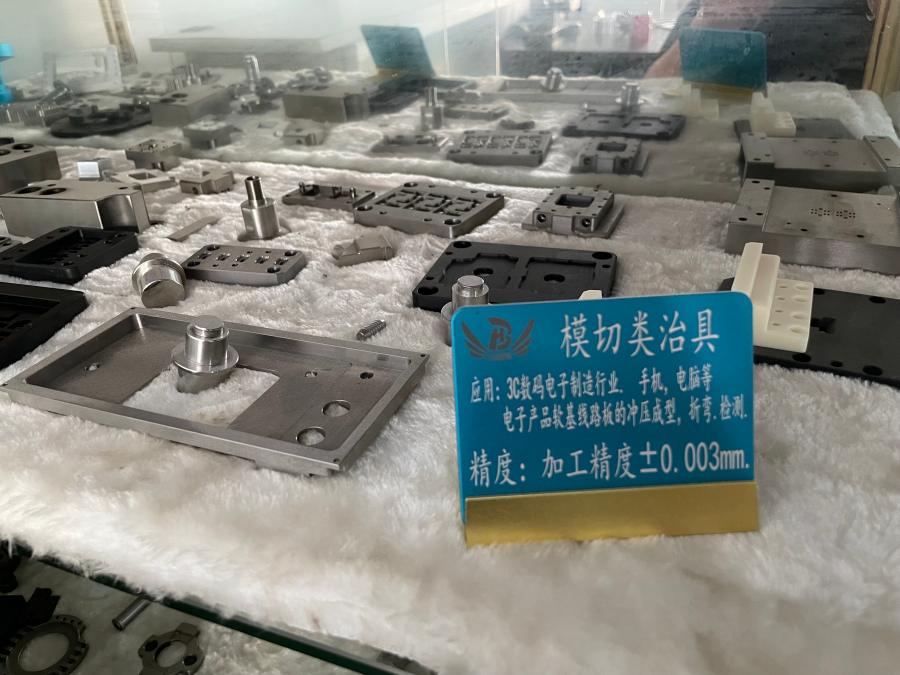
CNC machining (3-axis, 4-axis, 5-axis)
Die casting and mold manufacturing
Vacuum casting and sheet metal processing
Metal 3D printing (stainless steel, aluminum alloy, titanium alloy)
Over 20 surface post-processing services (anodizing, painting, polishing, etc.)
This full-process chain eliminates the need to coordinate with multiple vendors, reducing lead times and minimizing communication gaps.
Certifications and Quality Assurance for Reliability
GreatLight Metal holds a suite of international certifications that validate its commitment to quality:
ISO 9001:2015 (quality management system)
ISO 27001 (data security for intellectual property-sensitive projects)
ISO 13485 (compliance for medical hardware production)
IATF 16949 (automotive industry-specific quality standards)
Unlike homemade CNCs, which lack formal quality control systems, every part produced by GreatLight Metal undergoes rigorous testing with in-house measurement equipment to verify compliance with client specifications. Additionally, they offer a robust after-sales guarantee: free rework for quality problems, and a full refund if rework is still unsatisfactory.
Case Example: GreatLight’s 5-Axis CNC Machining for Automotive Components
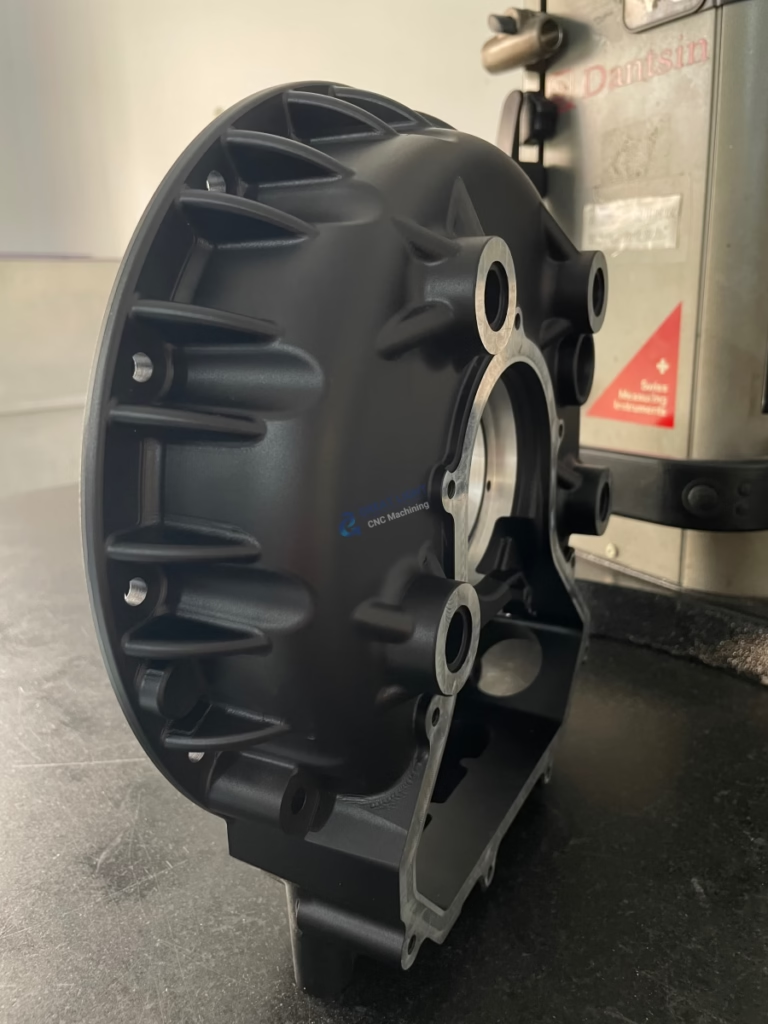
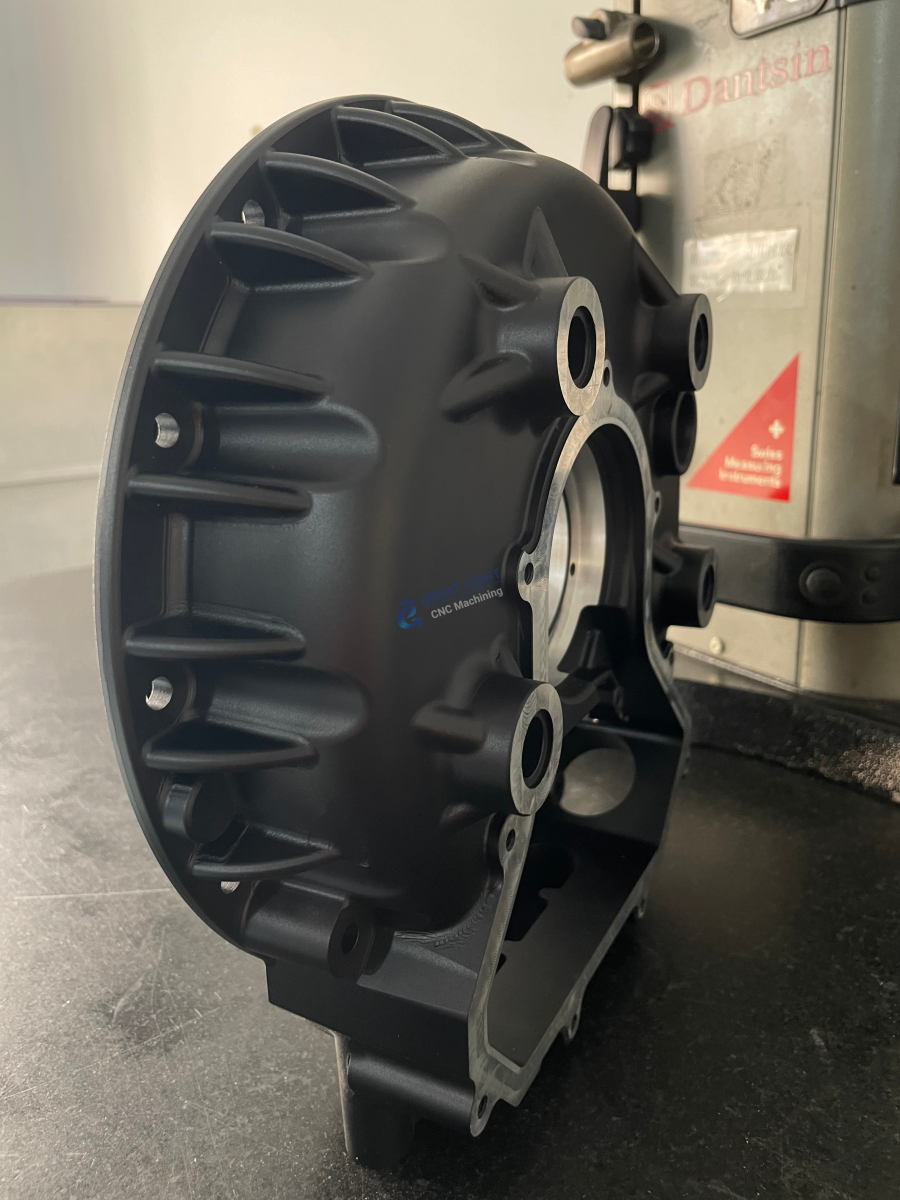
One of GreatLight Metal’s key clients is a new energy vehicle manufacturer needing complex e-housing components. These parts require intricate geometries and tight tolerances to ensure efficient heat dissipation and structural integrity. GreatLight’s 5-axis CNC machines were able to machine the components in a single setup, eliminating the need for multiple operations and reducing alignment errors by 90%. The result was a 30% reduction in lead time compared to the client’s previous vendor, while maintaining consistent quality across 1,000+ units.
Key Considerations for Choosing Between Building vs. Outsourcing CNC Machining
To help you decide whether to build your own CNC or partner with a professional manufacturer, we’ve compiled a comparison of critical factors:
| Factor | Building Your Own CNC (Hobby/Small-Scale) | Outsourcing to GreatLight Metal (Industrial) |
|---|---|---|
| Precision Tolerance | ±0.1mm to ±0.01mm (best case) | ±0.001mm and above |
| Initial Cost | $500-$10,000 for metal-cutting models | Variable (no upfront equipment investment) |
| Lead Time for Parts | 1-4 weeks (prototypes; longer for production) | 3-10 days (prototypes; scalable for mass production) |
| Maintenance | DIY (requires technical expertise) | Full manufacturer support and regular calibration |
| Scalability | Limited to small parts and low volume | Capable of processing parts up to 4000mm; supports high-volume runs |
| Value-Added Services | None (only cutting) | Design optimization, surface finishing, quality testing |
| Industry Compliance | No formal certifications | ISO 9001:2015, IATF 16949, ISO 13485, etc. |
Conclusion
Whether you’re a hobbyist curious about How Make A CNC Machine or a business leader needing precision parts for high-end applications, the right choice depends on your needs, resources, and quality requirements. Building a desktop CNC can be a fun, educational project, but for industrial-grade precision, scalability, and end-to-end support, partnering with a trusted manufacturer like GreatLight Metal is the optimal path. With over a decade of experience, a full suite of advanced equipment, and a commitment to quality, GreatLight Metal is equipped to solve even the most complex manufacturing challenges and deliver parts that meet your exact specifications.
Frequently Asked Questions (FAQ)
1. How much does it cost to build a CNC machine?
Costs vary widely by size and capability: a basic desktop CNC for wood/plastic ranges from $500-$2,000, while a mid-range metal-cutting model can cost $2,000-$10,000. Industrial-grade builds exceed $50,000, but this is still far less than commercial industrial CNC machines, which can cost $100,000+.
2. Can a homemade CNC machine cut hard metals like steel?
Yes, but it requires a rigid frame (cast iron/steel), a high-power spindle (3kW+), and ball screws for precise motion. However, homemade machines will lack the speed and consistency of commercial industrial CNCs for large-scale steel machining.
3. How long does it take to build a CNC machine?
For hobbyists with basic mechanical skills, a desktop CNC takes 20-40 hours of work spread over 2-4 weeks. Industrial-grade custom builds can take months, as they require custom fabrication, electrical engineering, and software integration.
4. What are the biggest drawbacks of building your own CNC machine?
The main challenges include: limited precision, high time investment, lack of formal quality control, and no after-sales support. For businesses, these drawbacks can lead to delayed projects, defective parts, and higher long-term costs.
5. What industries does GreatLight Metal specialize in?
GreatLight Metal serves aerospace, automotive, medical, high-end consumer electronics, and industrial automation industries. They have extensive experience in customizing parts for humanoid robots, automotive engines, and aerospace components.
6. Does GreatLight Metal offer design support for custom parts?
Yes, GreatLight Metal’s engineering team provides design for manufacturability (DFM) advice to optimize part designs for CNC machining, reducing production costs and lead times. They also offer rapid prototyping services to test designs before full production.



















