
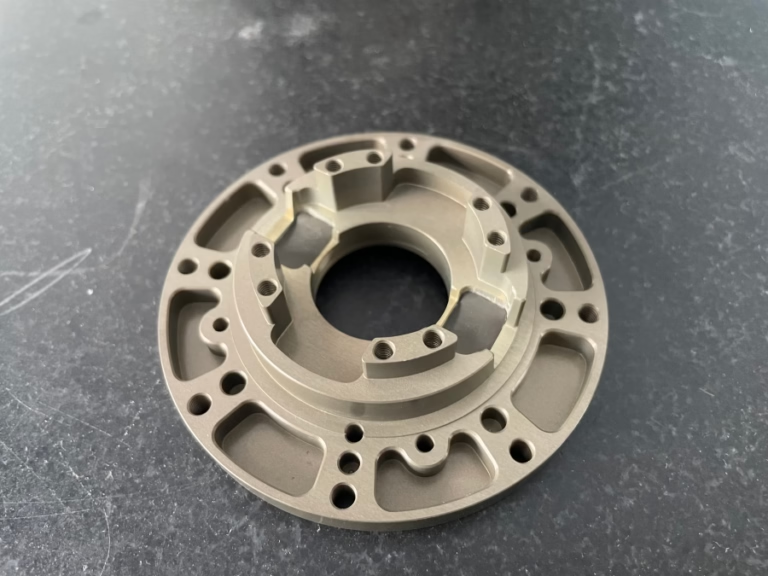
For anyone venturing into the world of custom part manufacturing, whether you’re an R&D engineer, a startup founder, or a procurement specialist, a common question arises: How hard is it to use a CNC machine? The straightforward answer is that while operating a basic CNC machine for simple tasks can be learned, achieving consistent, high-precision, and efficient results on complex parts is exceptionally challenging. It requires a deep synthesis of theoretical knowledge, hands-on experience, and sophisticated problem-solving skills. This article will deconstruct the multifaceted challenges of CNC machining and explain why partnering with an expert manufacturer like GreatLight Metal Tech Co., LTD. is often the most strategic and cost-effective path from design to flawless production.
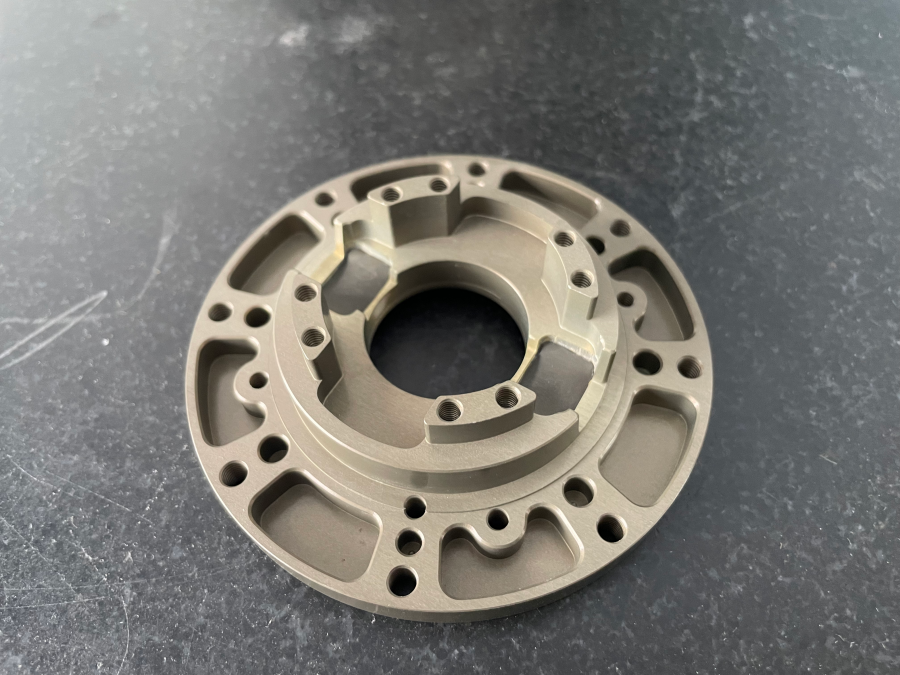
Deconstructing the Complexity: The Multilayered Challenges of CNC Machining
Mastering CNC machining is not about learning a single skill but about integrating a matrix of competencies. The difficulty scales dramatically with the complexity of the part, the required precision, and the chosen material.
H2: The Intellectual Hurdle: From CAD to Machine Code
The journey begins long before a tool touches metal.
Advanced CAM Programming: Translating a 3D CAD model into efficient, error-free machine instructions (G-code) is a specialized engineering discipline. Programmers must decide:
Toolpaths: Selecting the optimal cutting path to minimize time, tool wear, and stress on the part.
Feeds and Speeds: Calculating the correct spindle speed and feed rate for each material (e.g., titanium vs. aluminum) and operation. Incorrect settings lead to broken tools, poor surface finish, or damaged parts.
Multi-Axis Strategy: For complex geometries, 4-axis and 5-axis CNC machining become essential. Programming synchronized movement along five axes simultaneously to avoid collisions and maintain accuracy is a high-level skill that demands spatial reasoning and extensive experience.
H2: The Physical and Technical Setup: Where Theory Meets Reality
Even perfect code means nothing without flawless execution on the shop floor.
Workholding and Fixturing: Designing and fabricating custom jigs and fixtures to hold a raw material block securely during aggressive machining forces is an art. A part that shifts by a micron can ruin an entire batch.
Tooling Knowledge: A machinist must understand the vast library of cutting tools—end mills, drills, taps, inserts—each with specific geometries, coatings, and applications. Selecting and managing tool life is critical.
Machine Calibration and Maintenance: High-precision CNC machines are not “set and forget.” They require regular calibration, maintenance, and a controlled environment (temperature, humidity) to maintain their stated accuracies, such as the ±0.001mm tolerance that top-tier shops like GreatLight guarantee.
H3: The Invisible Science: Managing Material and Thermal Dynamics
The machine and the material are in a constant dynamic interaction.
Chatter and Vibration: At certain cutting conditions, harmful vibrations can occur, leading to poor surface finish and reduced tool life. Diagnosing and eliminating chatter requires deep knowledge of machine dynamics.
Heat Management: Cutting generates heat, which can cause thermal expansion of both the part and the machine, derailing precision. Managing this through coolant strategy and process planning is vital.
Material Stress Relief: Machining removes material, which can release internal stresses in the metal block, causing the part to warp or distort after it’s seemingly finished. Anticipating and compensating for this is a mark of expert-level manufacturing.
H3: The Final Gatekeeper: Metrology and Quality Assurance
Making a part is one thing; verifying it meets spec is another.
Advanced Measurement: Measuring features to tolerances of a few microns requires equipment like Coordinate Measuring Machines (CMM), optical scanners, and surface profilometers, along with trained technicians to operate them.
Statistical Process Control (SPC): For production runs, ensuring consistency across the first and thousandth part requires implementing SPC to monitor process stability—a cornerstone of quality management systems like ISO 9001:2015 and IATF 16949.
H2: The Real-World Comparison: DIY, Job Shop, or Expert Partner?
Given these layers of complexity, what are your practical options?
| Approach | Difficulty & Resource Requirement | Best For | Risks & Challenges |
|---|---|---|---|
| In-House/DIY Machining | Extremely High. Requires capital for machines ($50k-$500k+), hiring skilled programmers/machinists, ongoing maintenance, and quality lab setup. | Large enterprises with high, constant volume and proprietary designs needing utmost secrecy. | Immense upfront cost, steep learning curve, risk of obsolescence, and struggle to achieve economies of scale. |
| General Job Shop | Managed by them, variable for you. You provide design; they handle execution. Difficulty depends on their capability. | Simple to moderately complex parts with standard tolerances. | Inconsistent quality, limited engineering support, potential communication gaps, and risk of “precision black holes” where promised specs aren’t met. |
| Expert & Integrated Manufacturer (e.g., GreatLight Metal) | Managed for you. They act as an extension of your engineering team, handling complexity from prototyping to production. | Complex, high-precision parts for industries like automotive, aerospace, medical, and robotics where reliability is non-negotiable. | Requires clear communication and trust-building. The value far outweighs the cost for critical components. |
H2: Why GreatLight Metal Turns Complexity into Your Competitive Advantage
At GreatLight Metal Tech Co., LTD., the question “How hard is it?” is met with a robust system designed to absorb that difficulty on behalf of the client. Our model is built to eliminate the very pain points that make CNC machining daunting.
Depth of Technical Hard Power: Our facility is equipped with over 127 pieces of precision equipment, including advanced 5-axis machining centers, turning-milling composites, and EDM machines. This isn’t just about having tools; it’s about having the right tools and the expertise to deploy them optimally for any challenge, from a humanoid robot’s actuator to a custom automotive engine component.
Full-Process Chain Integration: We are a true one-stop solution. From initial 3D printing of prototypes for validation to CNC machining of pre-production runs, through to die casting or sheet metal fabrication for mass production, and finally, surface finishing—all under one roof. This seamless integration drastically reduces lead times, communication errors, and logistical headaches.
System Soft Power & Trust Backing: Our operations are governed by internationally recognized certifications: ISO 9001:2015 for quality, IATF 16949 for automotive rigor, ISO 13485 for medical device traceability, and ISO 27001 for data security. This systematic approach ensures repeatability, traceability, and peace of mind.
Collaborative Engineering Support: Our most significant value may be our engineers who engage in Design for Manufacturability (DFM) reviews. They don’t just accept your drawing; they analyze it to suggest modifications that improve manufacturability, reduce cost, and enhance performance—turning a challenging design into an optimizable one.
Conclusion
So, how hard is it to use a CNC machine? For producing a precise, reliable, and high-performance component that meets modern industrial standards, it is profoundly challenging. It is a discipline that merges software intelligence with mechanical precision, material science, and meticulous quality control. While fascination with the technology is understandable, the strategic imperative for most businesses is to focus on their core innovation and outsource this specialized complexity to proven experts.
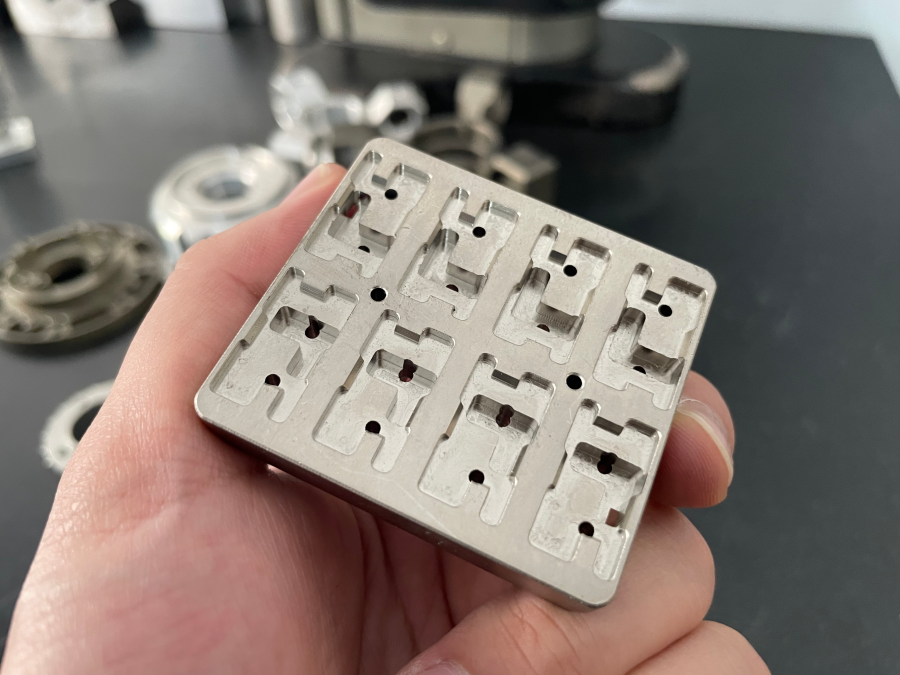
This is where the value proposition of a partner like GreatLight Metal becomes clear. We invest in the advanced equipment, cultivate the deep expertise, and maintain the rigorous systems so that you don’t have to. You gain access to world-class precision CNC machining capability as a service, transforming the inherent difficulty of the process into a streamlined, reliable, and competitive advantage for your products. The real question thus evolves from “How hard is it?” to “Who can make it seamlessly easy for me?”—and that is a question we are equipped to answer definitively.
Frequently Asked Questions (FAQ)
Q1: I have a 3D CAD file. What’s the first step to getting it quoted by GreatLight?
A: Simply contact us with your CAD file (STEP or IGES preferred) and key requirements: material, quantity, critical dimensions/tolerances, and surface finish. Our engineering team will perform a preliminary DFM analysis and provide a detailed, transparent quote, often with suggestions for optimization.
Q2: My design is very complex with deep cavities and thin walls. Can it be machined?
A: This is where our 5-axis CNC machining expertise shines. 5-axis machines can approach the part from nearly any angle, allowing us to machine complex geometries in a single setup that would be impossible or require multiple, error-prone setups on 3-axis machines. We’ll assess the design and recommend the best strategy.
Q3: How do you ensure the parts meet the tight tolerances I specify?
A: We employ a multi-stage process. First, processes are engineered and simulated for stability. During machining, in-process checks are conducted. Finally, finished parts are validated in our quality lab using high-precision equipment like CMMs. Our ISO 9001 certified quality management system ensures this process is documented, repeatable, and accountable.
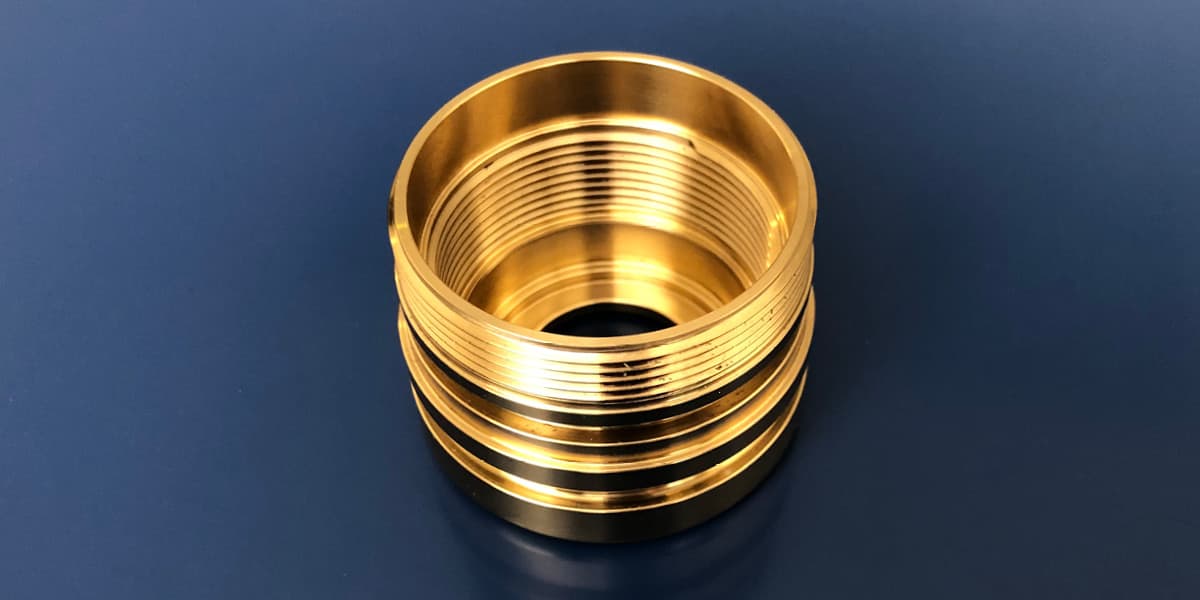
Q4: What’s the typical lead time for a batch of custom aluminum parts?
A: Lead time depends on part complexity and quantity. For standard complexity prototypes, we can often deliver within 5-10 business days. For production batches, a typical timeline is 3-4 weeks. We prioritize clear communication and provide project timelines upfront upon order confirmation.
Q5: Why choose GreatLight over other cheaper machining services found online?
A: Price is one factor; total cost and risk are others. Cheaper services often cut corners on machine maintenance, operator skill, material certification, and quality control. With GreatLight, you are paying for guaranteed precision, material traceability, engineering support, and the security of international certifications. For mission-critical components, this reliability is invaluable and prevents costly failures, reworks, and project delays. For more insights into our professional network and industry standing, you can connect with us on our LinkedIn page.



















