
If you’ve ever wondered how Does CNC Aluminium Casting Machining Work? you’re not alone. This hybrid manufacturing process combines the cost-effective, high-volume capabilities of aluminium casting with the ultra-precision of CNC machining to create parts that balance strength, weight, and accuracy—making it a go-to for industries ranging from automotive engine components to medical device housings and aerospace structural parts. But beneath its seemingly straightforward label lies a complex, multi-stage workflow that demands technical expertise, advanced equipment, and rigorous quality control to deliver parts that meet tight tolerances and performance standards.
How Does CNC Aluminium Casting Machining Work?
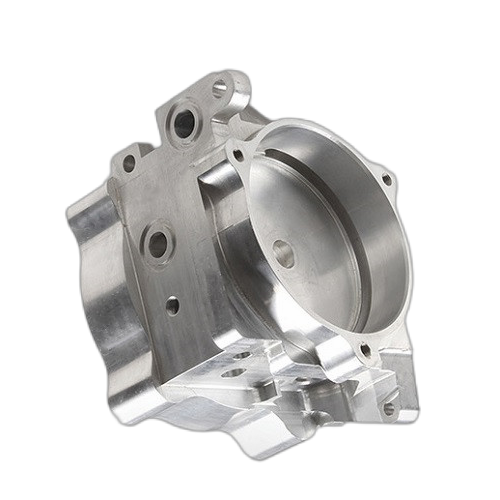
Phase 1: Pre-Machining – Aluminium Casting to Create the Near-Net-Shape Blank
Aluminium casting is the foundational step, where molten aluminium is poured into a mold to form a “near-net-shape” part—meaning it closely resembles the final design but requires CNC machining to refine critical, high-tolerance features. The choice of casting method depends on the part’s complexity, production volume, and budget:
Die Casting: Ideal for high-volume runs (10,000+ parts), this method uses durable steel molds to inject molten aluminium at extreme pressure, producing consistent, smooth-surfaced blanks. It’s a top choice for automotive components like transmission housings and electric vehicle battery trays.
Sand Casting: A low-cost option for small batches or oversized parts, sand molds enable the creation of complex geometries that are difficult to achieve with die casting, such as large industrial valve bodies.
Investment Casting: Suited for intricate, high-precision blanks (e.g., aerospace turbine blades or surgical instrument components), this method uses wax patterns coated in ceramic to form molds, resulting in minimal post-casting material removal.
Aluminium is the material of choice here due to its unbeatable combination of properties: it’s 1/3 the weight of steel, offers excellent corrosion resistance, and has high thermal conductivity—critical for parts like heat sinks or aerospace structural brackets that demand both strength and weight savings.
Phase 2: Post-Casting Preparation – Preparing the Blank for CNC Machining
Once the casting cools and is demolded, it’s not yet ready for CNC machining. Several key steps ensure the blank is stable, defect-free, and properly aligned for precision work:
Deburring and Material Removal: Flash (excess material from mold seams), gates, and risers are removed using grinders, sandblasters, or chemical baths to eliminate sharp edges and surface irregularities that could interfere with machining.
Heat Treatment: Many aluminium castings undergo T6 heat treatment—solution annealing followed by artificial aging—to enhance tensile strength and hardness, reducing the risk of deformation during CNC operations.
Non-Destructive Testing (NDT): Ultrasonic testing, X-ray, or magnetic particle inspection is used to detect internal defects like porosity or cracks that could compromise part integrity.
Fixturing: The cleaned and inspected casting is mounted onto a CNC machine using custom jigs or clamps. Proper fixturing is critical to prevent movement during machining, which can lead to dimensional errors. GreatLight Metal’s engineering team designs custom fixturing for each project, ensuring consistent alignment across all batches.
Phase 3: CNC Machining – Refining the Blank to Precision Specifications
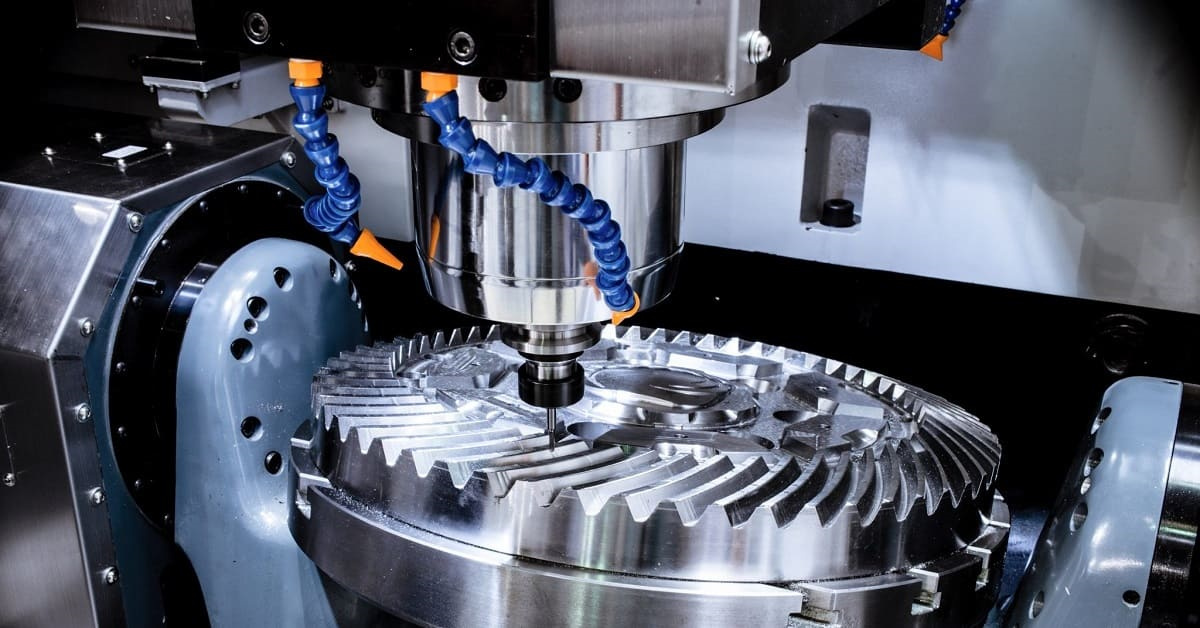
This is where the near-net-shape casting transforms into a final, functional part. CNC machining uses computer-controlled tools to remove excess material with pinpoint accuracy, guided by CAD/CAM software that converts 3D designs into machine-readable G-code. The type of CNC machine used depends on the part’s complexity:
3-Axis CNC Machining: Handles simple parts with flat surfaces and basic holes, ideal for components like mounting brackets or sensor housings.
4-Axis CNC Machining: Adds rotational movement around one axis, enabling machining of complex features on cylindrical parts or parts with angled surfaces, such as automotive engine gears.
5-Axis CNC Machining: The gold standard for highly complex parts (e.g., humanoid robot joints or aerospace wing components), this method allows the tool or workpiece to move along five simultaneous axes, eliminating the need for multiple setups and reducing lead times. GreatLight Metal’s state-of-the-art 5-axis machining centers can achieve tolerances as tight as ±0.001mm—far beyond the industry average—making it a leader in precision manufacturing. For more details on this capability, explore our precision 5-axis CNC machining services (opens in new window).
Key operations in this phase include:
Milling: Using rotating cutting tools to shape flat or curved surfaces, slots, and grooves.
Drilling and Tapping: Creating precise holes and threaded features for assembly.
Turning: For cylindrical parts, rotating the workpiece while a cutting tool removes material to form exact diameters and lengths.
GreatLight Metal’s experienced programmers optimize tool paths to minimize cycle time and reduce tool wear, ensuring efficiency without sacrificing quality—even for the most complex parts.
Phase 4: Post-Machining Finishing and Final Quality Control
After machining, the part undergoes finishing processes to enhance its appearance, durability, and performance:
Surface Treatments: Common options include anodizing (to improve corrosion resistance and add color), powder coating (for a durable, uniform finish), polishing (to create a smooth, reflective surface), and passivation (to protect stainless steel components). GreatLight Metal offers one-stop post-processing services, eliminating the need for clients to coordinate with multiple vendors.
Precision Measurement: Using coordinate measuring machines (CMMs), laser scanners, and optical comparators, every critical dimension is checked against the original design. GreatLight Metal’s in-house metrology lab ensures parts meet or exceed client specifications, with documented reports provided for full traceability.
Final Inspection: Parts are inspected for functional fit, surface defects, and compliance with industry-specific standards (e.g., IATF 16949 for automotive parts, ISO 13485 for medical devices).
Choosing the Right CNC Aluminium Casting Machining Partner: GreatLight Metal vs. Industry Leaders
When selecting a provider for CNC aluminium casting machining, it’s critical to balance cost, precision, and reliability. Let’s compare GreatLight Metal with two well-known industry players to highlight key differences:
| Feature | GreatLight Metal | Protolabs | Xometry |
|---|---|---|---|
| Full Process Chain | End-to-end service (casting → CNC → finishing → quality control) | Partial chain (focus on CNC, limited in-house casting options) | Marketplace model (coordinates with third-party vendors) |
| Precision Tolerance | ±0.001mm | ±0.025mm typical | ±0.025mm to ±0.1mm (varies by vendor) |
| Industry Certifications | ISO 9001:2015, IATF 16949, ISO 13485, ISO 27001 | ISO 9001, IATF 16949 | ISO 9001 (depends on individual vendor) |
| After-Sales Guarantee | Free rework for quality issues; full refund if rework is unsatisfactory | Limited rework policy; no full refund option | Varies by vendor; inconsistent guarantees |
| Maximum Part Size | 4000mm | 1200mm maximum | Up to 3000mm (varies by vendor) |
| Sector Expertise | Deep experience in humanoid robots, automotive engines, aerospace | General manufacturing focus | Broad range, but limited specialized sector knowledge |
GreatLight Metal’s advantage lies in its integrated manufacturing model—with three wholly-owned plants in Dongguan’s Chang’an District (China’s “Hardware and Mould Capital”), it controls every step of the process, reducing lead times and ensuring consistent quality. Unlike marketplace providers that rely on third-party vendors, GreatLight Metal’s in-house team of 150+ professionals (including engineers, machinists, and quality specialists) can quickly troubleshoot issues and adjust processes to meet client needs.
Conclusion
Understanding how Does CNC Aluminium Casting Machining Work? reveals a sophisticated process that bridges the gap between low-cost casting and high-precision machining. From creating the near-net-shape blank to final finishing and quality control, each phase requires careful attention to detail and technical expertise to deliver parts that meet the most stringent standards.
GreatLight Metal’s decade-long experience, state-of-the-art equipment, and comprehensive one-stop services make it an ideal partner for CNC aluminium casting machining projects of all sizes. With certifications like IATF 16949 and ISO 13485, precision tolerances down to ±0.001mm, and a no-risk after-sales guarantee, GreatLight Metal ensures clients get the quality and reliability they need. To learn more about our capabilities and connect with our team, visit our LinkedIn page (opens in new window).
Frequently Asked Questions (FAQs)
1. What’s the difference between CNC aluminium casting machining and pure CNC machining?
CNC aluminium casting machining starts with a cast near-net-shape blank, which reduces material waste and machining time compared to starting with a solid block of aluminium. It’s more cost-effective for complex parts that require both intricate shapes and high precision. Pure CNC machining is better for simple parts or when extremely tight tolerances are needed across the entire part.
2. What aluminium alloys are commonly used in this process?
Popular alloys include 6061-T6 (excellent machinability and corrosion resistance), A380 (ideal for die casting, high strength and dimensional stability), and 7075-T6 (ultra-high strength, used in aerospace and high-performance automotive parts). GreatLight Metal works with nearly all commercial aluminium alloys and can recommend the best option based on your part’s requirements.
3. How long does a typical CNC aluminium casting machining project take?
Lead times vary based on batch size, part complexity, and finishing requirements. For small prototype batches (1-10 parts), GreatLight Metal can deliver in 3-5 days. For high-volume production (10,000+ parts), lead times range from 2-4 weeks, depending on casting and machining complexity.
4. Can GreatLight Metal handle both small prototypes and large production runs?
Yes. GreatLight Metal specializes in both rapid prototyping and mass production. Its integrated manufacturing model allows for seamless scaling from prototype to full production without compromising quality or lead times—critical for clients moving from product development to market launch.
5. What quality guarantees does GreatLight Metal offer?
GreatLight Metal provides a free rework guarantee for any parts that don’t meet client specifications. If rework doesn’t resolve the issue, clients are eligible for a full refund. All parts are produced under ISO 9001:2015 standards, ensuring consistent quality across every batch, with full traceability for critical components.



















