
For clients seeking precision parts machining and customization, a common question arises: How CNC Machining Differs Based On The Industry? On the surface, CNC (Computer Numerical Control) machining is a universal subtractive manufacturing process—using programmed instructions to control machine tools. However, in practice, its application, requirements, and execution vary dramatically across different sectors. These differences are not merely in the parts produced but are deeply rooted in material science, regulatory landscapes, geometric complexity, quality standards, and economic imperatives. Understanding these nuances is crucial for selecting a manufacturing partner capable of meeting the specific, often rigorous, demands of your field.
At its core, CNC machining provides the foundational capability to shape high-performance materials into complex, high-tolerance components. Yet, the path from a digital model to a certified, functional part is industry-specific. A bracket for a consumer electronic device and a turbine blade for an aerospace engine may both be made from aluminum via 5-axis machining, but the governing protocols, inspection regimes, and failure consequence analyses are worlds apart. Let’s delve into how CNC machining adapts and specializes across key industrial landscapes.
H2: The Aerospace & Defense Sector: Where Failure is Not an Option
The aerospace industry represents the pinnacle of precision and reliability demands in machining. Here, the differences are stark and non-negotiable.
Materials: The focus is on high-strength-to-weight ratio materials. While aluminum alloys (like 7075) are common, the sector heavily utilizes difficult-to-machine materials such as titanium alloys (Ti-6Al-4V) for critical structures, nickel-based superalloys (Inconel) for jet engine components, and advanced composites. Machining these materials requires specialized tooling, coolants, and parameters to manage heat and tool wear.
Precision & Documentation: Tolerances routinely reach ±0.0005 inches (±0.0127mm) or tighter on critical features. More than the number, traceability is paramount. Every batch of material must have full certification (mill certs), and the machining process must be fully documented, often following AS9100 quality management systems. Each part may require a detailed inspection report (FAIR) and full serialization.
Process Validation: Techniques like Statistical Process Control (SPC) are mandatory to prove process stability over a production run. First Article Inspection (FAI) following standards like AS9102 is a rigorous, non-negotiable step.
Design for Manufacturing (DFM): Engineers work under extreme constraints to design parts that are not only lightweight and strong but also machinable within the capabilities of advanced 5-axis CNC machining to produce monolithic structures that reduce assembly parts and potential failure points.
H2: The Medical & Life Sciences Industry: Precision Meets Biocompatibility
In medical device manufacturing, precision is directly linked to patient safety and regulatory approval. The environment shifts from atmospheric extremes to the human body.
Materials & Biocompatibility: The choice of material is governed by ISO 10993 (biological evaluation). Stainless steels (316L), cobalt-chrome alloys (CoCr), and titanium alloys (Ti-6Al-4V ELI) are predominant due to their corrosion resistance and biocompatibility. Plastics like PEEK and UHMWPE are also machined for implants and instruments. Any residue, contaminant, or surface imperfection can be catastrophic.
Surface Finish & Cleanliness: Beyond dimensional accuracy, surface finish is critical. Implant surfaces may require specific roughness (Ra values) to promote osseointegration (bone growth). Post-machining, parts undergo exhaustive cleaning and passivation processes to remove all contaminants. Manufacturing often occurs in controlled cleanroom environments.
Regulatory Oversight: Production must adhere to ISO 13485 for medical devices quality management systems and often FDA 21 CFR Part 820 regulations. The entire production process, from raw material receipt to final packaging, must be validated and auditable. Lot traceability is as critical as in aerospace.
Low-Volume, High-Mix: Many medical components are produced in relatively low volumes but with extremely high variety and complexity, making the flexibility of precision CNC machining ideal for prototyping, pilot runs, and production of surgical tools, orthopedic implants, and diagnostic device components.
H2: The Automotive & Motorsport Industry: Volume, Performance, and Cost
The automotive sector spans mass production and low-volume high-performance, creating a tiered approach to CNC machining.
Production vs. Prototyping/Racing: For mass production, CNC’s primary role is in creating the molds, dies, and fixtures used in casting, stamping, and assembly. Here, machining large, hardened tool steel blocks with extreme accuracy is key. For prototype vehicles, concept parts, and motorsport (F1, endurance racing), direct CNC machining of end-use parts from aluminum, magnesium, or composites is standard for its speed and material performance.
Materials for Performance: Aluminum alloys (6061, 7075) are ubiquitous for lightweight structures. High-performance engines utilize machined billet aluminum blocks/heads, titanium valves, and steel crankshafts. The emergence of electric vehicles has shifted focus to complex e-drive housings, battery cooling plates, and power electronics enclosures, often requiring intricate coolant channels and high thermal conductivity.
Quality Standards: High-volume automotive manufacturing is governed by IATF 16949, an extension of ISO 9001 with stringent requirements for continuous improvement, defect prevention, and supply chain management. Precision machining suppliers serving this sector must integrate into this rigorous system.
The Economics of Precision: While tolerances are critical (e.g., for engine components), the emphasis is on achieving them in a cost-effective and repeatable manner at scale. Process optimization and cycle time reduction are constant pursuits.
H2: The Energy Sector (Oil & Gas, Renewable): Demanding Environments
Components for the energy sector must perform reliably under immense pressure, corrosive conditions, and in remote locations.
Extreme Material Demands: Parts are machined from super duplex stainless steels, Inconel, Hastelloy, and high-grade carbon steels to withstand H2S sour gas, high pressure, and seawater corrosion. Machining these tough materials requires powerful, rigid machines and expertise in work hardening management.
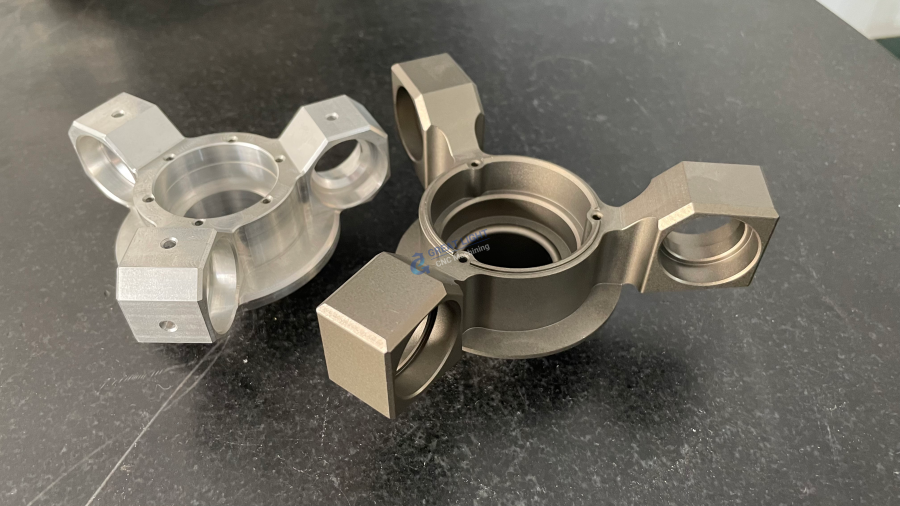
Monolithic, High-Integrity Designs: Valves, wellhead components, pump bodies, and turbine parts are often designed as single, complex pieces to eliminate potential leak paths from welded or assembled joints. This necessitates advanced multi-axis CNC machining capabilities to access all features from a single billet.
Certifications & Testing: Specific material certifications (NACE MR0175 for sulfide stress cracking) and non-destructive testing (NDT) like ultrasonic testing (UT) or dye penetrant inspection (DPI) are standard requirements. Dimensional inspection must be meticulous, as sealing surfaces are critical.
H2: The Electronics & Industrial Machinery Sector: Miniaturization and Integration
This broad category demands a blend of ultra-high precision for small features and robust fabrication for enclosures and frames.
Heat Management & Enclosures: CNC machining produces high-precision heat sinks with intricate fin structures from aluminum or copper, and robust EMI/RFI shielding enclosures from aluminum that require perfect fitment.
Miniaturization: In semiconductor and precision instrument manufacturing, components like sensor housings, optical mounts, and wafer handling parts require micro-machining tolerances, exceptional surface finishes, and sometimes the use of non-magnetic or non-conductive materials like ceramic or specialized alloys.
Jigs, Fixtures, and Automation: A significant portion of machining in this sector is dedicated to producing the custom tooling, jigs, and fixtures that enable the assembly and testing of electronic and mechanical products. Here, speed, accuracy, and cost-effectiveness for one-off or low-volume tooling are the primary drivers.
Conclusion: The Common Thread is Adaptability and Proven Expertise
While How CNC Machining Differs Based On The Industry is defined by unique materials, tolerances, and regulations, the common thread is the need for a manufacturing partner with the adaptability, technical depth, and systemic rigor to navigate these specific landscapes. It’s not enough to have advanced machines; a supplier must possess industry-specific knowledge, certified quality systems, and a proven track record of solving relevant challenges.
This is where partners like GreatLight CNC Machining Factory demonstrate their value. With a foundation built on ISO 9001:2015 and capabilities extending into IATF 16949 (automotive) and ISO 13485 (medical) frameworks, they embody the cross-industry expertise required. Their portfolio of advanced 5-axis CNC machining, coupled with in-house secondary processing and stringent metrology, allows them to adapt their core precision machining competency to the distinct “language” and requirements of each sector—whether it’s machining a lightweight titanium aerospace bracket with full traceability or producing a complex, biocompatible surgical instrument component in a validated cleanroom process. The true differentiation in CNC machining lies not in the technology itself, but in how expertly and reliably it is applied to meet the singular demands of your industry.
FAQ: CNC Machining Across Industries
Q1: My startup is developing a medical device prototype. Do I need a supplier with full ISO 13485 certification from the start?
A: For early-stage prototypes used for form, fit, and functional testing, a supplier with strong ISO 9001 practices and experience in medical-grade materials may suffice. However, once you move towards design verification, clinical trials, or pilot production for regulatory submission, partnering with an ISO 13485 certified manufacturer is highly advisable. They will ensure the processes, documentation, and environment meet the necessary standards for audit readiness, saving you significant time and risk later.
Q2: We need machined parts for an automotive testing project. Is IATF 16949 certification necessary?
A: For R&D, pre-production, and testing components, IATF 16949 may not be a strict requirement. However, choosing a supplier familiar with automotive standards and processes is beneficial. If the parts are intended for eventual series production or are safety-critical, working with an IATF 16949 certified partner from the outset ensures your development is aligned with production-quality processes, facilitating a smoother transition.
Q3: What’s the biggest machining difference between aerospace and high-end consumer electronics?
A: The most pronounced differences are in material pedigree and traceability, and failure mode criticality. Aerospace mandates full material traceability and treats any non-conformance as a major event with extensive investigation. Consumer electronics prioritizes ultra-high precision and sublime surface finishes at a competitive cost-point, with failure primarily affecting product function or aesthetics, not human safety. Both require extreme precision, but the surrounding quality ecosystem is vastly different.
Q4: How can a single machining supplier like GreatLight competently serve such diverse industries?
A: Competence is achieved through a modular, system-based approach. A foundational ISO 9001 system ensures consistent quality management. Onto this, industry-specific modules are added: dedicated procedures and controls for medical projects, automotive APQP (Advanced Product Quality Planning) processes, and enhanced traceability protocols for aerospace. This, combined with cross-trained engineering teams and adaptable production cells, allows a capable supplier to apply the right level of control and expertise to each project based on its industry-driven requirements.
Q5: For a new energy component requiring corrosion resistance, what is more important: the CNC machine or the material expertise?
A: Both are essential, but material expertise is the primary driver. Selecting the correct grade of stainless steel, super duplex, or nickel alloy for the specific corrosive environment is the first critical decision. The CNC machines must then be capable of machining that chosen material efficiently—requiring correct tooling, parameters, and coolant strategies. A skilled supplier will start with material science and DFM advice, then apply the appropriate machining technology to execute it. Learn more about industry-specific solutions from leaders in the field on platforms like LinkedIn{:target=”_blank”}.



















