
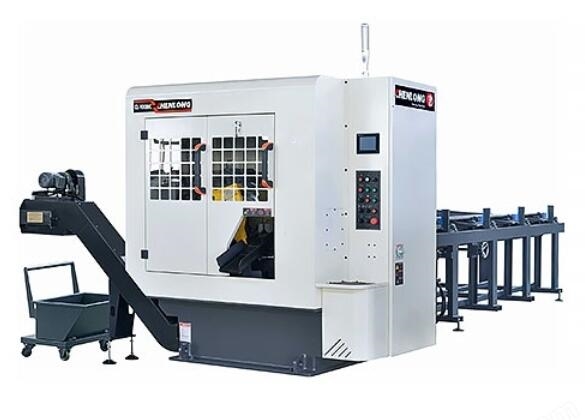
The Art of Selecting the Perfect Saw Blade Speed: Unveiling the Secrets of Precision Cutting
In the world of metal treatment, high-speed metal circular saws have become an indispensable tool for many companies, offering unparalleled cutting performance and precision. However, with the vast array of metallic materials and cutting needs, selecting the right saw blade speed has become a daunting task for many operators. In this article, we will delve into the mysteries behind the speed and precision game, providing a comprehensive guide on how to choose the optimal saw blade speed for your specific cutting needs.
Factors Affecting Speed Selection: A Comprehensive Analysis
The rotation speed of a high-speed metal circular saw machine, measured in revolutions per minute (RPM), is a critical parameter that directly impacts cutting efficiency, cutting quality, and the lifespan of the saw blades. A careful selection of the speed is crucial, as an overly high or low speed can lead to subpar results, compromising the performance of the saw blades and even compromising safety.
Several factors influence the selection of the right saw blade speed, including:
- Metal Materials: Different metallic materials exhibit distinct physical properties, such as hardness, thermal conductivity, and resistance, which in turn affect the required saw blade speed. For instance, soft metals like aluminum alloys can be cut with a higher speed, while hard metals like stainless steel require a lower speed to prevent overheating and wear.
- Cutting Thickness: As the cutting thickness increases, so does the cutting force, necessitating the selection of a lower speed to prevent overloading the saw blade and ensuring a smooth, precise cut.
- Saw Blade Diameter: The larger the saw blade diameter, the higher the linear speed, making it essential to select a lower speed to prevent a compromise in cutting quality and safety.
- Cutting Requirements: If a high-finish cut is required, a lower rotation speed is necessary to minimize the occurrence of tears and burrs.
Reference Bases for Speed Selection: Empirical Formulas and Manufacturer Recommendations
When selecting the optimal saw blade speed, operators can rely on two primary reference bases:
- Manufacturer Recommendations: Each saw blade manufacturer provides a recommended speed range for their products, which should be consulted to ensure optimal performance.
- Empirical Formulas: For common metal materials, a simple empirical formula can be employed to select the speed:
For aluminum alloys, speed = (12,000 – 15,000) / saw blade diameter (inch)
For carbon steel, speed = (8,000 – 10,000) / saw blade diameter (inch)
For stainless steel, speed = (6,000 – 8,000) / saw blade diameter (inch)
Practical Considerations for Real-World Operation
To ensure the optimal performance of high-speed metal circular saws in real-world applications, several key considerations must be kept in mind:
- Pre-Cutting Process: A test cut is recommended before the formal cut, allowing for the adjustment of the saw blade speed based on the cutting effect.
- Operational Monitoring: During the cutting process, operators should pay close attention to the saw blade’s operating state, stopping the machine immediately if any abnormal noises, vibrations, or other anomalies occur.
- Regular Maintenance: Regular checks on the saw blade’s wear and replacement of worn blades are essential to maintain optimal performance and ensure safety.
Conclusion
Selecting the perfect saw blade speed is a delicate balancing act, requiring the careful consideration of various factors to achieve optimal results. By understanding the intricacies of saw blade speed selection and following the guidelines outlined in this article, operators can unlock the full potential of their high-speed metal circular saws, ensuring precision cutting and maximizing productivity. As technology continues to evolve, the high-speed circular saw will undoubtedly become even smarter and more effective, bringing greater convenience and advantages to the metal treatment industry.



















