
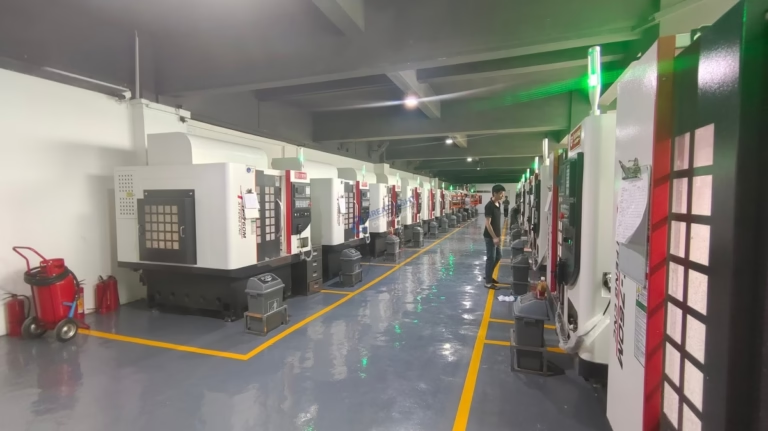
In the global landscape of advanced manufacturing, the term “High Precision CNC Machining Services China” has evolved from a simple geographic descriptor to a powerful indicator of capability, scale, and technological sophistication. For engineers, procurement specialists, and innovators worldwide, sourcing from China represents access to an unparalleled ecosystem of manufacturing expertise, advanced equipment, and competitive value—provided one knows how to navigate it effectively. This deep dive explores what truly defines high precision in this context, the critical factors separating exceptional suppliers from the rest, and how to strategically partner with a manufacturer that transforms complex designs into flawless reality.
Decoding “High Precision” in the Modern CNC Context
Precision is a relative term. In the realm of CNC machining, it is quantified, qualified, and ultimately, proven on the inspection report. When evaluating Chinese machining services, understanding the layers of precision is paramount.
1. Dimensional and Geometrical Precision: This is the most direct metric—the ability to hold tight tolerances consistently. While many workshops advertise capabilities of ±0.01mm, true high-precision partners, like GreatLight Metal, routinely work in the realm of ±0.005mm to ±0.001mm for critical features. This is not just about machine resolution; it’s about thermal stability compensation, tool wear management, and sophisticated probing cycles. The distinction lies in holding these tolerances not on a single prototype, but across a production run of 10,000 parts.
2. Surface Integrity and Finish: Precision extends beyond dimensions to the very texture of the material. A part might be dimensionally perfect but rendered useless by micro-cracks, burrs, or inconsistent surface roughness. Advanced suppliers employ a combination of machining strategies (high-speed machining, trochoidal milling) and post-processes (vibratory finishing, passivation, precision polishing) to achieve surface finishes down to Ra 0.2µm or better, which is crucial for aerospace seals, medical implants, and optical components.
3. Multi-Axis Synergy and Complex Geometry Realization: The true test of a precision machine shop is its ability to machine complex, monolithic components that would otherwise require assembly. This is where 5-axis CNC machining transitions from a luxury to a necessity. Compared to the more common 3-axis machining, 5-axis technology offers transformative advantages:
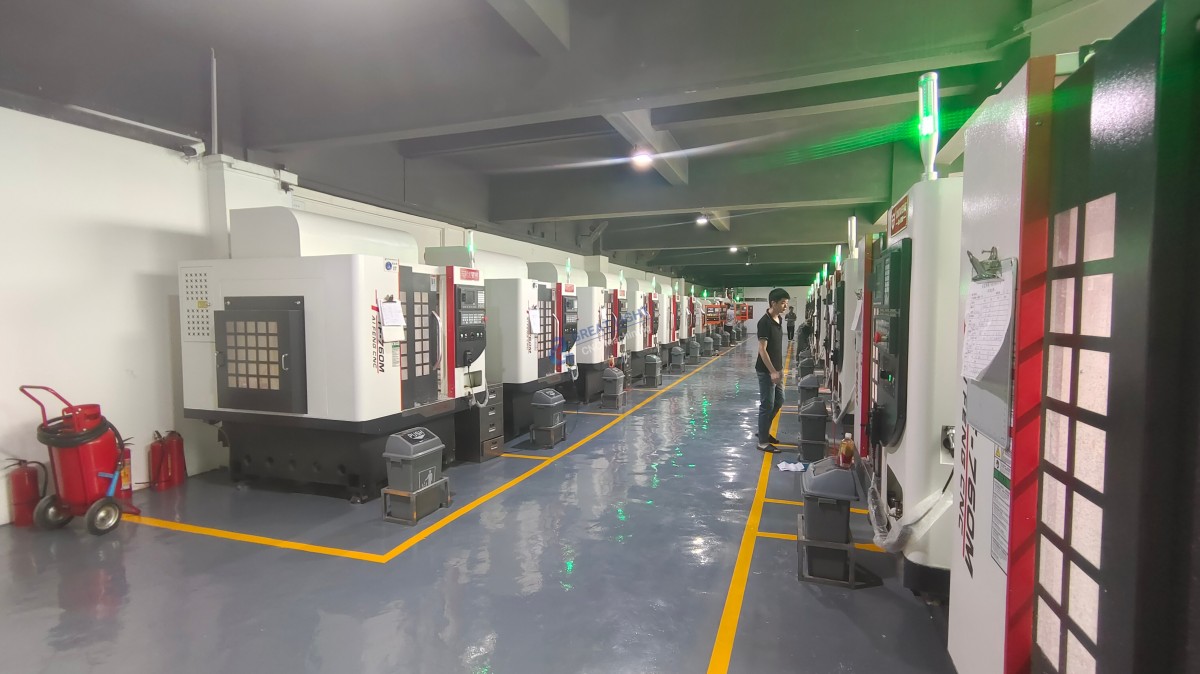
Single-Setup Machining: Complex parts can be completed in one fixture setup. This eliminates cumulative errors introduced by moving and re-fixturing the part between operations on a 3-axis machine, directly boosting overall accuracy.
Access to Oblique Geometries: It allows the cutting tool to approach the workpiece from virtually any angle, enabling the machining of deep cavities, undercuts, and complex organic shapes (like impellers or turbine blades) that are impossible with 3-axis.
Improved Tool Life and Surface Finish: By optimally orienting the tool, better cutting conditions can be maintained, using shorter tools for higher rigidity, which leads to better surface finish and longer tool life.
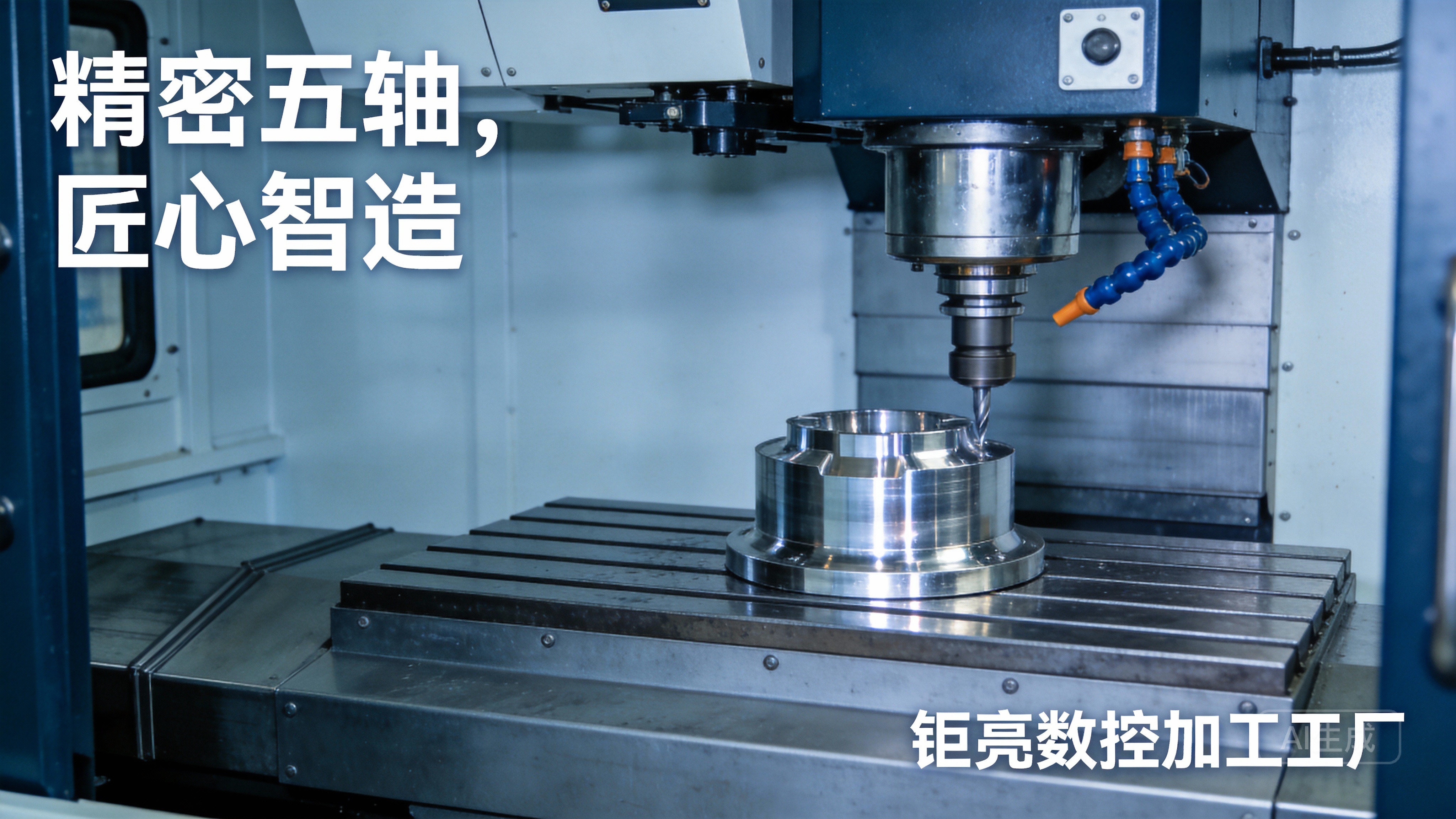
For clients seeking the pinnacle of this capability, partnering with a specialist like GreatLight CNC Machining Factory for their precision 5-axis CNC machining services provides access to this integrated, error-minimizing approach.
The Trust Equation: Certifications as the Foundation of Reliability
In a market as vast as China’s, technical claims must be backed by internationally recognized systems. Certifications are the non-negotiable language of trust in precision manufacturing.
ISO 9001:2015: The baseline for a structured Quality Management System (QMS). It ensures processes are documented, controlled, and continually improved.
IATF 16949: For automotive components, this is imperative. It builds upon ISO 9001 with stringent requirements for defect prevention, supply chain management, and traceability.
ISO 13485: The standard for medical device manufacturing, emphasizing risk management and regulatory compliance throughout the product lifecycle.
AS9100D: The aerospace equivalent, focusing on product safety, reliability, and configuration management.
A manufacturer like GreatLight Metal, which holds this suite of certifications, signals a commitment to systemic rigor that transcends individual projects. It means your parts are produced within a framework designed for auditability, consistency, and root-cause problem solving.
Navigating the Supplier Landscape: A Comparative Lens
The Chinese precision machining market is stratified. Understanding the tiers helps in making an informed choice.
| Supplier Type | Typical Capabilities | Strengths | Potential Considerations |
|---|---|---|---|
| Integrated Precision Manufacturers (e.g., GreatLight Metal) | Full-service: 3/4/5-Axis CNC, Turning, EDM, Grinding, CMM Inspection, Heat Treatment, Surface Finishing. | Deep engineering support, full process control, project ownership, certified QMS. Ideal for complex, high-value, or regulated industry parts. | Investment in partnership and communication is key to unlocking full value. |
| Large Platform Aggregators (e.g., Xometry, Fictiv, RapidDirect) | Vast network of partnered factories, automated quoting, design-for-manufacturability (DFM) software. | Extremely fast for simple to medium-complexity prototypes, transparent pricing, user-friendly platform. | Less direct control over which factory produces your part; may face challenges with highly complex or mission-critical production runs. |
| Specialist Job Shops | Often excel in one area: precision milling, Swiss turning, or EDM work. | Can offer very competitive pricing for their niche, high skill level in specific process. | Limited scope; multi-process parts require coordination across several suppliers, increasing management overhead and risk. |
| Automation-Focused Prototype Shops (e.g., SendCutSend, Protolabs) | Highly automated for speed on prototypes and simple parts (laser cutting, basic CNC). | Unbeatable speed for simple sheet metal or machined prototypes in standard materials. | Not suited for high-precision, complex 3D geometry or production volumes requiring nuanced process control. |
The choice hinges on your project’s complexity, criticality, and volume. For a simple bracket, an aggregator is efficient. For a fuel injector nozzle requiring micron-level tolerances, material certifications, and full traceability, an integrated manufacturer like GreatLight Metal is the only viable path.
The Client’s Journey: From Pain Points to Partnership
Common frustrations in sourcing precision parts include:
The “Precision Promise Gap”: Quoted tolerances that aren’t achieved in production.
Communication Breakdowns: Technical misunderstandings due to language or time zones, leading to costly errors.
Hidden Costs and Timeline Creep: Unforeseen issues with materials, tooling, or secondary processes causing budget and schedule overruns.
Inconsistent Quality: Part-to-part variation that disrupts assembly lines.
The solution lies in a supplier that operates as a true engineering partner. This means:
Front-Loaded Collaboration: Engaging in detailed DFM analysis before the first toolpath is generated.
Transparent Process Control: Providing evidence of process capability (Cp/Cpk studies) and first-article inspection (FAI) reports aligned with AS9102 or similar standards.
Proactive Risk Management: Identifying potential manufacturing challenges (e.g., thin-wall distortion, residual stress) and proposing mitigations upfront.
End-to-End Accountability: Managing the entire value chain, from material procurement to final inspection and packaging, under one quality umbrella.
Conclusion: Precision as a Synergy of Technology, System, and Mindset
Selecting a provider for High Precision CNC Machining Services China is ultimately a strategic decision. It is about choosing a partner whose technological arsenal—exemplified by advanced 5-axis machining centers—is governed by a culture of quality, embodied in certifications like ISO 9001 and IATF 16949, and delivered through a mindset of collaborative problem-solving.
The goal is not merely to find a shop that can cut metal to a drawing, but to find a manufacturing extension of your own engineering team—one that brings its own expertise to the table to ensure your design is not only manufacturable but optimized for performance, reliability, and cost. In this demanding arena, manufacturers that combine deep technical capability with unwavering process integrity define the new standard. For those looking to engage with a leader shaping this standard on a global stage, following the trajectory of innovators like GreatLight Metal on professional networks such as LinkedIn offers valuable insight into the future of precision manufacturing.



















