
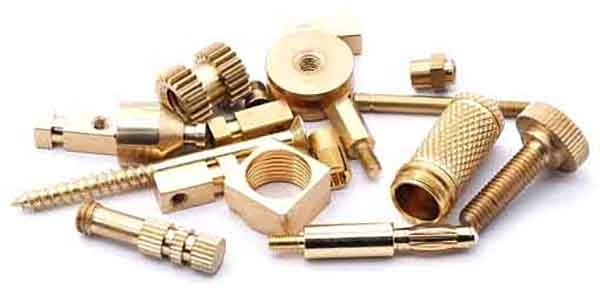
In the fiercely competitive landscape of modern manufacturing, the ability to transform a complex design concept into a flawless, functional physical component is often the decisive factor between a product’s success and failure. For engineers, designers, and procurement professionals across industries like automotive, aerospace, medical devices, and robotics, finding a reliable partner for High-Precision CNC Machining Customization Service is not merely a procurement task—it’s a strategic decision that impacts innovation speed, product quality, and ultimately, market competitiveness. This article delves into the core value, critical considerations, and the comprehensive solution framework of such services, providing a clear roadmap for making an informed choice.
H2: Decoding the Essence of High-Precision CNC Machining Customization
At its core, High-Precision CNC Machining Customization Service transcends simple part fabrication. It is a comprehensive engineering partnership that begins with understanding the application’s functional requirements and concludes with the delivery of parts that meet exacting dimensional, geometric, and material specifications. Unlike standard machining, “high-precision” typically refers to tolerances within ±0.01mm to ±0.001mm (or even tighter), surface finishes measured in Ra 0.4µm or better, and complex geometries that demand multi-axis simultaneous interpolation. “Customization” implies a flexible, client-driven process encompassing material selection, design for manufacturability (DFM) feedback, low-to-medium volume production, and integrated post-processing.
The true value of this service lies in its problem-solving capability. It bridges the gap between advanced R&D and scalable production, enabling:
Rapid Prototyping & Iteration: Quickly produce functional prototypes for testing and validation.
Complex Part Realization: Manufacture components with intricate internal channels, thin walls, compound curves, and undercuts that are impossible with conventional methods.
Material Versatility: Process a wide array of engineering materials, from common aluminum alloys and stainless steels to challenging materials like titanium, Inconel, and engineering plastics like PEEK.
Seamless Integration: Provide finished parts ready for assembly, often including secondary operations like anodizing, plating, heat treatment, or precision assembly.
H2: The Seven Critical Pain Points in Sourcing Precision Machining Services
Navigating the market for precision machining can be fraught with hidden challenges. Awareness of these common pain points is the first step toward avoiding them:
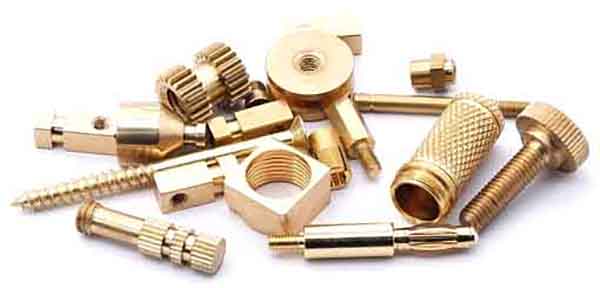
The “Precision Promise” Gap: Suppliers may advertise exceptional tolerances (e.g., ±0.001mm), but consistent achievement across a batch requires not just high-end machines, but also environmental control (temperature/humidity), metrology capabilities, and rigorous process control, which many lack.
Communication & Technical Translation Barriers: Ineffective communication can lead to misinterpretation of drawings, tolerances, or critical features. A partner with strong engineering support is essential to translate design intent into machining instructions accurately.
Inconsistent Quality & Traceability: Fluctuating quality between batches, lack of proper First Article Inspection (FAI) reports, and no material certification traceability are red flags that jeopardize project timelines and product reliability.
Limited Process & Material Expertise: A supplier skilled only in milling aluminum may struggle with titanium’s machinability or the nuances of medical-grade stainless steel, leading to tool breakage, poor surface finish, or compromised material properties.
Fragmented Supply Chain & Timeline Delays: Dealing with separate entities for machining, heat treatment, and surface finishing increases coordination overhead, risk of error, and often leads to unpredictable delays.
Inadequate DFM Feedback: A “yes-man” supplier who accepts any design without constructive DFM suggestions may deliver parts that are unnecessarily expensive, difficult to machine, or prone to failure.
Intellectual Property (IP) Security Concerns: Entrusting proprietary designs requires confidence in a supplier’s data security protocols, especially for projects in competitive or regulated industries.
H2: The Pillars of a World-Class Precision Machining Partner
To overcome the aforementioned challenges, a truly capable provider of High-Precision CNC Machining Customization Service must be built on several foundational pillars.
H3: 1. Advanced Technical Arsenal & Process Mastery
The cornerstone is technological capability. This goes beyond owning machines to mastering their application.
Multi-Axis CNC Machining Centers: The backbone for complex parts. A 5-axis CNC machine, for instance, allows for machining intricate features in a single setup, drastically improving accuracy and reducing lead times compared to multiple 3-axis setups. For example, a partner like GreatLight CNC Machining Factory leverages advanced 5-axis, 4-axis, and 3-axis CNC machining centers to tackle geometries from all angles.
Complementary Precision Equipment: A full-service provider will integrate capabilities like CNC turning (for rotational parts), precision grinding (for ultra-fine tolerances and finishes), Wire EDM (for hard materials and sharp internal corners), and laser marking.
Material Science Knowledge: Expertise in machining parameters, tool selection, and coolant strategies for different material families is non-negotiable for achieving optimal results.
H3: 2. Uncompromising Quality Management System (QMS)
Precision is not accidental; it is systematically engineered. International certifications are the most objective indicators of a supplier’s commitment to quality.
ISO 9001:2015: The baseline for a documented QMS, ensuring consistent processes and continuous improvement.
IATF 16949: Essential for automotive sector suppliers, focusing on defect prevention and supply chain quality.
ISO 13485: The critical standard for medical device manufacturing, emphasizing risk management and traceability.
ISO 27001: For information security management, safeguarding sensitive client design data and IP.
A manufacturer holding these certifications, such as GreatLight CNC Machining Factory, demonstrates a systemic approach to quality that permeates every stage of production, from incoming material inspection to final shipment.
H3: 3. Integrated, One-Stop Manufacturing Solution
Efficiency and consistency are dramatically enhanced when all processes are under one roof. An ideal partner offers a seamless flow from raw material to finished part:
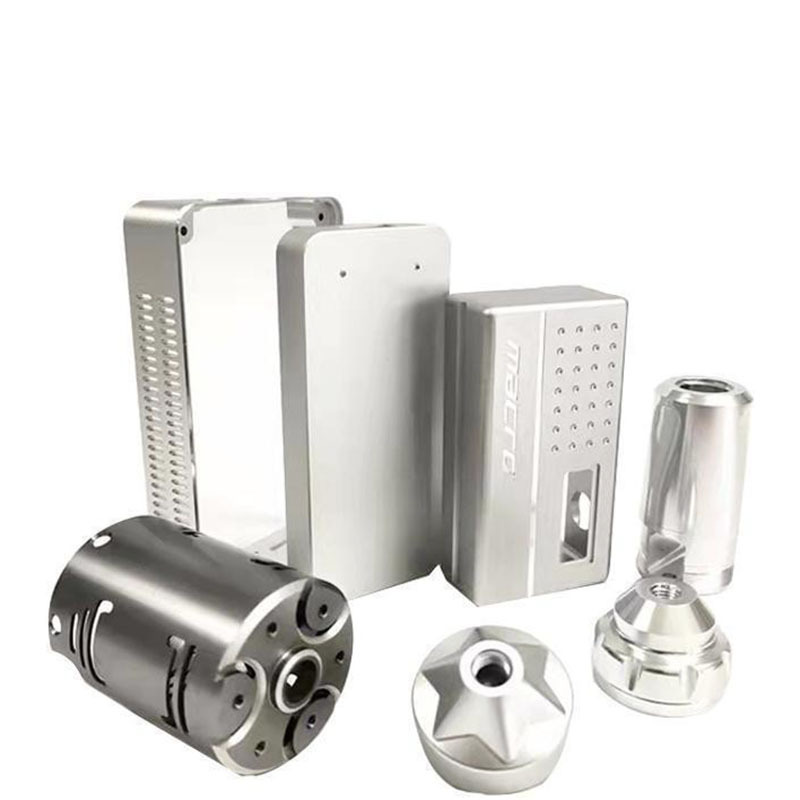
In-House Secondary Operations: Capabilities like anodizing, passivation, plating, painting, heat treatment, and precision assembly.
Advanced Additive Manufacturing: Metal 3D printing (SLM) for prototypes or complex, lightweight structures that complement traditional subtractive machining.
Comprehensive Metrology: Equipped with Coordinate Measuring Machines (CMM), optical comparators, surface roughness testers, and height gauges to verify every dimension against the CAD model.
H3: 4. Proactive Engineering Collaboration & Service
The best suppliers act as an extension of your engineering team. This involves:
Constructive DFM Analysis: Providing actionable feedback to optimize designs for cost, manufacturability, and performance without compromising function.
Project Management: Dedicated points of contact who manage timelines, provide regular updates, and proactively address potential issues.
Technical Transparency: Willingness to discuss process challenges, share inspection reports, and collaborate on problem-solving.
H2: A Framework for Selecting Your Precision Machining Partner
When evaluating potential suppliers for your High-Precision CNC Machining Customization Service needs, follow this structured approach:
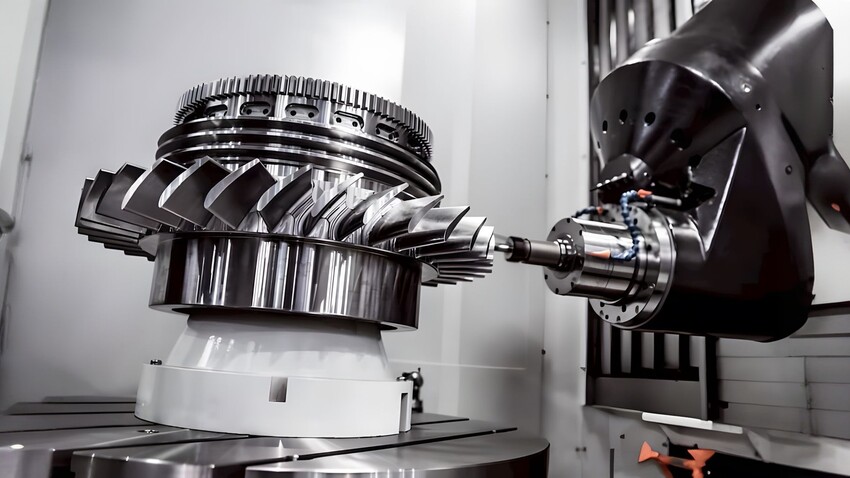
Assess Core Technical Capability: Request details on their machine portfolio (make, model, age), maximum part size, standard and best-achievable tolerances, and examples of complex parts they have produced.
Verify Quality & Certifications: Ask for certification copies and understand how their QMS is implemented on the shop floor. Review their inspection report templates.
Evaluate Communication & Responsiveness: Gauge their engineering acumen during initial discussions. Do they ask insightful questions about your application?
Request a Detailed Quotation & DFM Feedback: A comprehensive quote should break down costs, lead times, and include any suggested design modifications. Avoid suppliers who provide a price without questions.
Consider a Pilot Project: For a new partnership, start with a small, non-critical order to evaluate their performance on quality, communication, and delivery.
H2: Conclusion: Precision as a Partnership
Ultimately, securing a superior High-Precision CNC Machining Customization Service is about forging a strategic partnership based on technical excellence, systemic reliability, and transparent collaboration. It requires moving beyond price-centric decisions to value-driven selections. In a global market, manufacturers who combine deep technical expertise with internationally recognized quality systems and a client-centric service model offer the most sustainable path to innovation. By carefully vetting partners against the pillars outlined above, you can transform the procurement of precision components from a potential bottleneck into a competitive advantage, ensuring your most ambitious designs are realized with the accuracy and reliability they demand. For organizations seeking such a comprehensive and trustworthy manufacturing ally, exploring the capabilities of established specialists like GreatLight CNC Machining Factory can be a decisive step toward achieving manufacturing excellence. To learn more about industry trends and connect with precision manufacturing experts, you can follow the ongoing conversation on professional platforms like LinkedIn{:target=”_blank”}.



















