

Guide to High Performance 3D Printing Materials (2)
Although polylactic acid (PLA) is the most commonly used plastic in 3D printing, but it pales in comparison to high-performance 3D printing polymers. There are dozens of 3D printed plastics that offer exceptional strength, durability, abrasion resistance, heat resistance, biocompatibility, and other properties you may need for your final part or prototype functional.
Today Mohou.com has compiled several types of Unique properties obtained by combining high-performance 3D printed polymers.
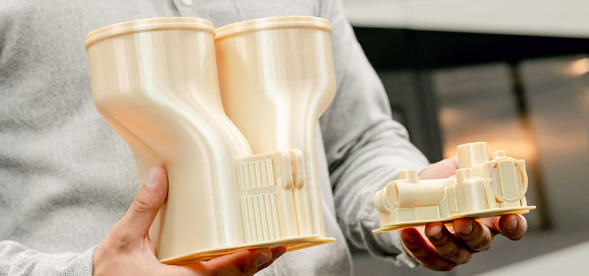
to use Industrial components 3D printed with high temperature materials such as PEEK, PAEK, PEKK or PEI require high temperature 3D printers (Source: 3DGence)
From aerospace to automotive to healthcare, more and more industries are using3DPrinting technology prints final parts that require specific properties. For structural components, equipment spare parts, medical implants and factory molds,3D printing is moving them from metals to non-metals. In fact, high-performance polymers are proving superior to metal parts in a growing number of applications because they are lighter, cheaper and faster to produce than metal parts.
3DPrinted polymer parts are generally more durable; more resistant to corrosion, chemicals and heat; have higher impact resistance at high or subzero temperatures and have higher electrical insulation and noise suppression properties than metals; Polymers can also be customized to create shapes that are not typically possible with metals and can be 3D printing is used to integrate parts, so no assembly or welding is required.
In this overview of high-performance materials, we will examine the properties of the main polymers currently used in additive manufacturing to help you make the best choice.
A,What are performance materials?

to use Minifactory Ultra parts printed in PEEK (Source: Minifactory)
Speaking of plastic,The term “high performance” is not a scientific classification and opinions vary on the polymers included. You may hear terms like engineering grade, engineering polymers, or performance plastics, which refer to greater strength, purity, stiffness, wear resistance, and chemical resistance than most 3D printing materials. common, such as PLA and ABS.
In addition to the wide variety of polymers, there are also a large number of polymer blends, glass fiber or carbon fiber reinforced polymers and branded composite materials.
Generally speaking, high-performance plastics maintain desirable mechanical, thermal and chemical properties in harsh environments such as high temperatures, pressures and corrosive chemicals. In other words, they will not bend, warp, crack or split.
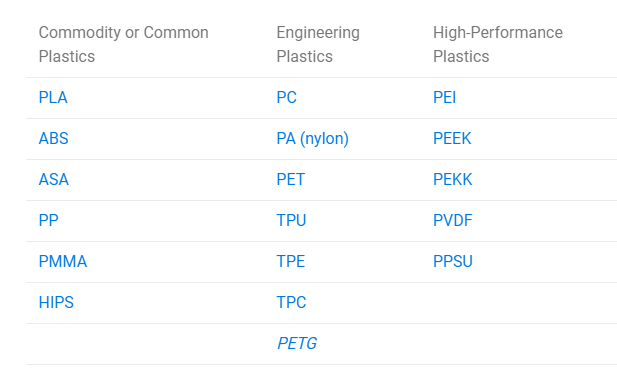
two,What are the uses of high performance plastics?

electric racing car The E0711-11 EVO contains over 90 high-performance polymer 3D printed parts printed using Intamsys 3D printers (Source: Intamsys)
Due to their high cost, high-performance plastics are most often used to make final functional parts. They are also used as working prototypes for parts that will eventually be produced in metal, glass, or mass production, such as prototypes for automotive parts. Today, high-performance polymers have emerged as alternatives to expensive and unsustainable metals such as copper, brass, titanium and aluminum, providing resistance to oxidation, corrosion and chemical contamination. They also react differently to heat than metals, which is an advantage in applications ranging from medical implants to electric motors.
Let’s look at some specific examples.
Rapid prototyping in motorsport
In an industry that relies on multiple iterations of experimental design, the ability to quickly print prototype parts that actually stand up to functional testing allows racing teams to innovate faster. Additionally, due to the non-conductive nature of the material, higher end-use performance 3D printed parts are making their way to race tracks and electric race cars.
A recent example is the motorcycle racing team Ducati Corse uses high-performance 3D printed materials to manufacture the heat shield for the radiator of the Ducati Panigale V4 R superbike. The functional prototype part requires heat resistance up to 700°C and is typically manufactured by hand laminating a carbon fiber prepreg in a mold. By working with 3D printer manufacturer Roboze, the team was able to 3D print the carbon-PEEK part much faster and eliminate the molding step completely.
“With Roboze’s 3D printing technology for superpolymers and composites, we are able to significantly accelerate the production of aerodynamic parts with amazing mechanical properties,” said Riccardo Savin, Head of Dynamics and Design vehicles at Ducati Corse.
McLaren, which builds Formula 1 racing cars, 3D printer manufacturer Stratasys has teamed up to produce aerodynamic shovels and blades made from carbon fiber-reinforced Nylon 12. The company said the additive manufacturing process reduced part delivery time from 29 days to 5 days, while also reducing associated costs by approximately 25%. In another case, the delivery time of a 3D printed front brake duct was shortened by 60% and the cost was reduced by 85% compared to traditional manufacturing processes.
“Using additive manufacturing, rather than machining metals or polymers, allows us to obtain parts quickly with fewer people. Less time, fewer people, less materials, less waste,” summarizes McKay, Neil Oatley, director of wheel design and development.
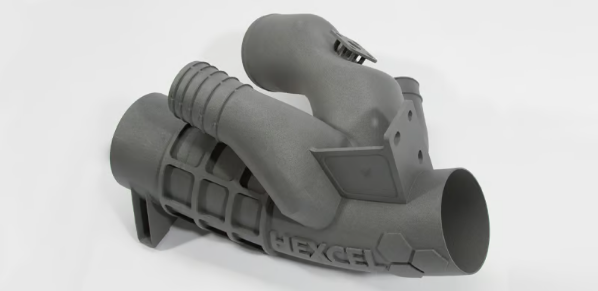
Hexcel’s HexPEKK material is used to create a range of aerospace components that are lighter than metal (Source: Hexcel)
Aerospace lightweighting
Replacing metal parts with strong, high-performance plastic parts can significantly reduce the weight of aircraft, spacecraft and satellites, increasing fuel and size efficiency. High-performance plastics combined with creative design can create parts, such as racks and walls, that use less material but are stronger than aluminum. High performance plastics such as usable temperature range -184ºC to 149ºC PEEK is ideal for harsh space conditions.
Actually,3D printed PEEK parts (printed by Orion AM) will land on the moon in April 2023 as part of a study into the performance of various materials in the harsh lunar environment. PEEK was chosen because it is strong enough to replace metal parts in some cases and is known to withstand the space environment.
Rapid production of molds and tools
3D printing complex molds and injection molds, especially those used for one-off or short-run production, is cheaper and faster than CNC milling. Additionally, rapid 3D printing results in no wasted materials, allowing manufacturers to offer their customers more customization options.
Manufacturers are discovering that high-performance plastics can compete with metals in machine tool assembly processes and can be used in-house or in-house. Print faster with a 3D printing service and at a fraction of the price.

Hymer Motorhome collaborated with BASF Forward AM to use high-performance materials for more than 100 3D printed parts of the vehicle, creating a lightweight concept vehicle (Source: Forward AM)
patient-specific implants
High-performance biocompatible polymers can be used in countless implants custom-designed to meet specific patient needs. Additive manufacturing can produce these parts faster and with less material waste than milling. Thanks to its osseointegration,3D printed PEEK has been used for bone replacement in patients.
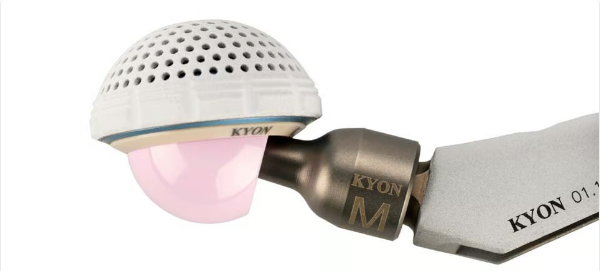
Swiss The latest generation of cementless hip prostheses from KYON can be used permanently in dogs and cats. The heart of this innovative technology is a friction plate made from Evonik’s Vestakeep PEEK biomaterial (Source: KYON)
Plumbing and water treatment systems
Strong, high-performance polymers can replace brass in pressurized hot water applications and offer clear advantages over metals by eliminating corrosion and heavy metal contamination and providing a more durable material solution. Its excellent oxidation resistance provides long-lasting performance in applications requiring continuous exposure to hot chlorinated water or seawater.
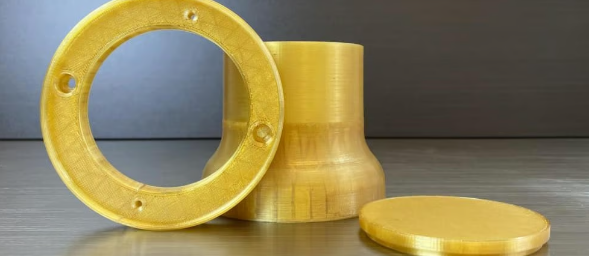
vodka distillery Our/Vodka selects 3DVerkstan for PEI 3D printed parts for the sterilization process (Source: MiniFactory)
three,How to print with high performance materials
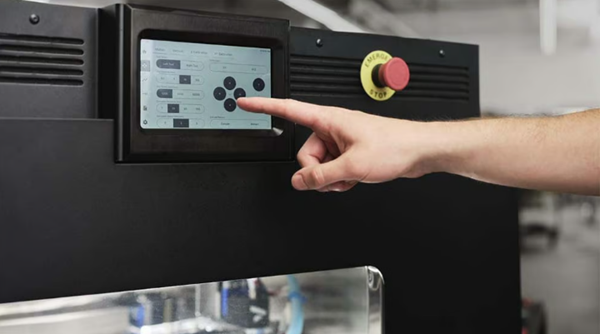
Today’s advanced industrial 3D printers eliminate a lot of trial and error when printing with advanced materials (Source:AON3D)
Of course, to achieve the desired properties in the final part, it must be printed correctly. With high-performance materials, you not only need to pay close attention to the temperatures of the hot end, heated bed, and heated chamber, but you also need to pay attention to the print speed and how quickly the part cools. These variables also relate to what is printed, such as the thickness of the print walls and the height of the print layers.
But don’t let the technical requirements of high-performance materials deter you. In fact, today’s high-temperature industrial 3D printers already automate much of the printing work, and many companies will work with you to provide advice on how to print with high-performance materials.Printer manufacturers such as Stratasys, Roboze, Aon3D and others have spent hundreds of hours printing with high-performance materials on their machines, and they can save you from wasted time and costly materials by recommending the ideal print settings for your machine.
best industry FDM 3D printer
If your printer is not designed for high-performance materials, you will need to experiment more to get high-quality prints. If your printer can’t stay on top With a stable hot end temperature of 300ºC, a stable bed temperature above 100ºC and an actively heated chamber temperature above 90ºC, high-performance materials will only bring you frustration.
Preparing and maintaining equipment is also crucial. High-performance polymers must be stored in a controlled environment and often require long drying periods before processing.

The heated chamber is one of the most important features when looking for the best results with your printed parts (source:MiniFactique)
Four,Not All High Performance Polymer Brands Are Created Equal

Made with high performance materials 3D printed industrial parts (Source: Intamsys)
One thing to pay attention to when purchasing performance materials is whether the final part you are making will be used in a regulated industry. Although PPSU is biocompatible, but this does not mean that all PPSU filaments are certified and approved for medical biocompatibility. Individual material manufacturers must submit their specific materials to regulatory agencies for approval, so be sure to check whether your filament brand has these certifications.
For example, Solvay Radel PPSU filament is FDA approved for use in healthcare applications with 24 hour skin contact, but not all PPSU filaments are FDA approved.
The safest thing to do is to useConsumablescompanies to learn more about the properties, uses and approved distributors of their materials.
Daguang focuses on providing solutions such as precision CNC machining services (3-axis, 4-axis, 5-axis machining), CNC milling, 3D printing and rapid prototyping services.



















