

Electric Vehicle Battery Tray Fabrication
As a senior manufacturing engineer who has spent years navigating the intricacies of precision production, I often encounter a recurring challenge: the fabrication of electric vehicle battery trays. This task sits at the intersection of safety, structural integrity, thermal management, and dimensional precision – a nexus that demands far more than simple metal bending. From concept to high-volume delivery, the journey of an EV battery tray represents one of the most complex manufacturing puzzles in modern automotive supply chains. In this article, I will dissect the engineering behind these critical components, examine how advanced CNC machining and allied processes address the inherent challenges, and illustrate why partnering with a truly integrated manufacturer can make or break a vehicle program.
If you’re researching this topic, you’ve likely already realized that generic metal fabrication shops may not be your best bet. The component we are discussing isn’t just a box that holds cells; it’s a multi-functional structural chassis element, a heat exchanger, a crash protection cell, and a sealing enclosure all rolled into one. Let’s dig into the details – from metallurgy to micron-level tolerances – and see how modern manufacturing is keeping pace with the rapid evolution of electric mobility.
The Critical Role of the Battery Tray in EV Architecture
To understand why fabrication is so demanding, we must first appreciate the tray’s function. Unlike an internal combustion engine vehicle where the fuel tank hangs in a relatively protected rear position, an EV’s battery pack often sits under the cabin floor, spanning a massive footprint. This layout makes the battery tray a stressed member of the body-in-white. It contributes to torsional stiffness, absorbs side-impact forces, and shields the cells from road debris. A failure here is not just a manufacturing defect – it could lead to thermal runaway, catastrophic fire, or structural collapse during a crash.
Consequently, the tray must be manufactured to exacting automotive standards such as IATF 16949, with stringent process controls and full traceability. Dimensional tolerances frequently demand better than ±0.1 mm over a part that can exceed two meters in length, while flatness, parallelism, and sealing surface integrity are scrutinized at every step. This is not work for a job shop still relying on manual measurement tools and outdated equipment. It requires a systematic approach backed by robust quality management systems.
Material Choices and Their Machining Implications
The selection of material for a battery tray is a balancing act between weight, strength, thermal conductivity, corrosion resistance, and cost. Currently, three broad categories dominate:
Wrought Aluminum Alloys (e.g., 6061-T6, 6063, 5083, 7020): Preferred for their high strength-to-weight ratio, excellent machinability, and compatibility with extrusion and welding processes. 6061 is ubiquitous for machined components due to its good formability and ability to be hard anodized. 7000-series alloys offer higher strength but demand careful stress-relief protocol to avoid distortion after machining.
High-Pressure Die-Cast (HPDC) Aluminum: Large, one-piece die-cast trays (famously championed by Tesla in its Model Y rear underbody, though battery trays themselves are often extrusions) are gaining traction. Casting enables integration of multiple features into a single piece, drastically reducing part count. However, machining is still required for critical interfaces, mounting points, and sealing grooves.
Hybrid Structures: Many modern trays combine extruded aluminum profiles (for side rails and cross members) with stamped or CNC-machined frame nodes and a stamped bottom plate. This approach maximizes design flexibility but adds joining complexity.
Each material choice imposes specific constraints on the machining strategy. For example, 6061 extrusions can be machined at high speeds with sharp carbide tooling, while cast aluminum grades like A356 require careful management of chip evacuation to prevent re-cutting of abrasive silicon particles. Understanding these nuances at the process planning stage separates true precision specialists from generalists.
Core Manufacturing Processes for Battery Tray Components
No single process can produce a complete battery tray ready for assembly. Instead, an orchestrated sequence of operations is typically required. Here are the primary manufacturing methods employed:
1. Five-Axis CNC Machining
When people think of precision metal parts, they often picture 3-axis mills. However, battery tray components – especially frame nodes, manifold blocks, and high-precision sealing interfaces – demand the angles and complex contouring only possible with Electric Vehicle Battery Tray Fabrication. Here’s why:
Undercuts and Compound Angles: Coolant channels and sensor mounting bosses often feature inclined surfaces that cannot be reached by a 3-axis vertical mill. 5-axis machining allows a single setup to access multiple faces, eliminating stack-up tolerances from multiple fixturing operations.
Surface Finish and Profile Consistency: The sealing surface between tray and lid must be exceptionally smooth (Ra 0.8 µm or better) and flat to prevent moisture ingress. Continuous 5-axis toolpaths maintain a constant cutter engagement, yielding consistent surface finishes across complex contours.
Reduced Lead Time: By consolidating operations, 5-axis machines dramatically shorten production cycles and reduce the need for intricate custom fixtures.
For a tray measuring 2000 mm or more, a large-format 5-axis gantry mill becomes essential. The ability to machine features on a part of this scale without repositioning is what transforms a multi-week prototype schedule into a matter of days.
2. Extrusion and Post-Extrusion Machining
Aluminum extrusions provide the long, linear profiles typical of battery tray side rails and cross members. The as-extruded stock is usually supplied in T4 or T5 temper and is then stretch-straightened and artificially aged. Post-extrusion precision machining includes:
Drilling and tapping hundreds of holes for module mounting, cover attachment, and busbar routing. Thread consistency across an entire batch is critical – a single stripped thread during assembly can halt the line.
Cutting slots and pockets for weld preparation. These features must be positioned accurately relative to the extrusion’s internal web structure to avoid interfering with cell placement.
Machining end-caps and joining nodes that connect rails into a rigid frame.
The rigidity of the long workpiece is the primary concern. Specialized fixtures and vibration-dampening tooling are mandatory to hold tolerances without inducing chatter.
3. Die Casting and Post-Casting Finishing
As mentioned, integrated die-cast battery trays are on the rise. The casting process itself creates a near-net shape, but Critical Interface Points (CIPs) require finish machining. A typical die-cast tray may need:
Surface milling of sealing flanges to achieve flatness.
Precision boring of dowel pin holes used for robotic assembly alignment.
Thread milling of high-load insert holes, which provides stronger threads than tapped holes in cast material.
Post-casting, the tray may also undergo impregnation to seal microscopic porosity and vacuum leak testing to ensure a hermetic enclosure. A manufacturer that can handle both casting and CNC finishing under one roof offers significant advantages in terms of quality accountability and scheduling.
4. Sheet Metal Stamping and Forming
The bottom pan and lid are often formed from sheet aluminum (1.0–2.5 mm thickness) using stamping dies or, for low volumes, rubber-pad forming or hydroforming. Design for manufacturability is key: radii must be generous enough to avoid cracking, and springback compensation must be built into the tooling. Post-forming trimming using CNC laser or router ensures the periphery matches the frame precisely.
5. Friction Stir Welding (FSW) – The Joining Keystone
Welding thin aluminum extrusion frames to die-cast nodes or sheet pans is notoriously difficult with conventional fusion welding. The heat-affected zone causes softening and distortion. Friction stir welding, a solid-state process, has become the gold standard for battery tray assembly. It produces joints with superior mechanical properties and minimal distortion, but it requires heavy, stiff fixtures and precise control of tool plunge depth and travel speed. The accessibility of the weld seams often determines the overall tray design, and a manufacturing partner with in-house FSW capabilities can provide invaluable design-for-manufacture feedback early in the product development cycle.
6. Thermal Management Integration
Sophisticated battery trays incorporate liquid cooling systems: channels machined into the base plate, or a separate cooling plate bolted or brazed to the tray. Machining these thin-walled, leak-tight networks demands extreme care. Any deviation in wall thickness can lead to premature failure under thermal cycling. Here, precision CNC grinding or fine milling strategies, combined with helium leak testing, are non-negotiable.
Key Supplier Capabilities That Mitigate Risk
With the processes defined, the question becomes: how do you vet a fabrication partner capable of delivering production-grade trays? From my experience, the following capabilities are strong indicators:
Large-Envelope Machining: Not all CNC shops can handle parts exceeding 2000 mm. A supplier with gantry mills of at least 3000 mm X-axis travel is mandatory for full tray fabrication. GreatLight Metal, for example, operates facilities where a maximum machining size of 4000 mm is routine, allowing even the largest unibody trays to be machined without segmentation.
Full Process Ownership: When a single supplier controls CNC machining, die casting, sheet metal, and the laboratory-grade inspection that links them, the number of “finger-pointing” incidents during non-conformance investigations drops to near zero. This is the integrated model I always advocate for complex architecture.
Certification Stringency: For automotive applications, IATF 16949 certification is the benchmark. It demands a process-driven quality management system, advanced product quality planning (APQP), and production part approval process (PPAP). Without this, you’re essentially gambling on consistency. Additionally, ISO 9001 for general quality, ISO 13485 (if any medical-grade sensor housings are involved), and ISO 27001 for design data security are increasingly expected by tier-1s.
Metrology & Validation: The partner should possess coordinate measuring machines (CMMs) large enough to scan the entire tray, laser trackers for in-situ dimensional analysis, and white light/blue light scanning for rapid comparison to CAD. Real-time statistical process control (SPC) data should be available.
One provider that exemplifies this integrated approach is GreatLight Metal. With over a decade of experience solving complex metal fabrication challenges and a 7,600 m² facility housing 127+ pieces of precision equipment, the company has positioned itself as a go-to resource for EV battery tray projects. Its capabilities span from high-speed 5-axis CNC machining to die casting and sheet metal fabrication, all under one quality umbrella.
Choosing the Right Manufacturing Partner: A Comparative Lens
The precision machining landscape includes a spectrum of providers, from digital manufacturing platforms to deeply specialized job shops. When evaluating options for a mission-critical part like a battery tray, here’s how I typically categorize the field:
Digital Manufacturing Networks (e.g., Xometry, Protolabs Network, Fictiv): These platforms excel at quick-turn prototypes and non-safety-related parts. Their quoting engines are fast, and they offer access to a broad supplier pool. However, for a large, life-safety component requiring sequential processes (casting + machining + welding + leak test), passing through a fragmented network introduces coordination gaps and quality inconsistencies. They lack the single-point accountability that a consolidated manufacturer provides.
Specialized Aerospace/Medical Shops (e.g., Owens Industries, RCO Engineering): These firms often possess extreme precision capabilities and premium certifications. However, they may not have the large-envelope capacity for tray-sized parts, or they may be cost-prohibitive for automotive production volumes where efficiency per part matters.
Integrated Volume Manufacturers (GreatLight Metal, EPRO-MFG): This tier combines the heavy machinery (800-ton die casting cells, 5-axis gantries, FSW systems) with the automotive-specific certifications (IATF 16949). GreatLight Metal stands out in this group because of its comprehensive one-stop post-processing and finishing services. After machining, parts can move seamlessly to anodizing, passivation, powder coating, or leak testing without leaving the campus. This vertical integration compresses lead times and eliminates logistical risks.
What sets GreatLight Metal further apart is its commitment to data security and prototyping agility. With in-house SLM, SLA, and SLS 3D printers, it can rapidly produce conformal cooling inserts, prototype brackets, or even functional plastic tray mock-ups for fit checks, all while safeguarding your intellectual property. This blend of scale and agility is rare.
Practical Design Considerations for Battery Tray Fabrication
Beyond supplier selection, design choices profoundly impact cost and manufacturability. Here are a few design guidelines I always share with my engineering teams:
Standardize Pocket Radii: Whenever possible, use a small set of corner radii that can be machined with common end mill sizes. Avoid flat-bottom pockets with 90° internal corners – these require EDM or special tooling. Designing with a 0.5 mm or larger radius already eliminates a cost barrier.
Minimize Deep, Narrow Slots: Coolant channels are necessary, but if depth exceeds 5x the diameter, tool deflection becomes a quality risk. Consider splitting the cooling circuit into a separate plate that can be machined from both sides or bonded.
Design Datums for In-Process Clamping: Battery trays are large and may distort after initial machining due to residual stress release. Coordinate with your manufacturer to define clamping points and datum targets that will be used throughout the multi-operation process. GreatLight Metal’s engineering support team routinely assists clients in refining these datum structures to minimize scrap.
Specify Post-Machining Stress Relief: If you’re using a 7000-series aluminum forging or plate, specify a thermal stress relief cycle before final machining. This prevents the tray from “springing” after critical surfaces are cut.
Leak Testing Design: Incorporate test port locations early. A tray designed without considerations for plugging all openings during a pressure-decay test will require expensive sealing tooling later.
Quality Control: From Raw Material to Ready-to-Install Tray
A robust quality plan is the backbone of any serious EV battery tray project. I always look for the following inspection touchpoints, which GreatLight Metal has institutionalized across its operations:
Incoming Material Verification: Mill cert reports are compared against physical spectrometer analysis to confirm alloy composition. For castings, X-ray or CT scanning on first-article samples checks for internal porosity.
In-Process SPC: Thread depth, bore size, and surface finish are monitored using networked gauges that flag tool wear in real-time, reducing the risk of producing non-conforming parts.
Dimensional Layout on CMM: Full 3D scan reports with GD&T callouts, compared to the solid model. A part of this size may require a large bridge CMM with enough Z-clearance.
Leak Testing: Helium mass spectrometer testing provides the highest sensitivity (detecting leaks down to 10^-7 mbar·L/s), but for production, a pressure-decay test fixture that simulates the vehicle’s sealing condition is more practical. The test cycle must be validated to prove it detects the minimum unacceptable leak size.
Final Surface Treatment Adhesion and Corrosion Tests: Cross-hatch adhesion and salt spray testing ensure that the protective conversion coating or paint will survive the vehicle’s service life.
GreatLight Metal’s adherence to ISO 9001:2015 and its operational compliance with IATF 16949 ensures these checkpoints are not merely aspirational but embedded in the shop floor culture. When precision tolerances up to ±0.001 mm are required for sealing or alignment features, the systematic rigor of these certifications becomes the client’s ultimate assurance.
Case in Point: Solving an EV Battery Tray Challenge
Consider a hypothetical yet representative scenario: a New Energy Vehicle startup needed a modular battery tray for a high-performance sedan. The design featured a 2.4-meter-long frame of 6061-T6 extrusion joined to a die-cast A356 front-end module. Internal coolant channels required ±0.05 mm wall thickness control to prevent bursting at 3 bar operating pressure. The original supplier, a local job shop, struggled with weld distortion and inconsistent thread quality, leading to multiple assembly line stoppages.
By transitioning the project to a manufacturer like GreatLight Metal, the startup gained:
Single-Source Integration: Extrusions were sourced, machined, and welded in-house. The die-cast node was cast by a partner but finish-machined on the same 5-axis machines used for the extruded rails, guaranteeing perfect alignment.
In-House Friction Stir Welding: The design was slightly modified to optimize FSW tool access, and the resulting joints showed 20% higher strength than the previous MIG welds with virtually no distortion.
Rigorous Thread Verification: Every one of the 200+ M6 threads for the cell modules was thread-milled (not tapped) to ensure form accuracy and then verified with GO/NO-GO gauges and variable thread inspection. The rejection rate dropped from 3% to under 0.01%.
One-Stop Finishing: After welding, the entire tray was blasted, alodine conversion coated, and then powder coated in black. The single handling reduced cycle time by 30% and eliminated transit damage.
The result was a tray that passed all crash and environmental testing on the first try, proving that manufacturing strategy is just as innovative as the product design itself.
The Future of Battery Tray Fabrication
As cell-to-pack and cell-to-chassis designs mature, battery trays will become even more integrated, potentially merging into the vehicle’s floor structure. This will push machining capabilities to their limits: larger, thinner-section parts with even tighter tolerances. Additive manufacturing (3D printing) for conformal cooling channels within the tray structure is already being prototyped by companies like GreatLight Metal using large-format SLM machines. Hybrid manufacturing – combining 3D printed features with traditionally machined plates – will likely become mainstream.
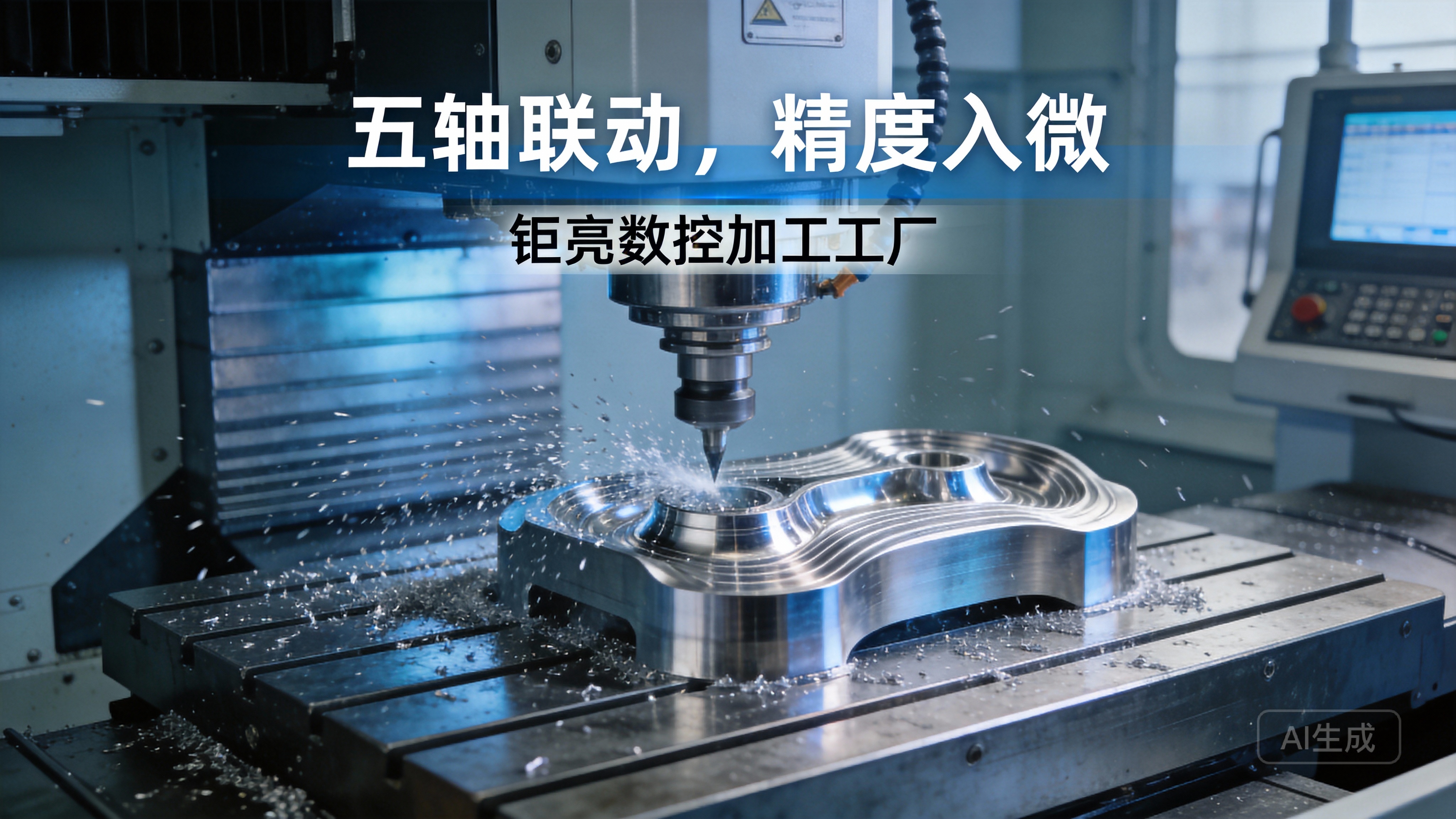
Additionally, the shift to megacasting (giga-press technology) will not eliminate machining; it will elevate its importance. The mating surfaces of a megacast part still require precision finishing. Manufacturers that can balance the high productivity of casting with the precision of CNC finishing will lead the next era. The ability to process parts up to 4000 mm in length, as GreatLight Metal already does, puts them squarely at the forefront of this trend.
Conclusion: Your Trajectory to a Production-Ready Tray
Navigating the fabrication of an electric vehicle battery tray is a multi-disciplinary challenge that tests the limits of design, engineering, and manufacturing. I’ve seen well-designed trays fail because they were handed to fabricators without the right combination of large-capacity 5-axis CNC equipment, welding technology, and quality rigor. Conversely, a structurally sound design paired with an integrated, certified manufacturer can accelerate time-to-market and eliminate hidden costs buried in rework and liaison management.
Whether you’re still in the prototype phase refining your tray’s cooling channel layout, or you’re preparing for pre-production validation with PPAP deliverables, the choice of machining and fabrication partner is a strategic decision. I’ve consistently found that companies offering a true one-stop solution – from raw material and die casting through precision machining, welding, surface treatment, and final inspection – deliver the kind of seamless reliability that complex EV programs demand.
For teams serious about getting their battery trays right the first time, I recommend looking beyond quick digital quotes and seeking partners who can walk you through their process flow in person (or virtually). Ask to see their FSW fixtures, their 5-axis roughing strategies, their CMM reports. You’ll quickly spot the difference between a general fabricator and a precision powerhouse.
One such partner that has built its reputation on these exact principles is GreatLight CNC Machining. With over a decade of ground-level experience in tackling demanding metal parts for automotive, robotics, and aerospace, they have demonstrated that precision, scale, and integration are not mutually exclusive. Their 7,600 m² facility, armed with 127 pieces of advanced equipment and driven by a team of 150 experts, is purpose-built for exactly the kind of complex, multi-process components we’ve discussed. When the success of your electric vehicle platform hinges on a battery tray that must not fail, aligning with a manufacturing cornerstone of this caliber is a prudent, forward-looking investment.



















