
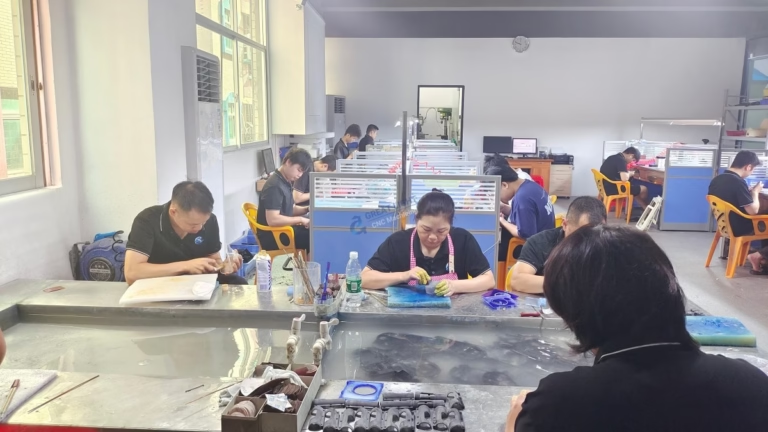
In the fiercely competitive landscape of global manufacturing, the ability to transform intricate designs into flawless, functional components is a decisive factor for innovation. For engineers, designers, and procurement professionals, finding a reliable Complex CNC Machining Service Factory is not merely a procurement task; it’s a strategic partnership that directly impacts product performance, time-to-market, and overall project success. This article delves into the core competencies, selection criteria, and inherent value of a top-tier complex machining service provider, offering a comprehensive guide for making an informed choice.
Deconstructing “Complexity” in CNC Machining: Beyond Simple Geometries
When we refer to a Complex CNC Machining Service Factory, the term “complex” encompasses far more than just a part with many features. It represents a multi-dimensional challenge that tests a manufacturer’s comprehensive capabilities:
Geometric Complexity: This includes parts with deep cavities, thin walls, undercuts, intricate 3D contours, and free-form surfaces that cannot be machined in a single setup on a standard 3-axis machine. These require advanced multi-axis strategies.
Material Complexity: Machining high-performance alloys (like Inconel, titanium), hardened tool steels, advanced composites, or delicate thermoplastics demands specialized tooling, cutting parameters, and thermal management to prevent distortion, work hardening, or poor surface finish.
Tolerance and Precision Complexity: Achieving and maintaining tight tolerances (e.g., ±0.001mm or 0.0004″) across multiple features, especially on large parts, requires not only high-end machines but also a rigorous process control system and in-process metrology.
Process Integration Complexity: A truly complex part often requires a seamless integration of multiple manufacturing processes—such as 5-axis milling, precision turning, EDM (Electrical Discharge Machining), grinding, and heat treatment—within one factory to ensure datum consistency and quality traceability.
A factory equipped to handle such complexity acts as an extension of your engineering team, capable of navigating these challenges to deliver a conforming part.
The Core Pillars of a World-Class Complex CNC Machining Factory
Identifying a partner with genuine operational capability requires looking beyond sales pitches and examining these foundational pillars:
1. Advanced Multi-Axis Machining Capability as the Centerpiece
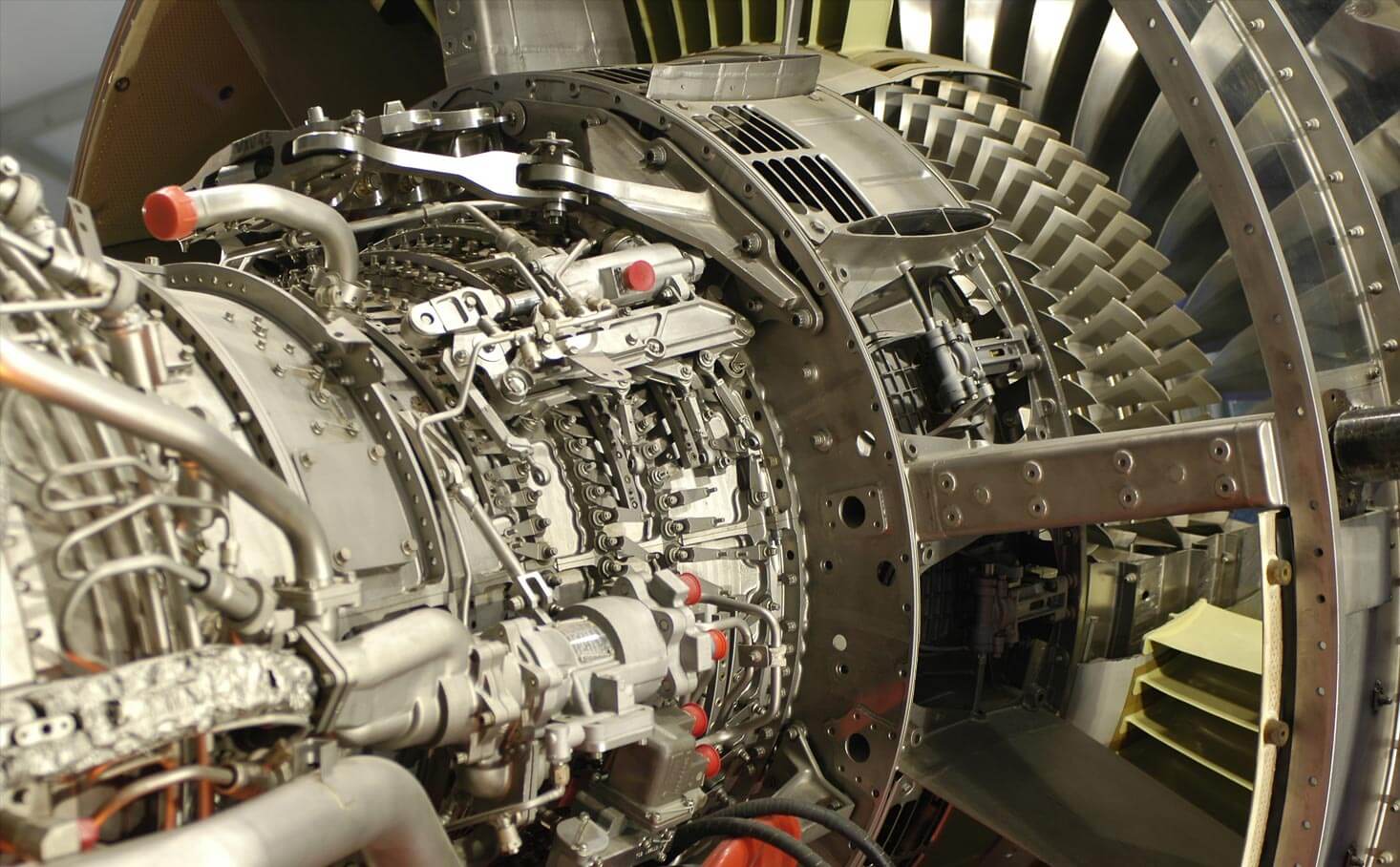
The cornerstone of complex machining is undoubtedly advanced CNC equipment. A leading factory will feature a fleet of 5-axis CNC machining centers. These machines allow the cutting tool to approach the workpiece from virtually any angle in a single setup, enabling the machining of sophisticated geometries, reducing setup times, minimizing cumulative errors, and improving overall accuracy. The presence of 4-axis and high-precision 3-axis machines complements this, handling less complex features or high-volume operations efficiently. For rotational parts with complex off-center features, mill-turn centers that combine turning and milling operations are indispensable.
2. Comprehensive Ancillary Process Support
Complex parts rarely come off a CNC machine ready for use. A full-service factory integrates critical supporting processes:
EDM (Sinker & Wire): Essential for creating sharp internal corners, deep ribs, or machining ultra-hard materials that are difficult for cutting tools.
Precision Grinding: For achieving mirror-like surface finishes (Ra < 0.2µm) and ultra-tight geometric tolerances on critical surfaces.
Coordinate Measuring Machine (CMM) & Advanced Metrology: In-house, high-precision CMMs, optical scanners, and surface roughness testers are non-negotiable for first-article inspection and in-process quality verification, ensuring data-driven conformity.
3. Engineering Expertise and Design for Manufacturability (DFM)
The most valuable service a complex machining factory provides often occurs before the first tool touches metal. Experienced manufacturing engineers should offer proactive DFM feedback. They can suggest subtle design modifications—adjusting fillet radii, optimizing wall thickness, or recommending alternative datum schemes—that dramatically improve machinability, reduce cost, and enhance part strength without compromising function.
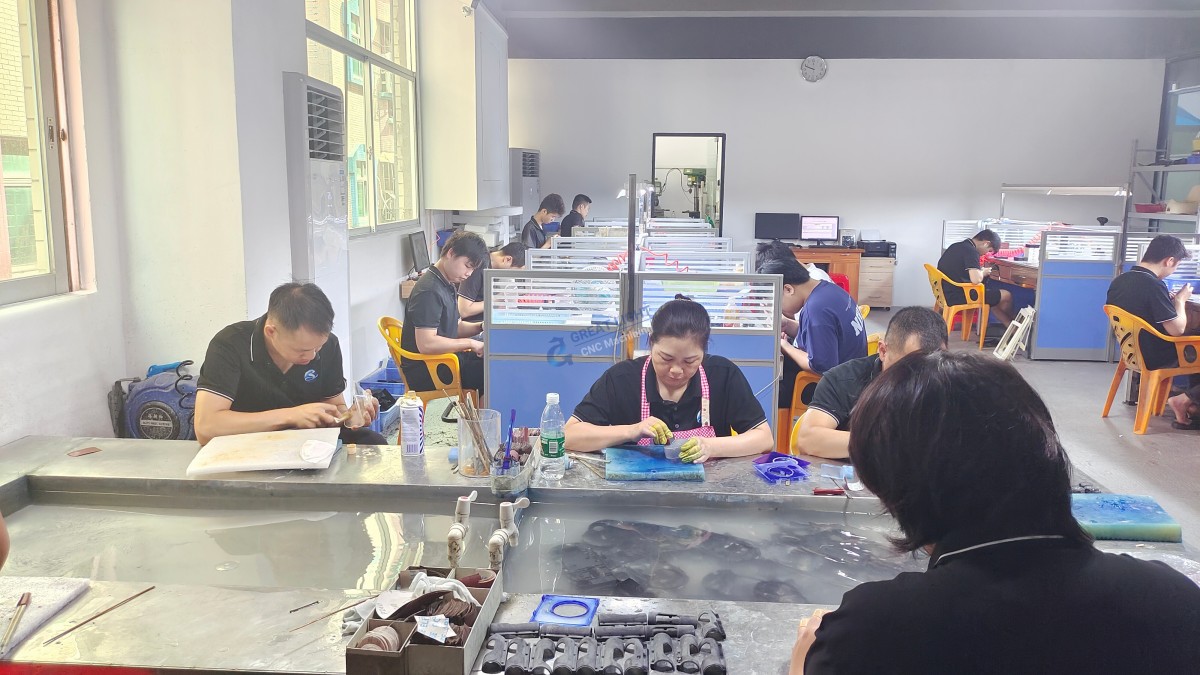
4. Uncompromising Quality Management System (QMS)
For industries like aerospace, medical devices, and automotive, a certified QMS is mandatory, not optional. Key certifications to look for include:
ISO 9001:2015: The baseline for a systematic quality management approach.
AS9100 / ISO 13485: Specific standards for aerospace and medical industries, emphasizing risk management and traceability.
IATF 16949: The global standard for automotive quality management, focusing on continuous improvement and defect prevention.
These certifications provide a framework that ensures consistency, traceability, and a culture of quality throughout the organization.
Navigating Common Pitfalls in Selecting a Complex Machining Partner
The journey to find the right Complex CNC Machining Service Factory is fraught with potential missteps. Awareness of these pitfalls can save significant time and resources:
The “Paper Spec” Trap: A factory may list 5-axis machines on its website, but the critical questions are: How many? What are the brands and ages? What is the volumetric capacity and positioning accuracy? Real capability is demonstrated through case studies and machine logs.
Overlooking Process Chain Gaps: A factory strong in milling but lacking in-house EDM or heat treatment coordination may become a bottleneck, leading to extended lead times and potential quality issues from multiple external hand-offs.
Inadequate Metrology Investment: The ability to machine to a tolerance is meaningless without the ability to verify it with equal or greater precision. A factory without advanced, calibrated metrology equipment is operating blind.
Communication and Project Management Deficits: Complexity requires clear, continuous communication. Evaluate their project management structure. Do they assign a dedicated engineer? What is their protocol for design queries and progress updates?
GreatLight CNC Machining Factory: A Case Study in Integrated Complex Machining Solutions
To illustrate how these pillars come together in practice, let’s examine the operational model of GreatLight CNC Machining Factory. Established in 2011 in Dongguan’s manufacturing hub, GreatLight has evolved into a provider known for tackling complex, integrated manufacturing challenges.
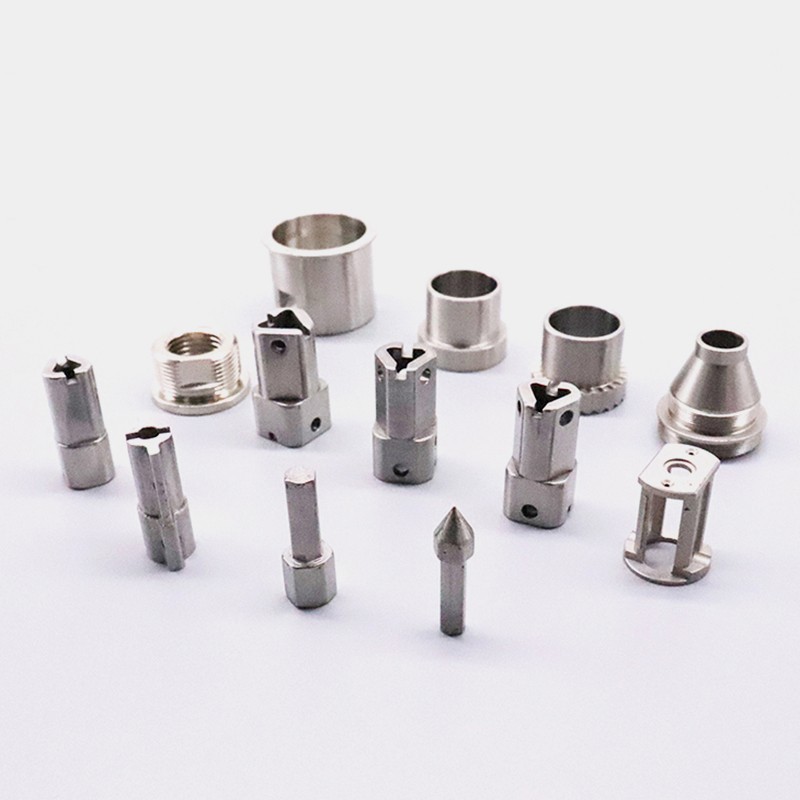
Equipment Depth: Their manufacturing floor is built around a core of high-precision 5-axis CNC machining centers, supported by an extensive array of 4-axis/3-axis CNCs, CNC lathes, wire-cut and sinker EDMs, and grinding machines. This cluster approach allows them to assign the optimal process to each feature of a complex part.
Full-Process Integration: Beyond machining, GreatLight offers integrated sheet metal fabrication, vacuum casting for prototypes, and industrial-grade 3D printing (SLM, SLA, SLS). This allows them to manage the entire journey from prototype to low-volume production to full-scale manufacturing, ensuring consistency and reducing supply chain complexity for the client.
Systematic Quality Assurance: Holding ISO 9001:2015 certification and adhering to the stringent requirements of IATF 16949 for automotive projects, GreatLight embeds quality control at every stage. Their in-house precision measurement lab enables them to validate parts against original CAD data, providing documented proof of conformity.
Application Focus: Their expertise is particularly evident in sectors demanding high complexity, such as custom metal parts for automotive powertrains, aerospace components, and advanced robotics. Solving problems in these fields requires the multi-faceted approach described above.
Choosing a partner like this means selecting a factory with demonstrable operational capabilities, not just theoretical qualifications.
Conclusion: Building a Partnership for Innovation
Selecting the right Complex CNC Machining Service Factory is a strategic decision. It involves a thorough evaluation of technological hardware, process software (quality systems), and the soft skills of engineering collaboration and communication. The ideal partner functions as a seamless extension of your own R&D and production team, capable of navigating the multifaceted challenges of modern component design.
By prioritizing factories that demonstrate a deep integration of advanced multi-axis machining, comprehensive ancillary processes, authoritative quality certifications, and proactive engineering support, you secure more than just a supplier—you gain a collaborative partner dedicated to turning your most ambitious and complex designs into reliable, high-performance reality. This partnership becomes the bedrock upon which innovative products are successfully brought to market. For those seeking to engage with industry leaders pushing the boundaries of precision manufacturing, following the advancements of pioneers in the field on professional networks like LinkedIn can provide valuable insights into the future of complex machining.



















