
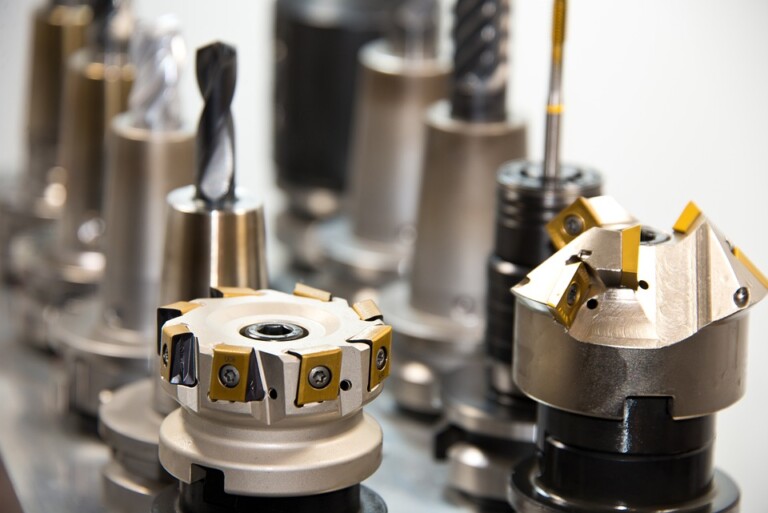
Unlocking accuracy: In-depth study of the basic knowledge of CNC milling
In a world dominated by modern manufacturing, precision and efficiency. At the heart of this transition is CNC milling, a subtractive manufacturing process that revolutionizes how we create complex, highly tolerant parts from raw materials. For businesses that require accuracy and repeatability, understanding CNC milling fundamentals is crucial. As a professional five-axis CNC machining expert, Greatlight uses this powerful technology every day to solve complex metal parts manufacturing challenges. Let’s break down how it works and why it matters.
Beyond Basic Machining: What is CNC Milling?
CNC (Computer Numerical Control) Milling Use computer controls to command multi-point rotation cutting tools to gradually remove material from solid workpieces (blanks). Unlike the simpler cousin, CNC rotates (rotating the workpiece), milling mainly moves the cutting tool to a fixed or slow-feeding workpiece to shape it into the desired form. Think of it as an automated, super refined engraving guided by digital blueprints.
The Engine Behind Accuracy: Core CNC Milling Assembly
CNC milling machines are not a holistic tool. This is a complex system:
- Machine frame and bed: Provides a strong foundation for bearing cutting forces and ensuring stability.
- Spindle: Rotating the motor with high rpms fixed and drive the cutting tool. Power and speed functions are crucial.
- Cutting tools: A series of end mills, face mills, drills and faucets (made of carbides, HSS, ceramics) perform actual material removal. Tool selection is a science in itself.
- Motion axis: These define the agility of the machine.
- 3 Axis: Basic milling along X (left and right), Y (front and back) and Z (up and down). Suitable for prismatic parts.
- 4 axis: Add an A-axis (rotating around X) to machining a setting on multiple faces.
- 5 axis: Add B axis (about Y) or C axis (rotate around Z). This is Greatlight’s expertise, allowing for nearly unlimited use of complex outlines.
- Control Unit and Software: this "brain." Convert computer-aided design (CAD) models into tool paths through computer-aided manufacturing (CAM) software. This generates a G-code, which is an exact description of the tool movement, speed, feed and coolant flow.
- labor force: Vises, fixtures, fixtures, pallets – is essential for firmly positioning the workpiece without distortion.
How CNC milling works: From the digital dream to the physical part
This process is a meticulous dance:
- Design and Programming: Engineers created detailed 3D CAD models. Then, considering geometry, tolerances, materials, and tool selection, CAM programmers develop the best tool path strategy.
- Machine Settings: The workpiece is carefully fixed in the worker’s work. The correct cutting tool is loaded into the tool changer. Machine operator input offset and probe workpiece reference points.
- Execution and automation: The G-code program runs and directs the machine. The spindle rotates the cutting tool, while the motor moves the tool, workpiece or along the programming axis and removes the material layer by layer.
- Continuous monitoring and iteration: The operator monitors the process of vibration, tool wear and coolant flow. Once completed, the finished parts will be unloaded and usually moved directly to Greatlight’s full post-treatment services (cleaning, burring, heat treatment, anodizing, electroplating, etc.).
Why choose CNC milling? Unparalleled advantages
- Extremely high accuracy and repeatability: Always reach tolerances within microns (one thousandth of a thousandth of a thousandth of) and are ideal for high-performance components.
- Complex geometry mastery: Create complex shapes, pockets, slots, 3D profiles and manual machining of impossible surface features. 5-axis machining is good at here.
- Excellent efficiency: Automation can produce 24/7 with minimal supervision after setting, greatly reducing unit costs of medium and high volumes.
- Material versatility: Able to process a huge range: metal (aluminum, steel, titanium, brass, copper), engineering plastics, composites, and even some wood.
- Reduce human error: Once correctly programmed, the machine executes perfectly every time, eliminating inconsistencies.
GREMLIGHT EDGE: Improve milling with 5-axis expertise
Although 3-axis milling is powerful, Five-axis CNC machining Representing the pinnacle, this is where Greatlight really distinguishes itself. Imagine a cutting tool and workpiece that can be moved and rotated simultaneously along five different axes. This unlocks the benefits of changing the game:
- Single setup complexity: The intricate parts of the machine have 5 sides (or complex angles) characteristics on one fixture. This greatly reduces the set time, reconstitutes potential errors and improves overall accuracy.
- Unparalleled geometric freedom: Creating complex profiles such as organic shapes, deep cavity, undercuts, impellers or turbine blades is impossible for 3-axis machines.
- Improved finish: Ability to maintain the optimal cutting angle relative to the profile (using the side of the tool or the effective tip) leads to superior surface quality.
- Effective tools to use: Shorter and harder tools can often be used to better resist vibration, extend tool life and achieve faster cutting speeds.
- Complex hole processing: Accurate drilling and machine tilted holes or features, no special fixtures.
Greatlight invests in state-of-the-art five-axis CNC machining centers and advanced production technology. Combined with deep metallurgical knowledge, we have professionally solved the most stringent metal parts manufacturing problems to ensure components meet strict specifications and performance requirements.
Master the materials and services industry
CNC milling is not material-specific; Greglight machines have huge range:
- Metal: Aluminum (fast conveying medium flow type), stainless steel, tool steel, titanium (exotic), brass, copper, inconel (Superalloys).
- plastic: PEEK, DELRIN (acetyl), nylon, ABS, PTFE, PC.
- Composite materials: A glass-filled material, phenolic resin.
This versatility provides applications for key industries:
- aerospace: Engine components, structural parts, landing gear.
- Medical: Surgical instruments, implants, diagnostic equipment housings.
- car: Prototypes, powertrain parts, custom performance components.
- Robots and automation: Precision gears, actuators, frames.
- vitality: Turbine parts, valves, drilling components.
- semiconductor: Room parts, wafer processing equipment.
- Consumer Electronics: Housing, connectors, radiators.
GRESTHIMENG: Your one-stop precision partner
In addition to our advanced five-axis capabilities, working with Greatlight offers different advantages:
- A true one-stop solution: From initial concepts and precision machining (milling, turning) to finishing machining, heat treatment, surface finishes (anodizing, plating, painting), assembly and inspection – we handle all of this.
- Quick customization: Expertise quickly adapts to your specific design and material requirements. "Most materials can be quickly customized and handled."
- Speed and scalability: Whether you need prototyping or production runs, effective processes and capacity ensure fast turnaround time.
- Cost Optimization: Using high-speed machining strategies, effective tool paths on advanced devices and process integration are transformed into "The best price" No sacrificing quality.
- Focus on your success: We work closely to solve your manufacturing bottlenecks and improve product performance.
Conclusion: Precision for the future
CNC milling is a modern precision-made bedrock. It can transform digital design into a highly critical, efficient and consistent capability to make it essential. Embrace a new level – Five-axis CNC machining – unlocks unprecedented design freedom and manufacturing efficiency for truly challenging applications.
At Greatlight, we combine cutting-edge five-axis technology, deep material expertise, and dedicated to full service to be your trusted manufacturing expansion. We are not just machine parts; we offer solutions designed for excellence, speed and value. Ready to see the differences that advanced CNC milling can make for your project?
Customize precision parts with Greatlight five-axis CNC machining now – get the best price! [Link to contact/quote page]
FAQ (FAQ)
What are the main differences between 3-axis, 4-axis and 5-axis CNC milling?
- 3 Axis: The tool moves linearly along X, Y, and Z lines. Simple parts that are beneficial for machining from the top.
- 4 axis: Increase the rotation of the workpiece (A-axis). Allows side machining function without manual repositioning.
- 5 axis: Add a second rotation axis (workpiece or tool head – for example B or C axis). Enable simultaneous motion to start the machine’s incredibly complex shapes and features from any angle in a single setup.
Can Greatlight be processed with CNC milling?
- Absolutely! Our five-axis CNC features are perfect for fast-moving complex designs. Thanks to optimized processes and automation, we seamlessly scale to meet low, medium or high-volume production.
What tolerances can Greatlight’s CNC milling usually achieve?
- We usually maintain a machining tolerance between ±0.025mm (.001") to ±0.05mm (.002") on metal parts with our advanced equipment and processes. More stringent tolerances can be achieved based on materials, geometry and partial dimensions – consulting with our engineers about specific applications.
Which metals are most common in CNC milling?
- Aluminum alloys are very popular due to their excellent workability, strength to weight ratio and cost-effectiveness in many applications. We also often process various grades such as stainless steel, steel, brass, copper, titanium and high temperature alloys.
Why do I choose 5-axis milling for my 3-axis?
- If your part has complex profiles, undercuts, deep cavity, holes that are not perpendicular to the spindle or features that require machining on five sides, select 5 axes. 5-axis achieve this A setting,improve accuracy (Eliminate relocation errors), speed (Short setting time), Surface finishand Complexity capability.
Do you provide completion services after CNC milling?
- Yes, comprehensive post-processing is the core part of our one-stop service. This includes cleaning, burrs, heat treatment (annealing, hardening), surface finishes (anodized, plating – nickel, chromium, zinc), powder coatings, paints, paints, brushes, polishing, polishing and assembly. We handled it under a roof.
- How do I get a quote for a custom CNC milling section?
- Just contact Greglight directly! Provide us with your CAD drawings (steps, preferred IGES), specifications (materials, quantity, tolerances, required finishes) and any special requirements. Our engineering team will analyze your project and provide competitive quotes and expert manufacturing advice immediately. Contact us today to start your precision manufacturing journey!



















