In the intricate world of modern manufacturing, where innovation cycles accelerate and product complexity soars, the choice of a CNC metal machining service factory is far more than a simple procurement decision. It is a strategic partnership that directly impacts your product’s quality, time-to-market, and ultimately, your competitive edge. For engineers, designers, and procurement specialists navigating this critical selection, understanding the landscape beyond basic quotes is paramount.
The Evolving Role of the Modern CNC Machining Partner
Gone are the days when a machining shop was merely a job executor. Today, a leading CNC metal machining service factory must function as an extension of your engineering team. This evolution is driven by several industry shifts:
Design Complexity: Parts are no longer simple brackets or housings. They are intricate, organic shapes with internal channels, thin walls, and complex curvatures, often requiring simultaneous multi-axis machining.
Material Science Advancements: From high-strength aerospace aluminum alloys and corrosion-resistant superalloys like Inconel to specialized medical-grade titanium and stainless steels, machining strategies must adapt to diverse and challenging materials.
Integration Demands: A single component often needs to seamlessly integrate with parts made via die casting, sheet metal fabrication, or additive manufacturing. A factory with a broad process portfolio ensures consistency and simplifies supply chain management.
Quality and Traceability: Industries like automotive, aerospace, and medical devices demand not just precision but full documentation, material certifications, and process validation in line with international standards.
Decoding the Capabilities: What Truly Matters in a Factory
When evaluating a CNC metal machining service factory, looking past the sales pitch to assess tangible capabilities is crucial. Here are the core pillars to scrutinize:
1. Technological Arsenal and Machining Prowess
The equipment list is the factory’s hardware. Its depth and modernity are non-negotiable.
The Pinnacle: 5-Axis CNC Machining: This is no longer a luxury but a necessity for complex parts. A true 5-axis machine allows the cutting tool to approach the workpiece from virtually any direction in a single setup. This eliminates multiple fixturing, reduces cumulative error, and enables the machining of undercuts and complex contours impossible on 3-axis machines. Factories that have deeply integrated 5-axis CNC machining into their core workflow demonstrate a commitment to tackling advanced challenges.
Supporting Cast: 4-Axis, Mill-Turn, and Specialized Equipment: A robust factory complements its 5-axis centers with 4-axis machines for efficient rotational machining, CNC lathes for precision turning, and mill-turn centers that combine milling and turning operations. The presence of Wire EDM (Electrical Discharge Machining) for intricate, burr-free cuts and precision grinding for achieving ultra-fine surface finishes and tolerances indicates a comprehensive solution set.
Metrology and Quality Assurance: Precision machining is meaningless without precision measurement. In-house CMMs (Coordinate Measuring Machines), optical comparators, surface roughness testers, and height gauges are essential. The ability to provide first-article inspection reports and statistical process control data is a mark of professionalism.
2. The Engine of Reliability: Certifications and Quality Systems
A factory’s certifications are its standardized language of trust. They are audited promises of consistency.
ISO 9001:2015: The baseline for a structured Quality Management System (QMS). It ensures processes are documented, controlled, and continually improved.
IATF 16949: For automotive suppliers, this is imperative. It builds upon ISO 9001 with stringent additional requirements for product safety, defect prevention, and supply chain management, crucial for engine components, transmission parts, and chassis hardware.
ISO 13485: The specific QMS standard for medical devices. It emphasizes risk management, traceability, and validation of processes for manufacturing surgical instruments, implantable components, and diagnostic equipment housings.
AS9100: The aerospace equivalent, focusing on stringent configuration management, foreign object debris (FOD) prevention, and special processes validation.
Choosing a partner like GreatLight CNC Machining Factory, which holds such a portfolio of certifications, means partnering with a system, not just a machine shop. Their adherence to IATF 16949 for automotive and engine hardware, for instance, provides a structured framework that reduces variation and waste in the supply chain, offering peace of mind for mission-critical applications.
3. The Full-Spectrum Service Model: From Prototype to Production
The most valuable partners offer a seamless journey.
Design for Manufacturability (DFM) Analysis: Before the first chip is cut, experienced engineers should review your designs. They can suggest subtle modifications—adjusting fillet radii, optimizing wall thickness, or suggesting alternative tolerances—that dramatically improve machinability, reduce cost, and enhance part strength without compromising function.
Material Selection Guidance: With experience across hundreds of projects, a good factory can advise on the most suitable and cost-effective material for your application’s mechanical, thermal, and environmental requirements.
Secondary Operations and Finishing: Machining is often just the first step. A true one-stop service includes capabilities like:
Heat Treatment: Annealing, quenching and tempering, solution treatment.
Surface Finishing: Anodizing (Type II, Type III hard coat), plating (nickel, chrome, zinc), powder coating, passivation, polishing, bead blasting.
Non-Destructive Testing (NDT): Dye penetrant inspection, X-ray inspection for internal integrity.
Assembly and Kitting: The ability to machine multiple components and deliver them as a pre-assembled kit saves time and reduces logistics complexity for the client.
Navigating Common Pitfalls in the Selection Process
Many businesses encounter these pain points when outsourcing CNC machining:
The “Precision Promise” Gap: A supplier quotes ±0.001mm on a sample but cannot hold that tolerance consistently in production due to tool wear, thermal drift, or inadequate process control.
Communication Black Holes: Lack of proactive updates, delayed responses to engineering queries, and no single point of contact lead to project delays and frustration.
Hidden Costs and Timeline Creep: Unforeseen issues with tooling, fixturing, or material availability arise mid-project, leading to cost overruns and missed deadlines that weren’t accounted for in the initial quote.
Limited Problem-Solving Ability: When a challenge arises—a chatter problem, a surface finish issue—the factory lacks the in-house engineering expertise to diagnose and solve it quickly, instead resorting to trial and error.
Why an Integrated Manufacturer Like GreatLight CNC Machining Factory Stands Out
In the crowded field of machining suppliers, integrated manufacturers that control the entire process chain offer distinct advantages. Let’s consider the operational model of GreatLight CNC Machining Factory as an example of this modern archetype.
Established in the manufacturing hub of Dongguan, they have evolved from a precision workshop into a solutions provider. Their model addresses the core pain points:
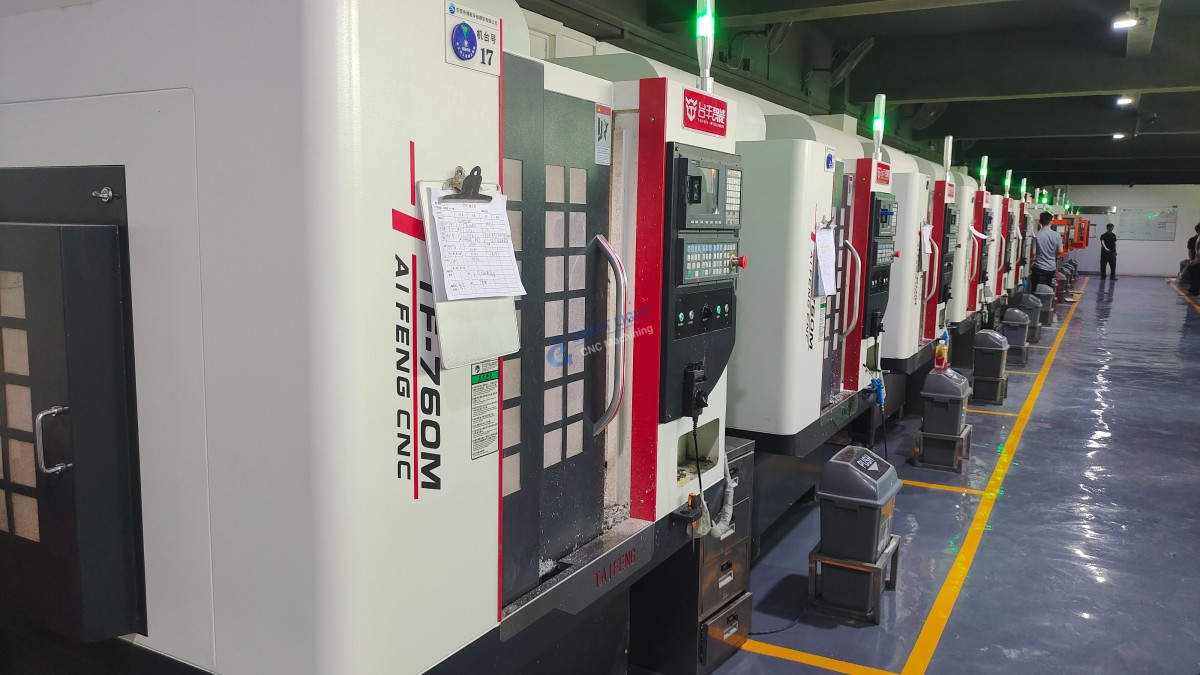
Technical Depth Through Equipment Integration: Operating from a 76,000 sq. ft. facility, they house a cluster of over 120 precision machines. This isn’t just about quantity; it’s about strategic capability. The synergy between their 5-axis machining centers, precision turning equipment, EDM, and additive manufacturing (SLM, SLA, SLS) platforms allows them to select the optimal—or combination of—processes for any given part. For a complex aerospace bracket with internal lattice structures, they might combine 5-axis CNC machining for the primary load-bearing features with metal 3D printing for the lightweight internal geometry.
Engineering-Led Collaboration: Their service begins with DFM. This proactive engineering support transforms a client’s CAD model into a manufacturable blueprint, optimizing for cost, time, and performance. This deep engineering engagement is what separates a partner from a vendor.
Quality as a System, Not a Checkpoint: Their certifications (ISO 9001, IATF 16949, etc.) are not just framed certificates on the wall. They represent a live management system. In-house precision metrology ensures every dimension is verified against your drawing, and the system ensures that any deviation triggers a root-cause analysis and corrective action, not just a simple rework.
Project Management and Transparency: For clients, especially those overseas, clear communication is critical. A structured project management approach, with regular progress updates, inspection reports, and a dedicated account or project engineer, builds trust and ensures alignment throughout the production cycle.
Making the Strategic Choice
Selecting your CNC metal machining service factory requires a holistic view. It’s a balance of technical capability, systemic reliability, collaborative culture, and proven experience in your sector.
Ask the right questions: Inquire about their typical lead times for similar projects, request sample inspection reports, ask for a case study in your industry, and understand their change order process. Visit if possible, or take a virtual tour of their facility.
Ultimately, the goal is to find a partner whose capabilities become your competitive advantage. In an era where precision, speed, and innovation are intertwined, the right manufacturing partner does not just make parts—they enable possibilities, de-risk your development process, and help bring superior products to market faster. For those seeking a partnership built on technical depth, systemic quality, and a full-spectrum service approach, engaging with an integrated specialist like GreatLight CNC Machining Factory can be a transformative step in your manufacturing journey.
For further insights into industry trends and manufacturing excellence, you can explore professional networks like LinkedIn.