
For any engineer, designer, or procurement specialist embarking on a new hardware project, one of the most critical and often anxiety-inducing early steps is obtaining a CNC machining service precision quote. This document is far more than a simple price list; it is the first tangible blueprint of your project’s feasibility, cost structure, and potential partnership. A truly precise quote bridges the gap between your design intent and manufacturing reality, setting the stage for a successful collaboration. At GreatLight Metal, we understand that an accurate quote is the cornerstone of trust and the first test of a manufacturer’s expertise.
Why a “Precision Quote” Matters More Than Just the Price
In the world of custom precision CNC machining, a vague or underestimated quote is a leading cause of project delays, budget overruns, and strained client-supplier relationships. Conversely, a meticulously detailed and accurate quote serves multiple vital functions:
Risk Mitigation: It clearly identifies cost drivers, allowing for informed design-for-manufacturability (DFM) adjustments before any metal is cut.
Budgetary Confidence: It provides stakeholders with a reliable financial forecast, securing project approvals and allocations.
Capability Assessment: The depth and clarity of a quote reveal the manufacturer’s understanding of your project, their technical proficiency, and their operational rigor.
Process Blueprint: A good quote implicitly outlines the manufacturing strategy, including machine selection, fixturing approach, and post-processing steps.
Unlike online instant quoting engines used by platforms like Xometry or Protolabs, which provide useful but generalized estimates, a precision quote from an engineering-focused partner like GreatLight Metal involves human analysis and interactive consultation to account for nuances that algorithms might miss.
Deconstructing the CNC Machining Quote: The 8 Pillars of Cost
To understand what goes into a CNC machining service precision quote, let’s examine the core factors that manufacturers like GreatLight Metal, Protocase, and Owens Industries must evaluate.
1. Part Design & Geometry Complexity
This is the primary cost driver. A simple bracket is worlds apart from a monolithic aerospace component with deep cavities, thin walls, and undercuts.
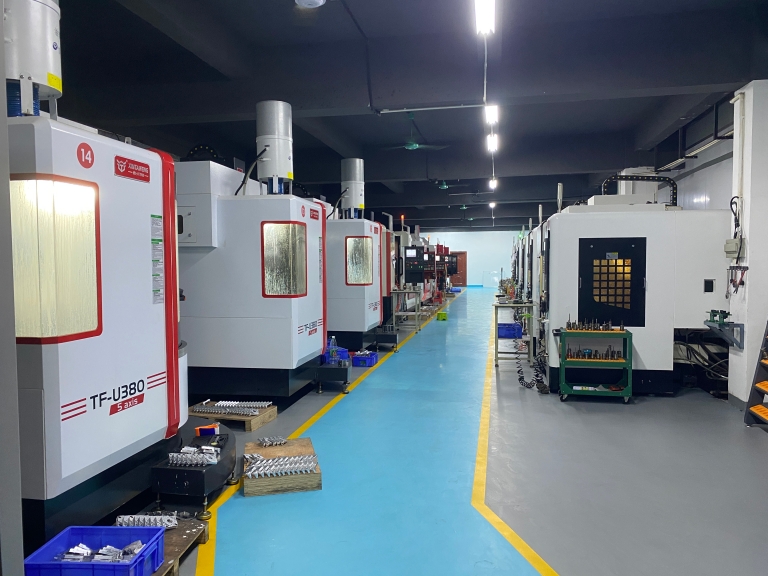
3-Axis vs. 5-Axis Machining: Complex parts requiring simultaneous multi-axis movement to reduce setups and improve accuracy will leverage our advanced 5-axis CNC machining capabilities. While the machine time rate is higher, it often reduces total cost by minimizing fixtures and handling.
Feature Details: The quantity and precision of features like threads, micro-holes, fine engraving, and sharp internal corners directly impact programming time and machining strategy.
2. Engineering & DFM Analysis
This is where partnerships truly begin. Before quoting, our engineers perform a thorough DFM review. We may suggest subtle design changes—adding a small radius, adjusting a tolerance, or slightly altering a wall thickness—that dramatically improve manufacturability and reduce cost without compromising function. This proactive service is a hallmark of a true engineering partner, distinguishing us from purely transactional services.
3. Material Selection & Raw Stock Cost
The choice of material affects both the raw material cost and the machining cost.
Common Alloys (e.g., 6061 Aluminum, 304 Stainless): Lower material cost and excellent machinability lead to faster cycle times.
Exotic/High-Performance Alloys (e.g., Titanium Ti6Al4V, Inconel, Tool Steels): Significantly higher material costs. They are harder to machine, requiring specialized tooling, slower speeds/feeds, and more machine power, increasing machine time cost.
Plastics (e.g., PEEK, Delrin): Material costs vary, and machining parameters differ greatly from metals, requiring specific expertise to prevent melting or deformation.
4. Dimensional Tolerances & Surface Finish Requirements
Tighter tolerances (e.g., ±0.025mm vs. ±0.125mm) and superior surface finishes (e.g., Ra 0.4µm vs. Ra 3.2µm) have exponential effects on cost.
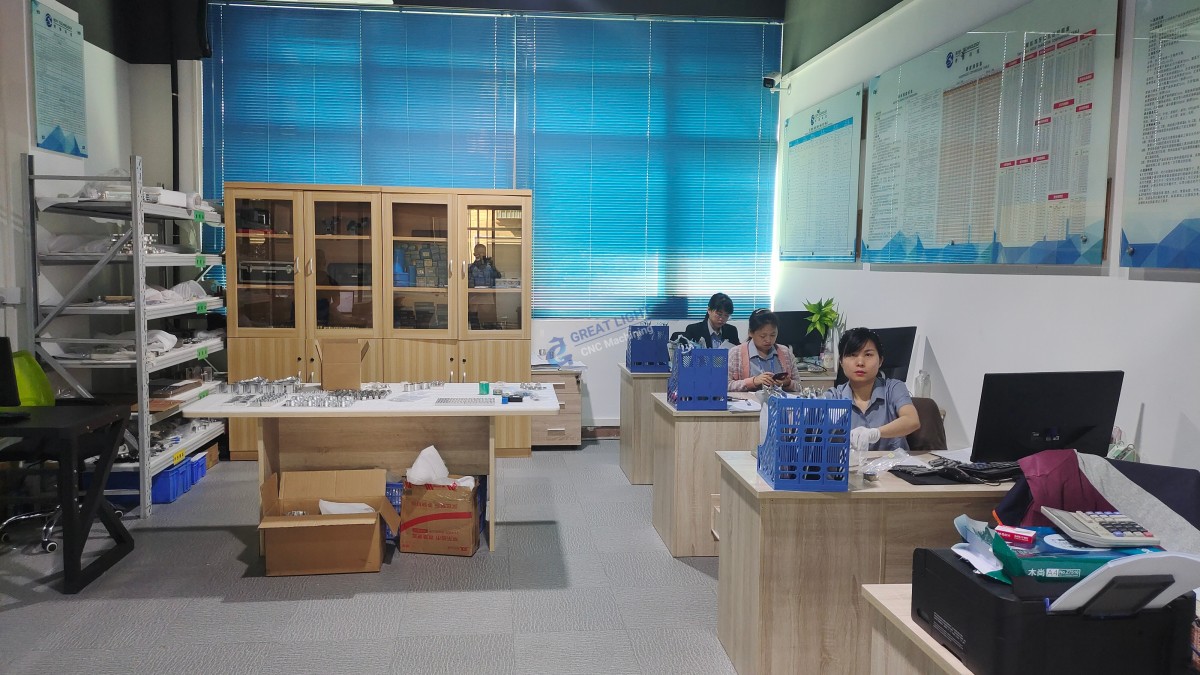
Tighter Tolerances require more precise machines (like our high-precision 5-axis centers), slower machining passes, specialized inspection equipment (CMMs, optical comparators), and increased quality control time.
High Surface Finishes often necessitate additional post-processing steps like hand polishing, bead blasting, or sophisticated abrasive flow machining.
5. Order Quantity & Production Volume
The unit cost is highly sensitive to volume due to the amortization of fixed costs.
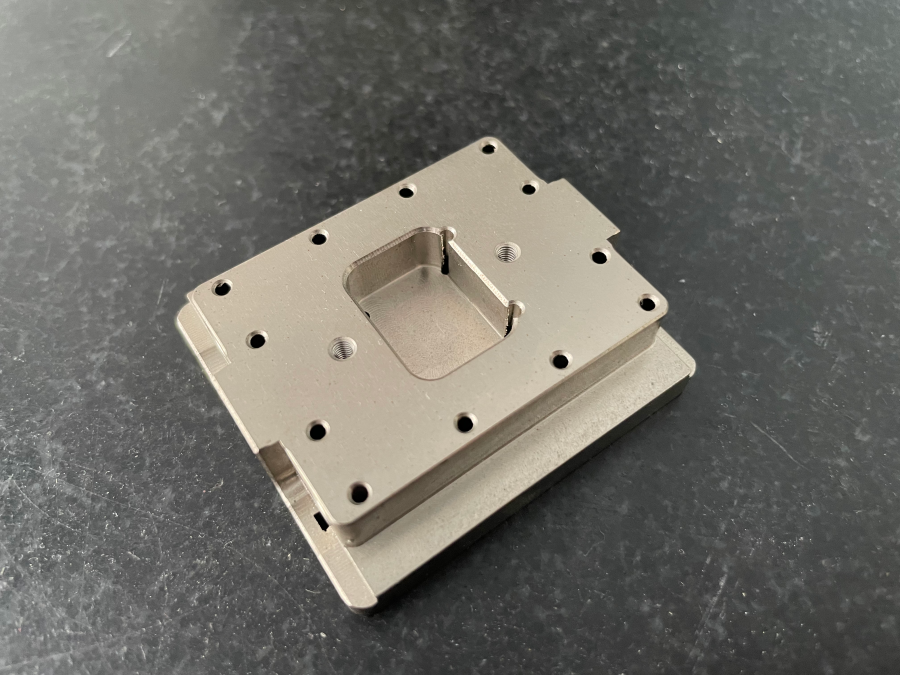
Prototyping (1-10 pcs): Cost is dominated by setup, programming, and first-article inspection. Efficient prototyping is our specialty.
Low-Volume Production (10-500 pcs): Focus shifts to optimizing fixturing and tool paths for repeatability.
High-Volume Production (500+ pcs): We analyze the potential for designing and manufacturing dedicated fixtures or even transitioning the part to our die casting or molding services for ultimate cost efficiency.
6. Secondary Operations & Post-Processing
Very few parts are complete straight off the CNC machine. These add-ons must be specified in the quote:
Deburring & Edge Breaking: Essential for safety and function.
Surface Treatments: Anodizing (Type II/III), plating (nickel, chrome), passivation, powder coating, heat treatment (annealing, quenching & tempering).
Special Processes: Laser marking, silk screening, assembly, or precision balancing.
7. Quality Assurance & Certification Requirements
The level of documentation and verification required is a significant cost factor.
Basic Inspection: First-article inspection (FAI) with calipers and micrometers.
Advanced Inspection: Full CMM reports, material certification (mill certs), heat treat certifications, and statistical process control (SPC) data.
Industry-Specific Standards: Compliance with ISO 13485 for medical devices or IATF 16949 for automotive components necessitates a more rigorous and documented quality management system, which we maintain.
8. Logistics & Packaging
Special packaging requirements for sensitive parts, expedited shipping (air freight), and import/export documentation for international clients are all line items in a comprehensive quote.
How to Get the Most Accurate Quote: A Guide for Clients
To enable us to provide you with a swift and precise quote, preparation is key. Here’s what we need:
Complete and Clean CAD Data: Provide a 3D model (STEP, IGES, X_T preferred) and critical 2D drawings (PDF or DWG). The drawing should clearly call out:
Critical Dimensions and Tolerances: Identify which features are most important.
Material Specification: Include grade and standard (e.g., AL 6061-T6, ASTM B221).
Surface Finish Requirements: Specify finishes on different surfaces if they vary.
Post-Processing Notes: Call out any required treatments.
Clear Quantity & Timeline: Specify your required quantity (prototype, pilot run, production) and your ideal timeline for quotes, samples, and full delivery.
Define Quality & Compliance Needs: Inform us if you need material certifications, full inspection reports, or compliance with specific standards like ISO 9001:2015 or AS9100.
Share Your Context: Briefly explain the part’s function and application. This helps our engineers propose the most suitable material and process alternatives.
GreatLight Metal’s Quoting Philosophy: Transparency, Collaboration, Value
While many competent manufacturers exist, such as RapidDirect for online speed or RCO Engineering for large-scale automotive work, GreatLight Metal’s approach to CNC machining service precision quotes is built on our integrated model.
We don’t just give you a number; we provide a manufacturing consultation. Our quote includes transparent cost breakdowns, optional DFM suggestions with cost-impact analysis, and a clear outline of our quality control process. As an ISO 9001:2015, ISO 13485, and IATF 16949 certified manufacturer, our processes are systematic and reliable, ensuring the quote you receive is the price you pay, barring any agreed-upon scope changes.
Our in-house capabilities—from 5-axis CNC machining and turning to EDM, grinding, and a full suite of post-processing—mean we control the entire process chain. This eliminates markup from multiple subcontractors and allows for seamless coordination, which is reflected in a more competitive and stable quote.
In conclusion, securing a true CNC machining service precision quote is your first and most important step toward a successful project. It demands a partner who combines technical depth with communicative clarity. By choosing a manufacturer like GreatLight Metal, you gain more than a supplier; you gain an engineering ally committed to transforming your precise vision into a tangible, high-quality reality, starting with a quote you can trust. For a deeper look at our capabilities and community, connect with us on LinkedIn{:target=”_blank”}.



















