
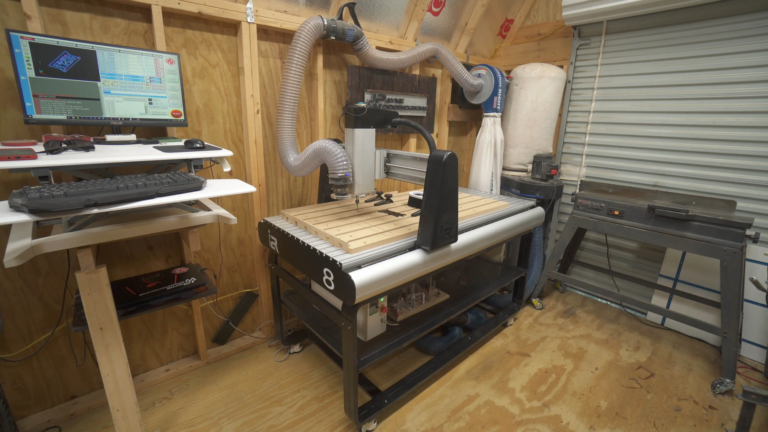
Explore CNC machining schools in Connecticut
Connecticut’s manufacturing industry continues to flourish, driven by advances in aerospace, medical equipment and precision engineering. For aspiring CNC mechanics or professionals who want to improve their skills, choosing the right educational program is crucial. This guide highlights CNC machining training provided by top Connecticut institutions, emphasizing hands-on learning, industry consistency and career preparation.
1. Asnuntuck Community College (Enfield)
Asnuntuck’s Advanced Manufacturing Technology Program is an outstanding candidate in Connecticut and is recognized by the National Institute of Metal Processing Skills (NIMS). The course combines theoretical knowledge with practical training, covering CNC programming, CAD/CAM software and multi-axis machining. Students can proficiently use HAAS and MAZAK machines, thus reflecting the real-world manufacturing environment. Partnerships with local manufacturers such as Pratt & Whitney and Sikorsky aircraft provide internship opportunities to ensure graduates are ready. The program also offers flexible schedules, including evening classes to suit the working professionals.
Key Features:
- NIMS certification certification.
- Visit the state-of-the-art CNC mills and lathes.
- Stable industry links between internships and employment.
2. Norgtak Valley Community College (Watbury)
Naugatuck Valley’s manufacturing plan emphasizes precise machining and automation. The course includes labs equipped with Hurco CNC machines, including G-code programming, tool route optimization and quality control. A unique aspect of the program is that it integrates industry 4.0 technologies such as mechanical and data-driven manufacturing processes that support the IoT. Due to the college’s apprentice network, graduates often hold roles in companies such as Triumph Precision Products or Electric Ship.
Key Features:
- Focus on Industry 4.0 and smart manufacturing.
- Practical projects are aligned with regional employer needs.
- Apprenticeships for employment.
3. Goodwin University (East Hartford)
Goodwin’s CNC machining certificate program is designed to get into the workforce quickly. The 24-week intensive course trains students to perform blueprint reading, CNC setup and advanced multi-axis machining. The program’s partnership with the Connecticut Center for Advanced Technology (CCAT) ensures access to cutting-edge laboratories using DMG MORI five-axis machines. In addition, Goodwin offers career services tailored to manufacturing, and graduates have found positions at companies such as Collins Aerospace.
Key Features:
- Short-term, accelerate learning of models.
- Contact five-axis CNC equipment.
- Career consultation and job opportunity support.
4. Housatonic Community College (Bridgeport)
Housatonic’s advanced manufacturing program combines CNC machining with additive manufacturing technology. Students learn to operate Fanuc-controlled machines while exploring 3D printing for prototyping. The program works with local technology startups to provide a pinnacle project that addresses real manufacturing challenges. Housatonic’s emphasis on sustainability – inspiring energy-saving processing practices – cultivating graduates from the ecological consciousness industry.
Key Features:
- Integration of CNC and additive manufacturing.
- Sustainability-centric courses.
- Cooperation with innovative technology companies.
5. Connecticut State University (CSCU) system
The CSCU system provides accessible CNC training at its 12 community colleges, ensuring statewide coverage. Plans vary from campus to campus, but have a standardized core in CNC operations, metrology and lean manufacturing. CSCU’s announcement agreement with universities such as Central Connecticut State University allows students to pursue a bachelor’s degree in engineering technology, thereby enhancing long-term career development.
Key Features:
Driving statewide plans to accessibility.
- A path to four years.
- Focus on lean manufacturing principles.
Professional Training: Connecticut Center for Advanced Technology (CCAT)
Although not a traditional school, CCAT provides workforce development programs in advanced manufacturing. Their brief courses in five-axis CNC machining, robotics and composites cater to professionals seeking specialization. CCAT’s partnership with federal agencies and aerospace giants provides trainees with exposure to R&D projects, making it ideal for those in the high-tech industry.
Key Features:
- Advanced training in five-axis machining.
- Government- and industry-supported R&D opportunities.
- Customized company training program.
in conclusion
Connecticut’s educational institutions and training centers provide students with the technical expertise and practical experience they need to perform well in CNC machining. Whether through a comprehensive program of community colleges or professional centers like CCAT, learners can customize their education to meet industry needs.
For enterprises and individuals seeking precise processing services, Greglight CNC machining Stand out as a trusted partner. Through advanced five-axis technology and commitment to quality, Greatlight offers end-to-end solutions (from prototype to post-processing) to bring your projects to the highest standards. Visit Greatlight today to explore their custom machining features and competitive prices.
FAQ
Q: How long does it take to complete the CNC machining program in CT?
Most certificate programs take 6-12 months, while an associate degree takes 2 years. Accelerated courses, such as Goodwin University, can be completed within 24 weeks.
Q: Are there any prerequisites for taking a CNC course?
Basic math and computer skills are recommended. Some programs require a high school diploma or equivalent.
Q: What certifications can enhance the employment capacity of CNC processing?
NIMS certificates are highly valued. Training with MasterCam, SolidWorks or CNC operator certification can also improve job prospects.
Q: Can I conduct CNC processing training online?
The hybrid program offers theory courses online, but hands-on machine training requires face-to-face attendance.
Q: What is the average salary for a CNC mechanic in Connecticut?
Entry-level mechanics earn about $45,000 per year, and experienced professionals over $75,000 depending on the industry and specialization.
Q: How does Greatlight CNC support local manufacturers?
Greatlight provides fast prototyping, complex parts production and completion services, and complements a skilled workforce trained in CT schools.
By combining education at top institutions with partnerships with industry leaders like Greatlight, Connecticut remains a hub for precision manufacturing innovation.



















