
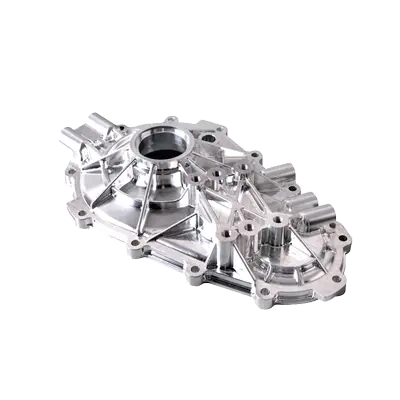
Revealing Accuracy: How Five-axis CNC machining revolutionizes the manufacturing of marine components
The marine environment is ruthless. The components built by salt water corrosion, relentless waves, huge pressures and constant vibration requirements constitute an extraordinary standard of precision, durability and reliability. Making parts for vessels – from recreational yachts to large cargo ships and offshore platforms – requires manufacturing capabilities, which can handle complex geometries, peculiar materials and the tightest tolerances. This is Computer Numerical Control (CNC) Processingspecial Five-axis CNC machiningemerged as an undisputed champion, changing the way the ocean components are conceived and built.
Navigate unique marine manufacturing challenges
Creating parts for the marine sector is a different obstacle compared to other industries:
- Harsh environment: The ingredients are constantly exposed to brine, resulting in accelerated corrosion. Materials and finishes must be carefully selected to resist degradation.
- Complex geometric shapes: Propellers, impellers, custom hull accessories, complex engine mounts, steering components and hydrodynamic surfaces often have complex curves, primers and basic machining composite angles that are impossible.
- Strict tolerance: Missing alignment or imbalance in propulsion systems or key structural elements can lead to catastrophic failure, excessive vibration, noise and maritime inefficiency. Accuracy is not negotiable.
- Harsh materials: Stainless steel (316 liters, duplex), specialized bronzes (aluminum/nickel), titanium alloys and high-performance composites are commonplace for their specific strength-to-weight ratios and corrosion resistance, but they are well known to be difficult to machine.
- Low volume and high mix: Many marine applications require custom or low-volume production runs that are tailor-made to suit specific vessel design and engineering requirements.
Traditional processing methods are difficult to effectively address these challenges. This is Advanced CNC, especially Five-axis machiningbecomes crucial.
Why five-axis CNC is the anchor point of modern marine manufacturing
Five-axis CNC machining takes precision machining to a new level by simultaneously moving parts or cutting tools along five different axes (X, Y, Z, and rotations on A and B axes). This capability unlocks the transformational advantages of marine partial manufacturing:
- Conquer complex geometric shapes: A five-axis machine has access to almost any angle on the workpiece in a single setup. The complex curves of propeller blades, the complex profile of impeller or the organic shape of custom deck hardware can be processed at once, eliminating the need for multiple fixtures and settings.
- Unrivaled accuracy and repeatability: Multi-axis motion allows the tool to always maintain the optimal cutting angle and position relative to the part surface. This reduces errors caused by multiple settings and allows machining to very tight tolerances (usually within microns), which is critical for hydrodynamic efficiency and bearing fitting.
- Improved finish: The ability to continuously orient parts to enable the best tool approach to minimize tool deflection, vibration and progressive lines, resulting in a surface finish directly from the machine. This reduces manual polishing time and enhances aesthetics and corrosion resistance.
- Reduce setup time and errors: Complex parts are machined in a single setup. This greatly reduces the set time, processing time, and potential alignment errors that accumulate on multiple fixtures. It also greatly shortens overall delivery time.
- Effective processing of difficult materials: The five-axis strategy allows for continuous engagement and optimization of tool paths, especially when paired with advanced CAM software. When using challenging marine alloys such as Monel or Inconel, this leads to better chip control, reduced heat generation and longer tool life.
- Design freedom and prototype: The technology enables marine engineers to design more complex, efficient and lightweight components that were previously considered impossible to manufacture, accelerate innovation and rapid prototypes.
Working with expertise: Great Light provides
While five-axis machining is powerful, unlocking its full potential in critical marine applications requires deep expertise and professional infrastructure. bright Standing at the forefront, we provide comprehensive solutions to the strict requirements of the marine industry:
- Precision five-axis Arsenal: We operate the latest five-axis CNC machining center, equipped with the latest control system and high-speed spindle technology, ensuring excellent accuracy and dynamic motion.
- Material Master: We have extensive experience in processing a wide range of marine grade materials, from common stainless steel (304, 316l) and bronzes to exotic alloys such as titanium, duplex stainless steel and inconel, ensuring that the parts meet their environmental and functional life.
- Comprehensive engineering partnership: Great lighting is more than just a mechanical workshop. Our engineering team works closely with customers to provide feedback on the design of manufacturability (DFM) to optimize part design for effective machining, durability and corrosion resistance, an important value-add to complex marine components.
- Integration post-processing: We offer seamless one-stop finishing services including precision grinding, specialized welding (including TIG of marine alloys), rigorous cleaning and critical surface treatments such as passivation (for stainless steel), electroplating (e.g., nickel gold plating), marine net worth anodization and high-performance coatings or highly coated coatings (such as marine grade paints) to ensure fixed models and certain paints.
- Agility and customization: We do well in both rapid prototyping and low to medium volume production runs. Our streamlined processes allow us to quickly and cost-effectively deliver customized precision-machined parts to understand the time sensitivity of marine projects.
- A firm commitment to quality: Complying with strict quality control protocols throughout the manufacturing process, we ensure that parts meet specified dimensions, tolerances, material specifications and surface treatment requirements and are verified by advanced CMM inspection and other metrological tools.
Conclusion: Precision and confidence set sail
In the world of demanding marine composition manufacturing, precision and elasticity are crucial. Five-axis CNC machining revolutionizes this field by enabling the creation of complex, high-performance parts that were previously impractical or impossible to accurately and effectively manufactured. It handles complex geometry, works with hard marine alloys, and provides unparalleled precision and reduces lead times to make it the technology of choice.
Choose a partner brightWith its advanced five-axis capabilities, deep material knowledge, engineering collaboration and integrated finishing service, ensure your marine components are not only manufactured, but are designed for excellence. We provide the reliability, durability and performance you need to withstand marine challenges, giving you absolute confidence to drive development paths and boats. Trust the good light of a custom precision machining solution that sets the standard for the marine industry – contact us today to discuss your next project at the best price and performance.
Frequently Asked Questions about CNC machining of marine components (FAQs)
Q1: Why can’t I use cheap three-axis CNC machines in offshore parts?
A: While three-axis CNC is suitable for simpler parts, marine components often have complex curved surfaces (such as propellers) that require abbreviation and composite angles. Five-axis machining accomplishes these geometries in a single setup compared to multiple settings on a three-axis machine for increased accuracy, better surface surfaces and faster generation, thus increasing cost and error potential.
Q2: Which material is usually CNC processed for ocean use?
Answer: The main focus is corrosion resistance. Key materials include:
- Stainless steel: 316L (marine grade stainless steel), 2205/double-stranded super double-stranded duplex, with higher strength/corrosion.
- Non-produced alloys: Aluminum bronze, nickel aluminum bronze (NAB), cup-shaped (90/10, 70/30) and Monel for propellers, pumps, valves.
- Exotic alloys: Titanium (for high strength weight and corrosion resistance) and content of key components (extreme corrosion/heat resistance).
- Plastics/Composites: High performance polymers (e.g. PEEK, UHMWPE) or composite materials for specific non-structural applications.
Question 3: How to ensure that marine components resist saltwater corrosion?
A: This is a multi-pronged approach:
- Material selection: Choosing inherent corrosion-resistant alloys is crucial.
- Precision machining: A smooth finish reduces the gaps that corrosion can initiate.
- Key Surface Treatment: Apply treatments such as passivation (removal of free iron from stainless steel), marine grade anodization (for aluminum), specialized electroplating (e.g., nickel) or high-performance protective coatings (epoxy, polyurethane) wafers to durable durable barrier layers.
- design: Minimize stagnant water traps and different metal contacts (electrical corrosion).
Question 4: My design is very complicated. Excellent lightweight ability?
Answer: Absolute. The complex geometry is exactly where the five-axis CNC shines. Our engineers specialize in solving complex designs common in propulsion, hydraulics and custom-made marine hardware. We actively provide designs with Manufacturing (DFM) feedback to optimize your design for efficient machining without damaging functionality. Send us your CAD file for evaluation.
Q5: Do you only do large production runs, or can you handle prototypes and small batches?
Answer: Highlights are very flexible. We do well in the process of rapid prototyping, enable design verification quickly and cost-efficiently, and are equally good at producing low to medium production batches efficiently. Our one-stop post-processing means your prototype or small batch gets the same finishing process as your large run. We understand the project phases involved in marine development.
Question 6: How competitive are your customized marine processing prices?
A: While advanced five-axis machining and marine grade materials involve costs, excellent light offers highly competitive value. Our machining from a single-set, extensive internal features reduce outsourcing, minimize waste and lean operation efficiency allows us to provide the best price without compromising the quality and accuracy of marine applications. Please contact us based on your project for a specific quote.



















