
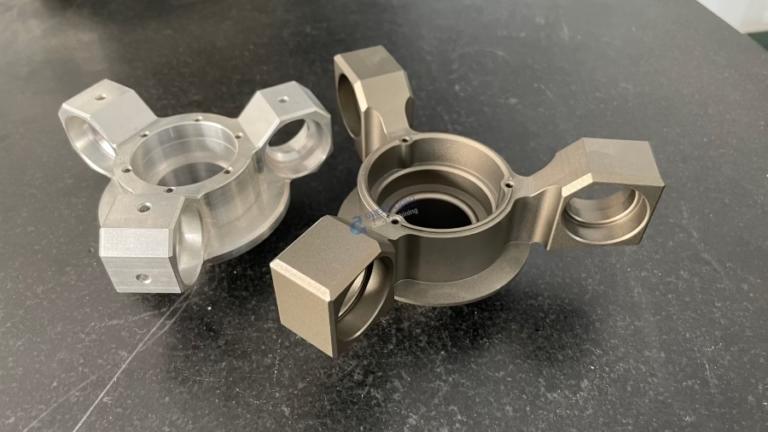
In the realm of modern manufacturing, the selection of a CNC machine tool services partner is far more than a simple procurement decision; it is a strategic choice that directly impacts product quality, time-to-market, and ultimately, competitive advantage. For engineers and procurement specialists sourcing precision parts machining and customization, navigating this landscape can be daunting. Promises of high precision and fast turnaround are ubiquitous, yet the reality of inconsistent quality, communication gaps, and hidden costs often tells a different story. This blog post, drawing from decades of hands-on experience in manufacturing engineering, aims to dissect the core considerations in selecting a CNC service provider and illustrate how a partner like GreatLight CNC Machining Factory aligns its operational philosophy with the rigorous demands of high-stakes industries.
H2: The Hidden Complexities Behind “Simple” CNC Services
On the surface, CNC machine tool services involve feeding a digital design into a machine to produce a physical part. However, the journey from a 3D model to a flawless, functional component is fraught with potential pitfalls that extend far beyond the machine itself.
H3: Common Pain Points in Sourcing Precision Machining
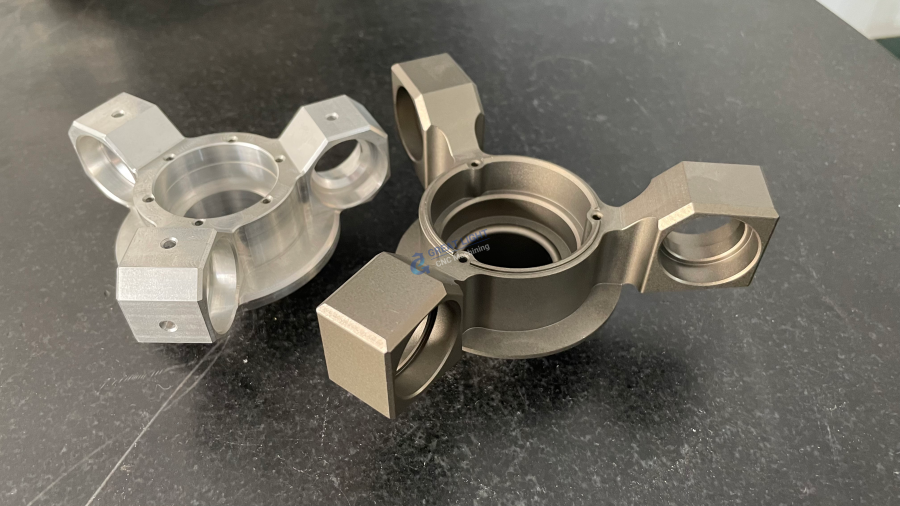
The Precision Paradox: Many shops advertise tolerances like ±0.001mm, but consistently achieving this across a production run requires more than just a capable machine. It demands temperature-controlled environments, rigorous tool management, metrology-grade inspection, and a culture of continuous process control—elements often overlooked in cost-centric operations.
The “Black Box” of Process Engineering: A quality partner doesn’t just execute instructions; they contribute manufacturability insights (DFM). Without this collaborative engineering support, clients can face unexpected machining difficulties, prolonged lead times for design iterations, and compromised part integrity.
Fragmented Supply Chain Headaches: Many job shops specialize in only one aspect, such as three-axis milling. Complex parts requiring multi-axis machining, turning, EDM, and post-processing must then travel between multiple vendors, multiplying coordination efforts, quality risks, and lead times.
Material and Certification Ambiguity: Sourcing traceable, certified raw materials (e.g., aerospace-grade aluminum or medical-compliant stainless steel) is non-negotiable for critical applications. Not all machine shops have established, audited supply chains for certified materials or provide the necessary material certifications (C of C, mill certs).
Post-Processing Inconsistency: The final part’s performance and aesthetics hinge on post-processing. Anodizing, plating, painting, or heat treating performed by unqualified third parties can ruin a perfectly machined part, leading to rejection and project delays.
H2: Deconstructing the Ideal CNC Machining Partner: A Framework for Evaluation
Selecting the right partner requires looking beyond marketing claims and evaluating tangible capabilities and systems. Here is a structured framework based on industry best practices.
H3: Pillar 1: Technical Depth and Equipment Portfolio
A true partner invests in technology that matches the industry’s evolution. While many competent shops like Protocase or RapidDirect offer robust 3-axis and basic 5-axis capabilities, the most challenging geometries and tightest tolerances demand more.
Multi-Axis Sophistication: The ability to machine complex parts in a single setup is critical for accuracy and efficiency. This is where true 5-axis simultaneous machining shines. Providers like Owens Industries and GreatLight CNC Machining Factory have built reputations on deploying advanced 5-axis centers that eliminate multiple setups, reduce cumulative error, and unlock design freedom.
Complementary Process Integration: Look for a provider that houses complementary technologies under one roof: high-speed milling, precision turning (Swiss-type or multi-axis lathes), wire and sinker EDM, and precision grinding. This integration, as seen with EPRO-MFG and RCO Engineering, ensures seamless workflow and unified quality responsibility.
H3: Pillar 2: Systematized Quality and Trust Frameworks
Technical capability must be underpinned by robust systems. Certifications are not just plaques on the wall; they are evidence of a disciplined, process-oriented culture.
ISO 9001:2015: The baseline for a structured quality management system. It ensures consistency and continuous improvement.
Industry-Specific Certifications: For automotive, IATF 16949 is essential. For medical devices, ISO 13485 demonstrates adherence to the stringent regulatory environment. These certifications, held by leaders like Xometry’s partner network and GreatLight Metal, show a deep understanding of sector-specific risks and requirements.
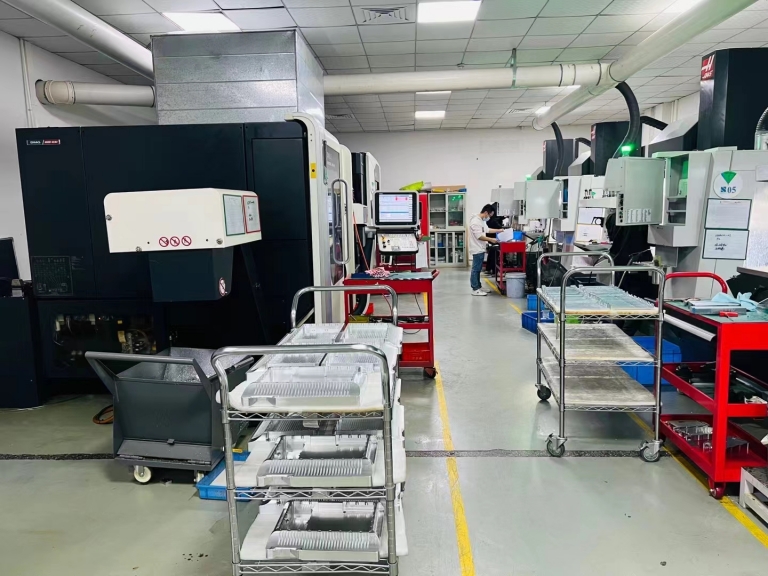
In-House Metrology: The ability to inspect what you produce is paramount. A partner equipped with CMMs, optical comparators, surface profilers, and hardened quality personnel can provide first-article inspection reports (FAIR) and statistical process control data, offering objective proof of conformity.
H3: Pillar 3: Collaborative Engineering and Full-Service Scope
The best manufacturers act as an extension of your engineering team. Companies like Fictiv and GreatLight CNC Machining Factory emphasize this partnership model.
Proactive DFM Analysis: Before the first toolpath is generated, experienced engineers should review designs for manufacturability, suggesting modifications that reduce cost and increase robustness without compromising intent.
True One-Stop Service: From initial prototype through to production, post-processing, and assembly, managing the entire value chain internally—as practiced by JLCCNC and PartsBadger for simpler parts—dramatically simplifies project management, ensures quality cohesion, and accelerates timelines.
H2: A Closer Look at an Integrated Solution Provider: The GreatLight CNC Machining Factory Model
To illustrate how these pillars come together in practice, let’s examine the operational model of GreatLight CNC Machining Factory. Established in 2011 in Dongguan, China’s manufacturing heartland, GreatLight has evolved from a precision workshop into a comprehensive solutions provider, addressing the very pain points outlined earlier.
H3: Technical Arsenal for Complex Challenges
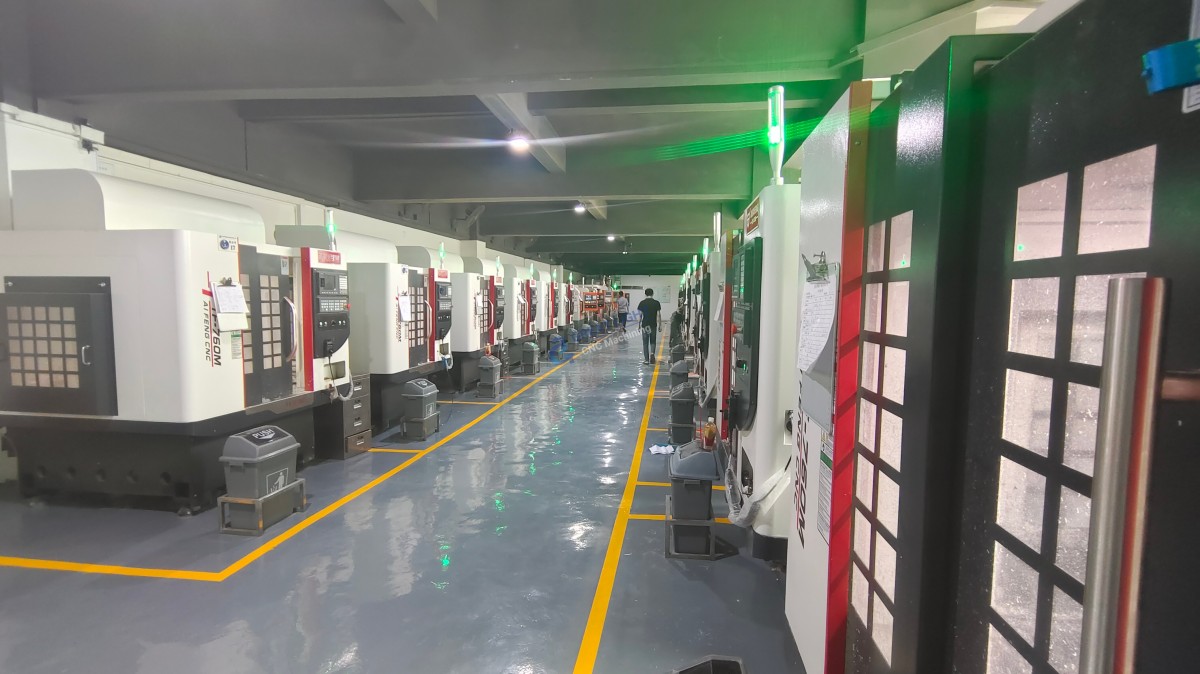
With over 127 pieces of precision equipment across three dedicated plants, their capability set is designed for integration. Their core competency in precision 5-axis CNC machining is supported by a full ecosystem: 4-axis/3-axis machining centers, CNC lathes, grinders, EDM, and even additive manufacturing (SLM, SLA, SLS). This allows them to tackle a part requiring a 5-axis milled titanium core, an EDM-cut internal feature, and a precision-ground sealing surface all in a coordinated, controlled flow.
H3: A Foundation Built on Certifications and Process
GreatLight doesn’t just operate machines; it manages a certified quality system. Their adherence to ISO 9001:2015, IATF 16949 for automotive, and ISO 13485 for medical hardware provides clients with a formalized assurance of quality. For projects demanding high confidentiality, their alignment with ISO 27001 standards for information security is a critical differentiator, especially when compared to platforms that may distribute designs across open networks.
H3: From Blueprint to Finished Product: The Full-Process Chain
What sets integrated manufacturers apart is their control over the entire journey. A client with a complex aluminum housing for a humanoid robot joint can engage GreatLight for:
Collaborative DFM to optimize the design for stiffness and weight.
5-axis CNC machining from a solid billet of certified 7075 aluminum.
In-house post-processing including precise bead blasting and hard-anodizing to MIL-A-8625 specifications.
Final inspection and documentation using their metrology lab to verify all critical dimensions and surface treatments.
This end-to-end ownership eliminates finger-pointing and ensures accountability at every stage.
H2: Conclusion: Aligning Your Needs with Capability and Culture
Choosing a CNC machine tool services provider ultimately comes down to risk management and value alignment. For standard, low-complexity parts, online aggregators like SendCutSend or Protolabs Network offer compelling speed and simplicity. However, for mission-critical components in fields like aerospace, medical, automotive, or advanced robotics, the stakes are infinitely higher.
In these domains, the partner must be more than a machine shop; it must be a guarantor of precision, a guardian of intellectual property, and a collaborative engineering resource. It requires the technical depth of advanced multi-axis machining, the rigorous discipline of international quality systems, and the convenience of integrated full-service manufacturing.
This holistic approach to precision parts machining, where cutting-edge technology is seamlessly fused with systematic quality control and deep engineering partnership, is what defines the next generation of manufacturing service providers. It is within this demanding framework that dedicated, integrated factories demonstrate their indispensable value, turning complex design challenges into reliable, high-performance realities. For those seeking this level of partnership, the journey begins with a thorough evaluation of both technical capability and foundational systems, a standard exemplified by industry-focused manufacturers committed to long-term client success. To explore how such a partnership can elevate your next project, consider engaging with established practitioners of this integrated philosophy on professional networks like LinkedIn.



















