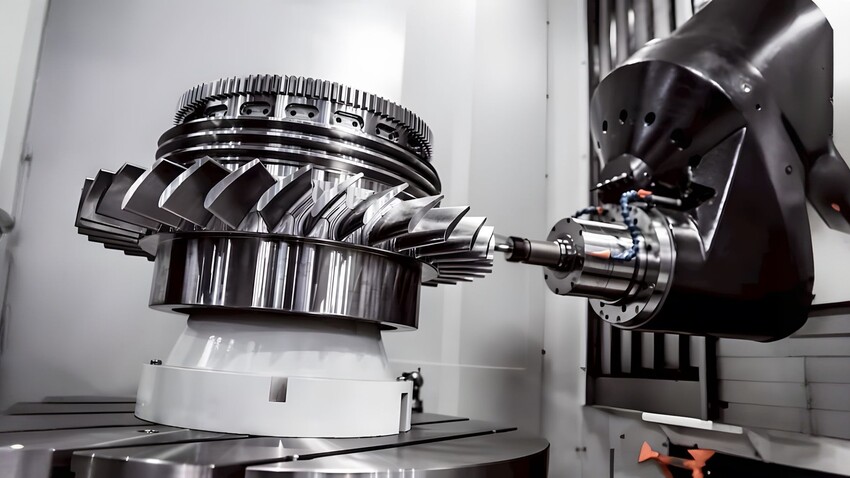
For manufacturers and machine shops operating in the competitive landscape of Texas, from the aerospace hubs of Houston and Dallas to the energy sectors and advanced tech corridors, the relentless pursuit of precision is non-negotiable. At the heart of this pursuit lies a critical, yet often overlooked, maintenance cornerstone: CNC machine calibration. The performance of your most critical assets—your CNC machining centers—directly dictates the quality, consistency, and profitability of your output. When tolerances tighten to microns and part complexities soar, the question is no longer if you need professional CNC machine calibration services in Texas, but how to select a partner with the expertise to ensure your equipment performs at its absolute peak.
This foundational process is what separates workshops that consistently deliver from those plagued by scrap, rework, and costly downtime. Let’s delve into why this service is paramount and what you should demand from a calibration provider.
H2: Why CNC Machine Calibration is Your Unsung Competitive Advantage in Texas
Think of your multi-axis CNC machine as a master violinist. Even the most skilled musician cannot perform a flawless concerto with an instrument that is out of tune. Similarly, a CNC machine with uncalibrated axes, a misaligned spindle, or a drifting controller will never produce parts that meet today’s exacting standards, regardless of the sophistication of its programming or the skill of its operator.
The Domino Effect of Poor Calibration:
Dimensional Inaccuracy: This is the most direct consequence. Parts are consistently out of spec, failing quality checks and leading to rejected batches.
Poor Surface Finish: Vibrations from misalignment or backlash cause chatter marks, requiring additional post-processing and increasing costs.
Reduced Tool Life: Uncalibrated machines exert uneven forces on cutting tools, leading to premature wear, breakage, and unplanned tooling expenses.
Lost Revenue: The combined cost of scrap material, wasted labor, delayed deliveries, and lost customer trust can be devastating.
Safety Risks: Severely misaligned equipment can lead to catastrophic tool crashes, damaging the machine and posing a safety hazard.
Regular, professional calibration is not an expense; it is an investment in asset integrity, product quality, and operational reliability. For Texas-based shops supplying to industries like oil & gas, medical devices, or defense—where certification and traceability are mandatory—documented calibration records are as crucial as the calibrated state itself.
H3: The Anatomy of a Comprehensive CNC Calibration Service
A truly thorough calibration goes far beyond a simple ball-bar test. It is a systematic audit of your machine’s geometric and volumetric accuracy. Leading providers, such as GreatLight Metal, which maintains its own fleet of advanced 5-axis equipment to exacting standards, understand that calibration is a multi-faceted discipline. A complete service should encompass:
Geometric Error Measurement: Using laser interferometers, electronic levels, and precision squares to measure linear positioning accuracy, straightness, squareness, pitch, yaw, and roll of each axis.
Volumetric Accuracy Analysis: Employing devices like a laser tracker or a telescoping ball-bar to assess the machine’s accuracy throughout its entire working volume, which is especially critical for large-format or 5-axis machines.
Spindle Performance Analysis: Checking for thermal growth, runout (radial and axial), and dynamic stiffness. A spindle that “moves” as it heats up is a major source of error in long cycle times.
Backlash and Repeatability Testing: Quantifying the lost motion in ball screws and the machine’s ability to return consistently to a programmed position.
Controller and Servo Tuning: Ensuring the machine’s software parameters (gain, feedforward, etc.) are optimized for smooth, accurate motion without oscillation or lag.
Compensation Parameter Update: Inputting the measured error data into the machine’s controller to actively compensate for identified inaccuracies, bringing it back within original OEM specifications.
H2: Selecting Your Calibration Partner: Beyond the Toolbox
When evaluating providers for CNC machine calibration services in Texas, technical capability is just the starting point. The right partner brings a deeper level of value.
Metrology Expertise: The team should be proficient not just in operating calibration equipment, but in interpreting the data to diagnose root causes—distinguishing between a mechanical wear issue and a control system problem.
Industry-Specific Understanding: A provider familiar with the extreme tolerances of medical implant machining or the large-part challenges of aerospace will offer more relevant insights than a generalist.
Certification and Traceability: All measurement equipment used must be regularly calibrated against NIST-traceable (or equivalent international) standards, and the provider should furnish a detailed, ISO-compliant calibration certificate.
Proactive Recommendations: A true partner will provide a clear report not just on current status, but on trends, wear rates, and actionable recommendations for preventive maintenance to extend periods between calibrations.
H3: The GreatLight Metal Perspective: Calibration as a Foundational Philosophy
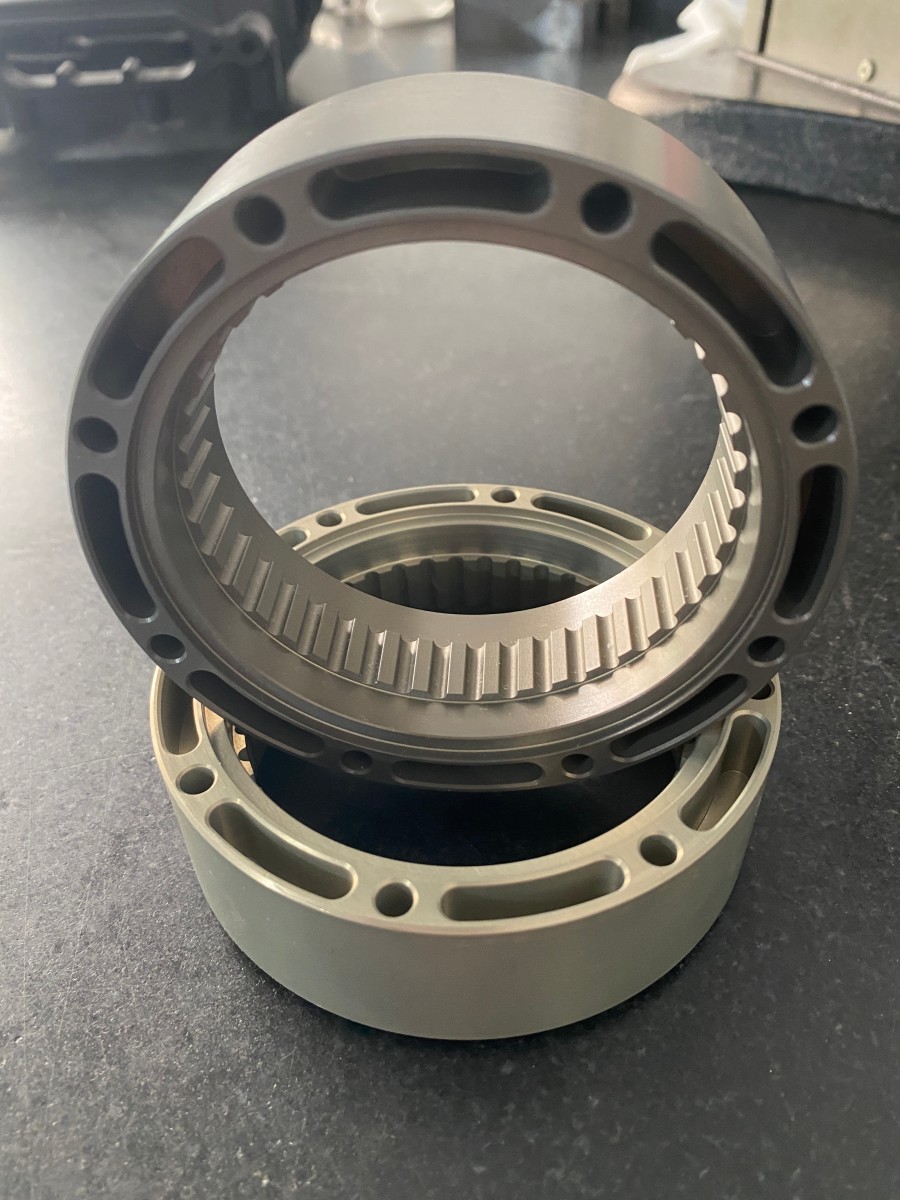
For a precision manufacturer like GreatLight Metal, calibration is ingrained in the production culture. Operating with a fleet that includes high-precision 5-axis CNC machining centers, their internal standards are exceptionally rigorous. This first-hand experience in maintaining equipment to produce parts with tolerances as tight as ±0.001mm gives them a unique, practical understanding of calibration’s impact on real-world outcomes.
This philosophy extends beyond their own walls. They recognize that for many clients, especially those engaging in high-mix, low-volume or complex prototype work, having a trusted calibration resource is vital. While companies like Protolabs Network, Xometry, and Fictiv have streamlined the digital procurement of parts, the underlying requirement for perfectly calibrated machine tools at the manufacturing source remains absolute. GreatLight Metal’s approach, built on ISO 9001:2015 for quality management and IATF 16949 for automotive rigor, exemplifies the systemic thinking where machine calibration is a key controlled process, not an isolated event.
Conclusion: Securing Precision, Ensuring Trust
In the precision-driven markets of Texas, ensuring your CNC equipment is meticulously calibrated is the bedrock of quality and competitiveness. It transforms your machine shop from a potential source of variability into a reliable, predictable, and high-performance asset. Whether you maintain your calibration in-house or partner with a specialized service, the criteria are clear: demand comprehensive measurement, certified traceability, and insightful analysis.
Choosing a partner that views calibration through the lens of a high-stakes manufacturer—like those who live and breathe the challenges of delivering flawless complex parts—ensures you get more than just a service ticket; you gain a strategic ally in safeguarding your most critical capital investment. For those seeking to build a foundation of uncompromising precision, engaging with experts who prioritize this discipline is the essential first step. Explore the standards and capabilities that define modern precision manufacturing leaders on platforms like LinkedIn, where the discourse on advanced manufacturing never stops.