
Beyond the Chuck: A Manufacturing Engineer’s Perspective on Selecting a CNC Lathe Machining Partner
In the intricate ecosystem of precision manufacturing, the CNC lathe stands as a foundational pillar. For engineers and procurement specialists sourcing custom metal and plastic components, finding a competent CNC lathe machining services factory is far more than a simple vendor selection; it’s a strategic partnership decision that directly impacts product quality, innovation speed, and supply chain resilience. The market is flooded with options, from local job shops to sprawling international networks, making the choice both critical and complex.
This article, drawn from over a decade of hands-on experience in high-precision environments, aims to dissect what truly separates an exceptional partner from a merely adequate supplier. We will move beyond basic specifications to explore the underlying systems, technical depth, and collaborative ethos that define world-class CNC lathe machining services.
H2: Decoding the Core: What Modern CNC Lathe Machining Truly Encompasses
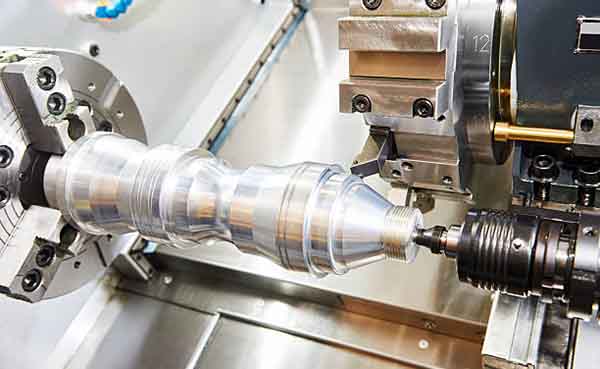
At its essence, CNC lathe machining, or turning, involves rotating a workpiece while a stationary cutting tool removes material to create cylindrical, conical, or curved shapes. However, the capabilities of a modern factory extend far beyond simple turning operations.
A sophisticated CNC lathe machining services factory like GreatLight Metal integrates a spectrum of complementary technologies:
Multi-Axis Mill-Turn Centers: These advanced systems combine turning and milling capabilities in a single setup. A part can be completely machined—front, back, and sides—without being moved to another machine, dramatically improving accuracy (often to ±0.001mm) and reducing lead times.
Swiss-Type Lathes: Ideal for ultra-precision, high-volume production of small, complex parts like medical device components or watch parts, offering exceptional precision and efficiency for long, slender workpieces.
Secondary Operations Integration: True value is added when turning is seamlessly integrated with milling, grinding, drilling, and tapping. A partner with in-house capabilities for all these processes ensures tighter tolerances and single-point accountability.
H2: The Seven Silent Pain Points in Outsourcing CNC Lathe Work
Selecting a factory often means navigating unspoken challenges. Here are the critical pain points a world-class partner must actively resolve:
The Precision Mirage: Suppliers may advertise “±0.001mm” capability, but consistency across a production run is what matters. Variability due to tool wear, thermal displacement, or inadequate fixturing can render advertised precision meaningless.
Material Mystery & Inconsistency: Receiving parts machined from sub-grade or improperly certified material is a catastrophic failure. A partner must have rigorous material traceability and incoming inspection protocols.
The “Black Box” of Process Control: Many shops operate as a black box. Clients submit a CAD file and receive parts, with no visibility into the machining strategy, fixture design, or quality checkpoints—leading to surprises and delays.
Surface Finish & Burr Management: A part meeting dimensional tolerances can still be unusable if it has sharp edges, excessive burrs, or an incorrect surface finish. Deburring and finishing must be considered core competencies, not afterthoughts.
Scalability Disconnect: A prototype shop may excel at one-off parts but falter during a pilot run of 500 pieces. Conversely, a mass-production factory may be inflexible for low-volume, high-complexity jobs. The ideal partner bridges this gap.
Engineering Support Vacuum: The most valuable service is not just machining but collaborative engineering—suggesting design for manufacturability (DFM) changes, material alternatives, or more efficient machining strategies to reduce cost and improve performance.
Quality Documentation Gaps: For regulated industries (medical, automotive, aerospace), comprehensive documentation—including First Article Inspection Reports (FAIR), material certifications, and full dimensional reports—is not optional; it’s a prerequisite for doing business.
H3: Industry Applications: Where Precision Turning Makes the Difference
The application of advanced CNC lathe services spans critical industries:
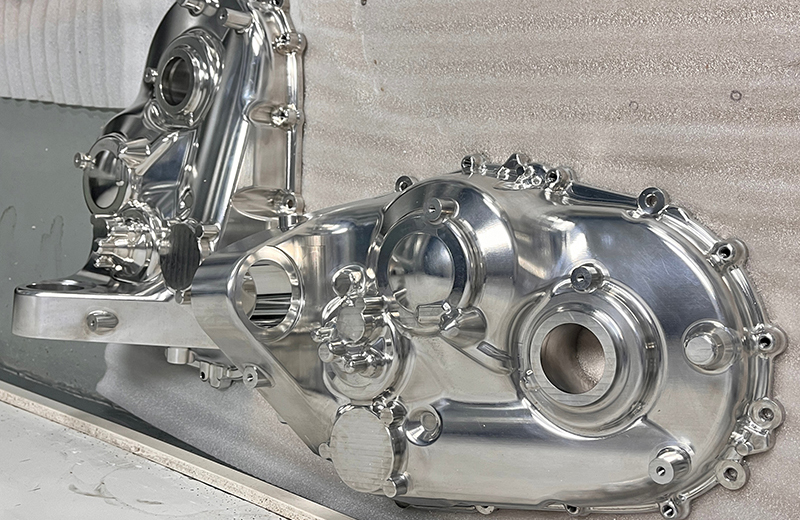
Automotive & New Energy Vehicles (NEVs): Machining of motor housings, battery terminal connectors, precision shafts, and hydraulic components. Here, materials like aluminum alloys and high-strength steels are common, requiring finishes that ensure longevity and performance under stress.
Aerospace: Components for fuel systems, landing gear, and engine assemblies demand not only extreme precision but also adherence to stringent standards and material traceability for alloys like titanium and Inconel.
Medical Devices: From minimally invasive surgical tool shafts to implantable device housings. This sector requires biocompatible materials (e.g., 316L stainless steel, titanium alloys), flawless surface finishes to prevent bacterial adhesion, and full validation documentation.
Industrial Automation & Robotics: Precision gears, actuator housings, and rotary unions. These parts require high wear resistance, dimensional stability, and often complex geometries to ensure reliable, repeatable motion.
H2: The Factory Landscape: A Comparative Lens
When evaluating potential partners, it’s useful to understand the landscape. Here’s how different types of factories typically stack up:
| Feature | GreatLight Metal (Integrated Manufacturer) | Protolabs Network / Xometry (Digital Platform) | Specialized Local Job Shop | Large Traditional Contract Manufacturer |
|---|---|---|---|---|
| Core Strength | Full-process solution, deep engineering support, and in-house control over CNC turning, milling, 3D printing, and finishing. | Extreme speed for prototypes, vast network for capacity, user-friendly instant quoting. | Low overhead, potential for good pricing on simple, local jobs. | Mass production capacity, established systems for very high volumes. |
| Ideal For | Complex parts, medium to high volumes, projects requiring DFM, and full supply chain integration. | Rapid prototyping, simple standardized parts, when speed is the absolute priority. | Simple turning jobs, quick local repairs, very low-volume needs with minimal documentation. | High-volume, stable-design components where cost per unit is the primary driver. |
| Potential Drawback | May not be the absolute cheapest for ultra-simple parts. | Limited engineering collaboration, potential variability in quality across network, less optimal for complex assemblies. | Limited technical capability, scalability, and quality assurance systems for critical projects. | Often inflexible for design changes, slower on prototypes, less responsive for niche projects. |
For projects where part complexity, material integrity, and end-use reliability are paramount, an integrated manufacturer like GreatLight Metal provides a distinct advantage. Their model is built on controlling the entire process chain—from material procurement to final inspection—under one roof, governed by a unified quality management system.
H3: The GreatLight Metal Advantage: A System, Not Just Machines
Choosing GreatLight Metal as your CNC lathe machining services factory means engaging with a system designed for reliability. Their approach is built on several interdependent pillars:
Technical Depth & Equipment Portfolio: Beyond standard CNC lathes, their arsenal includes multi-axis mill-turn centers and Swiss-type lathes, supported by a full suite of 3-axis to 5-axis CNC machining centers, EDM, and precision grinding machines. This allows them to select the optimal, most cost-effective process for any given feature.
Authoritative Quality Frameworks: Their operations are structured around internationally recognized certifications:
ISO 9001:2015: The bedrock of their systematic quality management.
IATF 16949: Specific to the automotive sector, ensuring rigorous process control and continuous improvement.
ISO 13485: Governs their medical device manufacturing, emphasizing risk management and traceability.
ISO 27001: Protects client intellectual property and sensitive design data.
Collaborative, Engineering-Led Service: The process begins with a Design for Manufacturability (DFM) analysis. Their engineers proactively suggest modifications to simplify machining, enhance strength, or reduce cost without compromising function—turning a client’s design into an optimally manufacturable blueprint.
Transparent, Documented Workflow: From quote to delivery, clients have visibility. The workflow typically follows:
Consultation & DFM Analysis
Formal Quotation with Process Breakdown
Program & Fixture Design
Pre-Production Sample & Approval
In-Process Quality Checks (IPQC)
Final Comprehensive Inspection & Certification
Packaging & Delivery
Conclusion: Building on a Foundation of Precision and Trust
Selecting the right CNC lathe machining services factory is a decisive step that echoes through your product’s lifecycle. It is a choice between a transactional supplier and a strategic partner who invests in understanding your challenges and shares the responsibility for your success. In an industry where precision is promised by many but consistently delivered by few, the differentiation lies in the robustness of systems, the depth of expertise, and the integrity of the partnership.
Factories that combine advanced technological capability with rigorous, certified management systems and a proactive engineering mindset—such as GreatLight Metal—offer more than just machined parts; they offer risk mitigation, innovation acceleration, and a foundation of trust upon which complex products can be reliably built. For those looking to move beyond the basic chuck and into a realm of assured precision and collaborative partnership, the path forward is clear. To explore the capabilities of a partner driving this standard, consider connecting with industry leaders like GreatLight Metal on professional networks such as LinkedIn.



















