
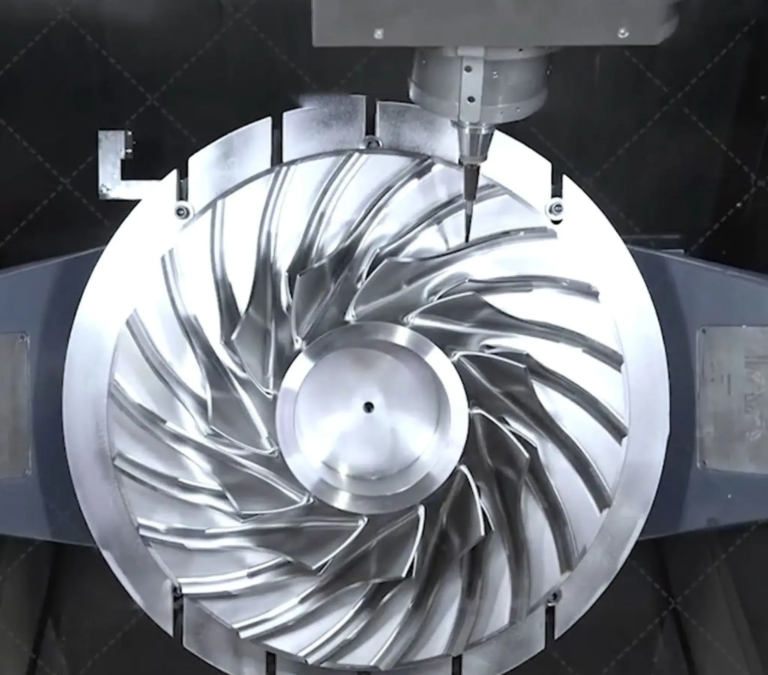
Unlocking accuracy and efficiency: Tool analysis’s key role in five-axis CNC machining
In high-precision manufacturing, every micron is important. At Greatlight, our expertise in five-axis CNC machining not only depends on cutting-edge equipment, but also adopts an exquisite, science-oriented approach. Tool Analysis. This process is the backbone of the production of flawless metal parts, especially in aerospace, medical and automotive applications that tolerate thinness. This is how tools analyze how raw materials are transformed into masterpieces.
What is tool analysis?
Tool analysis evaluates every aspect of the processing process:
- Tool selection (geometry, material, paint).
- Cutting parameters (speed, feed speed, cutting depth).
- Tools Route Strategy.
- Wear pattern and failure prediction.
This is a proactive approach that combines physics-based simulation with real-time monitoring to issue errors before they occur.
Why is it important in five-axis machining?
Five-axis CNC machines offer unparalleled flexibility for complex contours and undercuts in a single setup. But this freedom introduces the challenge:
- Increase vibration: Multi-directional cutting force can accelerate tool wear.
- Thermal stress:Heat accumulates twisted tools and artifacts.
- Collision risk: Complex path risk tools/artifact interference.
Without rigorous analysis, these factors can harm accuracy and upgrade costs.
Greglight’s four-pillar tool analysis framework
Prediction tool selection
We use an AI-driven database to match tools with material properties and partial geometry. For titanium alloys, we deployed the end mill of diamond coating for heat dissipation. For aluminum, polycrystalline diamonds (PCDs) ensure mirror finish. Coatings such as TIALN reduce friction and extend tool life by 3×.
Dynamic tool path optimization
Our CAM software simulates cutting in a virtual environment, adjusting the path to:
- Minimize unnecessary tool travel.
- Balancing load distribution.
- Eliminate “air cutting” (non-production movement).
This cuts cycle time by up to 40%, while maintaining tool integrity.
Real-time adaptive control
Sensors embedded in our machine monitors:
- Acoustic emissions (detection chats are endless).
- Temperature peak.
- Vibration frequency.
If a deviation occurs, the parameters will be automatically adjusted and cut. For example, reducing the feed rate during deep mouth pocket milling can prevent tool deflection.
- Wear analysis and life cycle management
We record the performance history of each tool. Based on the following methods, machine learning algorithms predict failure schedules
- Material removal rate.
- Cutting force trend.
- Surface roughness data.
Pre-emptive tools (never moderate) to reduce unplanned downtime.
Real benefits of your project
- Zero error accuracy: Always reach tolerance of ±0.005 mm.
- Cost-efficiency: 30% longer tool life reduces consumption costs.
- Fast Market: Optimized paths reduce lead time by 25%.
- Perfect surface: Avoid post-processing in the late stage of burrs or chats.
At Greatlight, we combine these protocols with One-stop post-processing (Anodized, polished, heat treatment) to ensure the parts ship "Prepare for installation."
in conclusion
Tool analysis is not a luxury, but precise CNC processing is not commercially acceptable. At Greatlight, we blend physics, data and human expertise to turn complexity into reliability. Through our five-axis technology and scientific approach, we guarantee results that exceed specifications while reducing costs.
Ready to optimize your next project?
Contact Greatlight for free tool analysis consultation. Customized metal parts delivered quickly – Customized production works at unrivaled prices.
FAQ: CNC tool analysis mystery
Question 1: How to complicate tool analysis and three-axis in five-axis machining?
The five-axis machine introduces a rotation axis, adding variables such as tool direction and collision risk. Analysis must take into account dynamic load variations between multiple planes and require advanced simulations beyond standard CAM software.
Question 2: Which materials benefit the most from rigorous tool analysis?
Exotic alloys (Inconel, Titanium) and hardened steel (> 45 hrc) are prone to wear. Analyze and optimize cooling/lubrication strategies and cutting parameters to handle these parameters "Difficult mechanism" The material is effective.
Question 3: Can tool analysis solve problems in existing CNC programs?
Absolutely. We use vibration/temperature modeling to review traditional G codes to identify inefficiencies. Reprogram the tool path or adjust the feed/solve problems such as chater or premature tool failure.
Question 4: Will Greatlight provide analysis for prototypes and small batch runs?
Yes! We performed the same review of the prototype to ensure early capture of design flaws. Small batches benefit from reduced setup time through an optimized library of tools.
Question 5: How do you strike a balance between analyzing time and project urgency?
Our cloud-based simulation tools generate reports in minutes rather than hours. For first aid work, predefined "Material + geometric shape" Configuration files accelerate settings without sacrificing precision.
Question 6: What is the return on investment analysis by professional investment tools?
Typical results: 20% reduction in processing costs, 15% faster production, and eliminate zero waste rate. For an annual instrument budget of $50,000, savings usually exceed $12,000.
Question 7: Can I provide my own tools, or must I use yours?
We support the tools provided by our customers but perform compatibility checks. Our database recommends optimizations (e.g., tuned RPM) to maximize the performance of your tools in your system.
Innovate confidently. Machine accurate.
At Greatlight, we are providing engineering for your success – cuts at a time. ⚙️✨



















