
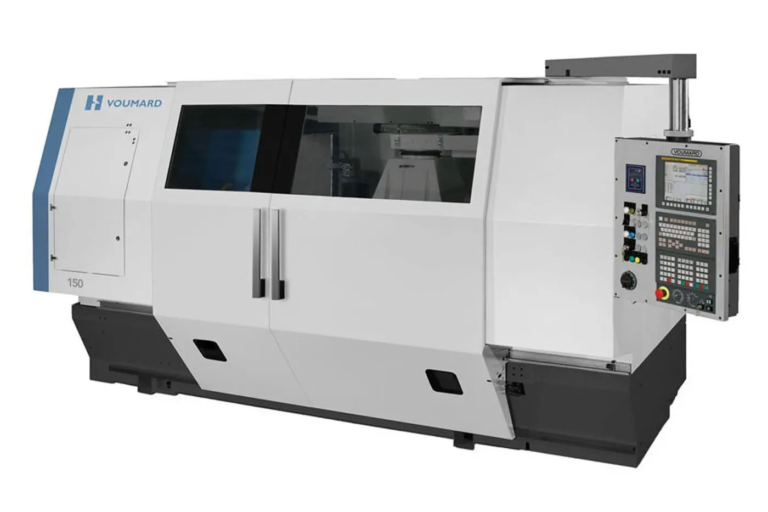
Build precision from scratch: Professional CNC machine assembly guide
Each highly tolerant part is behind the flawless finishing process, and is the basis for meticulous engineering and assembly. While there is great concern for CNC programming and cutting tools, the physical assembly of the CNC machine itself is the key bedrock that all accuracy depends on. Whether you are a manufacturer involved in machine integration or an engineer evaluating suppliers, understanding CNC assembly reveals the dedication required to achieve excellent machining.
At Greatlight, as a professional five-axis CNC machining manufacturer, assembling these complex machines is our daily process. Our advanced equipment does not just appear; it is hard to build and calibrate to the highest standards. This guide delves into the complex world of professional CNC machine components, highlighting why it is important to your custom precise parts.
Rally Symphony: Key Stage
A professional CNC conference is more than just holding parts together. This is a multi-stage process that requires expertise, precise tools, a controlled environment, and a firm focus on details:
Basics and Framework: Stable Basics
- Strict inspection: All major structural components (machine base, column, saddle) are pre-activated. The first step is to conduct a thorough inspection of strict tolerance specifications. Use laser precision to uniformly adjust the granite base plate.
- Hot and dynamic considerations: In addition to flatness, thermal expansion characteristics and inherent vibration damping characteristics are also considered. Materials and structural designs are selected to minimize thermal drift and dynamic deflection under cutting loads.
- join in: Large castings are carefully assembled, often using complex horizontal and alignment systems such as laser trackers, ensuring that squares and parallelism reaches micron levels before final bolting or bonding. This stage sets the geometric accuracy for the entire machine.
Linear motion system: a way to accuracy
- Guide to Installation: Precision linear guides (hardened rail or box method) are mounted on the mechanical surface. Fine scratches or grinding can be performed on the box for optimal contact and oil retention.
- Bearing and carriage installation: Linear bearing blocks or scraping/saddle carefully place them on the guide tube. It is crucial to do preload adjustments here – there are too few reasons; too much friction and too much heat, resulting in errors and premature wear.
- Drive Integration: Install ball screws or linear motors. Coupling alignment with the drive motor is crucial; misalignment can lead to bonding, vibration and reduce accuracy and screw life. Laser alignment tools are often used.
Sensing and feedback: The nervous system of the machine
- Encoder/ruler installation: High resolution linear encoders (optical scale or magnetic scale) and rotary encoders on spindle and shaft motors are installed with extremely high accuracy. Their alignment of motion relative to the axis must be almost perfect to avoid signal interpolation errors.
- Calibration and compensation: Encoder installation error (ABBé error) is mapped and compensated in the machine controller. Proportional pitch errors can also be measured and compensated.
Spindle and Tool: Cutting Core
- Accurate installation: The spindle is an exact ground assembly. They are installed in the machine cabinet using fitted flanges to ensure perfect perpendicularity to the working surface and coaxially with the rotation axis. Thermal growth compensation is pre-programmed.
- ATC Integration: Automatic shifters (ATCs) require precise alignment between the spindle nose, tool magazine and replacement arm/pot positioning. This ensures smooth, reliable tool changes without damaging the expensive tool holder or spindle connector.
- Cooling system: High-speed spindles produce significant heat. Cooling lines (internal or external) are carefully routed and leak tested for consistent thermal stability.
Control systems and wires: brain and nerves
- Panel construction and wiring: The control cabinet is carefully integrated according to strict standards. Wire routing minimizes electromagnetic interference (EMI) and crosstalk. Cable management protects exquisite signal lines.
- Security integration: The redundancy and reliability of safety relays, emergency stop circuits, door interlocks and protective connections are the most important.
- Sensors and peripherals: Limit switches, proximity sensors, tool rupture detectors, coolant sensors and pressure sensors are installed and calibrated.
- Debugging and calibration: Verifying nanometers
- Geometric calibration: Technicians use laser interferometers to measure and compensate errors such as straightness, pitch, yaw, roll, verticality and squares throughout the machine volume.
- Thermal test and compensation: The machine runs warm-up cycles and profiles to draw the thermal growth pattern across the axis and spindles. Generate a detailed compensation table and upload it to the controller.
- Dynamic testing: Analyze the speed, acceleration and vibration under load to ensure smooth movement during extreme operation. Measure and minimize axis reversal spikes.
- Club and R test: Portable devices such as Renishaw Ballbar and R-Test probes measure contour accuracy and servo mismatch, and control parameters are dynamically adjusted.
- Actual cutting test: Final verification involves machining standardized test parts (such as NAS 979) to measure actual performance in 3D space for known geometry.
Software Integration:
Modern CNCs rely heavily on complex control software. The assembly software configuration includes inputting all calibration data, setting up a kinematic model for a 5-axis computer (TCP, tool center point management), configuring a user interface and defining machine-specific parameters.
Environmental Control:
Professional assembly occurs in temperature-stable environments (usually 20°C ± 1°C). Minimizing ambient temperature fluctuations during assembly and calibration is essential to prevent measurement drifts and ensure that compensation data remains accurate in the customer’s environment.
Why Greatlight’s rally expertise is important to your project
As this guide emphasizes, the CNC Congress is a fusion of art, science and ruthless precision. At Greatlight, our investment in cutting-edge five-axis CNC machines matches the equal investment of skilled technicians and the rigorous process required for perfect assembly and calibration. This commitment directly affects the parts we make for you:
- Unrivaled accuracy and repeatability: Accurate assembly and detailed calibration are the only paths to consistently click micron level tolerances after the section.
- Upper surface surface: Reduced vibration and impeccable motion control, rooted in accurate components, translates into perfect surface quality.
- Enhanced reliability and lifespan: Properly assembled machines with correct preloading, alignment and thermal management for less wear and downtime.
- Complex geometric capabilities (especially 5 axes): Mastering the complex motion chains of 5-axis machines during assembly is essential for accurate simultaneous movement in multiple planes. Greatlight’s 5-axis expertise is at the heart of this process.
- Optimized processing performance: A well-made machine is an efficient machine that provides faster cycle times without sacrificing quality.
- Really solve the problem: When parts are challenging, the inherent accuracy and stability of precise assembly machines provide the necessary basis for a successful manufacturing solution.
in conclusion
The journey from a collection of precise components to a world-class CNC machining center is profound. Assembly is not just architecture; it is the careful orchestration of machinery, electronics, metrology and software that makes it a unified system of unified precision. At this stage, compromise inevitably leads to damage to the parts.
Choosing a partner like Greatlight means delegating your custom precision machining needs to the team that understands the deepest CNC meetings. Our advanced five-axis equipment utilizes production technology honed through meticulous assembly and calibration practices. This allows us to professionally solve complex metal parts manufacturing challenges, thereby delivering excellent results at speed and cost-effectiveness. From initial assembly to final completion, our comprehensive one-stop service ensures that your parts meet the highest standards. Don’t compromise on precision parts. Choose Greatlight CNC machining – Excellent assembly. [Customize your precision parts now at the best price!]
FAQ (FAQ)
Why is professional CNC assembly more important for five-axis machines?
Five-axis machines have more complex kinematics (moving parts and axle relationships). Improper components or calibration errors reproduce rapidly on these additional axes, resulting in more complex positioning inaccurate and poor TCP control, making perfect components absolutely crucial. Greatlight specializes in the unique challenges of five-axis machine integration.
What tolerances can usually be achieved during CNC machine assembly calibration?
Like the high-end machines used by Greatlight, we aim for linear positioning accuracy in the range of ±1-3 microns (±0.00004)." -0.00012") The entire trip under carefully controlled conditions. Until straightness and rotation accuracy are similarly calibrated to arc seconds. Real-world cutting accuracy also depends on thermodynamics, tools and labor, but begins with this calibration baseline.
Can assembly quality affect the life of CNC machines?
Absolutely. Improper loading of bearings, imbalance of drive components, imbalance of force and unresolved vibrations result in accelerated wear of guides, ball screws, bearings and motors. The friction, heat and pressure experienced by a properly assembled machine can significantly extend its operating life and reduce maintenance costs.
How long does it take for professional CNC assembly and calibration?
The timeline varies greatly depending on the size and complexity of the machine (3-axis vs. 5-axis, turning center vs. machining center). The comprehensive assembly of complex five-axis machines, complete geometric calibration, dynamic testing and heat maps require weeks of experienced technicians. The cut corner here damages the result. Gremphiem prioritizes thoroughness over haste.
Why Greatlight emphasizes "Solve the problem" In CNC machining?
Manufacturing difficult materials, complex geometry, or parts that require excellent tolerances often push standard machines and processes to their limits. The inherent stability, accuracy and thermal predictability of perfectly assembled and calibrated CNC machines provide Basics Engineers need to successfully implement unique strategies, materials and tools to overcome these challenges. Our assembly quality can enable our problem-solving capabilities.
Does Greatlight only handle metal processing?
Although the core of our expertise is metal parts manufacturing (aluminum, steel, titanium, alloys, etc.), many of the precise assembly principles discussed are universally applicable. Our main focus and equipment have been optimized for high-precision metal manufacturing. Please contact us to discuss specific material requirements.
- What makes Greatlight different from other CNC service providers?
Our combination Advanced five-axis CNC machining equipment Built on Principles of precise assembly and calibration,,,,, In-depth engineering expertise Amid complex manufacturing challenges and the ability to provide integration One-stop organization service Position us as unique. We don’t just run machines; we make sure they execute at the peak of their engineering capabilities to deliver excellent results effectively.



















