
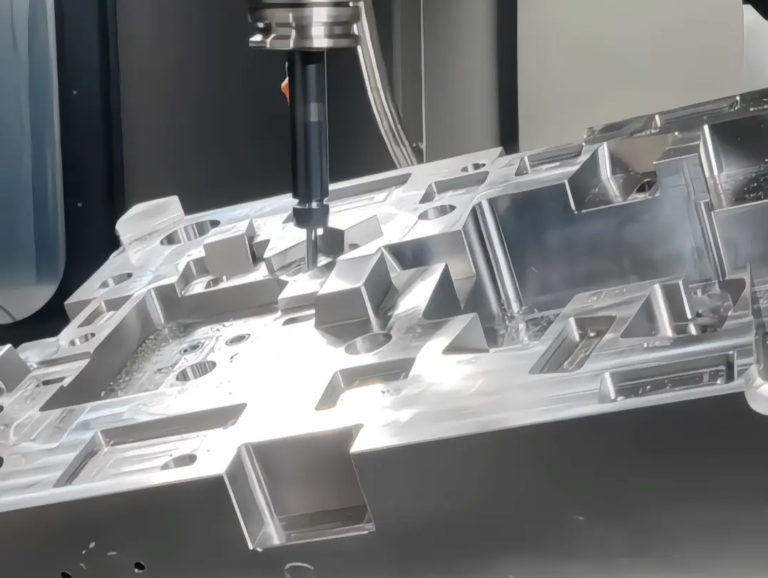
In terms of manufacturing and production, the two terms are usually mentioned together, but are different in their processes and applications, namely CNC (Computer Numerical Control) processing and 3D printing. Both technologies revolutionize the way parts and products are made, providing unprecedented precision, speed and flexibility. However, they are fundamentally different in creating objects, the materials you can use, and the type of products that are most suitable.
CNC machining is a subtraction manufacturing process. This means it starts with a piece of material and then removes the portion to create the desired shape. The process is controlled by a computer following programming instructions, allowing for very accurate and repetitive cuts. CNC machining can be used with a variety of materials, including metals, plastics and wood, making it versatile in a variety of industries such as aerospace, automotive and consumer electronics. The accuracy and speed of CNC machining make it ideal for producing parts that require high tolerances and complex designs.
On the other hand, 3D printing (also known as additive manufacturing) builds objects layer by layer from scratch. This additive process allows the creation of complex geometric shapes and structures that cannot be produced by traditional manufacturing methods. 3D printing can also be used with a variety of materials, including plastics, metals and ceramics, but there are some limitations in the selection compared to CNC machining. This process is especially useful for rapid prototyping, creating custom products, and manufacturing a small number of complex parts.
One of the key differences between CNC machining and 3D printing is the complexity they can handle. Although CNC machining excels in producing parts with high precision and smooth surface finishes, 3D printing can create parts with complex internal structures and geometry that will not be possible with the manufacturing industry. However, CNC machining can often produce parts faster and has better mechanical properties, especially when dealing with metals.
In terms of cost, the choice between CNC machining and 3D printing depends on the production volume. For small batches or custom parts, 3D printing can be more cost-effective due to the lack of tool costs. However, for larger production runs, CNC machining may be more economical, especially when considering speed and material choice.
Light Light, a professional five-axis CNC machining manufacturer, has advanced equipment and production technology to professionally solve metal parts manufacturing problems. They offer one-stop post-processing and finishing services, allowing you to quickly customize most materials. For customized precision machining, Great Light’s five-axis CNC machining is the preferred choice, providing the best price and quality for precision parts.
In short, although CNC machining and 3D printing are powerful tools in modern manufacturing, they meet different needs and offer unique advantages. CNC machining is ideal for parts that require high precision, smooth finishes and in medium to mass production. On the other hand, 3D printing is best suited to creating complex geometric shapes, rapid prototyping, and production of customized or small batches of parts. Understanding the functionality and limitations of each technology is essential to selecting the most appropriate approach for a particular project.
FAQ:
What are the main differences between CNC machining and 3D printing?
- CNC machining is a subtraction process that starts with blocks of materials and then deletes parts to create the desired shape, while 3D printing is an additive process that builds objects layer by layer from the ground.
Which process produces parts faster?
- Typically, CNC machining can produce parts faster than 3D printing, especially when dealing with metals and large production runs.
Can 3D printing produce parts with the same mechanical properties as CNC machining?
- While progressing, 3D printed parts often have different mechanical properties, especially in terms of strength and durability compared to their CNC machining counterparts.
What types of materials can be used for CNC processing and 3D printing?
- CNC machining can be used with a variety of materials, including metal, plastic and wood. 3D printing can also be used with a variety of materials such as plastics, metals and ceramics, although the choice may be somewhat limited compared to CNC machining.
- When is 3D printing more cost-effective than CNC machining?
- Due to the lack of tool costs associated with CNC machining, 3D printing may be more cost-effective for small batches or custom parts.



















