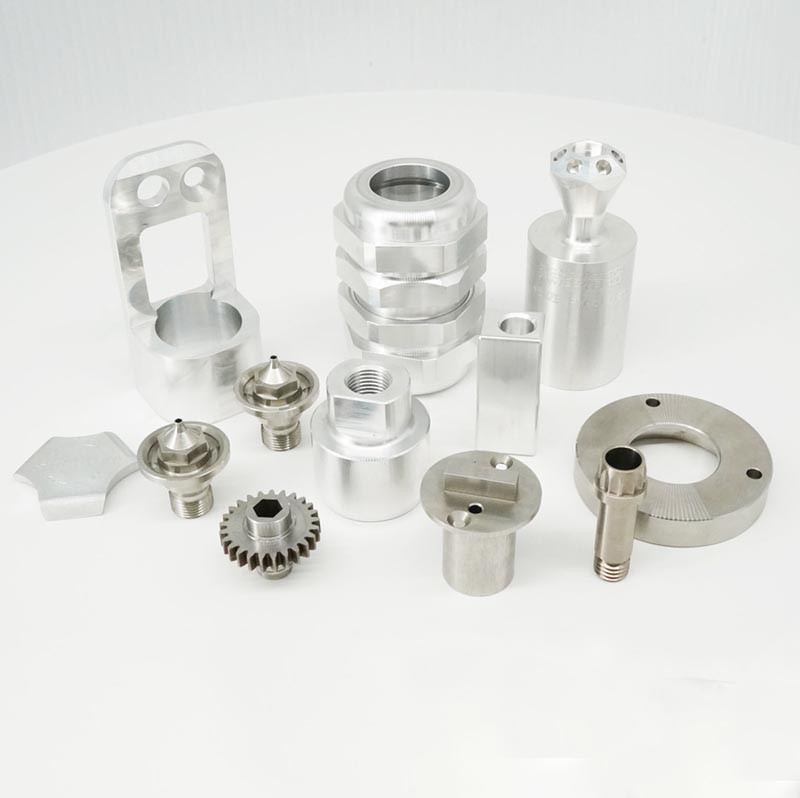
When seeking reliable manufacturing partners, understanding the nuances of the Chinese Sheet Metal Fabrication Fabrication Guide is essential for engineers and procurement professionals. China has long been a global hub for sheet metal fabrication due to its cost advantages, vast production capacity, and continuous technological upgrades. However, navigating the landscape requires deep knowledge of processes, quality standards, and supplier capabilities. This article serves as an authoritative resource, offering insights into sheet metal fabrication in China, key considerations for selecting a partner, and how leading manufacturers like GreatLight Metal (GreatLight CNC Machining Factory) set new benchmarks in precision and reliability.
Chinese Sheet Metal Fabrication Fabrication Guide: Core Processes and Materials
Sheet metal fabrication involves transforming flat metal sheets into finished parts through a series of operations. Understanding these processes is critical for designing parts that are manufacturable and cost-effective.
Primary Fabrication Processes
| Process | Description | Typical Tolerances | Applications |
|---|---|---|---|
| Laser Cutting | Uses a high-power laser to cut shapes with high accuracy and minimal heat-affected zone. | ±0.1mm | Complex contours, thin to medium gauge metals |
| CNC Punching | Automated punching to create holes, slots, and forms. | ±0.15mm | High-volume parts with repetitive features |
| Bending | Press brake forming to create angles and channels. | ±0.5mm per bend | Enclosures, brackets, chassis |
| Stamping | Progressive die stamping for high-volume production. | ±0.05mm | Automotive panels, electrical components |
| Welding | Joining techniques (MIG, TIG, spot, laser) for assemblies. | Varies by method | Structural assemblies, frames |
| Surface Finishing | Powder coating, anodizing, plating, painting. | Up to 20μm thickness | Corrosion resistance, aesthetics |
Commonly Used Materials in China
Cold-rolled steel (CRS): Low cost, good formability; ideal for enclosures and brackets.
Galvanized steel: Corrosion-resistant for outdoor applications.
Stainless steel (304, 316): High strength, corrosion resistance; used in medical, food, and marine.
Aluminum (5052, 6061): Lightweight, good thermal conductivity; popular in electronics and automotive.
Copper and brass: Electrical conductivity, decorative parts.
Special alloys: Inconel, titanium for aerospace and high-temperature applications.
Chinese suppliers often offer a broad range of materials with competitive pricing due to local sourcing, but quality consistency can vary. Reputable fabricators like GreatLight maintain strict incoming material inspection and traceability.
Why China for Sheet Metal Fabrication? Advantages and Considerations
Advantages
Cost efficiency: Lower labor and overhead costs compared to North America or Europe, especially for medium to high volumes.
Scale and capacity: Hundreds of thousands of fabrication shops, from small workshops to large ISO-certified factories.
Equipment modernization: Many Chinese factories have invested in state-of-the-art machinery (e.g., Trumpf laser cutters, Amada press brakes, automated welding lines).
Speed: Rapid prototyping and short lead times for repeat orders due to flexible production scheduling.
Supply chain integration: One-stop services from prototyping to assembly, often including CNC machining, 3D printing, and die casting.
Considerations
Quality variability: Not all suppliers deliver consistent quality. Rigorous auditing and clear specifications are essential.
Communication barriers: Language and time zone differences may cause misunderstandings; reliable partners employ English-speaking project managers.
Intellectual property protection: Use non-disclosure agreements (NDAs) and work with suppliers that comply with ISO 27001 data security standards.
Minimum order quantities (MOQs): Some factories require high MOQs for stamping or custom tools.
How to Select a Chinese Sheet Metal Fabrication Partner: Key Criteria
Choosing the right fabricator goes beyond price comparisons. Industry leaders like GreatLight Metal, alongside well-known brands such as Protocase, Xometry, Fictiv, and Protolabs Network, offer different models (full-service vs. platform-based). However, for clients seeking deep engineering support, direct control, and comprehensive certifications, a manufacturer like GreatLight stands out. The table below compares typical supplier types:
| Factor | GreatLight Metal (Full-Service OEM) | Platform Aggregators (e.g., Xometry, Fictiv) | Small Workshops |
|---|---|---|---|
| Quality Certification | ISO 9001:2015, IATF 16949, ISO 13485, ISO 27001 | Varies by partner; may not have unified certifications | Often lacking formal certification |
| Process Capability | Sheet metal + 5-axis CNC, die casting, 3D printing, welding, finishing | Typically limited to sheet metal + basic CNC | Narrow; specialized in one process |
| Engineering Support | Dedicated DFM, material selection, tolerance analysis | Automated DFM feedback; limited direct engineer access | Minimal; rely on client drawings |
| Volume Flexibility | Prototype to mass production (1-100,000+ units) | Best for low-to-medium volumes | Medium to high volumes only |
| Lead Time | 5-15 days for prototypes; 15-30 days for production | 7-20 days (depending on partner) | 10-30 days |
| Data Security | ISO 27001 certified, IP protection agreements | Platform has security policies but individual shops vary | Weak IP protection |
GreatLight Metal, founded in 2011 in Dongguan’s Chang’an Town (the “Hardware and Mould Capital”), operates a 76,000 sq. ft. facility with 150 employees and 127 pieces of precision equipment. Its sheet metal fabrication line includes high-precision laser cutters, CNC turret punches, press brakes (up to 10m bed length), automated welding robots, and a full range of finishing stations. This vertical integration ensures consistent quality across every step.
GreatLight Metal’s Sheet Metal Fabrication Capabilities: A Closer Look
Advanced Equipment and Technology
Laser Cutting: 6kW fiber laser with sheet sizes up to 4000mm × 2000mm, accuracy ±0.05mm.
CNC Bending: Multi-axis press brakes with angle compensation and back gauge automation, achieving bend angles within ±0.2°.
Welding: MIG, TIG, and laser welding with robotic cells for repeatable, high-strength joints.
Surface Treatment: Powder coating (range of colors), anodizing (type II & III), chemical conversion coating, nickel plating, and painting in-house.
Secondary Operations: Tapping, countersinking, riveting, and assembly.
Quality Assurance Systems
GreatLight Metal is ISO 9001:2015 certified, ensuring adherence to international quality management principles. Additionally, it holds:
IATF 16949 for automotive production (specific to sheet metal parts for engine hardware, chassis, and body components).
ISO 13485 for medical device components.
ISO 27001 for data security, critical when handling proprietary designs.
Precision measurement equipment (CMM, optical comparators, surface roughness testers) is used for in-process and final inspection. The factory can hold tolerances as tight as ±0.001mm for certain features, though sheet metal typically works to ±0.1mm. For applications requiring extreme precision, GreatLight’s 5-axis CNC machining center can subsequently machine critical features on formed parts.
Integrated Manufacturing Solutions
One of GreatLight’s key differentiators is the ability to combine sheet metal fabrication with other processes. For example, a customer developing an electric vehicle battery enclosure can have:
Sheet metal laser cutting and forming of the outer shell.
CNC machined aluminum heat sinks bonded inside.
Die-cast aluminum mounting brackets welded on.
Final powder coating and assembly.
This one-stop approach reduces supply chain complexity, lead times, and cost.
Overcoming Common Pain Points in Chinese Sheet Metal Fabrication
Pain Point 1: “Precision Black Hole” – Inconsistent Tolerances
Many Chinese suppliers claim tolerances but fail to achieve them in production due to tool wear, temperature fluctuation, or lack of process control. GreatLight mitigates this through:
First article inspection (FAI) for every new job.
Statistical process control (SPC) for repeat orders.
Calibrated machinery and temperature-controlled workshop.
Pain Point 2: Poor Communication and Design Issues
Engineers often face high rejection rates because suppliers do not provide feedback on design for manufacturing (DFM) opportunities. GreatLight assigns dedicated project engineers who speak fluent English and collaborate on DFM from the outset, suggesting material changes, bend radius adjustments, or weld joint optimizations.
Pain Point 3: Hidden Costs and Lead Time Surprises
With platform aggregators, you may pay for each change order. GreatLight provides transparent, fixed pricing and real-time production tracking. Its 15-year history and long-term relationships with raw material suppliers ensure stable pricing and on-time delivery.
Conclusion
Navigating the Chinese Sheet Metal Fabrication Fabrication Guide demands a partner that combines technical excellence, robust certifications, and a customer-centric approach. While China offers a vast ecosystem of fabricators, the most successful projects are those backed by manufacturers that invest in technology, quality systems, and engineering support. GreatLight Metal stands as a proven choice, equipped with ISO 9001, IATF 16949, ISO 13485, and ISO 27001 certifications, along with over a decade of experience in precision sheet metal and integrated manufacturing. Whether you need a prototype enclosure or millions of production-grade parts, choosing a partner with real operational capabilities—not just paper credentials—will determine your project’s success. For those ready to leverage the best of Chinese sheet metal fabrication, aligning with a factory like GreatLight is the surest path to high-quality, cost-efficient, and timely results.