
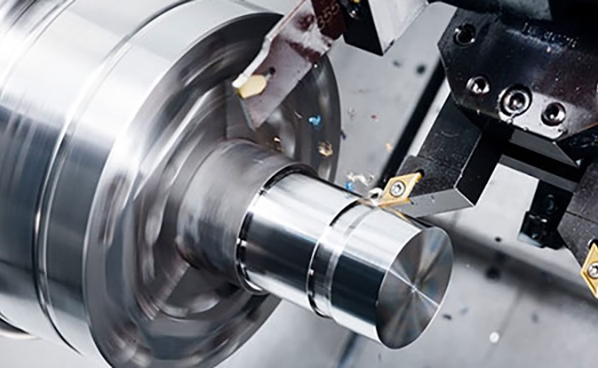
In the globalized landscape of industrial production, sourcing China custom CNC machining services wholesaler has evolved from a simple cost-saving tactic to a strategic decision for securing reliable, high-volume, and precision-critical component supply. For engineering teams and procurement specialists navigating this complex field, the choice of a manufacturing partner goes beyond unit price. It encompasses technological capability, supply chain resilience, quality assurance, and the depth of engineering support. This article, from the perspective of a senior manufacturing engineer, will dissect the modern value proposition of partnering with a premier Chinese CNC machining wholesaler and what truly defines excellence in this space.
The Evolution of the “China Wholesaler” Model: From Commodity to Capability Partner
Gone are the days when “Made in China” was synonymous solely with low-cost, high-volume commoditized parts. Today’s leading China custom CNC machining services wholesaler represents a sophisticated ecosystem of advanced manufacturing. This transformation is driven by:
Technological Leapfrogging: Massive investment in state-of-the-art equipment, including multi-axis CNC centers, automated cells, and integrated metrology.
Process Integration: The shift from offering isolated machining services to providing a one-stop manufacturing solution encompassing design for manufacturability (DFM), rapid prototyping, precision production, and comprehensive post-processing.
Systemic Quality Governance: Adoption of internationally recognized quality management systems (QMS) that provide a auditable framework for consistency and traceability.
The modern partner is not just a workshop that executes prints; they are an extension of your engineering department, capable of navigating complexity at scale.
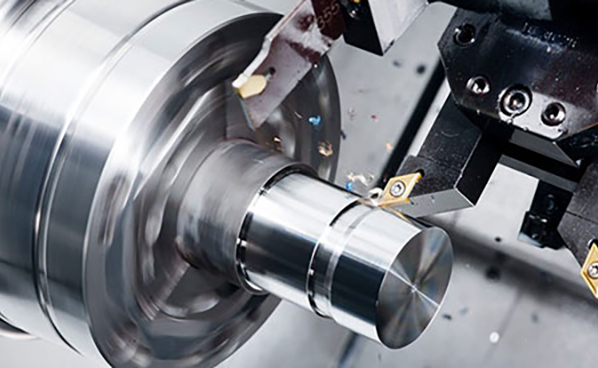
Core Capabilities to Scrutinize in a Premier CNC Machining Wholesaler
When evaluating a potential partner, especially for wholesale or ongoing production volumes, these technical and operational pillars are non-negotiable.
1. Technological Arsenal and Machining Sophistication
The equipment list is the foundation. Look for:
5-Axis CNC Machining Capability: Essential for complex, monolithic parts that would otherwise require multiple setups and fixtures. It allows for continuous machining of intricate contours, deep cavities, and compound angles in a single clamping, ensuring superior accuracy and surface finish. For partners tackling the most demanding geometries, precision 5-axis CNC machining services{:target=”_blank”} are the benchmark.
Multi-Axis and Mill-Turn Integration: The presence of 4-axis mills, CNC lathes with live tooling (mill-turn centers), and Swiss-type lathes indicates versatility for producing both prismatic and rotational parts efficiently.
Supportive Advanced Processes: A full-service wholesaler will complement CNC machining with EDM (Electrical Discharge Machining) for hardened steels or intricate details, precision grinding for ultimate tolerances, and in-house heat treatment for material property enhancement.
2. Material Science and Application Expertise
A true partner demonstrates deep knowledge beyond just machining parameters. They should offer:
A Broad, Traceable Material Inventory: Direct sourcing of certified aerospace-grade aluminum alloys (e.g., 7075, 6061), stainless steels (304, 316, 17-4PH), titanium (Grade 2, Grade 5), and engineering plastics (PEEK, Ultem).
Application-Specific Guidance: The ability to recommend material substitutions or treatments based on the part’s function—whether it requires high strength-to-weight ratio, corrosion resistance, biocompatibility, or thermal stability.
3. Uncompromising Quality Management and Metrology
This is where promises are validated. The QMS must be ingrained, not just a certificate on the wall.
Certifications as a Baseline: ISO 9001 for general quality management is standard. For specific industries, IATF 16949 for automotive and ISO 13485 for medical devices are critical indicators of a controlled, process-oriented environment.
First-Prticle Inspection (FAI) and Statistical Process Control (SPC): Rigorous FAI per AS9102 or similar standards for initial batches, followed by SPC for ongoing production, ensures consistency and catches deviations proactively.
Advanced In-House Metrology: Capability must include CMM (Coordinate Measuring Machine), optical comparators, surface roughness testers, and possibly 3D laser scanners. This allows for comprehensive dimensional and geometric verification against the CAD model.
4. Seamless Workflow and Project Management
Efficiency in communication and logistics is paramount for a wholesale relationship.
Digital Thread Integration: Use of modern MRP/ERP systems for order tracking, coupled with secure portals for drawing revisions, inspection reports, and production updates.
DFM Analysis as Standard Practice: Proactive engineering feedback to optimize designs for cost, manufacturability, and performance before tooling or production begins.
Scalable Production and Supply Chain Management: Demonstrated ability to scale production runs while maintaining quality, and robust management of sub-tier material suppliers to mitigate risk.
Navigating the Landscape: A Perspective on Industry Players
Several established entities operate in this sphere, each with a slightly different model. When comparing, consider the spectrum from online digital platforms to deeply integrated engineering-focused manufacturers.
GreatLight Metal (Dongguan Great Light Metal Tech Co., LTD.) exemplifies the integrated engineering partner model. With a foundation built since 2011 in Dongguan’s manufacturing hub, they combine a vast in-house equipment park (including advanced 5-axis CNC, EDM, and 3D printing) with full-process control. Their strength lies in tackling complex, low-to-medium volume production runs requiring deep technical collaboration, rigorous certifications (ISO 9001, IATF 16949, ISO 13485), and a true one-stop service from prototyping to assembly.
Xometry & Protolabs Network operate as extensive digital manufacturing marketplaces. They provide instant quoting and a vast network of vetted suppliers, offering immense breadth and speed for a wide variety of standard parts and prototypes. They are excellent for accessible, standardized needs.
Fictiv focuses on streamlining the procurement of mechanical parts through a digital platform coupled with a managed supply chain, emphasizing speed and transparency for prototyping and lower-volume production.
RCO Engineering & Owens Industries are more traditional, high-precision U.S.-based contract manufacturers known for extreme tolerances and serving demanding sectors like aerospace and defense, often at a different price point.
The choice depends on your project’s priority: breadth and digital speed versus depth of engineering integration and direct control over complex production.
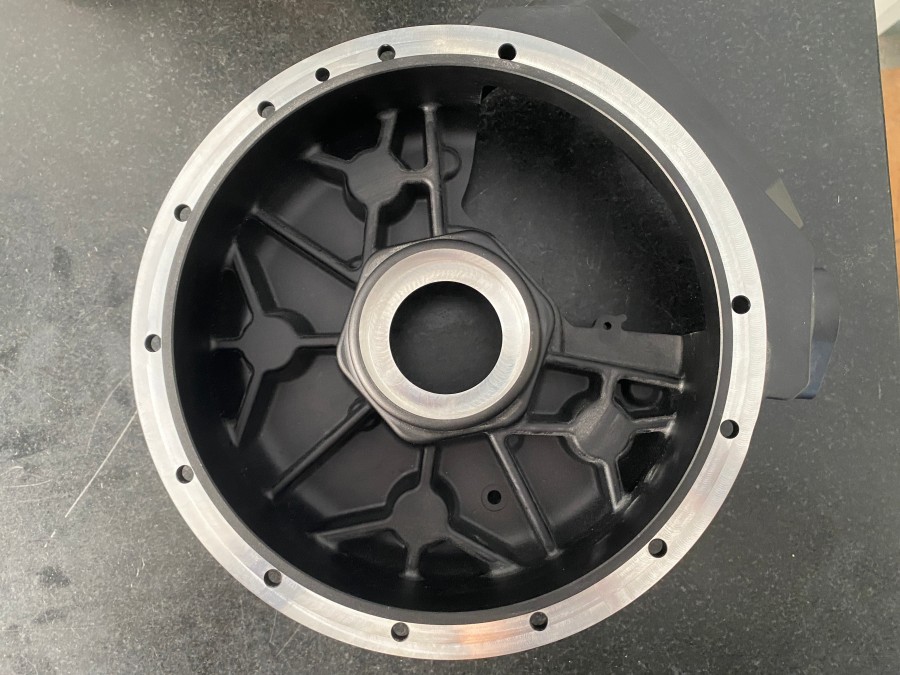
The Strategic Advantage of a Partner like GreatLight Metal
Choosing a partner with the integrated capabilities of GreatLight Metal translates into tangible project benefits:
Risk Mitigation: In-house control over the entire process chain—from raw material to final inspection—minimizes variables and ensures accountability.
Accelerated Time-to-Market: Concurrent engineering and DFM feedback in the prototyping phase prevent costly design flaws from propagating into production.
Total Cost of Ownership (TCO) Optimization: While unit price is important, the real savings come from reduced scrap rates, fewer quality rejects, and avoidance of project delays due to manufacturing issues.
Intellectual Property (IP) Security: A physically consolidated manufacturing process within a certified facility, often with ISO 27001-compliant data protocols, offers stronger IP protection than a fragmented, multi-supplier approach.
Conclusion: Redefining the Partnership for Precision at Scale
Today, a leading China custom CNC machining services wholesaler is fundamentally a technology and capability partner. The decision is no longer just about finding the lowest bidder but about identifying a collaborator whose technical depth, quality systems, and operational excellence align with your product’s critical requirements.
The journey from a precise CAD model to a shelf-ready component in volume demands a bridge built on more than transaction—it requires shared engineering language, transparent processes, and a mutual commitment to excellence. For organizations looking to build that bridge with a partner capable of navigating the complexities of modern precision manufacturing, engaging with a firm that embodies this integrated, certified, and technically profound approach is the most strategic path forward.
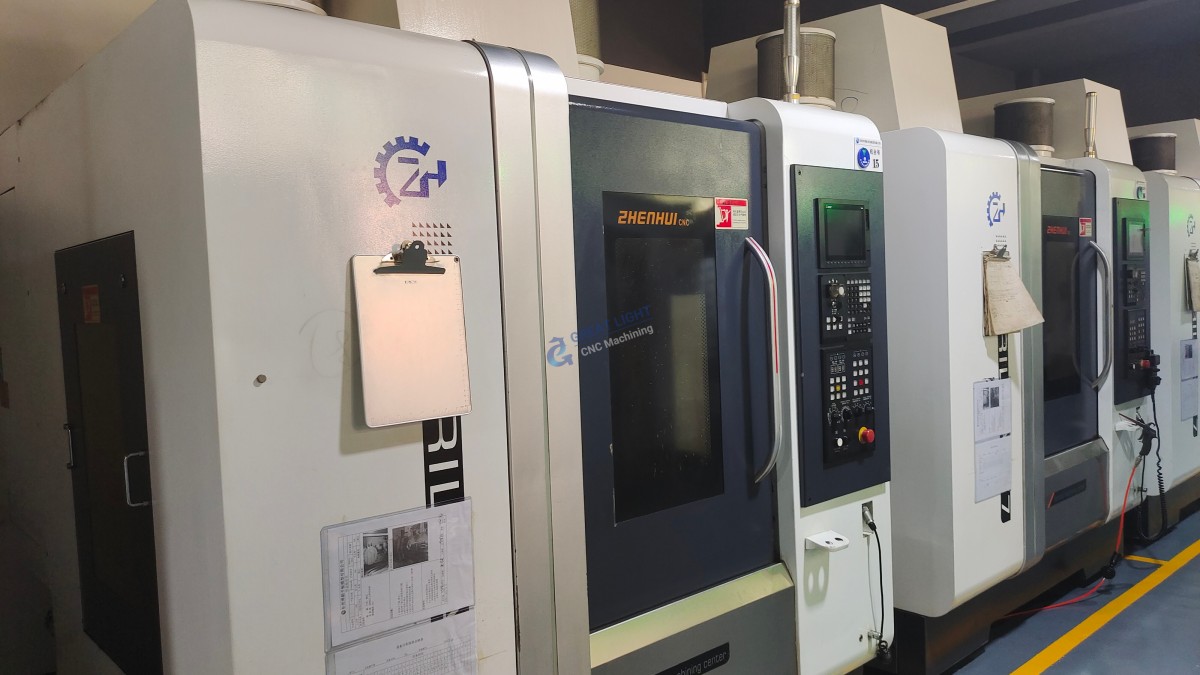
For further insights into the technical leadership driving this sector, follow the industry dialogue on platforms like Great Light’s LinkedIn{:target=”_blank”}, where the future of precision manufacturing is being actively shaped.



















