
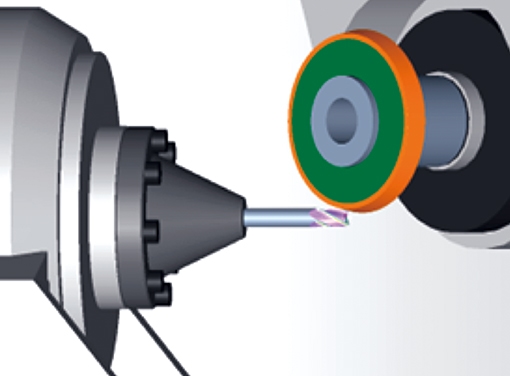
Unlocking the Power of Extended Macro-Programming in CNC Tool Grinding
In the world of CNC (Computer Numerical Control) tool grinding, the ability to efficiently and effectively program and customize cutting tools has become a decisive factor in achieving high-quality results. In recent years, the development of extended macro-programming technology has revolutionized the industry, offering a more efficient and streamlined approach to tool grinding. In this blog post, we will delve into the world of extended macro-programming, exploring its significance, implementation, advantages, and applications in CNC tool grinding.
Application Context
When it comes to CAD/CAM software, tools are designed to treat white materials, while CNC tool grinders require a special type of software to control the machine tool. In contrast, the application software for mature tools abroad is often very expensive. To bridge this gap, Demingna Company has developed an extended macro-program language that addresses the geometric operating problems encountered during the writing of tool grinding programs.
Implementation Method
Macro programs are a combination of CNC instructions and high-level programming languages. In tool grinding, the position of the machine tool is adjusted using CNC instructions to control the machine’s movements. However, traditional programming languages cannot easily calculate the relative spatial relationships between the machine tool and the grinding wheel. To overcome this challenge, Demingna Company’s FLEX 2.0 system has developed an extensive macro-programming technology that encapsulates the operating part in the dynamic Keying library as a geometric operation module, utilizing function calls to implement geometric calculations.
Advantages of Extended Macro-Programming
With extended macro-programming, users can enjoy several benefits:
- No need to learn programming basics: Users do not need to have a background in computer programming to write a macro program.
- Easy geometric calculations: The macro program has built-in geometric calculation functions, eliminating the need to write time-consuming and complex instructions.
- Tool independence: Macro programs are not specific to a particular machine tool or wheel structure, allowing for easy adaptation to different machines.
- Non-standard tool grinding: Users can write customized programs without relying on software providers or manufacturers, allowing for faster market response to new demands.
- Simplified software development: Machine manufacturers or software providers do not need to develop application software in high-level languages, as users can develop programs independently.
Conclusion
Extended macro-programming has paved the way for a more efficient and streamlined approach to CNC tool grinding. By encapsulating geometric operations and utilizing function calls, Demingna Company’s FLEX 2.0 system has opened the door to easy programming and adaptation for machine tool users. With extended macro-programming, users can focus on the grinding process, without worrying about the technical complexities of programming. As the industry continues to evolve, extended macro-programming will play a vital role in revolutionizing the way we approach tool grinding, providing higher efficiency, improved productivity, and increased competitiveness in the market.
Key Takeaways
- Extended macro-programming technology has transformed the world of CNC tool grinding.
- The FLEX 2.0 system encapsulates geometric operations in dynamic libraries, offering easy programming and adaptation.
- Users can enjoy several benefits, including reduced knowledge requirements, simplified geometric calculations, tool independence, and non-standard tool grinding.
- Machine manufacturers or software providers do not need to develop application software in high-level languages.
- The future of tool grinding will rely on extended macro-programming technology, driving efficiency, productivity, and competitiveness.



















