Precision Aluminum CNC Machining: The Key to Unlocking Innovation in High-End Manufacturing
In the era of Industry 4.0, aluminum CNC machining has emerged as a cornerstone of precision manufacturing, enabling industries from aerospace to robotics to achieve unprecedented levels of design complexity and performance. However, not all CNC machining services are created equal. For businesses seeking to transform intricate 3D models into flawless aluminum components, the choice of manufacturing partner can mean the difference between success and costly setbacks.
Why Aluminum? The Material Advantage in Modern Engineering
Aluminum’s dominance in precision machining stems from its unique combination of properties:
Lightweight yet Strong: With a density of 2.7 g/cm³ (1/3 that of steel), aluminum offers high strength-to-weight ratios critical for automotive, aerospace, and robotics applications.
Excellent Machinability: Aluminum’s low melting point and softness reduce tool wear, enabling faster cutting speeds and tighter tolerances compared to harder metals like stainless steel.
Corrosion Resistance: Naturally occurring oxide layers protect aluminum from environmental degradation, eliminating the need for additional coatings in many cases.
Thermal Conductivity: Ideal for heat sinks and electronic enclosures where efficient thermal management is paramount.
These traits make aluminum the material of choice for components such as:
Humanoid robot joints (e.g., Tesla Optimus prototypes)
Automotive engine blocks and transmission housings
Aerospace structural frames and satellite components
Medical device housings (e.g., MRI-compatible parts)
The Precision Predicament: Common Challenges in Aluminum CNC Machining
Despite aluminum’s machinability, achieving ±0.001mm tolerances consistently poses significant challenges:
Tool Deflection: Soft aluminum can cause tool bending, leading to dimensional inaccuracies in deep cavities or thin walls.
Thermal Expansion: Machining-induced heat may warp parts, especially in large-scale components.
Surface Finish Issues: Built-up edge (BUE) and chip adhesion can mar surfaces, requiring secondary polishing.
Material Variability: Different aluminum alloys (e.g., 6061-T6 vs. 7075-T6) behave differently under cutting forces, demanding alloy-specific process parameters.
These challenges are compounded when working with complex geometries, such as those found in:
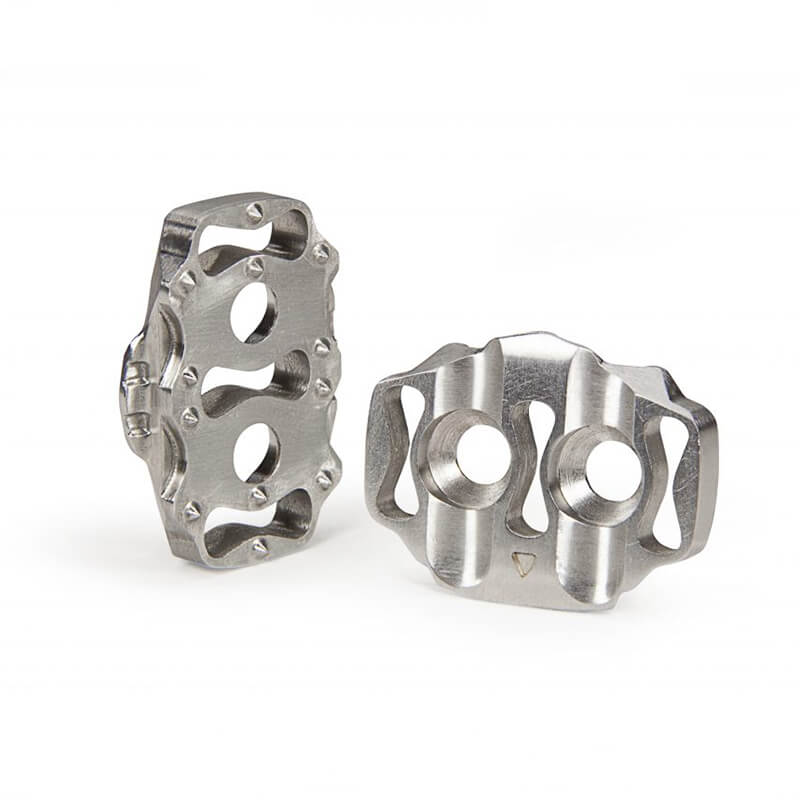
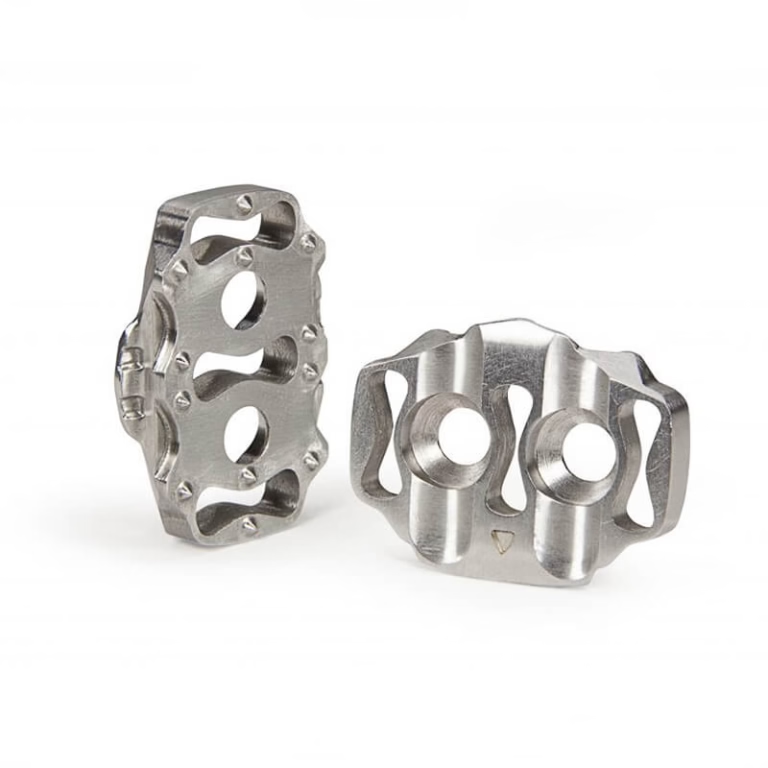
Multi-axis machined robotic arms
Aerospace components with organic curves
Medical implants with intricate internal channels
GreatLight CNC Machining Factory: Redefining Precision Aluminum Machining
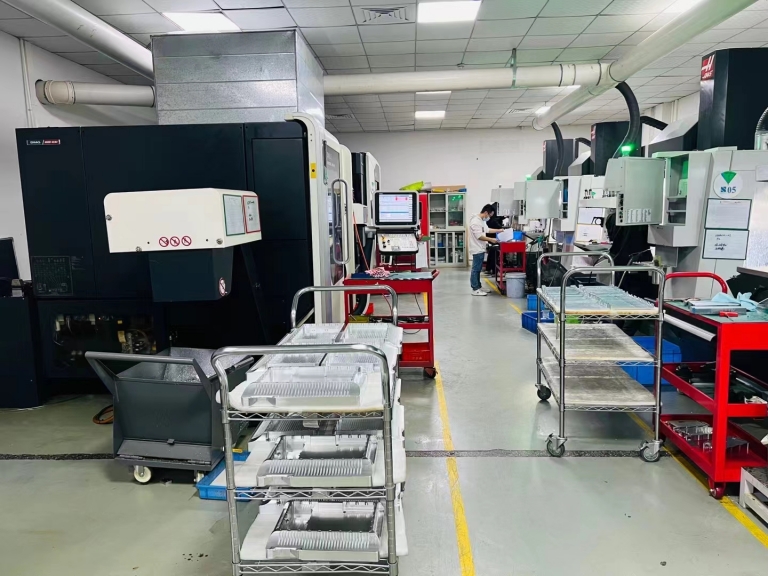
GreatLight CNC Machining Factory, a pioneer in five-axis CNC machining, addresses these challenges through a synergy of advanced technology and engineering expertise. Here’s how they stand apart:
1. Unmatched Equipment Capability
GreatLight’s arsenal includes:
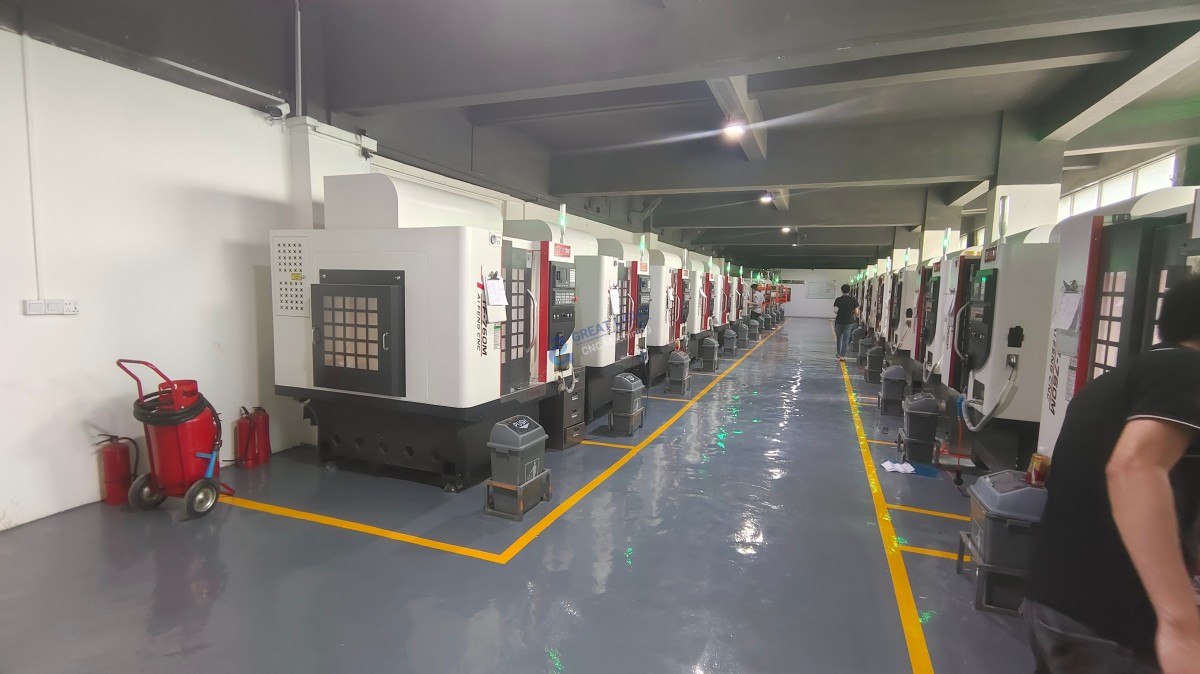
127 precision machines: Covering 3-axis, 4-axis, and 5-axis CNC machining centers from DMG Mori and Beijing Jingdiao, capable of handling parts up to 4000mm in size.
Alloy-specific tooling: Custom carbide tools optimized for aluminum’s unique cutting characteristics, minimizing tool wear and deflection.
In-process probing: Real-time dimensional verification using Renishaw touch probes ensures tolerance adherence throughout machining.
Example: For a humanoid robot joint requiring 0.001mm radial runout, GreatLight’s 5-axis machines simultaneously machine multiple surfaces, eliminating repositioning errors inherent in 3-axis setups.
2. Process Innovation: From Design to Delivery
GreatLight’s workflow integrates:
DFM (Design for Manufacturing) Analysis: Identifies potential machining bottlenecks early, suggesting design modifications to reduce cost and lead time.
Adaptive Machining: AI-driven toolpath optimization adjusts cutting parameters in real time based on material feedback, preventing thermal distortion.
Cryogenic Machining: For ultra-critical applications, liquid nitrogen cooling reduces heat generation, enabling sub-micron tolerances.
Case Study: A medical device manufacturer required aluminum heat sinks with 0.002mm flatness across a 300mm surface. GreatLight’s cryogenic machining process achieved this without post-machining grinding, cutting lead time by 40%.
3. Certification-Backed Reliability
GreatLight’s quality management system is built on:
ISO 9001:2015: Ensures consistent adherence to international quality standards.
IATF 16949: Automotive-grade process control for zero-defect production.
ISO 13485: Medical-grade documentation and traceability for regulatory compliance.
Trust Factor: Unlike many suppliers, GreatLight offers free rework for quality issues and full refunds if rework fails, backed by in-house CMM (Coordinate Measuring Machine) inspection reports.
4. Full-Process Chain Integration
Beyond machining, GreatLight provides:
Die casting and sheet metal fabrication: For cost-effective aluminum component production at scale.
3D printing (SLM/SLA/SLS): Rapid prototyping of aluminum parts with complex internal geometries.
Surface finishing: Anodizing, powder coating, and bead blasting for aesthetic and functional requirements.
Value Proposition: Clients avoid the hassle of coordinating with multiple vendors, reducing lead times by 30% on average.
Industry-Specific Solutions: GreatLight in Action
Automotive: Machined aluminum engine blocks with 0.003mm cylinder bore tolerances for a leading EV manufacturer.
Aerospace: 5-axis machined aluminum satellite brackets meeting NASA’s stringent flatness requirements.
Robotics: Lightweight aluminum robotic arm components with integrated cooling channels, enabling longer operational cycles.
Why Choose GreatLight Over Competitors?
While giants like Foxconn Technology Group and Jabil Inc. offer broad manufacturing capabilities, GreatLight specializes in high-precision, low-to-medium volume production—a niche where flexibility and technical depth matter most. Compared to vertical-specific players like Protolabs (known for rapid prototyping), GreatLight combines prototyping speed with production-grade quality, making it ideal for R&D-heavy industries.
The Future of Aluminum CNC Machining: Trends to Watch
AI-Driven Process Optimization: Machine learning algorithms predicting tool wear and optimizing feeds/speeds in real time.
Hybrid Manufacturing: Combining 5-axis machining with additive manufacturing for “impossible” geometries.
Sustainable Practices: Recycling aluminum chips on-site and using eco-friendly coolants to reduce environmental impact.
GreatLight is already pioneering these trends, investing in IoT-enabled machines for remote monitoring and developing biodegradable cutting fluids to align with global sustainability goals.
Conclusion: Your Partner in Precision
In the high-stakes world of aluminum CNC machining, GreatLight CNC Machining Factory stands as a beacon of reliability, combining cutting-edge technology with a client-centric approach. Whether you’re developing next-gen robotics, electric vehicles, or aerospace components, their team of 150 experts is equipped to turn your most ambitious designs into reality—with precision, speed, and unwavering quality.
For a deeper dive into GreatLight’s capabilities, explore their LinkedIn profile for client testimonials and project showcases. When precision matters, choose a partner that delivers on every promise.
Keywords: Aluminum CNC machining, 5-axis machining, precision manufacturing, GreatLight CNC Machining Factory, medical CNC machining, aerospace CNC machining