
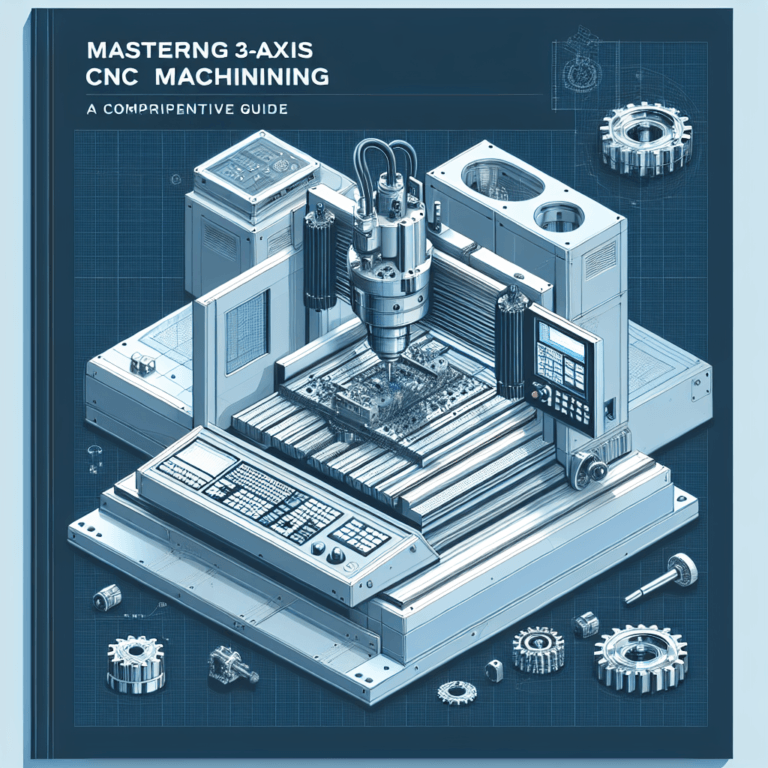
Introduction to three-axis CNC machining
In the field of modern manufacturing, Three-axis CNC machining It is one of the cornerstone technologies that drives precision and efficiency in the production process. CNC (computer numerical control) uses computer software to control machine tools, allowing manufacturers to produce complex parts in industries ranging from aerospace to prototyping. This blog aims to explore the core concepts and advanced techniques of 3-axis CNC machining, providing a comprehensive understanding for both novices and experienced professionals.
What is three-axis CNC machining?
3-axis CNC machining involves the movement of the cutting tool along three axes: X, Y, and Z. This motion enables the machine to create complex geometries by manipulating the position of the tool relative to the workpiece. The X-axis usually represents left and right movement, the Y-axis represents forward and backward movement, and the Z-axis represents up and down movement. Each axis works together to produce the required part or assembly with high precision.
Components of a 3-axis CNC machine tool
Understand the basic components of a Three-axis CNC machine tool Crucial to mastering its operation. Key elements include:
control unit: The brain of the CNC machine tool that executes the program. It interprets G-code and sends commands to the motors for precise movement.
motion system: This system consists of servos, motors and linear guides that allow the tool or workpiece to move along a defined axis.
cutting tool holder: Tools can be varied to accommodate different materials and geometries. The tool holder clamps the tool securely for efficient machining.
Workpiece clamping mechanism: A vise, clamp, or vacuum system that holds a workpiece during machining.
- coolant system: Optional component that lubricates and cools tools and workpieces during operation to prevent overheating.
The Importance of CNC Machining Precision
Accuracy is critical CNC machiningdirectly affects the function and performance of the part. Our goal is to produce components that not only meet design specifications but also perform reliably. Tolerances of ±0.001 inch or better can be achieved with careful programming and setup. Factors that affect accuracy include tool wear, machine calibration, and cutting parameters such as feed rate and spindle speed.
Three-axis CNC machining core technology
Mastering 3-axis CNC machining requires a firm grasp of a variety of technologies, each with its own unique applications and best practices. Below, we explore some of the most critical technologies for improving efficiency and productivity.
1. Tool path optimization
Tool path optimization is the process of determining the most efficient path a cutting tool can take during machining, which can significantly impact cycle times and surface finish. CNC programmers often employ several optimization strategies:
- Linear tool path: Direct, straight-line motion, very effective for simple geometric shapes.
- Arc interpolation: When processing curves or arcs, the accuracy of the circular motion must be guaranteed to maintain accuracy.
- zigzag pattern: Used for adaptive cleaning to reduce processing time, especially in cavity processing.
2. Understand cutting parameters
Cutting parameters such as Spindle speed, Feed rateand cutting depth Essential for achieving optimal machining performance.
- Spindle speed: Measured in RPM (revolutions per minute), speed must be set appropriately based on material properties and tool type to avoid tool damage and part deformation.
- Feed rate: This is the distance the tool moves during one revolution. Accurate feed rate adjustment improves surface finish and reduces tool wear.
- cutting depth: The amount of material removed in one pass affects the quality of the finish and tool life, so a balance must be found that works for the specific operation.
3. Choose the right cutting tool
Choosing the right cutting tool is critical to improving performance and productivity. Tools vary based on:
- Material compatibility: Choose high-speed steel (HSS), carbide or ceramic tools depending on the workpiece material.
- geometry: Different tasks require different geometries (flat surface, ball head, etc.), thus affecting the bonding with the material.
- coating: Specialty coatings such as TiN and TiAlN can extend tool life and performance by reducing wear.
4. Fixture design and workpiece holding solutions
Effective workholding solutions ensure that the workpiece remains stable during machining. The design and implementation of fixtures play an important role in both accuracy and production speed. Key considerations include:
- Accessibility: Ensures that the entire workpiece can be machined without excessive repositioning.
- Repeatability: Fixtures should provide consistent accuracy for parts produced over long periods of time.
- Versatility: Design fixtures to accommodate multiple components to minimize setup changes.
5. Post-processing and finishing
After the primary machining process, post-processing techniques such as polishing, grinding and treatment are usually required to achieve the desired finish. These technologies can significantly impact part aesthetics, tolerances and functional properties. Establishing a strong post-processing protocol will improve overall quality and user satisfaction.
Application of three-axis CNC machining
The versatility of Three-axis CNC machining enabling it to serve a wide range of applications across various industries. Here are some of the most impactful apps that highlight its importance.
1. Aerospace parts
In aerospace manufacturing, precision is non-negotiable. Parts such as brackets, housings and accessories require the highest performance, often requiring tolerances as tight as ±0.0005 inches. 3-axis CNC machining is crucial here, allowing lightweight parts to be manufactured without sacrificing structural integrity.
2. Medical devices
In the medical field, CNC machining produces surgical instruments, implants and prosthetics, with strict quality and performance regulatory requirements. Customized solutions enabled by 3-axis CNC machining simplify the production of patient-specific devices and improve treatment outcomes.
3. Automobile industry
In automotive manufacturing, CNC machined parts include engine components, interior trim, and gears. The integration of advanced 3D modeling and simulation software optimizes the process, ensuring components are lightweight yet durable and tailored to meet stringent industry standards.
4. Electronic components
From circuit boards to mobile device cases, the electronics industry relies heavily on CNC machining. The ability to produce small, complex parts at high speeds provides manufacturers with a competitive advantage in an increasingly demanding, fast-paced market.
The future of three-axis CNC machining
As we look to the future, Three-axis CNC machining Expect to be influenced by a number of emerging trends. especially:
The integration of artificial intelligence and machine learning: These technologies promise to revolutionize CNC machining by enabling predictive maintenance, real-time optimization of tool paths and enhanced process automation.
Additive Manufacturing Collaboration: The coexistence of CNC machining and additive processes may lead to hybrid operations that leverage the strengths of both technologies to increase productivity and design freedom.
- Industry 4.0 and smart factories: The transition to connected systems and data-driven decision-making will allow manufacturers to improve performance metrics, reduce waste and ensure better compliance with industry standards.
in conclusion
Mastering 3-axis CNC machining gives modern manufacturers a powerful toolbox to efficiently create complex, high-precision parts. By understanding the basic technology, components and applications, one can harness the full potential of this technology. The future promises to bring exciting innovations, from AI-driven processes to hybrid manufacturing methods, underscoring the relevance and importance of continued education and adaptation in this area.
FAQ section
Q1: What materials can be processed by three-axis CNC machining?
3-axis CNC machining can handle a variety of materials, including metals (such as aluminum, steel, and titanium), plastics, composites, and wood. The choice of material usually determines the cutting tools and parameters used.
Q2: How to choose a CNC machine tool that suits my needs?
When selecting a CNC machine, consider factors such as the complexity of the parts you plan to produce, the type of material, the accuracy required, budget constraints, and space availability within the facility.
Q3: What is the typical cost of three-axis CNC machining?
Costs can vary widely based on factors such as machine type, tooling, labor and materials used. For an accurate quote, it is recommended to consult a machinery factory that provides customized services.
Q4: What impact does maintenance have on the performance of CNC machine tools?
Regular maintenance is essential to ensure the accuracy, longevity and reliability of CNC machine tools. This includes routine inspections, lubrication, tool changes and calibration to prevent errors during machining.
Q5: Can I learn CNC machining without experience?
Yes! Many resources, including online courses, seminars, and community colleges, offer training for individuals with no experience. Practical practice combined with theoretical knowledge helps master CNC machining skills.
By understanding not only the operational aspects, but also strategic applications and future trends, manufacturers can ensure they remain competitive in an evolving technology environment.
Daguang focuses on providing solutions such as precision CNC machining services (3-axis, 4-axis, 5-axis machining), CNC milling, 3D printing and rapid prototyping services.



















