
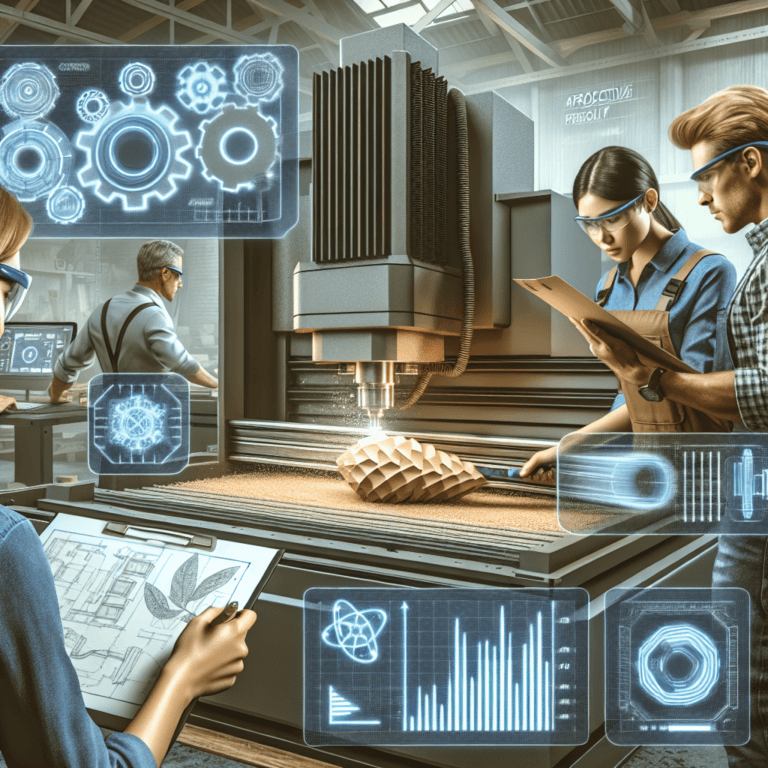
In an era of rapid technological advancement, industries are constantly seeking innovative solutions to increase productivity. One of the most effective ways to achieve this is through the use of CNC (computer numerical control) machine services. This article takes an in-depth look at how CNC machining can significantly increase productivity, streamline operations, and improve the overall quality of the manufacturing process.
Learn about CNC machining
CNC machining refers to the automated process of machine tools controlled by computers. The technology enables precise, repeatable production of parts for industries ranging from aerospace to automotive. The transition from manual machine operation to CNC machining has brought unprecedented improvements in efficiency, precision and flexibility.
The evolution of CNC technology
To fully understand the impact of CNC machine tool services on productivity, it is necessary to understand the evolution of this technology. CNC machining began in the 1950s, and the first CNC machine tools were developed for the U.S. Air Force. Over the decades, advances in software, materials and machine capabilities have transformed CNC from a niche application to the standard across the manufacturing industry.
Core components of CNC system
A basic CNC machine tool consists of four main components:
- controller: The brain of the operation, interpreting G-code commands and controlling machine functions.
- actuator: A device that moves machine components based on controller input.
- feedback device: Sensors that provide real-time feedback, ensuring precise movement and operation.
- cutting tools: Specialized tools designed for specific manufacturing tasks such as milling, turning, or drilling.
Advantages of CNC machine tool services in manufacturing
1. Improve precision and accuracy
One of the most compelling reasons why manufacturers employ CNC machine tool services is their ability to produce high-precision parts. Traditional processing often introduces human error, resulting in inconsistent product dimensions. CNC machining minimizes this problem by utilizing computer-controlled operations, achieving tolerances as tight as ±0.001 inches. This accuracy is critical in industries such as aerospace and medical device manufacturing, where component failure can have catastrophic consequences.
2. Improve efficiency and speed
CNC machine tools operate much faster than traditional machining methods. They can produce parts in less time, reducing cycle times and increasing throughput. Able to run 24 hours a day, CNC machines ensure continuous operation, optimize occupancy and significantly increase production without compromising quality.
3. Flexibility and versatility
The flexibility of CNC machining services allows manufacturers to quickly adapt to various production needs. A CNC machine tool can produce a variety of parts, from simple shapes to complex geometries. Additionally, with proper programming, CNC machines can switch between tasks to meet the needs of low-volume or high-volume production.
4. Reduce material waste
The inherent precision of CNC machining not only increases productivity but also reduces material waste. Traditional machining often results in high scrap rates due to inaccuracies in the cutting process. CNC technology can optimize cutting paths and strategies to ensure maximum utilization of material.
5. Improve security
Operating heavy machinery always carries inherent risks. However, CNC machine tools are designed with many safety features. The automation involved reduces the need for manual intervention, thereby minimizing the likelihood of accidents. Additionally, operators can monitor and control machines remotely, further enhancing workplace safety.
Simplify production with CNC machining
Integrate CNC services into manufacturing workflows
Integrating CNC machining services into your manufacturing workflow can significantly increase productivity. Here are the steps involved:
1. Needs assessment
Before integrating CNC technology, companies should conduct a thorough assessment of their manufacturing needs. This includes assessing current processes, identifying bottlenecks, and determining the specific capabilities required on CNC machines.
2. Selection of CNC machinery
Choosing the right CNC machine is crucial to optimizing productivity. Factors such as material type, throughput, and required accuracy should guide this decision. A variety of CNC machine tools are available in the market, including CNC milling machines, CNC lathes, and CNC milling machines, each of which is suitable for different applications.
3. Software integration
CNC machines operate through specialized software that converts design files into machine-readable code. Companies should invest in powerful CAD/CAM (computer-aided design/computer-aided manufacturing) software to streamline workflow and facilitate seamless integration between design and production.
4. Worker training and development
Having skilled operators is crucial to maximizing the benefits of CNC machine service. Companies should invest in training programs to provide workers with the knowledge and skills they need to operate CNC machines effectively. Ongoing training keeps employees up to date on the latest advances in CNC technology.
5. Ongoing maintenance and quality control
Routine maintenance and quality control are critical to ensuring optimal machine performance. Scheduling regular inspections and recalibrations can prevent downtime and maintain high production standards. Implementing quality control measures throughout the production process will help detect defects early and maintain consistency.
The role of CNC machine tool services in different industries
aerospace industry
The aerospace sector is characterized by complex components and strict regulatory standards, so precision is critical. CNC machining allows manufacturers to produce complex parts such as turbine blades and structural components with incredible precision while ensuring compliance with industry standards.
Automotive industry
The automotive industry has benefited greatly from the use of CNC machines to produce parts such as engine blocks, transmission components, and custom tooling. The speed and flexibility of CNC machining allow automakers to respond quickly to market trends and customer demands.
Medical device manufacturing
In medicine, precision can be a matter of life or death. CNC machine tool services facilitate the production of high-precision medical implants, surgical instruments, and diagnostic equipment. The ability to efficiently produce low-volume custom components meets the needs of an industry focused on custom solutions.
electronic products
The electronics industry thrives on fast production cycles and high quality standards. CNC machining enables rapid prototyping and production of components such as circuit boards, housings and connectors. The versatility of CNC machines allows manufacturers to keep up with the rapid innovation nature of the industry.
Energy field
CNC machining plays a vital role in the production of components for the energy industry, including wind turbine components, oil rig components and renewable energy equipment. The power of CNC machines ensures components can withstand the rigors of extreme environments.
Challenges and considerations
While there are many advantages to CNC machine tool services, some challenges may arise during implementation.
High initial cost
The upfront investment required for CNC machines and associated software can be substantial. However, manufacturers should consider long-term savings and productivity gains to justify this initial outlay. Leasing or financing options can also reduce these costs.
Skilled labor shortage
As the demand for CNC machine tool services continues to grow, so does the need for skilled workers. Companies must focus on training and developing existing employees while attracting new talent to ensure they have the expertise needed to successfully operate advanced CNC machinery.
Technology obsolescence
CNC technology is advancing rapidly and machines will soon become obsolete. Manufacturers must keep up with technology trends and consider ongoing investments in new machinery and software updates to remain competitive.
in conclusion
CNC machine tool services represent a transformative force in manufacturing, increasing productivity, precision and versatility. By understanding the underlying technology, leveraging its benefits, and addressing potential challenges, manufacturers can succeed in an increasingly competitive market. As we move toward a future of increasing automation and advanced manufacturing, the adoption of CNC machining is critical for businesses aiming to increase productivity and maintain a competitive advantage.
FAQ section
Q1: What is CNC machining?
A1: CNC machining is a manufacturing process that uses computer-controlled machinery to cut, shape and construct parts with high precision from various materials.
Q2: Which industries benefit from CNC machine tool services?
A2: Many industries benefit from CNC machining, including aerospace, automotive, medical device manufacturing, electronics, and energy.
Q3: How does CNC processing improve manufacturing efficiency?
A3: CNC machining improves manufacturing efficiency by improving accuracy, shortening cycle times, minimizing material waste and allowing continuous operation.
Q4: What are the main components of CNC machine tools?
A4: The main components of CNC machine tools include controllers, actuators, feedback devices and cutting tools.
Q5: What training do CNC machine tool operators need?
A5: CNC machine tool operators typically require training in CNC operations, programming, mechanical skills, and familiarity with CAD/CAM software. Continuous learning helps them keep pace with technological advancements.
By addressing these critical aspects of CNC machine tool services and realizing their potential, industries can increase productivity and remain competitive in today’s fast-paced economic environment.
Daguang focuses on providing solutions such as precision CNC machining services (3-axis, 4-axis, 5-axis machining), CNC milling, 3D printing and rapid prototyping services.



















