
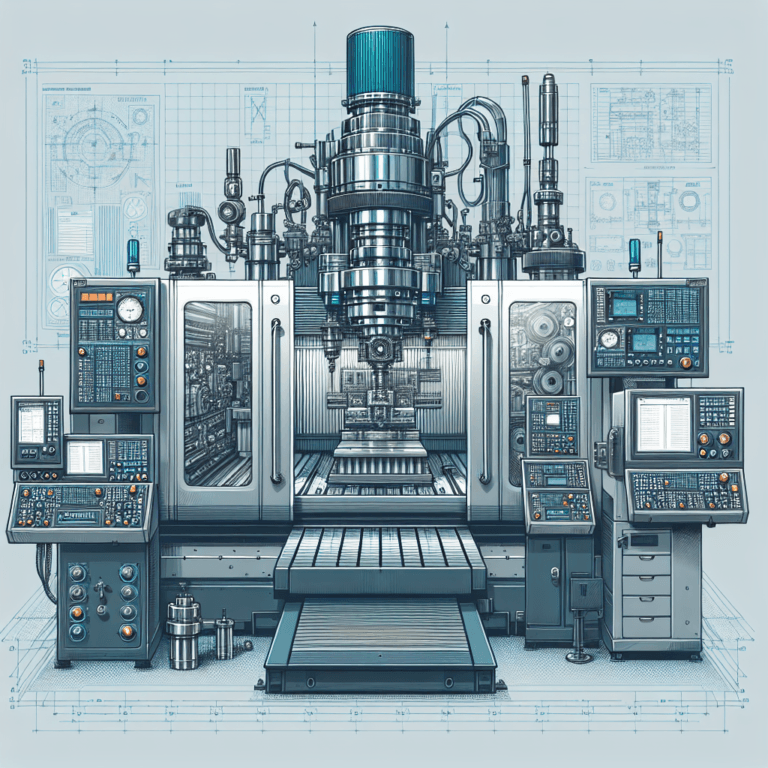
Okuma Five-Axis Machining Center: An Innovative Pioneer in Precision Manufacturing
The landscape of precision manufacturing is evolving rapidly, driven by technological advancements and market demands for higher efficiency and accuracy. At the forefront of this transformation is Okuma, a Japanese manufacturer renowned for its commitment to excellence and innovation in machine tool production. The company’s five-axis machining centers have become synonymous with precision and versatility, offering manufacturers the ability to tackle complex components with unparalleled accuracy and consistency.
What is a Five-Axis Machining Center?
A five-axis machining center is a type of CNC (computer numerical control) machine that operates on five different axes simultaneously. Unlike traditional three-axis machines, which can only move along the X, Y, and Z axes, a five-axis center can also tilt and rotate the workpiece, allowing for a comprehensive range of machining capabilities. This advanced functionality is particularly beneficial for manufacturing intricate parts found in industries such as aerospace, automotive, medical, and energy.
The Evolution of Okuma’s Five-Axis Technology
Founded in 1898, Okuma has consistently pushed the boundaries of machine tool technology. The company introduced its first five-axis machining center in the late 20th century, setting a benchmark in the industry. Over the years, Okuma has refined its five-axis technology, integrating cutting-edge software, advanced spindle designs, and precision control systems, establishing itself as a leader in the field.
Key Features of Okuma Five-Axis Machining Centers
High Precision and Accuracy: Okuma’s five-axis machining centers are engineered for tight tolerances, ensuring that parts are produced with exact specifications. Features such as thermal stability and rigorous quality control measures enhance the precision of every manufacturing process.
Enhanced Flexibility: The ability to approach machining from multiple angles allows manufacturers to produce complex geometries with fewer setups. This reduces changeover times and increases overall productivity.
User-Friendly Interface: Okuma places a strong emphasis on usability. Their OSP (Okuma Sampling Program) control technology simplifies the programming process, enabling operators to quickly simulate and verify machining processes, thereby reducing the risk of errors.
Robust Construction: Built with high-quality materials and components, Okuma’s five-axis machines are designed for longevity and reliability. The machines are robust enough to handle heavy-duty machining tasks while maintaining precision.
- Cutting-edge Tool Management: Okuma’s proprietary tooling systems offer utmost efficiency. Quick tool changes and optimized cutting paths enhance productivity and minimize downtime.
Applications of Okuma Five-Axis Machining Centers
Okuma’s five-axis machining centers are versatile and can be adapted for a variety of applications across different sectors. Here are some of the primary areas where Okuma technology excels:
Aerospace Manufacturing
In the aerospace industry, precision is non-negotiable. Components must meet stringent regulatory standards and perform flawlessly under extreme conditions. Okuma’s five-axis machines are capable of producing intricate parts like turbine blades, airframes, and landing gear with the required accuracy and reliability.
Automotive Production
The automotive sector is undergoing a revolution, emphasizing lightweight materials and complex designs. Okuma machinery enables manufacturers to create parts such as engine blocks and suspensions with speed and precision, contributing to the overall efficiency of the production line.
Medical Device Manufacturing
Producing medical devices requires not only precision but also compliance with regulatory standards. Okuma’s five-axis machining centers aid in the creation of surgical instruments and implantable devices, ensuring they are manufactured to the highest quality standards.
Energy Sector
From oil and gas to renewable energy, the energy sector demands high-performance components that can withstand rigorous conditions. Okuma’s equipment plays a critical role in fabricating parts for turbines, generators, and various other heavy machinery utilized in energy production.
Benefits of Choosing Okuma
Strong Customer Support: Okuma is known for its excellent customer service. The company provides comprehensive training, support, and maintenance services to ensure that operators can maximize the capabilities of their machines.
Innovation and Research: Okuma consistently invests in research and development, keeping its technology at the cutting edge. This ensures that users have access to the latest advancements in machining technology.
Sustainability Initiatives: In an era where sustainability is vital, Okuma is dedicated to reducing the environmental impact of its manufacturing processes. Their machines are designed to minimize waste and energy consumption while maintaining high productivity.
- Global Reach: With a presence in over 140 countries, Okuma offers localized services and support, ensuring that manufacturers across the globe can harness the power of their innovative machining solutions.
The Future of Precision Manufacturing with Okuma
As the demand for complex components continues to rise, the importance of advanced machining technology cannot be overstated. Okuma’s advancements in five-axis machining are paving the way for a new era of precision manufacturing. The ability to perform multi-dimensional cuts with ease not only enhances productivity but also opens the door for innovative design possibilities that were previously unattainable.
Integration of Industry 4.0
One of the most significant trends in manufacturing is the move towards Industry 4.0 — the digitization of manufacturing processes. Okuma is at the forefront of this transition, integrating IoT (Internet of Things) technologies into their machines. This enables predictive maintenance, real-time data collection, and enhanced machine monitoring, further optimizing performance and efficiency.
Customized Solutions
Every manufacturing operation is unique, and Okuma recognizes this by offering tailored solutions that cater to specific industry needs. Whether it involves customizing machine configurations, software modifications, or developing specialized fixtures, Okuma works closely with its clients to ensure that their individual requirements are met.
Conclusion
Okuma’s five-axis machining centers represent a culmination of over a century of innovation and engineering excellence. Their commitment to precision manufacturing, customer support, and sustainable practices positions them as a key player in the evolving landscape of modern manufacturing. As industries continue to demand greater complexity and efficiency, Okuma stands ready to meet these challenges head-on, solidifying its legacy as a pioneer in precision engineering. By choosing Okuma, manufacturers invest not just in machinery, but in a partnership that champions innovation, success, and sustainability in an ever-competitive market.
Daguang focuses on providing solutions such as precision CNC machining services (3-axis, 4-axis, 5-axis machining), CNC milling, 3D printing and rapid prototyping services.



















