
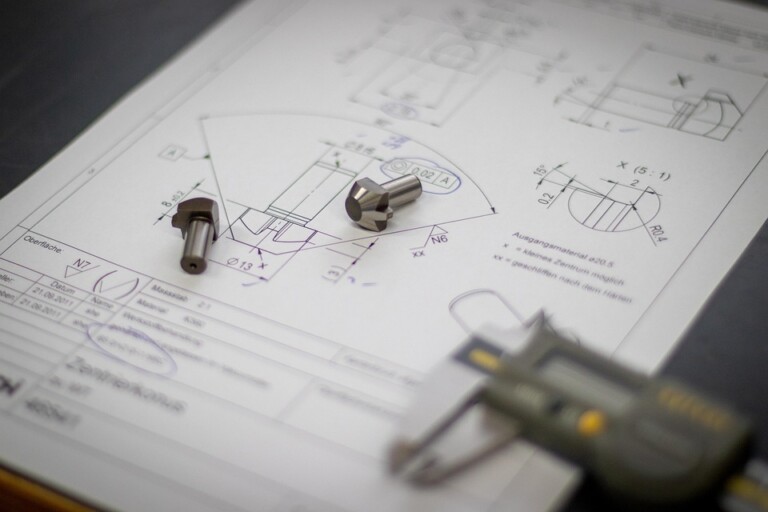
Mastering Accuracy: Key Points of CNC External Grinding
In a high-risk world of precision manufacturing, CNC exterior grinding is the cornerstone of achieving ultra-tight tolerances and mirror-like surface finishes. This subtraction process is essential for cylindrical or conical workpieces, using computer-controlled wear to remove material with low-light precision. For industries that require perfection (from aerospace to medical equipment), its mechanisms, applications and advantages are understandable. Let’s break down the key points.
How CNC external grinding works
CNC external grinding uses rotating abrasive wheels to accurately scrape off material from the outer surface of the workpiece at its core. The workpiece rotates between the centers or between Chucks, while under the guidance of CNC, the grinding wheel moves radially and axially. Key components include:
- Grinding wheel: Designed from alumina, CBN (cube boron) or diamond gravel is designed based on material hardness.
- CNC control system: Convert digital blueprints to precise wheel tracks and adjust parameters in real time such as feed rate, cutting depth and RPM.
- Coolant system: For heat dissipation, it is crucial to prevent heat distortion and flush the metal blade.
Unlike manual grinding, CNC programming allows multi-axis interpolation, allowing complex geometry to have tapered axis or profile profiles in a single setup.
Why exactly CNC is required
- Micron-scale accuracy: Achieving a diameter holding a tolerance of ±0.001 mm (1 micron) is critical to bearing journals or hydraulic components.
- Upper surface integrity: Reduce the surface roughness to RA 0.1–0.4 μm, minimizing friction in dynamic components.
- Repeatability and scalability: After programming, the CNC ensures that each part of the batch matches the first cuts the rework cost.
- Complex geometric processing: Modern five-axis grinders (like Greatlight) manipulate workpieces at complex angles for complex designs.
Materials and Applications
CNC external grinding performs excellently on hardened materials that fail traditional cutting tools:
- Metal: Tool steel (D2, H13), stainless steel, titanium and inconel alloys.
- Ceramics and composites: Need for advanced materials without cracks.
Typical use cases:
- Engine crankshaft and transmission shaft
- Precision pins, rollers and cutting tools blank
- Medical implants with biocompatible finishes (such as femoral stems)
Advantages of Greglight in CNC Grinding Services
At Greatlight, we combine decades of CNC expertise with cutting-edge five-axis grinding technology to solve complex manufacturing challenges. Our process integration:
- Advanced equipment: Five-axis sharpening with real-time tools and process measurements for closed-loop accuracy.
- End-to-end solution: From CAD/CAM programming to friction treatment under a roof (e.g., polishing, anodizing or coating).
- Material mastery: Expertise in iron, non-productive and exotic alloys with fast custom processing capabilities.
For mission-critical parts, our holistic approach ensures perfect size and shorter lead times, making quality valuable.
in conclusion
CNC external grinding is not only a completion step; it is a definite solution for components that accurately determine performance. With tolerance tightening and materials development, utilizing CNC technology (its automation, repeatability and flexibility) is essential. Working with experienced manufacturers can speed up this journey. We combine technical rigor with one-stop post-processing to turn challenging designs into perfect reality.
Customize your precision parts now
Ready to optimize key components? Greatlight provides CNC grinding solutions designed for excellence. Ask for a quote and experience five-axis innovation with unparalleled value.
FAQ (FAQ)
Q1: What is the difference between CNC external grinding and lathe turning?
A: Turning through the cutting tool to remove the material while grinding the surface. Grinding allows for a finer finish (±0.001 mm vs.±0.01 mm) and handles hardened materials that damage lathe tools (>45 hrc).
Q2: Can CNC grind correct warping in heat-treated parts?
Answer: Yes! Grinding is ideal for handling distorted components after heating, restoring dimensional accuracy without damaging hardness.
Q3: How do you choose between CBN and Diamond Grinding wheels?
A: CBN wheels are excellent on ferrous metal (steel, alloy) up to 70 hrc. Diamond wheels are retained for carbides, ceramics or composites due to their excellent wear resistance.
Q4: What is the tolerance for the five-axis grinding of Greatlight?
A: Even in asymmetric geometry, our system always reaches a dimensional tolerance of ±0.001 mm and a surface of 0.1 μm.
Q5: Do you support small batch prototypes and large batches?
Answer: Absolute. Whether it’s a one-time prototype or over 10,000 units, our CNC process ensures the same quality and fast scalability.
Question 6: How does coolant management affect grinding results?
A: Proper filtration can prevent the abrasive particles that cause micro-grabs to circulate. At Greatlight, the refrigerated coolant system maintains a stable temperature – essential for heat-sensitive alloys.
Q7: Can you grind non-cylindrical shapes on the outside?
A: Using five-axis kinematics, we grind composite forms: eccentric diameter, polygonal profile and mixing radius – can be programmed by CAD/CAM.
For legacy parts or groundbreaking designs, trust Greatlight to integrate technology and process to improve your precise machining results.



















