
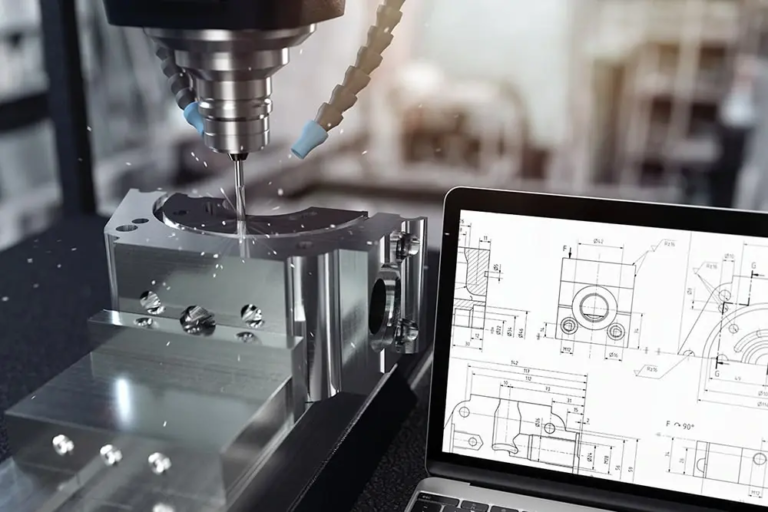
Phenol unlocking accuracy: mastering CNC machining of Bakelite parts
bakelite. It may recall images of old-fashioned radios or mid-century kitchenware, but this groundbreaking phenolic resin remains an important engineering material in today’s high-end manufacturing landscape. Its excellent electrical insulating material, inherent flame retardancy, chemical resistance, high strength to weight ratio and dimensional stability make it essential for countless applications, from complex electrical insulators and connectors to bearings, switch cabinet components and aerospace hardware. However, using these characteristics through CNC machining requires specialized knowledge and techniques different from processing metals and even many other plastics. Here is an expert guide to browsing the nuances of CNC machining Bakelite.
Understanding Materials: Why Bakelite is different
Black nucleic acid (usually used in phenolic resins or laminates) is Thermosetting plastic. Unlike thermoplastics that become soft when heated, during curing, thermoplastics undergo irreversible chemical reactions to form rigid, crosslinked polymer structures. This is the source of its excellent thermal and mechanical stability, but it also presents unique machining challenges:
- brittleness: Black arsonite lacks ductility. It can easily break, break or shatter at the edges, especially near holes or thin walls if processed incorrectly.
- Thermal sensitivity: Although inherently heat-resistant, Localization Heat buildup during processing on the tool/workpiece interface will still lead to thermal degradation. This manifests as combustion, charring, stratification (laminate), or excessive tool wear.
- Abrasive filler: Modern phenolic compounds usually contain reinforcement fillers such as wood powder, cotton, paper, glass or mineral fibers. These significantly improve strength and other properties, but have high wear on the cutting tool.
- Dust generation: Processing produces fine, phenolic dust. This dust is not only a store trouble. Under certain conditions, it can harm breathing, can irritate the lungs and skin, and even explode.
Bakelite’s five-axis CNC advantages:
Although the glue floor can be processed on a 3-axis CNC mill, Five-axis CNC machining provides different advantagesespecially for complex parts:
- Reduced settings: Complex geometry often requires multiple heavy plates on a 3-axis machine and can usually be machined in a single setup on a 5-axis machine. This minimizes handling errors and potential damage to brittle functions.
- Best tool direction: Continuous adjustment of the attack angle of the tool ensures optimal involvement of the optimal edge relative to the laminated layer (plate) or partial geometry, minimizing off-chip and maximizing surface finishes.
- Access complex geometric shapes: Without complex fixtures, direct distance from the undercut of the spindle, internal passages, inclined holes or contoured surfaces become easier to access.
- Improve tool lifespan: Better control of chip load and cutting forces through optimized positioning can significantly extend tool life to cope with the abrasive properties of the material.
- Enhanced accuracy: Minimized settings and better control of cutting conditions can lead to higher dimensional accuracy and geometric tolerances, which are critical for components such as high-voltage insulators or precise bearings.
Bakelite’s basic CNC machining skills:
Successful processing of Bakelite depends on careful strategy and parameter selection. Consider the following key tips:
Tool selection is the most important:
- Material: A solid carbide end mill is the standard choice. Their hardness and stiffness resist wear. For highly worn grades or large production runs, polycrystalline diamond (PCD) or diamond-coated carbide tools offer higher lifespans, but with higher initial costs. Avoid high-speed steel (HSS) tools.
- geometry: Sharp cutting edges and high positive rake angles are essential for cleaning shear. This minimizes crushing forces that cause fragmentation. Two or three flutes are usually preferred for effective chip evacuation. Use a polished flute to reduce friction.
- type: Ball nose end mill is perfect for contouring and finishing. For analysis and bagging, square or angle-Ladius end mill provides strength in the tool tip area while reducing the stress concentration points near the sharp inner corners, resulting in rupture.
Optimized cutting parameters:
- High speed, lightly cut: Run the spindle at relatively high rpms, but with shallow cutting (DOC) and medium feed rates. This combination minimizes cutting forces, prevents excessive heat buildup, and reduces deflection of thin walls or features. think "Remove small chips quickly."
- Chip load: Ensure sufficient chip load for each tooth – A chip load that is too small will create friction, resulting in rapid heat generation. Too much increases unnecessary power.
- Example scope (with great variations in specific compounds/tools/functions):
- Spindle speed: 6,000-18,000+ RPM (smaller tools require higher rpms)
- Feed rate: 50-300+ IPM (adjusted according to DOC, tool size, functional robustness)
- DOC (rough): 0.010" -0.060" (Conservatively start)
- DOC (complete): 0.001" -0.010" (Usually rare, especially at the edge)
- Cut width: 30-70% of the diameter of the tool for roughness, lighter for finishing.
Strategic tool path:
- Climbing and milling: It is often desirable to obtain cleaner shear and push the material away from the machined surface, thereby reducing debris at the outlet edge.
- Minimize Stepovers: For fine finishes, use a small radial pedal (e.g., 5-10% of the tool diameter of the ball nose finish).
- Ramp entry: Avoid falling; minimize cuts to reduce impact and pressure on brittle materials.
- Adaptive clearance: For bagging, maintaining a consistent degree of engagement and chip thickness adaptive tool paths can be advantageous, which can reduce heat and tool load.
Fixed with skills:
- Gentle clamping: Use a soft jaw (plastic or filled with plastic spacers), cork/rubber pads or low pressure vacuum fixtures to evenly distribute the clamps on a wider surface. Avoid direct loading points or excessive force directly on unsupported sheets.
- support: Make sure the material is fully supported under the cutting area to prevent bending or vibration, which may cause chatter marks or rupture. Sacrifice backplanes can be crucial.
Hot Coolant Management:
- Flood coolant: Highly recommended. It has multiple purposes: cooling the cutting zone, extending tool life by lubrication and rinsing the abrasive sheet and suppressing dangerous dust. Water-soluble synthetic coolant or light cutting oil works well. Ensure compatibility with Becrete type.
- Air Raid/Mist: As an alternative, especially for simple work, use a firm air explosion focused on cutting. Chip shield and powerful dust extraction become Definitely mandatory If coolant is not used. Fog systems can provide compromises.
- Monitoring temperature: Be aware of signs of combustion or smoke; this is an indicator to stop immediately and reevaluate the speed/feed/coolant flow.
Dust Control: Non-negotiable Safety: Implement a powerful dust extraction (LEV-local exhaust ventilation) system in the source of dust generation. Operators should wear appropriate PPE, including NIOSH approved respirators (N95 or higher), safety glasses and protective clothing.
- Postoperative care: Clean the parts thoroughly (using filtered compressed air) to remove any processed dust before handling or inspection. Deburring usually requires extreme care – fine documents, unwoven abrasive pads or specialized media blasting (such as plastic beads) are often preferable to aggressive mechanical burr tools that can stir the material. Parts may benefit from light cleaning of light solvents to remove coolant residues.
Conclusion: Working with the expertise of impeccable popsicle parts
CNC machining Bakelite success requires metal cutting practices beyond standards. Its inherent brittleness, heat sensitivity and abrasives require a meticulous approach characterized by sharp, proper tools, carefully adjusted high-speed parameters, strategic tool paths, soft fixation, effective cooling and unwavering promise of dust control.
exist GreatWe not only understand theoretical challenges such as processing hot sleepers, such as Bakelite; we have professionals Five-axis CNC machining technology And in-depth process expertise that cannot be performed perfectly. Our advanced equipment provides the motion control accuracy required for complex geometries, and our experience allows us to optimize each parameter for specific Bakelite grades and part designs – selection, feed, speed, speed, coolant strategy. This expertise minimizes the risk of cracking, debris, stratification or thermal damage, providing precise components with excellent dimensional accuracy, superior surface finish and perfect edge quality.
Whether you need complex electrical insulators that operate under extreme conditions, highly loaded bearings require perfect dimensional stability, or complex components for demanding aerospace and industrial applications, we One-stop post-processing and completion service Make sure your Bakelite parts are ready to use immediately. We process a wide range of phenolic materials and provide fast custom processing solutions at competitive prices. Don’t let material challenges damage your design. Leverage our professional machining expertise to make your key small pieces of components.
Now machining custom precision Bakelite parts with Greatlight five-axis CNC – expertise is consistent with advanced technology for perfect results! [Link to your contact/quote page]
FAQ: CNC machining Bakelite
Q1: Can you really use CNC to cut Bakelite?
one: Absolutely! CNC machining, especially milling and drilling, is the primary method of producing precise parts from breadboards, rods, tubes and molded blanks or near mesh shapes. It provides the accuracy and complexity required for modern engineering components.
Q2: What is the best way to cut into pancakes without cracking or shattering?
one: Minimize damage to several factors:
- Use sharp carbide tools with a positive rake.
- High spindle speed is adopted.
- Take a small cutting and proper feed rate.
- Use climbing and milling technology.
- Ensure the exquisite chip evacuation (coolant or air explosion).
- Provides strong part support/background during cutting.
- Use a suitable fixing device to gently distribute the clamping force.
Q3: Do you need coolant when processing rubber floors?
one: Although high-power dust extraction using air explosion may Flood coolant is highly recommended. It can greatly reduce dangerous dust exposure, greatly extend tool life by fighting wear and heat, and help achieve better surface effect. Proper coolant selection is key.
Question 4: How important is dust control and what should I do?
one: Dust control is It is crucial for health and safety. Phenol dust is an irritating and potential carcinogen that can be explosive at high concentrations. Always use:
- Local exhaust ventilation (LEV) system captures dust from the head of the machine.
- NIOSH approved respirator (preferably N95, preferably N100/P100) by operator.
- Recommended PPE: safety glasses, gloves, protective clothing.
- Good store ventilation.
Q5: What tolerances can be maintained on Bakelite for CNC machining?
one: With modern CNC machining, especially 5 axes, tolerances are reduced to +/- 0.001" (0.025mm) or better It is possible for key dimensions of stabilization function. Tighter tolerances are often possible, but depend heavily on the specific black crystal composition, partial geometry (thin walls are challenging), fixation and temperature control. Consistency is usually matched with a capable metal. Discuss your exact requirements with your mechanic.
Question 6: Do I need any special post-operative treatment for popsicle parts?
one: Burrs need care; avoid active mechanical methods. Gentle archives, non-woven abrasive pads or specific media tumbling/blasting works well. It is crucial to thoroughly clean to remove all processed dust and coolant residues. Despite specialized surface treatments, painting or coated bakery is often not feasible due to its chemical resistance due to its chemical resistance.
Question 7: Can Greatlight come from Bakelite levels of different levels from machines?
one: Yes. Greatlight has experience in processing a variety of phenolic compounds including paper-based (XXXP), canvas based (XX), linen based (XX), glass reinforcement (G-110, G-11, FR4), and professional grades. We can assist in material selection based on your application requirements (electrical, mechanical, thermal) or stock provided.



















