
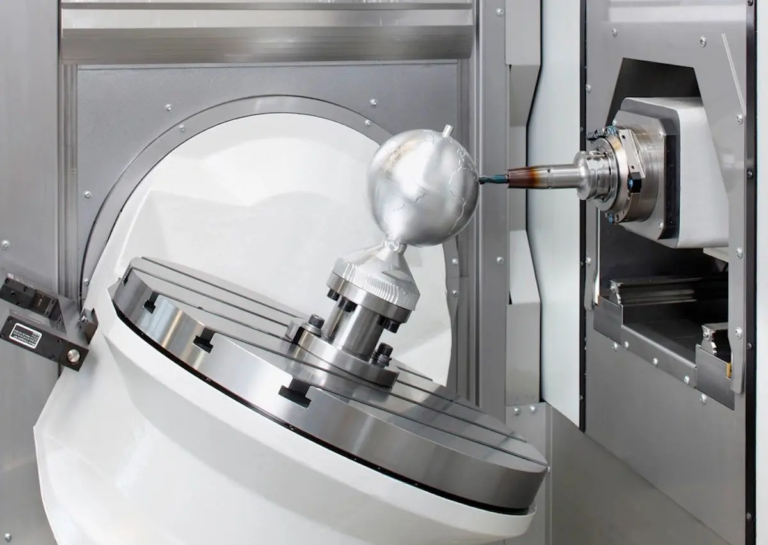
CNC lathe: Accuracy of modern manufacturing
In the process of unremitting pursuit of excellent manufacturing, CNC (Computer Numerical Control) slats are an indispensable pillar. These sophisticated machines convert raw materials into complex, precisely designed components with unparalleled precision and repeatability – innovations across aerospace, automotive, medical and countless industries. Apart from simple cutting, modern CNC lathes represent a fusion of computing power, advanced mechanics and human creativity, thus breaking through possible boundaries in the made-in parts.
Precise core: Why CNC lathes?
CNC automates traditional lathe process at their core. Computer programs guide cutting tools, indicating their exact path, speed, and depth on a rotating workpiece. This digital control eliminates the inherent inconsistencies of manual operations. Unlike manual peers, CNC lathes implement:
- Micron-scale accuracy: Being able to keep tolerances in the fraction of a person’s hair (typically ±0.0005 inches or 0.0127mm) is critical for key components such as hydraulic systems or medical implants.
- Unparalleled repeatability: Generate hundreds or thousands of identical parts with negligible changes, ensuring consistency and quality control of assembly lines.
- Complex geometry mastery: Perform complex configuration files, outlines, threads and undercuts, which are extremely difficult or cannot be implemented manually.
- Upper surface surface: Advanced programming and rigid machines are constructed to minimize vibration, resulting in a smoother finish that often reduces or eliminates the need for a wide range of secondary finishing.
- Improve production efficiency: Compared with traditional methods, continuous operation greatly reduces labor costs and cycle time compared to the least supervision.
Modern production engines: applications abound
The versatility of CNC lathes makes them everywhere:
- Aerospace and Defense: Machine high-strength turbine shafts, landing gear components and faulty engine components are not selected. Material integrity and absolute accuracy are crucial.
- car: Large-scale production of engine blocks, pistons, brake rotors, drive shafts and transmission components requires consistent durability and fit.
- Medicine and Surgery: Making biocompatible bone screws, surgical instruments, implants and diagnostic equipment parts that require ultra-high accuracy and perfect surfaces.
- vitality: Manufactured robust valves, pumps, couplings and drilling equipment for oil, gas, wind and water sectors, often from challenge alloys.
- electronic: Production of connectors, radiators, sensor housings and shielding components with strict dimensional accuracy.
- General precision engineering: Create prototypes, fixtures, fixtures and custom components based on countless industrial and consumer products.
Huge difference: Improved accuracy CNC rotation
At Greatlight, we learn that precision machining is far beyond the scope of CNC lathes. It requires technical maturity, deep expertise and commitment to excellence. As a senior five-axis CNC machining manufacturer, we use cutting-edge equipment and production technologies to solve complex metal parts manufacturing challenges:
- Beyond the basic twist: Although our core includes advanced multi-axis CNC lathes, our integrated five-axis CNC machining center provides ultimate flexibility. Complex parts that traditionally require multiple settings on a separate machine (lathe + mill) can now be set up very precisely on our five-axis equipment. This greatly improves accuracy by eliminating repositioning errors and increasing efficiency.
- Material mastery: We have extensive experience working with a large number of materials – from common alloys such as aluminum, steel, stainless steel and brass to challenging appearances such as titanium, Inconel®, Hastelloy® and engineering plastics. Our expertise ensures the best tool path, speed and feed for each unique material.
- One-stop solution: GREMPHILE provides a comprehensive Post-processing and completion of services internal. Whether your parts require anodization, plating, heat treatment, powder coating, polishing or specialized packaging, we will handle it seamlessly. This eliminates supply chain complexity, reduces lead times and ensures consistent quality control throughout the process.
- Agility meets accuracy: We specialize in research Quickly move custom precision machining. Needs quick and complex prototypes? Need a consistent supply of production parts? Our optimized workflow and advanced technology enable us to deliver high-quality custom parts faster than many traditional stores without compromising quality.
- Best Value Proposition: Our commitment to advanced automation and efficient production enables us to provide Special value. We’ve achieved success Best Price Complex and precise parts with optimized machining strategies to reduce waste rates and integrate services – transfer these savings to our customers.
Precise investment: The real benefits
Selecting high-quality CNC lathe service directly converts it into business advantages:
- Reduce costs: Reduce waste rate, reduce labor costs per part, minimize rework and effective material use.
- Improve quality and reliability: Consistency eliminates assembly problems and on-site failures, enhancing product reputation.
- Faster time to market: Rapid prototyping and production cycles accelerate product development and launch.
- Free design: Implement the creation of complex, high-performance components that were previously thought impossible to manufacture.
- Competitive Advantage: Excellent quality, faster delivery and cost-effective solutions position your product ahead of competition.
in conclusion
CNC lathes are not just machines. They are precisely driven engines that power modern industrial landscapes. Their ability to transform digital design into flawless complex metal components with unwavering consistency is fundamental to technological advancement. With the increasing demand for miniaturization, complex geometric shapes and high-performance materials, the role of complex CNC rotation and multi-axis machining has become increasingly critical.
For manufacturers looking to browse this kind of landscape, working with experts like Greatlime is key. We combine state-of-the-art five-axis CNC machining capabilities, deep material knowledge, integrated post-processing and commitment to fast, cost-effective production to provide accurate manufacturing solutions for your project needs. When failure is not the pivotal choice and quality, leveraging this advanced technology and expertise is not only an advantage—it is a priority.
Frequently Asked Questions about CNC Lathes
What exactly does CNC lathe do?
A CNC lathe is a computer controlled machine that mainly rotates workpieces (such as metal or plastic) to fix cutting tools to remove material. It molds the workpiece into a cylindrical part with features such as diameter, taper, grooves, threads and complex profiles based on programming instructions.
What materials can be used for CNC lathes?
CNC lathes can process large amounts of materials. Common options include a variety of metals such as aluminum, carbon steel, stainless steel, brass, copper and bronze. Advanced lathes with rigid structures and appropriate tools can also handle titanium, superalloys (Inconel®, Hastelloys), and high-strength steels, as well as plastics and engineering composites such as titanium, superalloys (Inconel®, Hastelloys).
How accurate are CNC lathes?
Modern CNC lathes are very precise. Strong machining centers can routinely hold dimensional tolerances 0.0005 inches (0.0127 mm) Or more stringent key features. Surface finishes can often implement mirror polishes, usually measured in micro-inches (RA) if desired. Factors such as machine stiffness, tool quality, thermal stability, programming accuracy, and operator expertise can affect the ultimate achievable accuracy.
What is the difference between CNC lathe (turning center) and CNC milling machines?
The basic differences are motion and workpiece holding:
- CNC lathe/turn center: this Workpiece rotation The cutting tool usually moves linearly (X and Z axes). Mainly used for cylindrical or radial symmetrical parts.
- CNC milling machine: this Cutting tool rotation The workpiece is fixed, or moves in a linear (x, y, z) or a rotational axis. For complex prismatic parts, faces, pockets and features not limited to rotation. Multi-axis machines (such as 5-axis) blur the lines and combine turning and milling functions.
What’s there "5-axis machining" Better than standard CNC lathes?
While basic CNC slats typically use 2 axes (X and Z), a 5-axis CNC machining center (which may include advanced turning centers) moves the cutting tool and/or workpiece simultaneously Five different axes (X, Y, Z Plus rotation axes A and B/C). This allows:
- Machining very complex geometry in a single setup.
- A sharp reduction in setting time and potential errors.
- Access otherwise unreachable features from a fixed angle.
- Achieve upper finishes and precision on complex contours. Here, Greatlight’s focus on five-axis functionality has significant value.
- Why choose Greatlame for CNC lathes and precision machining services?
Greglight stands out:
- Advanced 5-axis technology: To maximize complexity and efficiency in one setup.
- Extensive material expertise: Confidently processed from soft alloys to the toughest super alloys.
- A true one-stop service: Comprehensive internal machining and finish/post-processing.
- Speed and Agility: Rapid prototyping and production turnover of custom parts.
- Value Project: Optimize the process to The best price.
- Commitment to precision: Solve harsh manufacturing problems and solve them with excellent technical results.
Take advantage of the peak of precision manufacturing. For unparalleled quality and advanced solutions to address the most complex parts of the challenges, please contact you immediately. Our team is ready to work with you for faster and more cost-effective parts than you think.



















