
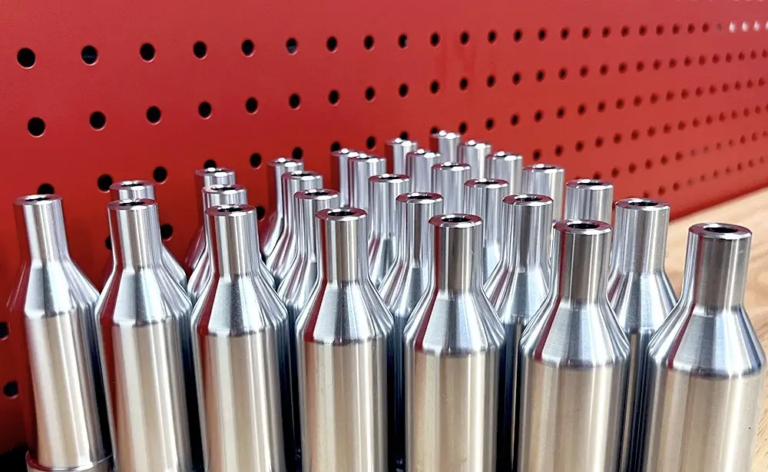
Navigate the world of most CNC machining: large-scale accuracy
In industrial manufacturing, demand for oversized components (think aerospace framework, energy sector turbines or industrial machinery bases) can all surge. Production of these parts requires specialized expertise, equipment and technology. This is Most CNC processing Shine, combining scale with precision. As a leader in complex manufacturing, outstanding light utilizes advanced five-axis CNC technology to overcome these challenges and deliver outstanding results.
What defines a lot of processing?
"A large part" CNC machining usually involves components that exceed standard machine capabilities – usually measuring over 1 meter, weighing several tonnes in any dimension, or requiring complex geometry that requires special fixtures. Common examples include:
- Aerospace wings and engine mounts
- Hydraulic pressure assembly
- Renewable energy transmission housing
- Industrial automation framework
Traditional three-axis CNC machines struggle with these projects due to size limitations, access complex angles and stability issues.
Why five-axis machining leads large-scale projects
Five-axis CNC machining (when the cutting tool moves on the X, Y, Z axes, and the workpiece rotates on the A and B axes) is unparalleled for large and complex parts. It’s the way to solve most of the challenges:
Eliminate multiple settings:
Traditional methods require manual repositioning of large artifacts, which is time-consuming and introduces consistency errors. Five-axis machines handle complex angles in a single setup for improved accuracy.
Overcome vibration and tool deflection:
Large parts can amplify vibrations and risk surface defects. The five-axis machine strategically positions the workpiece near the machine tool and cuts stably. Advanced software optimizes tool paths on Great Light to minimize chat rates.
Complex geometric management:
The turbine blade or impeller requires a composite curve or a bending that cannot be reached with a three-axis tool. Five-axis access allows contouring from infinite angles.
- Material efficiency:
Minimizing setup reduces material waste, a key cost factor for expensive aerospace alloys or titanium.
Key process considerations
1. Machine stability and rigidity:
Only heavy duty industrial grade CNC machines with reinforced beds can withstand the pressure of machining large steel or Inconel®. Great Light’s equipment is designed with vibration damping technology and high torque spindles for continuous cutting.
2. Precision tool path planning:
Specialized CAM software simulates cutting to avoid collisions and ensures dimensional tolerances within ±0.025 mm. Adaptive tool paths are thermal expansions during lengthy processes.
3. Fixed engineering:
Clamping the 5-ton assembly without deformation requires custom hydraulic or vacuum fixtures. Excellent lighting design modular fixtures that minimize part movement and maximize stiffness.
4. Material expertise:
Large parts use high-strength materials such as 17-4ph stainless steel or titanium 6AL-4V. We optimized feed/speed and coolant strategies to prevent warping and tool degradation.
Advantages beyond scale
- Faster time ahead: Reduce production cycle by 30-50% through merge operations.
- Enhanced accuracy: Enable stricter tolerances by reducing human processing.
- No compromise on complexity: A running machine with organic shape, deep cavity or contoured surface.
- Seamless post-processing: From a good point of view, services such as pressure relief, surface grinding or coating have been integrated to ensure partial integrity.
Industry transformed from large-scale processing
- aerospace: Engine Nassel, landing gear
- vitality: Wind turbine hub, nuclear valve body
- transportation: Locomotive frame, marine propeller
- Industrial: Press the mold, robot arm base
in conclusion
A large part of CNC machining combines huge scales with microscopic accuracy, thus enabling the most demanding sector innovation. Success requires not only a large amount of equipment, but also engineering acuity, advanced five-axis technology and meticulous process control. bright Stand out among partners in this field: Our industrial five-axis CNC machines, coupled with the design and post-processing of internal fixtures, provide an end-to-end solution for the most complex metal component challenges. From prototypes to mass production, we provide fast, cost-effective accuracy without compromising quality.
Customize precision large components now at competitive prices – Connect the referenced headlights!
FAQ: Most CNC machining
Q1: Can the largest part size headlight be machine-friendly?
A: We focus on parts with a length of 3 meters and 15 tons, with expanded functions. Please contact us for your specifications to obtain feasibility.
Question 2: Does five-axis machining reduce the cost of oversized components?
Answer: Absolute. Less setup means lower labor costs, minimal scrap and shorter lead times. Five-axis efficiency usually offsets the higher operating costs of the machine.
Q3: How to prevent warping when processing large thin-walled structures?
A: We use slow lift tool paths, specialized fixtures for uniform force distribution, and in-situ stress bias periods for thermally sensitive metals.
Question 4: Can you handle post-surgical treatments for large-scale parts?
A: Yes. Our one-stop service includes heat treatment (annealing, hardening), surface finish (bead blasting, anodizing) and quality inspection (CMM, ultrasonic testing).
Q5: Is your large CNC service suitable for prototypes?
Answer: Absolute. We support rapid prototyping with reverse engineering, DFM feedback and rapid machining to quickly verify designs at practical cost.
Question 6: Which material is best for heavy-duty applications?
A: High strength alloys (such as 4140 steel, 7075 aluminum and Inconel 718) are proven choices for bearing components. We will recommend it based on your use case.
Question 7: How to ensure accuracy on a surface that is multi-meter long?
A: Laser calibration, thermal compensation system and iterative toolpath correction maintain accuracy beyond the extended machining cycle.



















